You're buying a used car from a private seller in Arkansas, and you're wondering what you'll owe at the DMV. That's a fair question, and the answer isn't always straightforward. The Arkansas sales tax on used vehicles purchased from individuals depends on a few key factors, and if you don't know the rules, you could end up overpaying, or worse, underpaying and facing penalties.
Here's the short version: Arkansas charges a 6.5% state sales tax on the purchase price of a used vehicle, but the state often uses a Standard Presumptive Value (SPV) instead of what you actually paid. That means if you bought a car for $5,000 but the state says it's worth $7,000, you could owe tax on the higher number. As of 2026, this is still the system, and local county taxes can push your total rate to 9.5% or more.
Let's walk through exactly how it works so you can budget, plan, and avoid surprises.
Quick Answer
Arkansas taxes private-party used car sales at 6.5% state rate plus local county tax. The state compares your purchase price to the Standard Presumptive Value. You pay tax on the higher of the two.
Total rates range from 7% to 9.5%. Pay within 30 days to avoid penalties.
Why This Matters More Than You Think (and How to Avoid a Surprise Tax Bill)
You might think sales tax on a used car is a simple percentage of what you paid. In Arkansas, that's not always true. The state's SPV system is designed to stop people from underreporting the sale price.
If the DFA's database says a 2018 Ford F-150 is worth $22,500 and you wrote $18,000 on the bill of sale, they'll tax you on the $22,500. That difference can mean hundreds of dollars extra.
Private-party buyers in Arkansas often get hit with a tax bill $300 to $600 higher than they expected because they didn't account for SPV. If you try to fudge the numbers intentionally, you risk an audit and potential penalties. The DFA has access to valuation tools similar to what dealers use.
They know what your car is worth.
The smart move is to check the SPV before you even hand over the cash. That way you know the taxable amount upfront. You'll also want to factor in your county's local tax rate, which we'll cover in detail.
But the core takeaway is simple: don't assume the tax is just based on your handshake deal. The state has its own number.
The Quick Answer: How Much You'll Actually Pay in Tax
Let's get specific. Here's the baseline for the Arkansas sales tax on used vehicles purchased from individuals:
- State tax rate: 6.5% of the taxable amount (either purchase price or SPV, whichever is higher)
- Local county tax: varies from 0.5% to 3% depending on where you live
- Total tax range: typically 7% to 9.5%
For example, you buy a used sedan for $15,000 and the SPV is $14,500. You'll pay tax on the $15,000 purchase price. At a 7% combined rate (6.5% state + 0.5% county), that's $1,050.
But if the SPV is $16,000 and you paid $15,000, you owe tax on $16,000. That's $1,120. A $70 difference just from the valuation.
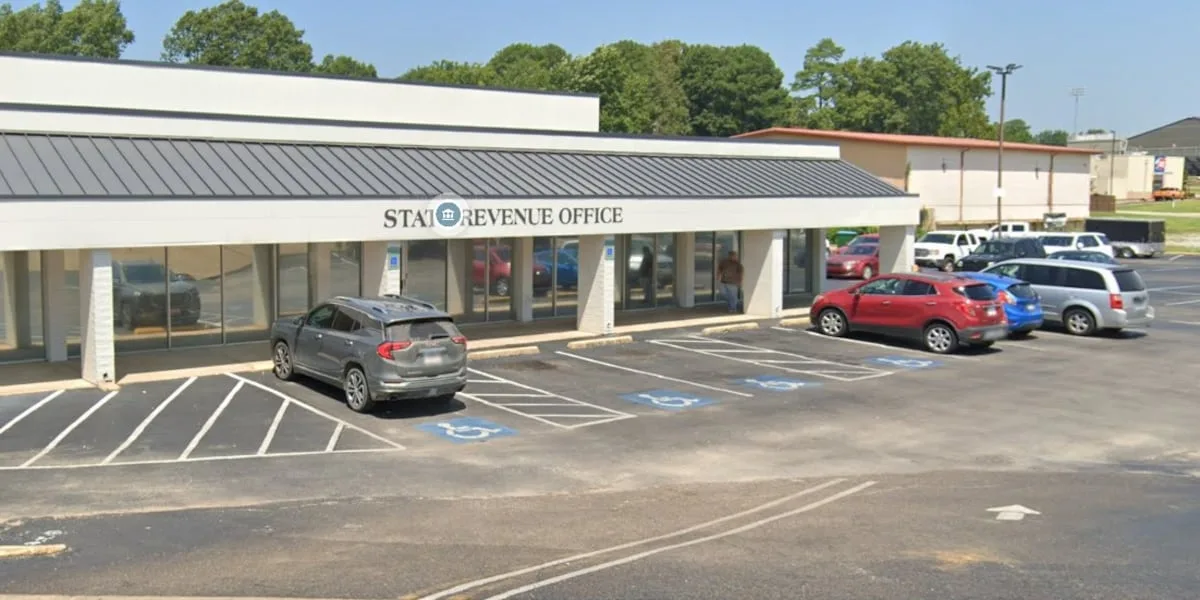
The tax is due when you apply for the title and registration. You can't finance it through a loan like you might at a dealership. You pay out of pocket at the DFA office or an authorized tag agent.
That means you need to bring the full tax amount plus title fees when you go.
Use the DFA's online SPV lookup or call your local revenue office to get the number before you buy. Multiply by your combined rate. The result is what you'll owe, no surprises.
Standard Presumptive Value vs. Purchase Price – Which One Does Arkansas Use?
This is the most important concept to understand. Arkansas uses a system called Standard Presumptive Value (SPV). The DFA maintains a database of estimated market values for most used cars, trucks, and SUVs.
When you apply for a title, they compare your reported purchase price to the SPV.
Here's how it works in practice:
- If your purchase price is higher than the SPV, the state taxes you on the purchase price. That's fair.
- If the SPV is higher than your purchase price, the state taxes you on the SPV. That's where people get tripped up.
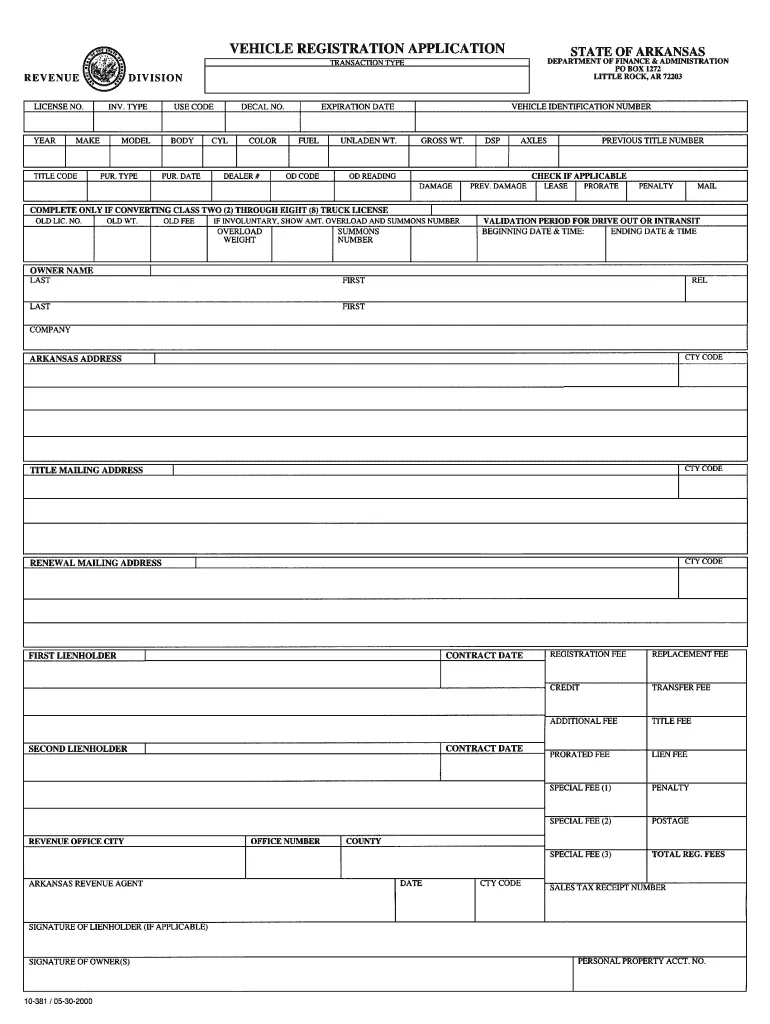
The SPV isn't perfect. It's based on wholesale auction data and similar sales, but it doesn't account for damage, high mileage, or mechanical issues. If you bought a car with a salvage title or one that needs major repairs, the SPV might be too high.
In those cases, you can request an appraisal or provide documentation to try to lower the taxable amount. It's not guaranteed, but it's worth trying.
For most clean-titled, average-mileage vehicles, expect the SPV to be close to what you paid, maybe a bit higher. For older cars with high miles, the SPV might be lower than the actual purchase price, which benefits you.
Never assume your purchase price is the taxable amount. Always check the SPV. You can ask the seller to check with their local DFA office or use the state's online vehicle valuation tool if available.
Some tag agents will also run the number for you before you buy.
Step-by-Step: How to Pay Sales Tax on a Private-Party Used Car in Arkansas
The process itself is straightforward. You handle everything at the DFA or a licensed private tag agent. Here's a step-by-step walkthrough.
Step 1: Get the Right Paperwork from the Seller
You need three main documents to prove the sale and process the tax:
- A bill of sale signed by both buyer and seller. It should list the date, names, addresses, vehicle description (VIN, make, model, year), and the actual purchase price.
- The Arkansas title signed over by the seller. The seller must complete the odometer disclosure section on the back if the vehicle is less than 10 years old.
- Valid identification for you (driver's license or state ID).
Make sure the bill of sale is accurate and honest. If the DFA finds a mismatch between the price you report and the SPV, they'll use the higher number. Don't try to lowball the price on paper.
It rarely saves you money and can cause legal trouble.
If the seller doesn't have the title, don't proceed. You cannot register the vehicle without it. For lost titles, the seller needs to apply for a duplicate before you buy.
Step 2: Look Up the Standard Presumptive Value
Before you go to the DFA, find out the SPV. You can do this by:
- Calling your local DFA revenue office and giving them the VIN
- Visiting the DFA's motor vehicle website (look for the vehicle valuation page)
- Asking an authorized tag agent to run the number
Write down the SPV amount. You'll use it in the next step.
Step 3: Calculate Your Total Tax (State + Local)
Take the higher of your purchase price or the SPV. Multiply that by 6.5% for the state portion. Then add your county's local tax rate.
You can find your county rate on the DFA's local tax rate table or by searching "[your county] Arkansas sales tax rate."
Add the two together. That's your total tax due. Also budget for the title fee ($10) and registration fee (typically $17 to $30 depending on vehicle weight).
Step 4: Visit the DFA or a Tag Agent Within 30 Days
You have 30 days from the date of purchase to apply for the title and pay the tax. If you go past that window, you'll face late fees. The penalty is usually $10 plus possible interest.
More importantly, driving an unregistered vehicle is illegal.
Bring your documents, the calculated tax amount (cash or check; some offices take credit cards with a fee), and the title and registration fees.
Step 5: Pay and Get Your Title and Plates
At the office, you'll submit the paperwork and pay. The DFA will issue a new title in your name (mailed to you in a few weeks) and give you license plates right there if you're registering for the first time. If you're transferring plates from another vehicle, they'll handle that too.
The whole process takes about 15 to 30 minutes if you have everything ready. No appointment is usually needed, but some busy offices recommend checking in advance.
What Counts as the "Purchase Price" (and What Gets You in Trouble)
The purchase price is the amount you actually paid for the vehicle. It should include cash, trade-in value, or any combination. But there are a few nuances that trip people up.
Trade-ins: If you traded in another vehicle, the tax is calculated only on the difference. For example, you trade in a car worth $5,000 and buy a used truck for $12,000. You pay tax on $7,000.
This is called the trade-in tax credit, and it's allowed in Arkansas.
Gifts: If a family member gives you the car as a gift (parent, child, sibling, grandparent, grandchild), you may not owe any sales tax. You'll need to fill out a gift affidavit and provide documentation of the relationship. The DFA is strict about this.
It's not a gift if you paid anything in return.
Out-of-state purchases: If you bought the car in another state and already paid sales tax there, Arkansas may give you a credit for that tax. You'll need to provide proof of payment. If the other state's rate was lower, you pay the difference.
If it was higher, you don't owe anything extra.
What gets you in trouble: Lying about the purchase price is the fastest way to get audited. The DFA cross-references with insurance claims and dealer records. If you claim you bought a 2020 SUV for $3,000, that's going to raise red flags.
The penalty for falsifying information can include fines and even criminal charges.
Keep your bill of sale honest. If you negotiate a great deal, use the real price. If the seller gives you a discount for cash, record that too.
The SPV system exists because people used to write down $500 for a $10,000 car. Don't be that person.
Local Tax Rates by County – Why Your Total Varies
The state rate of 6.5% is only half the picture. Every Arkansas county adds its own local sales tax on top. Combined rates range from about 7% in counties with no extra tax up to 9.5% or more in high-tax areas like Pulaski County (Little Rock) or Washington County (Fayetteville).
Here's how the local tax works. When you pay at the DFA or tag agent, they calculate the total based on the county where you live, not where you bought the car. That means if you live in a high-tax county, you pay that rate even if you bought the vehicle from a seller in a low-tax county.
A few examples of combined rates around the state:
| County | Local Rate | Total Rate (state + local) |
|---|---|---|
| Pulaski (Little Rock) | 1.5% | 8.0% |
| Washington (Fayetteville) | 1.75% | 8.25% |
| Benton (Rogers) | 1.0% | 7.5% |
| Rural county with no extra | 0% | 6.5% |
You can check your exact county rate on the DFA website under local sales tax tables. Factor this into your budget before you walk into the office. That half percent difference adds up on a $20,000 car.
When You Don't Have to Pay Sales Tax (Gifts, Family, and Out-of-State Exceptions)
Not every private-party purchase triggers a tax bill. Arkansas gives you a few clear exemptions.
Gifts between immediate family members: If a parent gives a car to a child, a sibling to a sibling, or a grandparent to a grandchild, no sales tax is due. You'll need to fill out a gift affidavit at the DFA and provide proof of relationship (birth certificates or similar). No money can change hands.
If you paid even a dollar, it's a sale, not a gift.
Vehicles already taxed in another state: If you bought the car in another state and paid that state's sales tax, Arkansas gives you a credit. You'll need to show proof of payment (a receipt or tax document). If the other state's rate was equal to or higher than Arkansas's combined rate, you owe nothing.
If it was lower, you pay only the difference.
Out-of-state relocators: If you move to Arkansas and already owned the vehicle, you don't pay sales tax on it. You just pay the standard title and registration fees. This only applies if you owned the vehicle before becoming an Arkansas resident.
Trade-in credit: Not an exemption, but a reduction. You only pay tax on the price difference after trade-in. This works for private-party trades too, as long as you document the trade properly.
Common Mistakes That Cost Arkansas Buyers Money and Headaches
These are the four biggest pitfalls our research found among private-party buyers in Arkansas. Avoid them and you'll save time, money, and legal hassle.
Mistake 1: Trying to "Save" Tax by Undeclaring the Price
Writing a lower number on the bill of sale to reduce tax is both common and dangerous. The SPV system catches most attempts. If the DFA sees a $3,000 price on a car worth $10,000, they use the SPV.
You still pay the higher amount. Worse, you could face a penalty for filing a false statement. The small chance of saving a few hundred dollars isn't worth the risk.
Mistake 2: Missing the 30-Day Window
You have 30 days from the purchase date to apply for the title and pay the tax. Miss that deadline and you owe a $10 late fee plus possible interest. More importantly, you're driving illegally.
If you get pulled over, you could face a ticket and more fines. Mark your calendar the day you buy the car.
Mistake 3: Not Factoring in Local Tax
Many buyers budget only for the 6.5% state rate. Then they show up at the DFA and owe an extra 1.5% or 2%. On a $15,000 car, that's an unexpected $225 to $300.
Check your county rate beforehand and add it to your savings.
Mistake 4: Assuming the Seller Handles the Tax
In a private-party sale, the buyer is responsible for paying the tax. The seller has nothing to do with it. Don't hand your money to the seller thinking they'll handle the paperwork.
You go to the DFA yourself, bring the documents, and pay directly. The seller just signs the title and bill of sale.
Real Numbers: What Three Different Used Car Buys Actually Cost in Tax
Let's look at three real-world scenarios so you can see the math in action.
Scenario 1: You buy a 2017 Honda Civic from a private seller in Conway (Faulkner County) for $14,000. The SPV is $14,200. Your combined rate is 7.5% (6.5% state + 1.0% local).
Tax is on $14,200 (the higher number). Total tax: $1,065. Plus $10 title fee and $25 registration.
Total out-of-pocket: $1,100.
Scenario 2: You buy a 2020 Ford F-150 from a family friend in Little Rock (Pulaski County) for $28,000. The SPV is $27,500. Since your purchase price is higher, tax is on $28,000.
Combined rate is 8.0%. Tax: $2,240. Add $10 title and $30 registration.
Total: $2,280.
Scenario 3: Your grandmother gives you her 2015 Toyota Camry as a gift. No money changes hands. You fill out a gift affidavit.
SPV doesn't matter. You pay $0 in sales tax. Just the $10 title fee and $25 registration.
Total: $35.
These numbers show why checking the SPV and knowing your local rate matters. A few hundred dollars can swing either way.
What If the Seller Doesn't Have a Title or Odometer Statement?
This is a red flag. If the seller cannot produce the Arkansas title, do not buy the vehicle. Without a title, you cannot register the car.
The seller needs to apply for a duplicate title from the DFA before the sale can proceed. That process takes a few days and costs about $10. A legitimate seller will handle this.
If the vehicle is less than 10 years old, the seller must also provide an odometer disclosure statement. This is usually on the back of the title. If it's missing or incomplete, ask the seller to fill it out.
Federal law requires it. You can also use a separate Odometer Disclosure Statement form (Form 10-361) available from the DFA.
If the seller refuses to provide proper documentation, walk away. The risk of buying a stolen vehicle or one with a lien is too high. Protect yourself with a clean title and complete paperwork.
When to Talk to a Professional or the DFA Directly
Most private-party purchases are straightforward. But if you run into a salvage title, a vehicle with a lien, or a seller who can't produce proper documents, call the DFA's Motor Vehicle Division. They can walk you through the exceptions.
You can also consult a local tag agent who handles title work daily. They charge a small service fee but save you headaches.
If the SPV seems wildly off for your car's condition, ask about an appraisal. The DFA may accept a certified appraisal to lower the taxable value. This is rare but worth pursuing for high-value or damaged vehicles.
The Bottom Line – Your Cheat Sheet for a Clean, Legal Purchase
Here's what to remember. Check the SPV before you buy. Know your county's total tax rate.
Budget for the full amount plus fees. Get a signed bill of sale and the original title. Pay within 30 days.
Keep all paperwork.
Do not lie about the price. Do not skip the odometer disclosure. Do not assume a handshake deal avoids tax.
Follow these steps and you'll drive away with a legal title and no surprise bills.
Frequently Asked Questions
Do I pay sales tax on a used car I buy from a family member in Arkansas?
Yes, unless it's a gift between immediate family members (parent, child, sibling, grandparent, grandchild). Gifts require a signed affidavit and proof of relationship. No money can change hands.
How do I find the Standard Presumptive Value for a car in Arkansas?
Call your local DFA revenue office with the VIN. Some tag agents can also look it up. You can also check the DFA's online vehicle valuation tool if available.
What happens if I don't pay the sales tax within 30 days?
You'll owe a $10 late fee plus possible interest. More importantly, driving without a valid registration is illegal. You can be ticketed.
Can I get a refund if I overpaid sales tax on a used car in Arkansas?
It's difficult but possible. You'd need to file a refund claim with the DFA and provide proof the SPV was too high. An appraisal or documentation of damage helps.
Success is not guaranteed.
Do I owe tax if I buy a car from out of state and bring it to Arkansas?
You may owe the difference if Arkansas's tax rate is higher than the state where you bought it. You get a credit for tax already paid. Bring proof of that payment to the DFA.