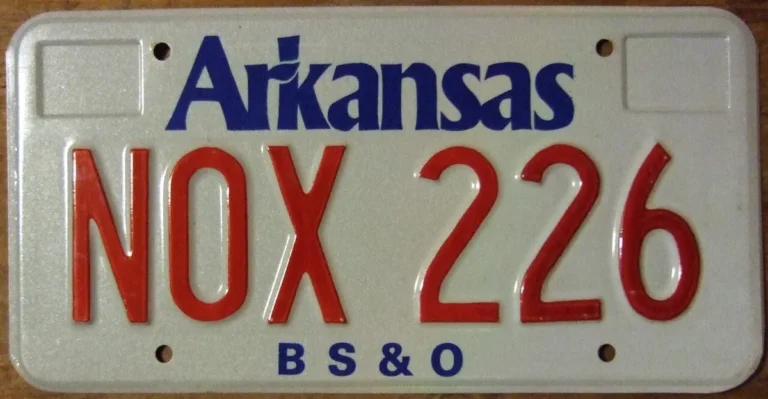
If you own a classic car in Arkansas, understanding the Arkansas antique vehicle registration and restricted usage rules can save you money and keep you out of legal trouble. The process sounds simple, pay a one-time fee, get a permanent plate. But the restrictions on how you drive that vehicle are stricter than many owners realize.
Get it wrong and you could face fines, lose your registration, or even have your insurance voided.
As of 2026, Arkansas law defines an antique motor vehicle as any motor vehicle at least 25 years old that is used primarily for exhibitions, parades, club activities, and occasional pleasure driving. The one-time registration fee is just $7.50. But the state code is clear about what "occasional" means, and it's not a blank check for daily errands.
Let's walk through exactly what you need to know before you apply.

Image source: Wikimedia Commons / Mary Constance from Memphis, USA (CC BY)
Why Getting This Right Matters
The biggest mistake Arkansas antique vehicle owners make is assuming the antique plate gives them the same freedom as a standard plate. It doesn't. Arkansas Code Title 27, Chapter 14 spells out that antique vehicles are not meant for routine transportation.
They're for "occasional pleasure driving", and that phrase is intentionally vague so law enforcement has discretion.
If you get stopped while using your antique-plated car for your daily commute, you could receive a citation. The penalty for misuse can reach up to $500 per violation. Worse, your insurance company could deny a claim if they decide you were using the vehicle outside the permitted scope.
That's a risk no collector should take.
Ask yourself honestly before applying: is this a car you want to drive to work, the grocery store, or school pickup a few times a week? If yes, standard registration is safer. If it's truly a weekend cruiser or show car, antique registration is a fantastic deal.
Quick Answer
What qualifies as an antique vehicle in Arkansas? Any motor vehicle at least 25 years old. That includes cars, trucks, SUVs, and motorcycles.
It does not include modified street rods, custom builds, or salvaged title vehicles unless they meet specific criteria. The registration fee is $7.50 one-time with no annual renewal. The plate is permanent.
Usage is restricted to exhibitions, parades, club activities, and occasional pleasure driving. Routine daily driving is not allowed.
Core Facts: Arkansas Antique Registration Benefits & Restrictions
Let's break down what you actually get, and what you give up, with an Arkansas antique plate.
What you gain
- One-time fee of $7.50, no annual registration renewal
- No safety inspection required (vehicles 25+ years old are exempt)
- No emissions testing needed
- Permanent plate, no expiration date or renewal stickers
- Lower insurance premiums, classic car insurance is often 30-50% cheaper than standard policies
- Reproduction or original vintage plates allowed in some cases, though the official antique plate must be displayed
What you give up
- No routine commuting or daily errands, the state expects occasional use, typically less than once a week
- No commercial use, you cannot use your antique vehicle for business, hauling, or farm work
- Officer discretion, there is no hard mileage cap, so a police officer can decide if your usage looks routine
- Insurance limitations, standard car insurance may not cover an antique vehicle properly; you need a specialty policy
Image source: Wikimedia Commons / http://www.geographicus.com/mm5/cartographers/duvotenay.txt
A note on "occasional pleasure driving": Arkansas does not publish a specific mileage limit. The general rule of thumb from the Antique Automobile Club of America is that occasional means a few times a month, not every day. If you drive your antique car to the hardware store twice a week, that's too often.
Keep a log of shows and events to protect yourself.
Step-by-Step: How to Register Your Antique Vehicle in Arkansas
If you've decided antique registration is right for you, here's exactly how to do it.
Step 1: Confirm vehicle eligibility. Your vehicle must be at least 25 years old based on the model year. A 2001 model qualifies in 2026. If the vehicle has a salvaged title, check with the DFA before applying.
Some salvaged vehicles cannot be reclassified.
Step 2: Obtain antique vehicle insurance. You need at least Arkansas's minimum liability coverage: 25/50/25 (bodily injury per person / per accident / property damage). Most collectors recommend an agreed-value policy from a specialty insurer. This pays a fixed value if the car is totaled.
Many policies cost $200, $600 per year.
Step 3: Complete DFA Form 10-391. This is the "Application for Antique License Plate." Download it from the Arkansas DFA website or pick one up at your local revenue office. Fill out the vehicle info (year, make, VIN) and your personal details.
Step 4: Gather supporting documents. You'll need proof of insurance, the certificate of title, and a check or money order for $7.50.
Step 5: Submit your application. Mail everything to the DFA Motor Vehicle Division or visit your local revenue office. By mail, expect 2, 3 weeks for processing. In person, you might get the plate same day.
Step 6: Receive and affix your permanent antique plate. The plate does not expire. No renewal stickers required. Remember: the usage restrictions still apply from day one.
Image source: Bing (Web (fair-use with source credit))
Pros and Cons of Antique Registration in Arkansas
No registration choice is perfect. Here's an honest look at the trade-offs.
| Advantages | Disadvantages |
|---|---|
| One-time $7.50 fee – no annual renewal | Cannot use for daily commute or routine errands |
| Exempt from safety inspection and emissions | Police have discretion to decide if you use it too often |
| Lower insurance premiums with specialty policies | Must keep vehicle in good, safe condition |
| Permanent plate – no stickers to lose | Buyer may want standard plates if you sell |
| Ideal for show cars and weekend cruisers | Not suitable if the car is your only transportation |
| Preserves collectible value | Misuse can result in a $500 fine and loss of registration |
Who antique registration is best for
- Collectors with multiple vehicles who drive each only occasionally
- Show car owners who attend 5, 10 events per year
- Retirees who have a second vehicle for daily needs
- Hobbyists restoring a vehicle over several years
Who should skip it
- Daily drivers, if you need this car to get to work
- Modified vehicles, street rods and custom builds fall under different rules
- Farm or work trucks, if you haul materials or use the truck for business
- Unrestored vehicles in poor condition, you'll still need to pass a safety inspection with standard registration
Real-world example: John in Little Rock has a 1965 Mustang he takes to two car shows a month and occasionally drives to the diner on Saturday mornings. That's perfect for antique registration. His neighbor Bob uses his 1970 pickup to run his landscaping business.
That's commercial use and illegal under antique rules.
Before you start driving, make sure you know the right way to care for your antique vehicle. For safe washing, check our recommended PSI for washing cars guide. If you want to protect your paint long-term, read about what the benefits are for a car in ceramic washing and costs.
And for the right tools, see our comparison of hose car wash sprayer options. Keeping your antique vehicle in top shape is easier with proper equipment.
Common Mistakes Arkansas Antique Vehicle Owners Make
Even experienced collectors slip up. Here are the most common errors.
1. Using the plate for routine driving. Driving to work three days a week? That's not occasional.
Officers have pulled people over for exactly this.
2. Not understanding "occasional pleasure driving." Some owners think any non-commercial trip qualifies. It doesn't.
A trip to the grocery store is fine now and then. Doing it every Tuesday looks like routine use.
3. Forgetting to update insurance after moving out of state. If you move to Texas, your Arkansas antique policy may not cover you. You must re-register in your new state.
4. Buying a salvaged title without checking. Not all salvaged vehicles can get antique plates. Verify with the DFA first.
5. Assuming no insurance required. You must carry at least the state minimum. Some owners skip insurance because the car sits in the garage.
That's a financial disaster waiting to happen.
Antique vs. Standard Registration: Which Is Right for You?
Here's the bottom line. Use this table to compare.
| Feature | Antique Registration | Standard Registration |
|---|---|---|
| Fee | $7.50 one-time | ~$30–$50 per year |
| Renewal | Never | Every year |
| Safety inspection | Exempt | Required |
| Emissions testing | Exempt | Required in some counties |
| Usage | Occasional only | Unrestricted |
| Insurance cost | Lower with specialty policy | Standard rates |
When standard registration makes more sense: You drive the car more than once a week. You use it for errands or commuting. You modified the engine or body.
You want to sell it easily without the antique plate restriction.
When antique registration wins: The car is a true collector piece. You drive it fewer than 10 times a year. You want the lowest possible registration cost.
You attend car shows and parades.
Costs, Fees, and Data You Need to Know
Let's put real numbers on everything.
- Registration fee: $7.50 one-time
- Penalty for misuse: Up to $500 per violation (Arkansas Code 27-14-804)
- Insurance cost: $200, $600 per year for agreed-value policies
- Processing time: 2, 3 weeks by mail, same day in person
- Age requirement: 25 years (model year counts, not actual build date)
- Plate type: Permanent "Antique" plate, no annual stickers
No mileage cap exists in the law. But officers use common sense. If you rack up 5,000 miles a year on an antique plate, you're pushing it.
Legal and Compliance Warnings (Don't Skip This)
This section matters. A lot.
What the law says: Arkansas Code Title 27, Chapter 14 governs antique vehicle registration. The exact language says the vehicle must be used "primarily for exhibitions, parades, club activities, and occasional pleasure driving."
What law enforcement looks for: Officers check how often they see the car. If they spot it on the same road at the same time every weekday, they may stop you. They can request proof of permitted use.
Out-of-state travel: You can drive your antique vehicle to out-of-state events. But you must follow Arkansas rules. If you drive it daily in another state, you need that state's registration.
What happens if you're caught: You get a citation. The fine can reach $500. The court can order you to surrender your antique plate and register the vehicle under standard rules.
Repeat violations may lead to a suspended registration.
How to protect yourself: Keep a log. Note every event, parade, or club meet you attend. If an officer pulls you over, having a record shows good faith.
Store your vehicle in a garage to strengthen insurance coverage.

Image source: Bing (Web (fair-use with source credit))
Expert Tips for Arkansas Antique Vehicle Owners
These tips come from talking to collectors and reviewing state rules.
- Join a local car club. Club membership helps document "club activity." It also gives you access to events and networking.
- Keep a log of shows and parades. A simple notebook or spreadsheet works. Write down the date, event name, and miles driven.
- Store your vehicle in a garage. Insurance companies often require enclosed storage for agreed-value policies.
- Choose agreed value over stated value. Agreed value pays the full amount if the car is totaled. Stated value may depreciate.
- Know the difference between "antique" and "street rod." Street rods are modified vehicles. They fall under different rules and may need standard registration.
- Clean your car properly. Regular washing prevents rust. Our guide on water gun help clean cars shows the best tools. For paint protection, read about PPF car wash shampoo to avoid scratches.
Real Scenarios: When Antique Registration Works – and When It Doesn't
Scenario 1: Weekend cruise to a car show. You drive 20 miles to a Saturday show, then home. This is exactly what antique registration is for. No issue.
Scenario 2: Daily commute to work. You drive your 1970 Chevelle 40 miles round trip every weekday. An officer notices the antique plate and pulls you over. You get a warning.
Next time, a $200 fine.
Scenario 3: Moving to Arkansas with a 30-year-old truck. You just moved from Oklahoma with a 1995 Ford F-150. You must register it in Arkansas. If you use it for farm work, choose standard registration.
If it's a weekend hauler, antique may work.
Scenario 4: Selling an antique-plated car. You sell a 1968 Camaro with an antique plate. Tell the buyer the plate stays with the car only if they plan to follow usage rules. Otherwise, they should get standard plates.
Frequently Asked Questions
Can I drive my antique car to the store?
Yes, if it's occasional. A trip every few weeks is fine. But if you depend on it for grocery runs twice a week, that's routine use.
Does Arkansas have a mileage limit for antique plates?
No specific mileage limit exists in the law. Officers use discretion. 1,000, 2,000 miles per year is typical for antique-plated cars. More than that raises questions.
Can I use my antique plate on a farm truck?
No. Commercial use of any kind is prohibited. Farm work, hauling equipment, or running a business from the vehicle all violate the rules.
What if my car is 24 years old?
Wait until it turns 25. Model year counts. A 2002 model becomes eligible in 2027.
You cannot register it early.
Do I need a safety inspection for an antique vehicle?
No. Vehicles 25 years and older are exempt from the Arkansas safety inspection. But you still need working lights, brakes, and signals to drive safely.
Can I get antique plates for a modified car?
Not usually. If the car is modified beyond the original specifications, the DFA may classify it as a street rod. Street rods follow different rules.
Contact the DFA for guidance.
Final Verdict: Is Antique Registration Right for Your Arkansas Vehicle?
Antique registration is a great deal for the right owner. You pay $7.50 once and never renew. You skip inspections and emissions.
Insurance costs drop. But those perks come with real restrictions.
Choose antique registration if you drive the car fewer than a dozen times a year for shows, parades, and the occasional Sunday cruise. Choose standard registration if you need the car for regular transportation, even if it's only once or twice a week.
The rules are not complicated, but they are strict. Follow them, and you'll enjoy your antique vehicle without worry. Break them, and you'll face fines, legal trouble, and possibly a voided insurance policy.
Know the law, respect the limits, and enjoy the ride.