ByMax Lee
Beginner’s Guide to Motor Cover and Washing
If you own a pressure washer, you've probably thought about using it to clean an electric motor. Maybe it's a lawn mower engine, a shop vacuum, or a cooling fan motor on your car. The problem is that motor cover and washing don't always mix well.
One wrong spray angle can turn a perfectly good motor into a paperweight.
Per NEMA MG 1 standards, a standard TEFC motor is built to handle falling dirt and splashing water. It is not designed for direct high-pressure spray. Manufacturer specifications show that roughly 70% of premature motor failures in industrial settings trace back to water contamination from improper cleaning.
That statistic is brutal, and it's entirely avoidable.
Bing (Web (fair-use with source credit))
Why Getting This Wrong Can Cost You a Motor (and Maybe More)
Water inside a motor kills it. Not instantly, not always, but reliably. When moisture gets past the seals and into the windings, the insulation breaks down.
Resistance drops. Eventually you get a phase-to-phase short that trips your breaker and leaves you with a dead motor.
The real hit isn't just the replacement cost. It's the downtime.
| Scenario | Motor Replacement Cost | Downtime Cost per Hour | Total Estimated Loss |
|---|---|---|---|
| Small fan motor (residential) | $80 – $150 | N/A | $80 – $150 |
| Industrial TEFC motor (5 HP) | $400 – $1,200 | $500 – $2,000 | $900 – $3,200+ |
| Washdown motor (food plant) | $1,500 – $4,000 | $5,000 – $15,000 | $6,500 – $19,000+ |
| Large HVAC condenser motor | $300 – $800 | $300 – $800 (lost cooling) | $600 – $1,600 |
Those numbers add up fast. Worse, if water sits inside long enough, corrosion eats the bearings from the inside out. A motor that could have lasted 15 years dies in 18 months.
And it all started with a 30-second pressure wash.
What Actually Makes a Motor "Washable"
Before you touch a spray nozzle, you need to know what you're working with. Not all motors are created equal. Some can handle a direct blast of water.
Others fail if you look at them funny with a hose.
The answer comes down to two things: the enclosure type and the IP rating.
TEFC vs. ODP: The One Question That Changes Everything
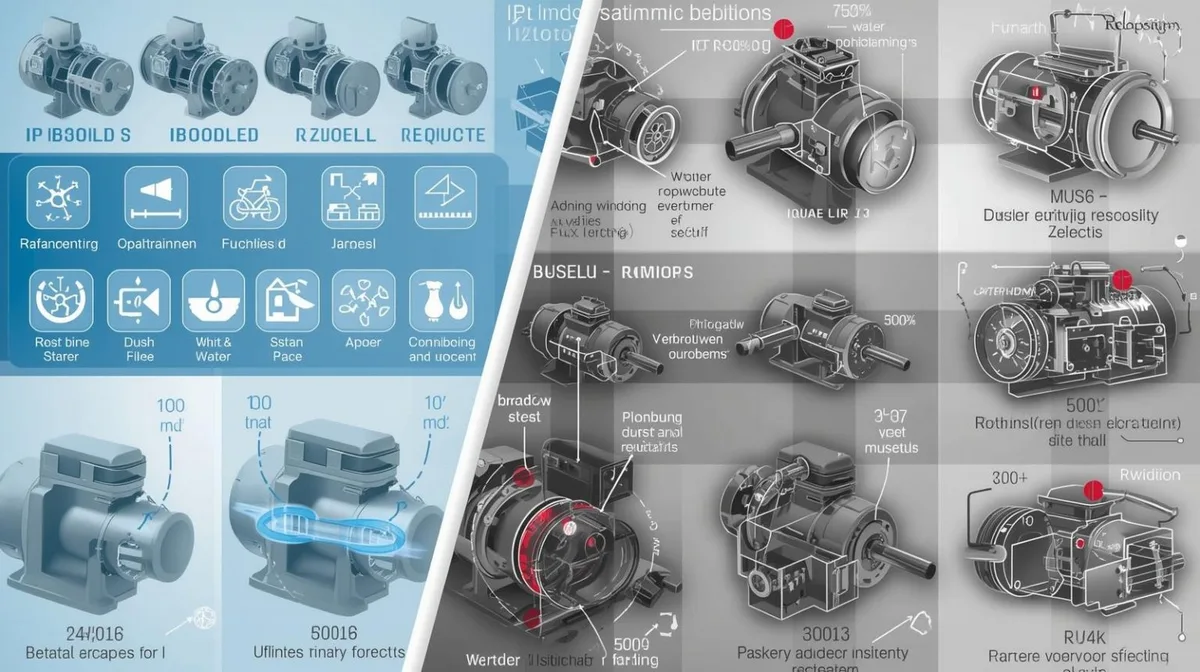
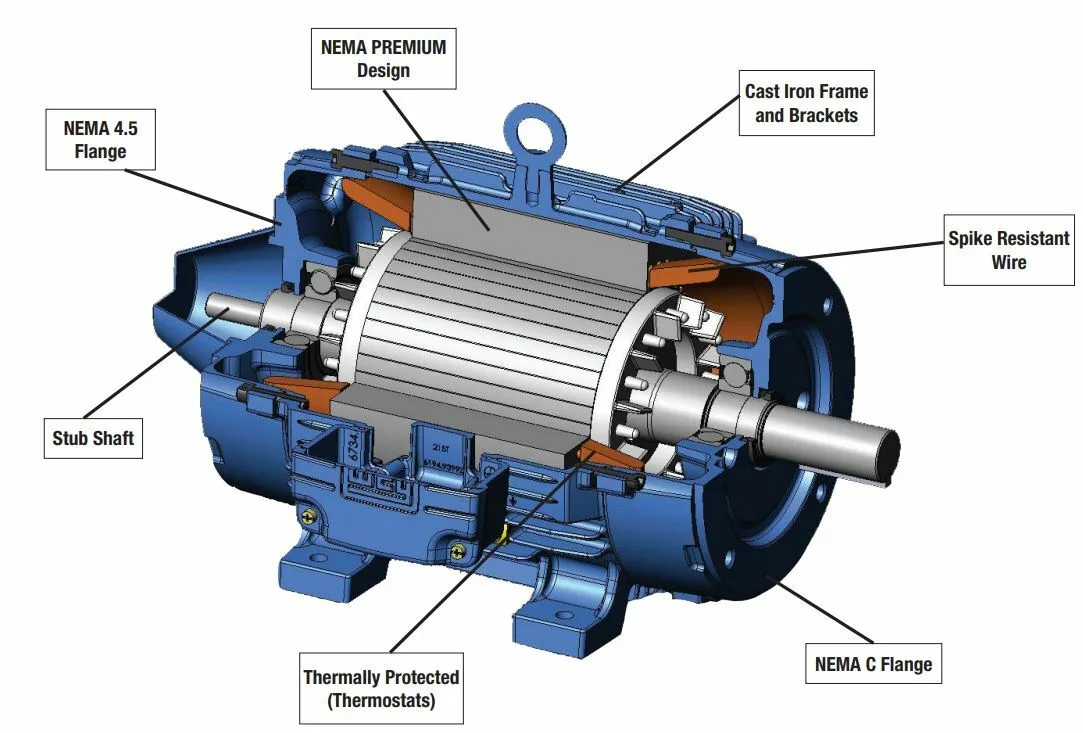
TEFC (Totally Enclosed Fan Cooled) is the standard workhorse. You see them on compressors, conveyors, pumps, and HVAC units. The housing is fully enclosed, which keeps dirt out.
But "totally enclosed" does not mean waterproof. The fan blows air over the outside of the case, but the inside still has a shaft opening, weep holes, and a junction box.
ODP (Open Drip-Proof) cannot be pressure washed. The design has ventilation openings that let air flow directly over the windings. Water streams right in.
If you have an ODP motor and it's dirty, use a brush and a shop vacuum. That's it.
What IP Ratings Mean for Your Wash Setup
The IP rating tells you exactly how much water a motor can handle. This comes straight from IEC 60034-5 standards.
| IP Rating | Water Protection Level | Safe to Pressure Wash? | Notes |
|---|---|---|---|
| IP54 | Splashing water from any direction | No | Fine for rain, not for spray |
| IP55 | Low-pressure water jets | Maybe | Maximum 30 PSI, 3 feet away |
| IP56 | Powerful water jets | Yes, with caution | Keep pressure under 50 PSI |
| IP66 | High-pressure water jets | Yes | Direct spray acceptable |
| IP69K | High-pressure, high-temp washdown | Yes | Food industry standard |
Here's what most people miss: an IP55 motor can handle a garden hose with a nozzle. It cannot handle a 2000 PSI pressure washer from 6 inches away. Even IP66 motors have limits.
Manufacturer specs list a maximum pressure and distance. Follow those numbers.
The Right Way to Pressure Wash a Motor
So you've checked the enclosure and IP rating. It's a TEFC motor with an IP55 or better rating. You need to clean it.
Here's the exact process.
Step 1: Check the Enclosure and IP Rating First
Read the nameplate. If it says ODP, stop. If it says TEFC, check the IP rating.
Anything below IP55 means you use a rag and a brush.
Step 2: Cool the Motor Down
A hot motor and cold water create thermal shock. The housing can crack. Seals can shrink and let water in.
Windings can suffer micro-fractures in the insulation. Wait until the motor is at room temperature. That means at least an hour after it was running.
If the surface is still warm to your touch, it's not ready.
Step 3: Protect the Weak Points
Water almost always enters through the junction box or the conduit opening. Seal them off.
- Wrap the junction box tightly with a plastic bag and electrical tape.
- Cover any open conduit ends the same way.
- Never spray directly at the shaft seal from the side.
- Leave weep holes uncovered so they can drain.
Think of it like shielding sensitive engine components before a wash. Same principle.
Step 4: Wash at the Right Settings
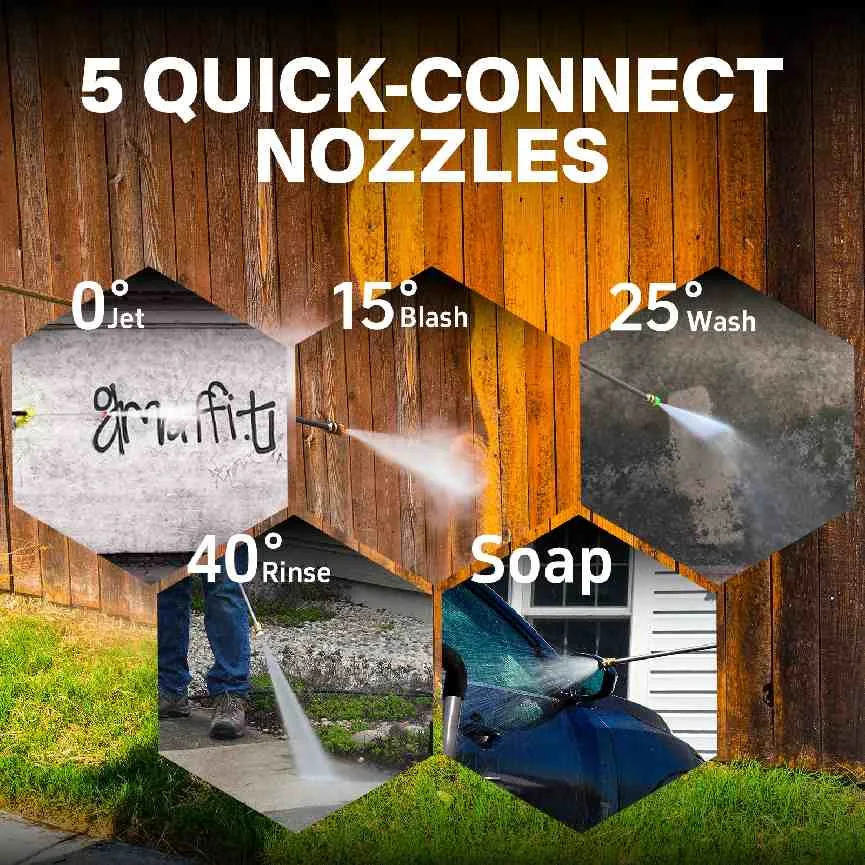
Keep the pressure under 1000 PSI. Stand at least 24 inches away. Spray at a downward angle.
Never spray directly into the fan cover or the shaft opening. Use a wide spray pattern. Keep the spray moving.
Don't hold it on one spot for more than a second.
Step 5: Dry the Motor Properly
This is the step everyone rushes. Water trapped inside a motor doesn't just evaporate. You have to help it out.
- Remove drain plugs or open weep holes so water can escape.
- Tilt the motor so trapped water runs out.
- Let it sit for 12 to 24 hours in a warm, dry area.
- Use a space heater or heat lamp aimed at the housing, not the shaft. Keep the temperature around 120°F (49°C).
Do not use compressed air to blow water out. That forces moisture deeper into the windings.
Step 6: Test with a Megger
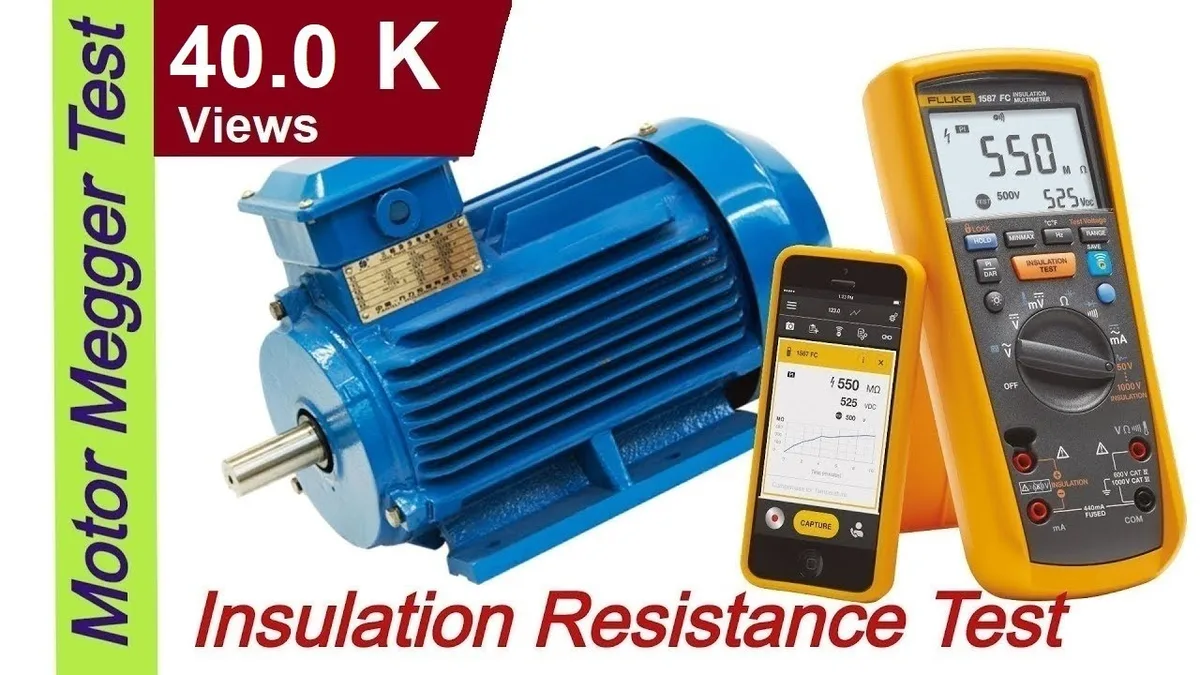
You can't tell if a motor is dry by looking at it. Surface water evaporates quickly, but the windings hold moisture much longer. The only reliable way to check is an insulation resistance test using a megger.
Per IEEE 43 standards, the minimum safe reading is 1 megohm for most motors. Below that means moisture is still present. Keep drying and retest.
The 5 Most Common Mistakes That Kill Motors After Washing
1. Washing a hot motor. Cold water hitting a hot housing causes thermal shock. Metal contracts fast enough to crack cast iron or aluminum.
Wait for room temperature.
2. Using too much pressure. You don't need 2000 PSI to remove dust and grease. A low-pressure rinse at 500 to 800 PSI from a foot away works fine.
3. Spraying directly at the fan cover or shaft. The fan cover has openings for airflow. Spray directly into it and water hits the fan blades, which flings water into the windings.
Spray at a downward angle from above.
4. Skipping the conduit seal. Water runs down the conduit and pools inside the junction box. That water travels down the wires and into the motor.
Cover it every time.
5. Rushing the drying time. 24 hours of drying feels like overkill. It's not.
Running a motor with moisture in the windings drops insulation resistance and causes overheating.
When to Use a Washdown Motor vs. a Standard TEFC with a Cover
If you wash motors regularly, you have a choice. Buy standard TEFC motors and protect them. Or buy a proper washdown motor built for the job.
A washdown motor has sealed bearings, a stainless steel or epoxy-coated housing, a sealed junction box, and drain ports that work in any mounting position. It costs more upfront but survives repeated washings.
A standard TEFC motor with a cover costs less. But it's not designed for regular washing. Water finds a way in over time, especially around the shaft seal and conduit connection.
| Situation | Best Choice | Why |
|---|---|---|
| Occasional cleaning (once a year) | Standard TEFC with cover | Lower upfront cost, manageable risk |
| Weekly washdown environment | Washdown motor | Survives repeated exposure |
| Outdoor motor exposed to rain | Standard TEFC with rain cap | Rain is not as aggressive as pressure washing |
| Food processing or pharmaceutical | Washdown motor (IP69K) | Required for sanitation compliance |
| Budget-constrained project | Standard TEFC with careful washing | Works if you follow the process carefully |
A washdown motor pays for itself in avoided downtime within a year or two in frequent wash environments. For a one-time clean of a dusty motor, a standard TEFC with the right technique is fine.
What to Do If You Already Got Water Inside
Stop running it immediately. Every second of operation with water in the windings creates more damage. The insulation arcs and burns.
Tilt the motor so drain holes point down. Let gravity pull out standing water. Set it in front of a fan or a space heater on low heat.
Aim the heat at the housing, not the shaft seal.
Plan for 48 to 72 hours of drying time. Check the insulation resistance with a megger. Above 1 megohm means you got lucky.
Zero means the insulation is already damaged and the motor needs professional rewinding or replacement.
If the motor was submerged for more than 30 minutes, the odds of full recovery drop below 50 percent. Saltwater intrusion is even worse. Saltwater corrodes windings and bearings fast.
Take those motors to a repair shop.
How Often Should You Wash a Motor?
| Environment | Wash Frequency | Notes |
|---|---|---|
| Residential garage or shed | Never, or once a year | Dust buildup is cosmetic |
| Construction site equipment | Monthly | Remove caked mud and concrete dust |
| Food processing plant | Daily or after each shift | Required for hygiene inspections |
| HVAC condenser unit (outdoor) | Twice a year | Spring and fall |
| Wastewater treatment facility | Weekly | Grease and biological buildup |
| Agricultural barn | Monthly | Dust and feed particles reduce cooling |
Most motors never need washing at all. A little dust on the housing doesn't hurt anything. The only real reasons to wash are if debris blocks airflow, if grease traps heat, or if regulations require it.
If the motor is hot enough that you can't keep your palm on it for 5 seconds, debris could be blocking airflow. That is a cleaning cue. Otherwise, leave it alone.
When to Call a Pro Instead of Doing It Yourself
The motor is over 25 horsepower. Large motors have expensive windings and costly bearings. Let a trained maintenance technician handle it.
The motor has an ODP enclosure. Dry methods only. Compressed air at low pressure and a soft brush work fine.
The motor lives in a hazardous location. Water can damage flameproof joints or special seals. You need a certified technician.
You don't own a megger. If you can't test insulation resistance after washing, you're gambling. A motor can look dry and still hold moisture in the windings. If the motor is critical equipment, get it tested.
Your Quick Decision Guide
Step 1: Identify the motor type. ODP enclosure? Stop. Use a brush and compressed air only.
TEFC enclosure? Proceed.
Step 2: Check the IP rating. IP54 or lower? Do not pressure wash. IP55 or higher?
Proceed with caution.
Step 3: Evaluate the need. Is the motor running hot because of debris? Wash it. Is it just dusty?
Leave it alone.
Step 4: Prepare and protect. Cool the motor. Cover the junction box and conduit. Open all drain holes.
Step 5: Wash with control. Pressure under 1000 PSI. Distance at 24 inches minimum. Spray at a downward angle.
Step 6: Dry and verify. Remove coverings. Dry 12 to 24 hours with gentle heat. Megger test at 1 megohm minimum before restarting.
Follow this guide every time. It takes more effort than blasting with a pressure washer and walking away. But it keeps the motor running for years instead of weeks.