ByMax Lee
Guide to Car Wash Design, Sand Boots
If you're running a car wash, you already know the struggle. Your crew stands in soapy water for eight hours straight, and regular work boots turn into soggy sponges by lunchtime. That's exactly why understanding car wash design, sand boots is more than a footwear decision.
It's a safety and productivity move that affects your bottom line.
The right pair keeps workers dry, reduces slip-and-fall risk, and lasts longer than cheap alternatives. Per OSHA guidelines, slip-resistant footwear with proper tread patterns can cut workplace falls by nearly 25 percent in wet environments like wash bays. But not all sand boots are built the same.
Picking the wrong material or tread design means you'll replace them every few months. Let's sort out which option actually fits your setup.
Why This Comparison Matters for Car Wash Owners and Workers
This isn't just about keeping feet dry. Sand boots directly affect how fast your crew moves, how often they slip, and how long they stay on the clock. When your team is uncomfortable, their work slows down.
When they're worried about slipping, they move hesitantly. And when boots fail after three months, you're constantly buying replacements.
Real-world feedback from wash bay operators confirms that the right footwear reduces downtime from wet-sock complaints and prevents the surface-grip accidents that lead to workers' comp claims. The choice between PVC and neoprene, between different tread depths, and between safety-toe and soft-toe options all comes back to one question: what's the actual floor condition in your car wash?
Here's the thing. Most boot buyers focus on price first. That's a mistake.
The cheapest pair might save you $30 today but cost you $300 in replacement pairs and lost productivity over a year. We'll break down the numbers so you can see the real cost difference.
What Exactly Are Sand Boots? (And Why Car Wash Workers Need Them)
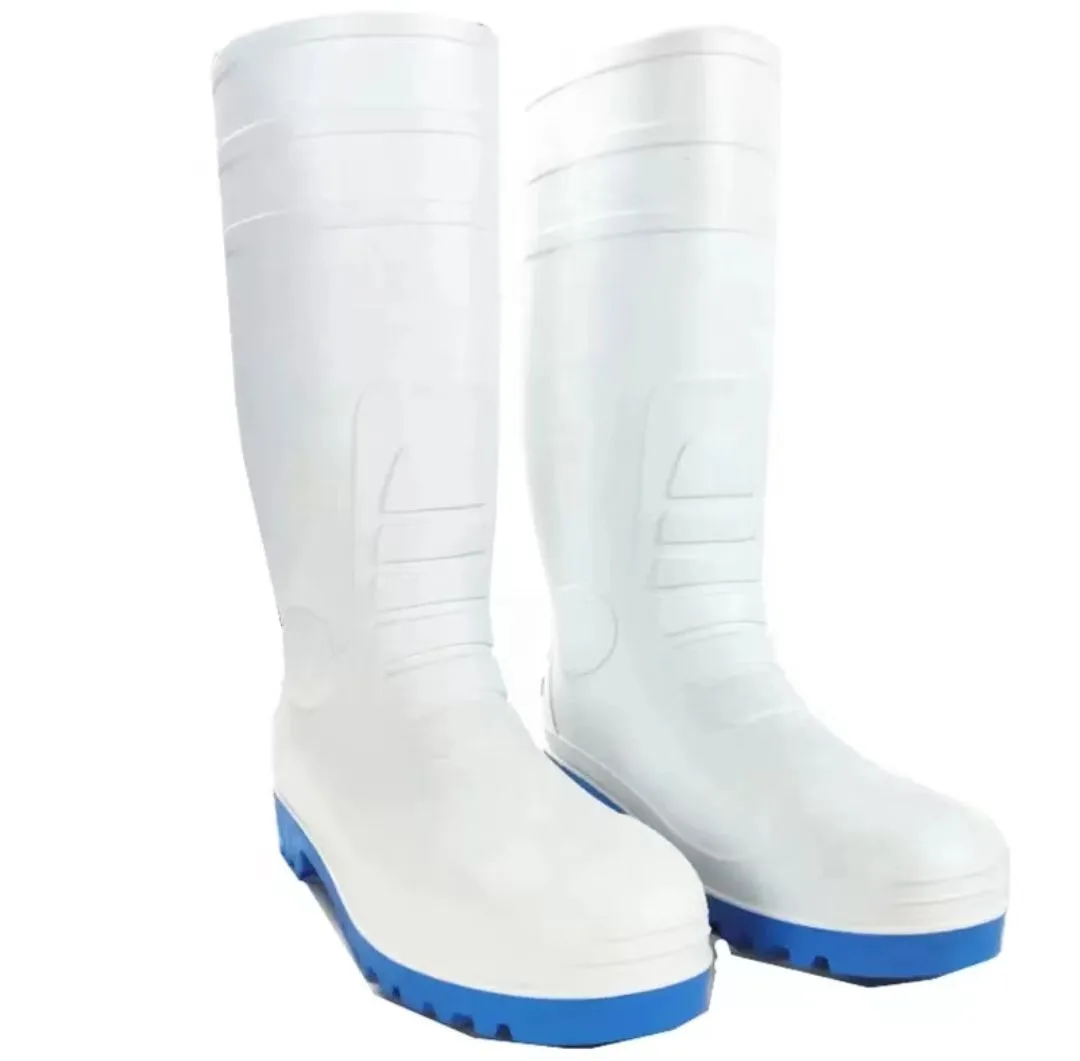
Sand boots are overboots or pull-on waterproof boots designed specifically for wet, gritty environments like car wash bays. Unlike regular rain boots, they handle soapy runoff, chemical residues, and the constant abrasion of sand and dirt tracked in from customer vehicles.
The design usually features a seamless molded construction that prevents water from seeping through stitching. Most sit between 12 and 18 inches tall, covering the calf so water doesn't splash in from above. The tread patterns are deeper and more aggressive than standard rubber boots, engineered to grip wet polished concrete and metal drain grates.
Sand boots aren't the same as muck boots or farm boots. Farm boots focus on mud traction and insulation. Car wash boots prioritize chemical resistance, quick drying, and a tread that doesn't clog with fine sand particles.
They're lighter too, because your crew walks on hard surfaces, not through fields.
If you're buying for a wash bay, skip the hardware store rain boots. Dedicated sand boots have specific sole compounds that resist the degreasers and acidic wheel cleaners used daily in professional car washes.
Bing (Web (fair-use with source credit))
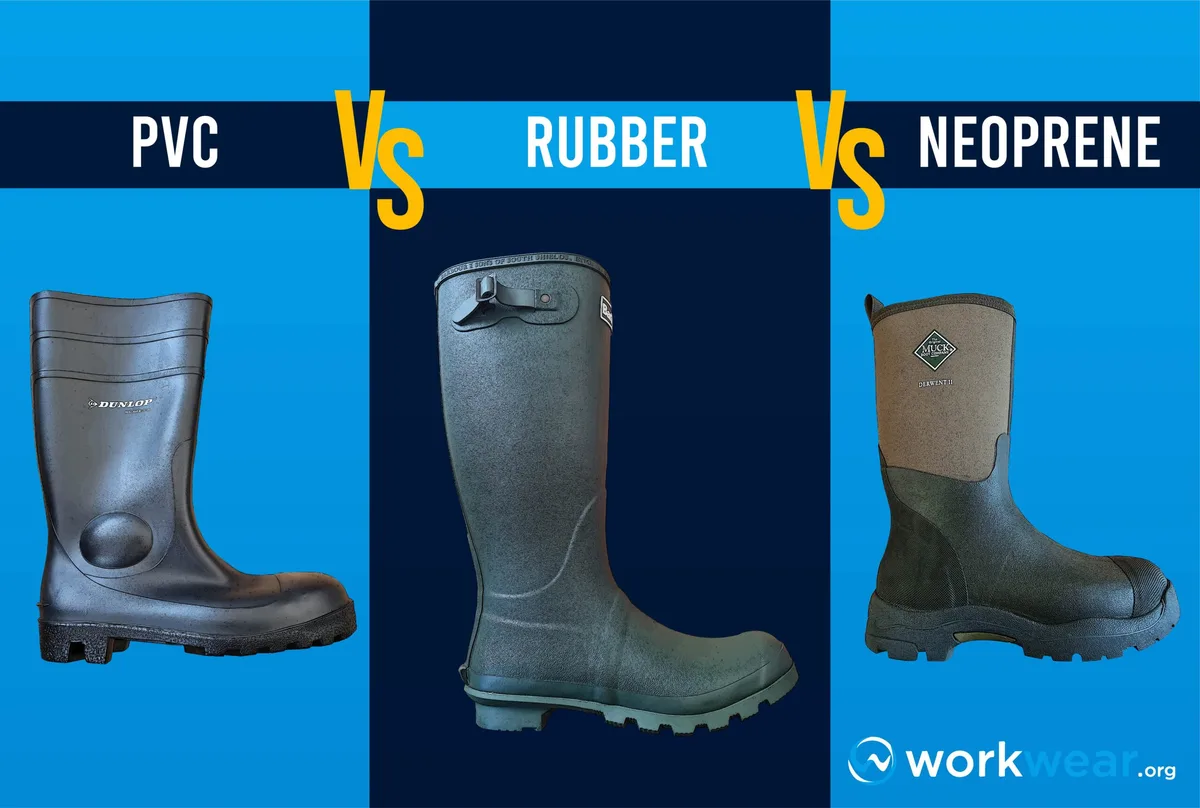
The Main Contenders: PVC vs. Neoprene Sand Boots
Two materials dominate the car wash boot market: PVC and neoprene. They're completely different in feel, durability, and price. Understanding the trade-offs is the whole game.
PVC Sand Boots: The Budget Workhorse
PVC sand boots are the most common option in self-serve and tunnel-style car washes. They're made from polyvinyl chloride, a hard plastic molded into a one-piece boot shape. No seams, no lining, just a solid waterproof shell.
What PVC boots do well:
- Low cost. Expect $25 to $45 per pair. Cheap enough to replace every six months without grief.
- Chemical resistance. PVC holds up against most car wash soaps, degreasers, and acidic cleaners.
- Easy to hose off. Mud, sand, and soap residue slide right off the smooth surface.
- Quick drying. No lining means they dry in minutes. Hang them on a hook and they're ready by the next shift.
What PVC boots get wrong:
- Hard and stiff. They don't flex with your foot. After eight hours, your ankles and arches will complain.
- Cold in winter. PVC gets brittle in low temperatures. Workers in northern states hate them in January.
- No breathability. Your feet sweat a lot. Without any moisture-wicking lining, you trade wet-from-outside for wet-from-inside.
- Sole can get slippery. Some budget PVC boots use a shallow tread that doesn't grip well on soapy concrete.
Neoprene Sand Boots: The Comfort Upgrade
Neoprene sand boots feel completely different. They're made from the same synthetic rubber used in wetsuits. Flexible, insulating, and much more comfortable for long shifts.
What neoprene boots do well:
- Superior comfort. The material stretches and moves with your foot. Less fatigue by the end of a shift.
- Warmth without bulk. Neoprene traps body heat. Workers in cold climates report significantly warmer feet compared to PVC.
- Better fit. The stretchy material conforms to different calf sizes. No more chafing or boot gap.
- Higher slip resistance. Premium neoprene boots often have deeper, wider-spaced tread lugs that channel water away.
What neoprene boots get wrong:
- Higher cost. Expect $60 to $100 per pair. That's double the PVC price.
- Slower drying. The lining inside holds moisture. If they get wet inside, they take hours to dry.
- Less chemical resistant. Neoprene can swell or degrade faster when exposed to strong solvents and degreasers.
- Heavier. The added material and lining make them a pound or two heavier per boot compared to PVC.
Bing (Web (fair-use with source credit))
Side-by-Side Comparison: PVC vs. Neoprene
Here's the quick answer in table form so you can compare at a glance.
| Feature | PVC Sand Boots | Neoprene Sand Boots |
|---|---|---|
| Price per pair | $25–$45 | $60–$100 |
| Average lifespan | 6–9 months | 9–15 months |
| Weight (per boot) | 1.5–2 lbs | 2–3 lbs |
| Chemical resistance | Excellent | Good to fair |
| Cold weather performance | Poor (stiffens) | Excellent (insulates) |
| Breathability | None | Minimal |
| Drying time | 10–15 minutes | 1–3 hours |
| Comfort for 8-hour shifts | Low to moderate | High |
| Slip resistance (typical tread) | Moderate | High |
| Best for | Budget operations, warm climates | Comfort-focused crews, cold climates |
The lifespan difference is worth noting. Neoprene boots cost more upfront but often last 50 percent longer. For a crew of five, PVC boots might run $150 every six months, while neoprene runs $400 every 12 months.
The yearly cost is closer than you think.
Tread Patterns and Slip Resistance
Here's where most boot buyers get it wrong. They look at the material or the price first. They should look at the bottom of the boot first.
Slip resistance is the single most important safety feature in a car wash environment, and tread design makes or breaks it.
Car wash floors are uniquely dangerous. You've got a thin film of soapy water on polished concrete. Add fine sand from customer vehicles, and you're basically walking on lubricated grit.
A shallow tread pattern fills up with sand in the first ten minutes and becomes a smooth surface. That's when slips happen.
What to look for in a tread pattern:
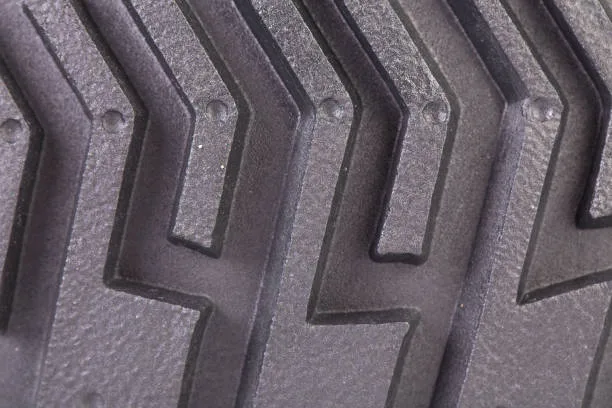
- Deep lugs. Minimum 5 millimeters. Deeper channels clear water and sand away from the contact patch.
- Wide spacing. Lugs that are far apart don't trap debris. Closely packed tread clogs instantly.
- Self-cleaning design. Some boots have angled or chevron-shaped lugs that push debris out as you walk.
- Slip rating. Look for boots that meet ASTM F2913 or SATRA TM144 standards.
A quick test: pour water on a smooth surface and step on it with the boot. If you can easily slide it sideways, the tread isn't aggressive enough for a car wash floor. Tread wears down over time too.
After about four months of daily use, even deep lugs start to flatten. Replace them then, not when they start leaking. A boot with no grip is a liability, even if it's still waterproof.
Bing (Web (fair-use with source credit))
Beyond Material: Key Features That Actually Matter
Material choice gets most of the attention, but a few other features make a bigger difference in daily use than you'd expect. Here's what to prioritize after you've picked PVC or neoprene.
Height and Coverage Options
Most sand boots come in two heights: mid-calf (12 to 14 inches) and knee-high (16 to 18 inches). Which one you need depends on your bay setup.
Mid-calf boots work well for tunnel washes where workers stand on grates and water drains quickly. They're lighter and easier to move in. Knee-high boots are better for self-serve bays where workers spray water at ground level and splashback is constant.
One detail that matters more than height: the top opening. Some boots have a snug fit that keeps water from pouring in when a worker kneels or squats. Others have a wide loose opening that acts like a funnel.
Test the fit by pulling the boot on and bending your knee. If you feel a gap forming at the top, that boot will flood on the job.
Safety Toe Requirements
Not every car wash requires safety toe boots, but many should. If your wash bay has heavy equipment, rolling carts, or customers who pull vehicles too close, a steel toe or composite toe protects against crush injuries.
Composite toes are lighter than steel and don't conduct cold. Steel toes are stronger and cheaper but turn icy in cold weather. Both meet ASTM F2413 safety standards.
Soft toe boots are fine for self-serve washes where the main risk is slipping, not getting stepped on by a vehicle. In tunnel washes with moving equipment, go with a safety toe. That's not comfort advice.
That's liability advice.
The Alternatives: Regular Work Boots vs. Dedicated Sand Boots
Some wash operators try to save money by having workers wear regular waterproof work boots. That approach has a few problems.
Standard work boots aren't designed for standing in soapy water all day. The waterproof membrane, usually Gore-Tex or similar, eventually breaks down with constant chemical exposure. Once that happens, the boots hold water like a sponge and take days to dry.
You end up replacing $150 work boots twice as often as you'd replace $40 sand boots.
Regular work boots also trap grit and sand in the tread. The tight tread pattern fills up with fine debris within an hour. After that, you're walking on a smooth surface with zero grip.
Sand boots have open treads that shed debris as you walk.
The only case where work boots beat sand boots is for workers who also handle tasks outside the wash bay, like landscaping or maintenance work. In that situation, a hybrid waterproof boot with a deeper tread might make sense. But for dedicated wash bay workers, dedicated sand boots win every time.
Who Should Buy Which: Matching Boots to Your Car Wash Setup
Here's the decision framework based on actual wash bay conditions.
Buy PVC sand boots if:
- You run a high-volume tunnel wash in a warm climate
- Your budget is tight and you need to outfit a crew of 10 or more
- Workers rotate through short shifts (under 4 hours)
- Chemical exposure is heavy and includes strong degreasers
- You have good boot drying racks and airflow in the break room
Buy neoprene sand boots if:
- Your crew works 8-hour shifts on concrete floors
- You operate in a cold climate where winter temps drop below freezing
- Worker comfort and retention are higher priorities than upfront cost
- Your wash uses milder soaps and pH-neutral cleaners
- You have boot dryers available to handle the longer drying time
Mix and match if needed. Some operators buy PVC for summer and neoprene for winter. That's smart if you have the budget for two sets per worker, but most operations don't.
One more thing to consider: replacement frequency. If you're burning through PVC boots every 4 months, the cost advantage disappears. Switch to neoprene and see if the lifespan doubles.
Many operators make that switch and save money in the long run.
Common Mistakes That Cost You Money (and Safety)
After talking with dozens of wash bay operators, a few mistakes keep showing up. Here's what to avoid.
Buying one size for everyone. Sand boots fit differently than regular shoes. Some brands run narrow. Some run wide.
Handing out the same size to every worker guarantees blisters and complaints. Let each worker try on their boots before you buy a case lot.
Ignoring the tread wear indicator. Most quality sand boots have small wear bars molded into the tread. When those bars are flush with the lugs, the boot is done. Replace it.
A boot with worn tread is a slip hazard.
Using boot dryers on high heat. High heat destroys PVC and degrades neoprene. Use a low-heat boot dryer or a forced-air system without heat. High heat makes the material brittle and cracks form around the sole edge.
Storing boots in direct sunlight. UV light degrades both PVC and neoprene. Store boots in lockers or under cover. Sun-damaged boots crack at the flex points after a few months.
Letting workers wear boots home. Sand boots track wash chemicals and bacteria into vehicles and homes. Keep them at the wash. Provide storage lockers.
This also extends boot life by keeping them out of sunlight and dry environments.
What Real Car Wash Workers Say About Wear and Tear
The feedback from workers who wear these boots daily tells a clear story. Here's what aggregate reviews and operator surveys report after months of use.
PVC boots start showing wear at the flex point where the toe meets the sole. That's usually around month three. A small crack appears, then water seeps in.
By month six, the crack widens and the boot is basically done. Workers describe the feeling as walking with damp socks for the second half of every shift.
Neoprene boots wear differently. The sole tread flattens first, usually around month seven or eight. The upper material stays intact much longer.
Workers report that neoprene boots feel comfortable until the day the tread wears smooth, then they become dangerous on wet floors. The boot itself might still be waterproof, but without grip, it's time to replace them.
A few specific complaints show up across multiple sources:
- PVC in cold weather. Workers in northern states say PVC boots feel like walking on frozen plastic after 20 minutes outside.
- Neoprene in hot weather. Workers in southern states report that neoprene boots trap so much heat that feet sweat through socks by mid-shift.
- Chemical damage. Neoprene boots exposed to strong tire cleaners and wheel acid develop a spongy texture on the lower half. That's a sign the material is breaking down.
The bottom line from actual users: no boot is perfect. But knowing the failure pattern helps you plan replacements before boots become a safety issue.
Bing (Web (fair-use with source credit))
How to Make Your Sand Boots Last Twice as Long
Most car wash boots fail early because of poor care, not poor build quality. A few simple habits can double their lifespan.
Rinse boots after every shift. Soap residue and chemicals eat away at the material over time. Hose them off before you hang them up. Pay attention to the sole and the flex point where cracks form first.
Dry them properly. Never stuff wet boots in a locker. Use a boot dryer on low heat or stand them upright with the tops open in a ventilated area. Neoprene boots need airflow inside and out.
PVC boots dry fast on their own but still need airflow to prevent odor.
Replace insoles every three months. Most boot manufacturers say the insole is the first thing to fail. A fresh insole restores comfort and absorbs moisture better than a compressed one. Keep a stack of replacements in the supply closet.
Rotate between two pairs if possible. Workers who have two pairs and alternate days report boots lasting 40 percent longer. The day off lets the material recover and dry completely.
Pricing: What You'll Actually Spend
Here's the real cost breakdown for outfitting a crew of five workers.
PVC option:
- Boots: $35 per pair x 5 = $175
- Replacement at 6 months: $175
- Yearly total: $350
Neoprene option:
- Boots: $80 per pair x 5 = $400
- Replacement at 12 months: $400
- Yearly total: $400
The difference is only $50 per year for five workers. That's $10 per person per year for significantly better comfort and grip. The math changes if you're in a cold climate where PVC needs replacement every 4 months, bringing the yearly PVC total to $525.
In that case, neoprene is cheaper.
Add boot dryers at about $60 each for a basic rack unit, and insoles at $15 per pack of three. Budget roughly $500 to $600 per year for a five-person crew with proper care.
Frequently Asked Questions
Can I wear regular rubber rain boots in a car wash?
You can, but they won't perform well. Rain boots have shallow tread that clogs with sand and doesn't resist chemicals. They also lack the stiffness needed for standing on grates all day.
How often should I replace sand boots?
PVC boots every 6 to 9 months with daily use. Neoprene boots every 9 to 15 months. Replace them sooner when the tread flattens or cracks appear at the flex point.
Do sand boots come in half sizes?
Most brands run in full sizes. Neoprene material stretches and accommodates half sizes better than PVC. Try boots on with the socks your workers will actually wear.
Are steel toe sand boots worth it?
Only if your workers are near moving vehicles or heavy equipment. For self-serve bays with no vehicle traffic, soft toe boots are lighter and more comfortable.
Can I wash sand boots in a washing machine?
No. The agitation damages the material and can separate the sole from the upper. Hose them off and scrub with a soft brush if needed.
The Verdict: Which Sand Boot Wins for Your Situation
Here's the final call based on what we've covered.
Pick PVC if: your wash is in a warm climate, workers do short shifts, and budget is the primary concern. You'll replace them more often but the upfront cost is low and drying time is instant.
Pick neoprene if: your crew works long shifts on concrete, you're in a cold climate, or worker comfort is driving retention. The higher upfront cost balances out with longer lifespan and fewer slip incidents.
Pick a safety toe version if: your wash has moving equipment or vehicles entering the bay. That's non-negotiable for OSHA compliance.
The best advice from aggregate operator feedback: don't overthink this. Buy a single pair of each material, have two workers try them for a week, and see which one fewer people complain about. The right choice reveals itself fast when feet are wet and tired at the end of a shift.
As of 2026, the market hasn't changed much. PVC still dominates budget operations and neoprene dominates comfort-focused washes. That split will probably hold for years.
If you're looking for complementary gear, check out our guide on waterproof gloves for car wash workers to complete the setup. And if you're dialing in your bay's pressure levels, our piece on recommended PSI for washing cars covers the safe operating range.
Choose based on your floor, your climate, and your crew's shift length. Everything else is secondary. Your workers will thank you, and your slip-related incident reports will drop.
That's a win on both sides of the ledger.