ByMax Lee
CT Left Lane Law: Passing Only on Multi-Lane Roads
Bing (Web (fair-use with source credit))
If you’ve ever been stuck behind a slow driver in the left lane on a Connecticut highway, you’re not alone. The Connecticut left lane passing only law on multi lane state roads exists to keep traffic moving and reduce congestion. This rule isn’t just about etiquette, it’s the law, and breaking it can cost you.
As of 2026, Connecticut General Statutes § 14-230 explicitly states that the left lane on multi-lane roads is for passing only. Drivers who linger can face fines, and police actively enforce it.
Quick Answer
The Connecticut left lane passing only law on multi lane state roads requires drivers to use the left lane solely for passing. It applies to all multi-lane state highways. Slower traffic must stay right.
Violations can result in fines. Enforcement is active statewide.
What Connecticut’s Left Lane Passing Only Law Actually Means
This law is straightforward: on any multi-lane road in Connecticut, the left lane is not a cruising lane. Its only purpose is for overtaking slower vehicles. Once you’ve passed, you must return to the right lane as soon as it’s safe.
Wikimedia Commons / Memorialman (CC BY-SA)
The rule is codified in Connecticut General Statutes § 14-230, which mandates that drivers keep right except when passing. This isn’t unique to Connecticut, many states have similar laws, but Connecticut enforces it rigorously. The goal is to prevent traffic bottlenecks and reduce the risk of accidents caused by sudden lane changes.
If you’re driving the speed limit or slower in the left lane, you’re breaking the law. Even if traffic is light, the left lane isn’t for loitering. The only exceptions are when traffic is congested and all lanes are moving slowly, or when you’re preparing to exit left.
Where the Law Applies on Connecticut Roads
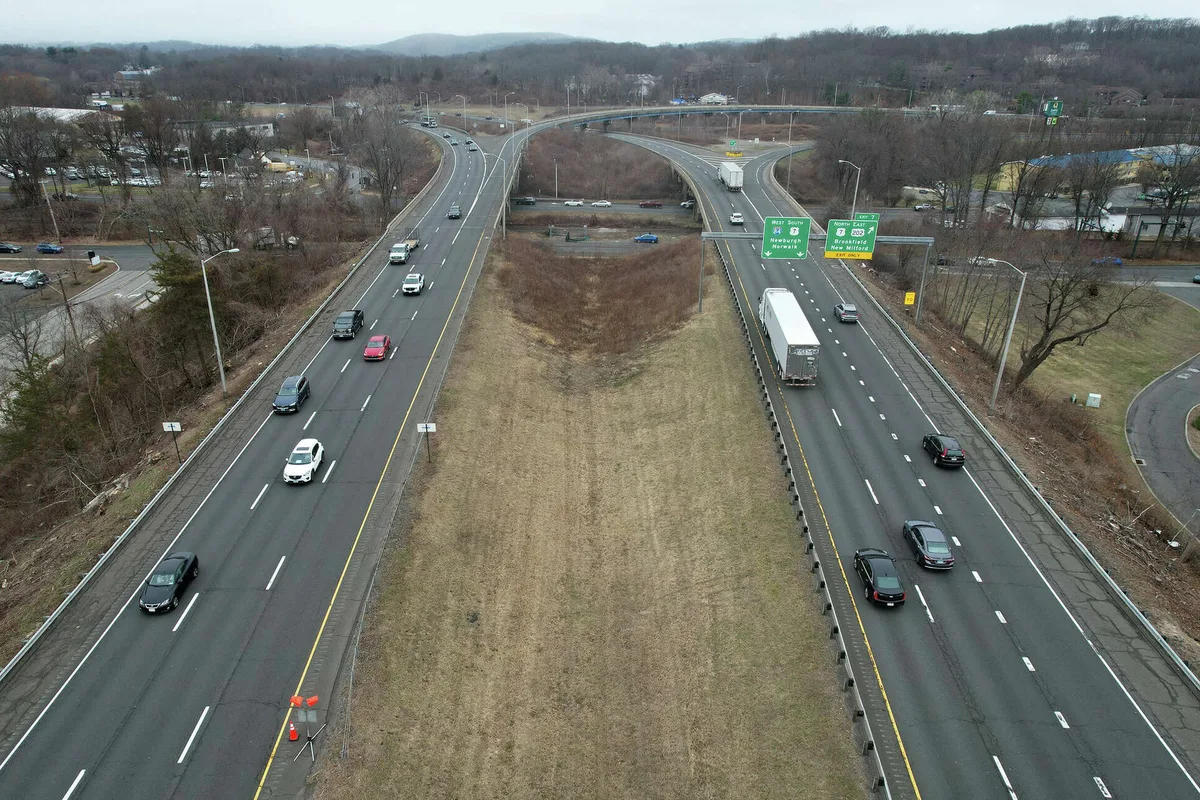
The left lane passing only rule applies to all multi-lane state roads and highways in Connecticut. This includes major interstates like I-95, I-91, and I-84, as well as multi-lane state routes such as Route 2, Route 9, and Route 15 (the Merritt Parkway).
It does not apply to single-lane roads or local streets where passing isn’t an option. The law is specifically designed for roads with two or more lanes traveling in the same direction. If you’re on a two-lane road with one lane in each direction, the standard passing rules still apply.
For more on Connecticut’s broader traffic regulations, you can review the official driver’s manual.
The Exact Rules: When You Can (and Can’t) Use the Left Lane
You can use the left lane in Connecticut only under these conditions:
- Passing a slower vehicle. Once you’ve overtaken the vehicle, you must move back to the right lane as soon as it’s safe.
- When traffic is congested and all lanes are moving slowly. In heavy traffic, it’s acceptable to stay in the left lane if all lanes are equally slow.
- Preparing to exit left. If your exit is on the left, you can enter the left lane in advance of the exit.
You cannot use the left lane for:
- Cruising at the speed limit or slower.
- Avoiding merging traffic.
- Using your phone or adjusting controls.
If you’re driving in the left lane and a faster vehicle approaches from behind, you must move over. This is a courtesy and a legal requirement.
Why Connecticut Enforces This Law So Strictly
Left lane hogging is a major cause of traffic congestion and road rage. When drivers linger in the left lane, it forces others to make unsafe lane changes or tailgate to pass. This increases the risk of accidents and slows down traffic for everyone.
Connecticut’s enforcement is part of a broader effort to improve highway safety. The Connecticut Department of Transportation reports that improper lane usage contributes to a significant number of rear-end collisions and near-misses on state highways.
The law also helps emergency vehicles. When the left lane is clear, first responders can reach incidents faster.
How Police Monitor and Penalize Left Lane Violations

Bing (Web (fair-use with source credit))
Connecticut State Police and local law enforcement actively patrol highways to enforce the left lane passing only law. Officers use marked and unmarked vehicles to spot drivers lingering in the left lane. If you’re caught, you’ll typically receive a written warning or a citation.
The fine for a left lane violation in Connecticut can reach up to $150 as of 2026. While this may not seem steep, repeated offenses can lead to higher penalties and points on your license. The Connecticut Department of Motor Vehicles tracks these violations, and accumulating points can result in increased insurance premiums.
Enforcement isn’t just about issuing tickets. Police often use these stops as opportunities to educate drivers about the law.
Common Mistakes Drivers Make with the Left Lane
One of the biggest mistakes is assuming the left lane is for faster drivers. Speed limits apply to all lanes, and the left lane isn’t an exception. If you’re driving the speed limit in the left lane, you’re still breaking the law if you’re not passing.
Another common error is staying in the left lane after passing. Once you’ve overtaken a vehicle, you must return to the right lane as soon as it’s safe. Lingering in the left lane, even at high speeds, is illegal.
Some drivers also mistakenly believe that if traffic is light, it’s okay to stay in the left lane. The law doesn’t make exceptions for traffic volume.
What Happens If You Get Pulled Over for a Left Lane Violation
If you’re pulled over for a left lane violation, the officer will likely ask for your license, registration, and proof of insurance. They may issue a warning or a citation on the spot. In most cases, you’ll receive a ticket with a fine and a court date.
You have the right to contest the ticket in court. If you believe you were wrongly cited, you can plead not guilty and present your case. However, the burden of proof is on you to show that you were complying with the law.
Paying the fine is often the simplest resolution. If you choose to pay, the violation will typically appear on your driving record.
How to Pass Safely and Legally in Connecticut
Wikimedia Commons / Author: Adobe Firefly
To pass safely, first check your mirrors and blind spots. Signal your intention to move into the left lane. Accelerate smoothly to match the speed of traffic in the left lane before merging.
Once you’ve passed the slower vehicle, signal again and return to the right lane as soon as it’s safe. Avoid cutting off other drivers or making abrupt lane changes. Always maintain a safe following distance.
If you’re in the left lane and a faster vehicle approaches from behind, move over to the right lane. This is both a courtesy and a legal requirement.
Connecticut vs. Other States: How Left Lane Laws Differ
Connecticut’s left lane passing only law is similar to those in many other states, but there are some key differences. In Massachusetts, the left lane is also for passing only, but enforcement can be less consistent. New York has similar rules, but the penalties for violations can vary by jurisdiction.
Some states, like Florida, have more lenient left lane laws. In Florida, the left lane is for passing, but drivers are only required to move over if they’re impeding traffic. This can lead to more subjective enforcement.
Connecticut’s law is more straightforward. The left lane is for passing only, period.
Real-World Scenarios: When You’re Allowed in the Left Lane
You can legally stay in the left lane when traffic is heavy and all lanes are moving at similar speeds. This often happens during rush hour on I-95 or I-84. The law recognizes that in stop-and-go traffic, switching lanes constantly isn’t practical.
Another valid scenario is when you’re preparing to exit left. If your exit is approaching and you need to be in the left lane to take it, you’re allowed to stay there until you exit.
If you’re passing a line of slower vehicles, you can stay in the left lane until you’ve cleared them all. But once you’ve passed the last vehicle, you must move back to the right.
FAQs About Connecticut’s Left Lane Passing Only Law
Does the left lane law apply to all Connecticut roads?
No, it only applies to multi-lane roads with two or more lanes traveling in the same direction. Single-lane roads and local streets aren’t covered by this specific law.
What’s the fine for violating the left lane law in Connecticut?
As of 2026, the fine can reach up to $150. The exact amount may vary depending on the circumstances and the officer’s discretion.
Can I use the left lane if I’m driving the speed limit?
No. The left lane is for passing only, regardless of your speed. If you’re not actively passing, you must stay in the right lane.
Are there any exceptions to the left lane rule?
Yes. You can stay in the left lane if traffic is congested and all lanes are moving slowly, or if you’re preparing to exit left.
How do I know if I’m breaking the law?
If you’re in the left lane and not passing, you’re likely breaking the law. If a faster vehicle approaches from behind and you don’t move over, you’re definitely in violation.