Towing a trailer in Connecticut without the right safety setup isn’t just risky, it’s illegal. The Connecticut trailer towing safety chain and lighting equipment requirements exist to prevent accidents and keep you compliant with state law. One loose chain or burned-out light can mean a fine or worse.
Per Connecticut General Statutes, your trailer must have safety chains rated for its gross vehicle weight rating and fully functional lighting. Get this wrong, and you’re looking at enforcement action from state police or the DMV.
Quick Answer
Connecticut requires at least two safety chains crossed in an X pattern under the trailer tongue. All trailers need working tail lights, brake lights, turn signals, and reflectors. Trailers over 80 inches wide must have clearance lights.
Break-away brakes are mandatory for trailers over 3,000 lbs.
Why Connecticut’s Trailer Towing Safety Rules Matter
These rules prevent trailers from detaching and causing crashes. They also ensure other drivers can see your trailer’s signals and position, especially at night or in bad weather.
Non-compliance can lead to fines, failed inspections, or liability if an accident occurs. Connecticut State Police actively enforce these regulations during routine stops and safety checks.
Connecticut’s Safety Chain Requirements (The Non-Negotiables)
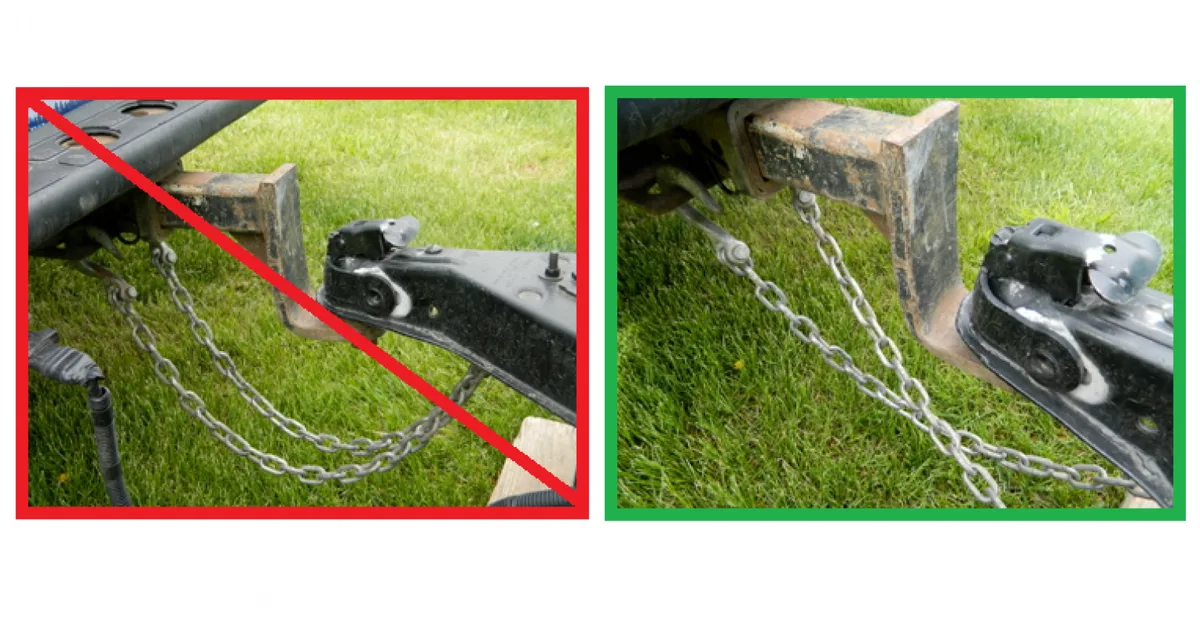
Your trailer must have at least two safety chains. These must be crossed under the tongue to form an X, which prevents the tongue from digging into the road if the hitch fails.
The chains must be rated for your trailer’s gross vehicle weight rating (GVWR). For example, a 5,000-lb trailer needs chains with a minimum breaking strength of 5,000 lbs. Use Grade 70 or 80 steel chains for the best strength and durability.
Inspect the chains before every trip. Look for rust, wear, or weak links. Replace any chain that shows signs of damage or fatigue.
Trailer Lighting Equipment Rules in CT (What Must Work & Where)
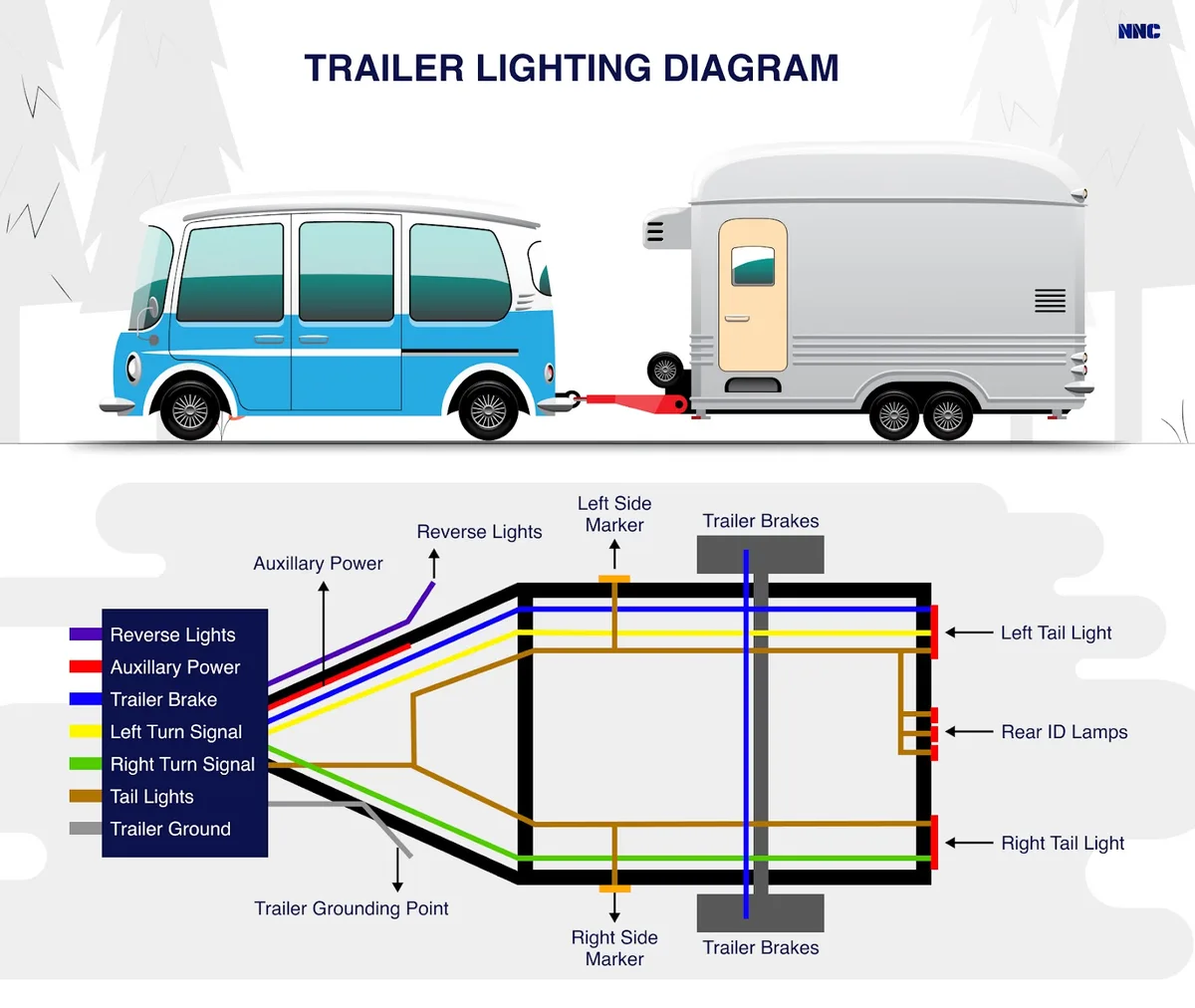
All trailers must have the following lighting as of 2026:
- Tail lights: Red, visible from at least 500 feet.
- Brake lights: Red, brighter than tail lights.
- Turn signals: Amber or red, visible from at least 300 feet.
- Reflectors: Red on the rear, amber on the sides, with a minimum diameter of 2 inches.
- License plate light: White light illuminating the plate.
Trailers over 80 inches wide require additional clearance lights. These must be amber at the front and red at the rear. Trailers over 30 feet long need side marker lights spaced at intervals not exceeding 10 feet.
Wiring & Connectors: How to Stay Compliant and Safe
Most passenger vehicles use a 4-way flat connector for basic lighting. This covers tail lights, brake lights, and turn signals. For trailers with brakes or auxiliary power, you’ll need a 5-way, 6-way, or 7-way connector.
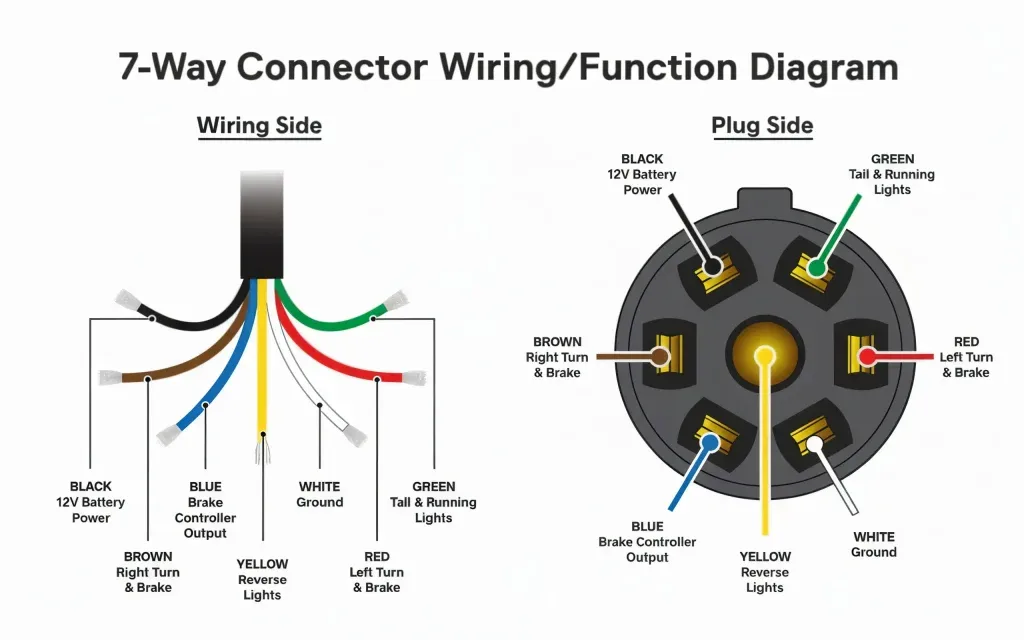
Here’s a quick breakdown of common connectors:
| Connector Type | Typical Use | Wires |
|---|---|---|
| 4-way flat | Basic lighting | Tail, brake/turn, ground |
| 5-way flat | Basic lighting + electric brakes | Tail, brake/turn, ground, brake control |
| 7-way RV | Full lighting + brakes + auxiliary power | Tail, brake/turn, ground, brake control, battery, auxiliary, reverse |
Always check your vehicle and trailer manuals for the correct connector type. Use dielectric grease on connections to prevent corrosion, and test all lights before hitting the road.
Break-Away Brakes & Other CT-Specific Trailer Rules
Connecticut requires break-away brake systems for trailers over 3,000 lbs. This system activates the trailer’s brakes automatically if it detaches from the tow vehicle.
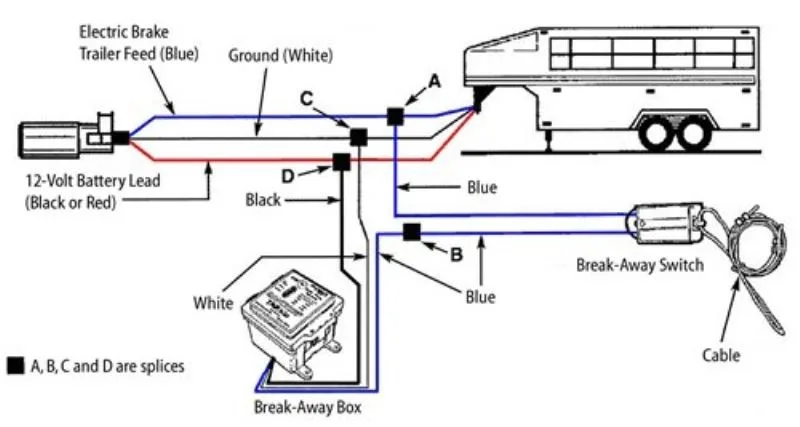
The break-away system must include a lanyard or cable connected to the tow vehicle. If the trailer separates, the lanyard pulls a pin, activating the brakes. Test this system before every trip to ensure it’s functional.
Step-by-Step: How to Inspect Your Trailer Before Hitting the Road
Start with the safety chains. Check that they’re crossed under the tongue and have no visible damage. Ensure they’re tight enough to prevent dragging but loose enough to allow turns.
Next, verify all lighting. Have a partner check brake lights, turn signals, and tail lights while you operate the controls. Walk around the trailer to confirm reflectors are clean and visible.
Finally, inspect the hitch and coupler. Make sure the ball and coupler are the same size and properly secured. Check the break-away brake system if your trailer requires one.
Common Mistakes That Get Connecticut Drivers Fined (or Worse)
Using only one safety chain is a frequent violation. Connecticut requires at least two, crossed in an X pattern. A single chain can fail under stress.
Burned-out lights are another common issue. Many drivers assume their lights work because they did last trip. Always test them before driving.
Improper wiring is a third problem. Corroded or loose connections can cause intermittent lighting failures. Use dielectric grease to protect connections from moisture.
DIY Fixes vs. When to Call a Pro
You can replace a burned-out bulb or a damaged reflector yourself. These are simple fixes that require basic tools and minimal expertise.
Replacing a wiring harness or installing a break-away brake system is more complex. If you’re not comfortable with electrical work or brake systems, consult a professional. Incorrect installations can lead to safety hazards.
For wiring issues, a multimeter can help diagnose problems. If you’re unsure about the readings, a professional mechanic can provide a thorough inspection.
Connecticut’s Enforcement & Penalties (What Happens If You Skip This)
Connecticut State Police and DMV inspectors enforce trailer safety regulations. They can pull you over for visible violations like missing lights or improper safety chains.
Fines vary depending on the violation. Non-compliant lighting or safety chains can result in fines up to $100 or more. More serious violations, like a missing break-away brake system, can lead to higher penalties.
In addition to fines, you may be required to fix the issue on the spot. If you can’t, your trailer may be deemed unsafe to operate until repairs are made.
FAQs About CT Trailer Towing Safety Chains & Lights
Do I need safety chains if my trailer has a heavy-duty hitch?
Yes. Connecticut requires at least two safety chains regardless of hitch strength. The chains must be crossed under the tongue and rated for your trailer’s GVWR.
Are LED trailer lights legal in Connecticut?
Yes. LED lights are legal as long as they meet color and visibility requirements. They must be DOT-approved and properly installed.
How often should I check my trailer’s lighting and chains?
Inspect them before every trip. Check chains for wear and lights for functionality. A quick pre-trip test takes minutes and prevents violations.
What’s the fine for non-compliant trailer lighting in CT?
Fines start around $50 but can go higher for multiple violations. Fixing the issue on the spot may avoid a ticket.
Do utility trailers need break-away brakes in Connecticut?
Only if the trailer weighs over 3,000 lbs. Lighter trailers don’t require them, but safety chains and lighting are still mandatory.