ByMax Lee
Illinois Scott’s Law Fund & Court Requirements
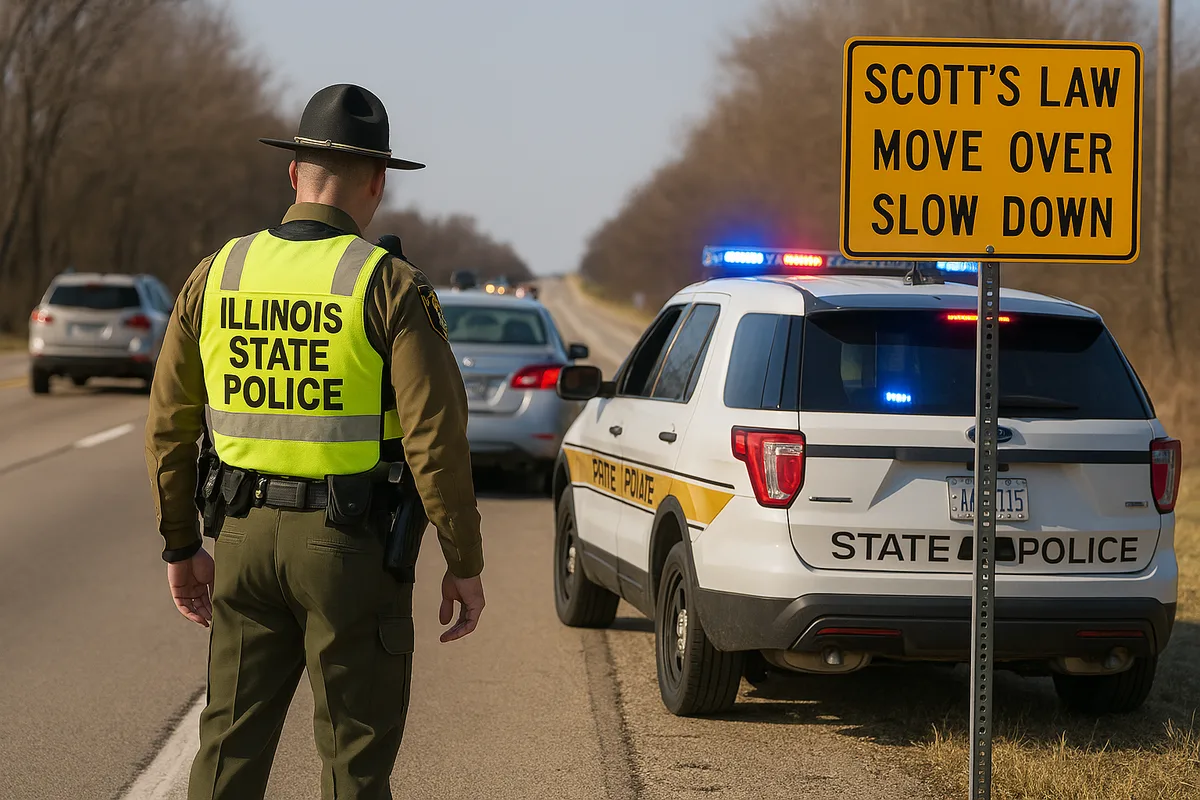
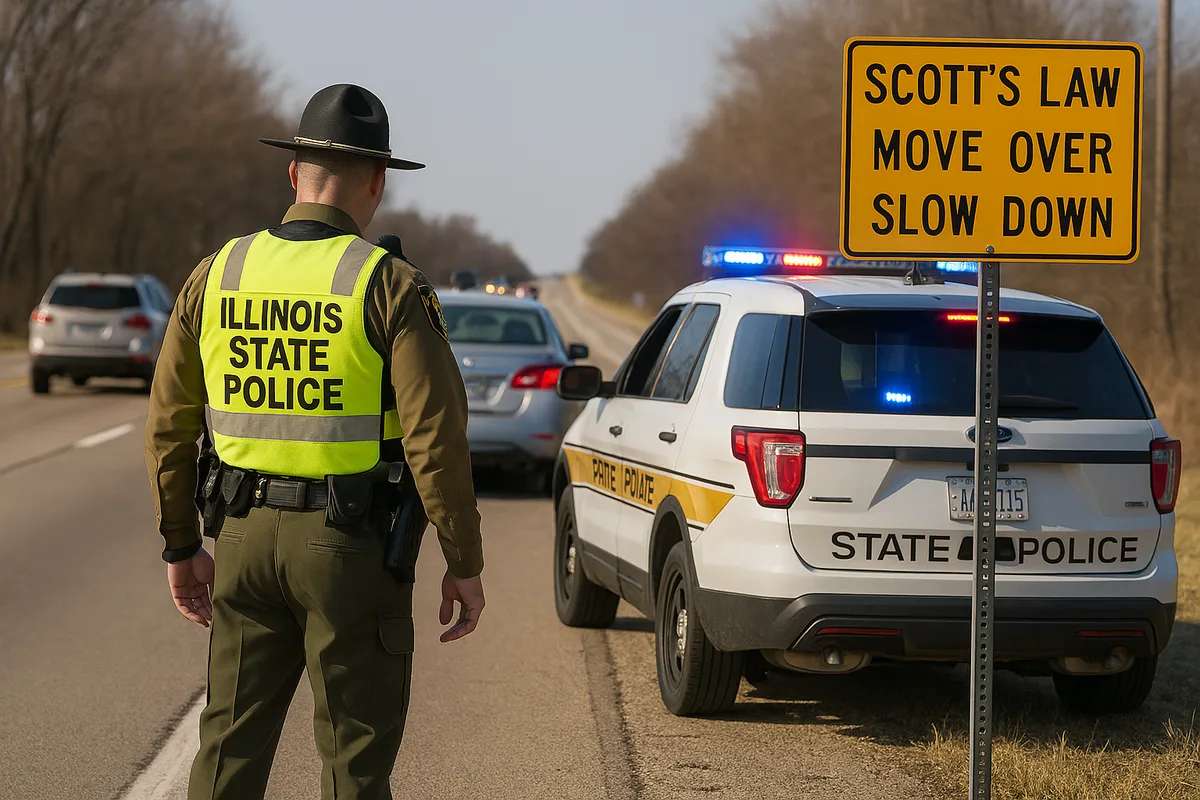
A Scott's Law citation in Illinois is not a standard traffic ticket. The Illinois Scott's Law fund and mandatory court appearance for offenders mean you cannot pay by mail and walk away. Every first offense requires you to stand before a judge.
The minimum fine starts at $250 and climbs to $10,000 if property damage or injury occurs.
The statute adds 25 points to a regular license and triggers a 60-day CDL disqualification on the first offense. Our research shows most drivers do not realize the court date is mandatory until a warrant is issued.
Quick Answer
Illinois Scott's Law requires drivers to move over for stopped emergency vehicles. A citation carries a mandatory court appearance. Fines start at $250.
The fund splits money between State Police enforcement and road safety projects. CDL holders face automatic disqualification.
Why Getting This Wrong Costs More Than a Ticket
Most drivers treat a move-over ticket like a speeding ticket. They assume they can pay online and move on. That assumption costs people their licenses and sometimes their jobs.
The law treats this violation differently because it protects first responders and roadside workers.
A conviction adds 25 points to your Illinois driving record. That is halfway to a suspension for drivers over 21. For CDL holders the penalty is a 60-day disqualification on the first offense.
A second offense within three years brings a 90-day disqualification. A third brings 120 days. These are federal thresholds that follow you across state lines.
Insurance companies classify this as a major moving violation. Expect surcharges for three to five years. Some carriers non-renew policies after a Scott's Law conviction.
The Statute, the Fund, and Where the Money Actually Goes
The law lives in 625 ILCS 5/11-907(c). It covers stationary authorized emergency vehicles with flashing lights. It also covers maintenance and construction vehicles with flashing amber lights.
The 2017 and 2019 amendments expanded the protected vehicle classes.
Fines collected under this statute feed the Scott's Law Fund. The split is 50 percent to the Illinois State Police for enforcement. The other 50 percent goes to the Illinois Department of Transportation for safety improvements.
The Illinois Auditor General audits fund expenditures. The State Police publish an annual enforcement report.
Mandatory Court Appearance: No Mail-In Option, No Exceptions
The statute explicitly prohibits mail-in pleas for a first offense. You must appear in the circuit court of the county where the stop occurred. The court date is typically three to six weeks after the citation.
Missing that date triggers a Failure to Appear warrant and an automatic license suspension.
Some counties allow an attorney to appear for you. Others require your personal presence. Check the local circuit court rules before you assume representation is enough.
Cook County and collar counties often have stricter appearance rules than downstate circuits.
Prosecutors rarely amend Scott's Law citations to non-moving violations. The mandatory appearance statute removes judicial discretion for supervision.
License Points, CDL Disqualification, and the Secretary of State
The Secretary of State assesses points after a conviction. Regular license holders receive 25 points. That puts you at risk if you accumulate additional violations.
Three moving violations in 12 months trigger a suspension.

CDL holders face federal disqualification periods. First offense: 60 days. Second offense within three years: 90 days.
Third offense within three years: 120 days. The clock starts on the conviction date. Your employer receives notification.
Reinstatement requires a $70 fee for a regular license. CDL reinstatement costs $500. The Illinois Secretary of State publishes the point schedule and reinstatement process.
First Offense vs. Repeat Offense: How Penalties Escalate
A first offense with no damage carries a $250 minimum fine. The maximum is $10,000 if property damage or injury occurs. The judge has discretion within that range.
Court costs and fees add several hundred dollars on top of the fine.
A second offense raises the minimum fine to $750. The maximum remains $10,000 for property damage or injury. A third or subsequent offense does not increase the statutory minimum but judges impose harsher sentences.
The three-year lookback period applies to CDL disqualifications.
If the violation causes great bodily harm or death the charge becomes a Class 4 felony. The maximum fine rises to $25,000. Prison time becomes possible.
The Illinois State Police track these enhanced penalties in their annual report.
When a Citation Becomes a Felony: Injury, Death, and Class 4 Charges
The line between misdemeanor and felony is clear. If your violation causes great bodily harm or death it becomes a Class 4 felony. The felony charge applies even if you did not intend harm.
The statute focuses on the outcome not the intent.
What Prosecutors Rarely Negotiate and Why
Prosecutors treat Scott's Law citations differently. The mandatory court appearance removes supervision as an option. Most counties will not amend the charge to a non-moving violation.
The reason is deterrence. Leniency undermines the statute's goal of protecting first responders.
Out-of-State Drivers: Reciprocity Doesn't Save You
Illinois reports convictions to your home state. Most states honor the Illinois suspension. CDL holders face federal disqualification regardless of their home state.
The Driver License Compact covers 45 states. Illinois participates. Your home state will treat the conviction as if it happened there.
Insurance Impact: The Three-to-Five-Year Surcharge Window
Insurance companies classify this as a major moving violation. Expect a surcharge for three to five years. Some carriers non-renew policies after a Scott's Law conviction.
The surcharge varies by carrier and your driving history. A clean record might see a 20 to 30 percent increase. A history of violations could double your premium.
Step-by-Step: From Citation to Case Resolution
You receive the citation at the traffic stop. The officer notes the court date and location. You have until that date to prepare your case.
At court you enter a plea. Guilty means sentencing. Not guilty means a trial date.
Some counties allow negotiation before the trial. If convicted the judge imposes the fine. The Secretary of State adds the points.
CDL holders receive a disqualification notice.
Common Mistakes That Trigger Warrants and Suspensions
The biggest mistake is ignoring the court date. A Failure to Appear warrant is automatic. Your license is suspended until you resolve it.
Another error is assuming you can mail in a plea. The statute prohibits this for first offenses. Showing up late or unprepared also hurts your case.
Some drivers think paying the fine ends the process. It does not. The Secretary of State still adds points.
CDL holders still face disqualification.
When to Hire a Traffic Attorney vs. Representing Yourself
Hire an attorney if you have a CDL. The disqualification period can cost you your job. An attorney may negotiate reduced charges in some counties.
Represent yourself if it is a first offense with no damage. The penalties are fixed but an attorney cannot change the mandatory appearance. The cost of representation may exceed the fine.
If the citation involves injury or death hire an attorney immediately. The felony charge requires legal expertise.
Verified Quick Reference: Fines, Points, Deadlines, and Fund Allocation
Here are the key numbers you need to know.
| Offense | Fine Range | Points | CDL Disqualification |
|---|---|---|---|
| First offense, no damage | $250–$10,000 | 25 | 60 days |
| Second offense | $750–$10,000 | 25 | 90 days |
| Third offense | $750–$10,000 | 25 | 120 days |
| Injury/Death | Up to $25,000 | 25 | Varies |
The fund splits 50/50 between State Police and IDOT. Court dates are typically 3, 6 weeks after citation. Reinstatement fees are $70 for regular licenses and $500 for CDLs.
Frequently Asked Questions
What happens if I miss my court date?
A Failure to Appear warrant is issued. Your license is suspended. You must resolve the warrant before reinstatement.
Can I take traffic school for a Scott's Law citation?
No. The statute prohibits supervision or traffic school for first offenses. The conviction and points are mandatory.
Does this affect my CDL if I was driving a personal vehicle?
Yes. The disqualification applies regardless of the vehicle type. The federal rules follow the conviction not the vehicle.
How long does this stay on my driving record?
Points remain for 4, 5 years. Insurance surcharges last 3, 5 years. CDL disqualifications are recorded for 3 years.
Can I get this reduced to a non-moving violation?
Most counties will not amend the charge. The mandatory court appearance removes judicial discretion for leniency.