Black Friday deals are live on Amazon · limited-time discounts, grab them before they’re gone
Grab the deals

ByMax Lee
How to Value a Car Wash Business: Ultimate Guide for Smart Buyers
A car wash is worth more than its tunnels, vacuums, land, or monthly sales. Its real value depends on the cash flow a buyer can reasonably expect after paying labor, utilities, repairs, chemicals, rent, taxes, insurance, and ongoing capital costs.
The most reliable valuation combines three perspectives:
- Earnings: What cash flow does the business produce?
- Assets: What are the land, building, equipment, and other assets worth?
- Market evidence: What have comparable car washes sold for under similar conditions?
This guide explains how to value a car wash business in 2026, what documents to request, which formulas to use, and how to avoid paying for overstated earnings or obsolete equipment. You can also read our guide on how to set up car wash business.
What Determines a Car Wash Business’s Value?
A buyer is purchasing a stream of future operating benefits, not simply a set of machines. The following factors usually have the greatest effect on price:
| Value driver | Why it matters | What to investigate |
|---|---|---|
| Sustainable cash flow | Supports debt payments and investor returns | Revenue quality, normalized expenses, owner compensation |
| Location | Determines visibility, access, traffic, and customer convenience | Traffic patterns, entrances, zoning, nearby development |
| Business model | Affects margins, labor, capacity, and capital needs | Tunnel, in-bay automatic, self-service, detailing, or hybrid |
| Equipment condition | Determines uptime and near-term capital spending | Age, service history, warranties, replacement costs |
| Real estate | Can represent a large portion of total value | Ownership, lease term, rent, zoning, environmental condition |
| Customer retention | Makes revenue more predictable | Membership churn, recurring plans, customer concentration |
| Competition | Influences pricing and traffic | Nearby sites, planned developments, service quality |
| Compliance and environmental risk | Can create expensive liabilities | Water discharge, chemical storage, permits, inspections |
| Management dependence | Affects how transferable the earnings are | Owner hours, staffing systems, operating procedures |
A busy site is not automatically a valuable site. Poor access, long queues, weak reviews, high churn, excessive rent, or unreliable equipment can reduce the amount a buyer should pay.
Start by Defining What Is Being Sold
Before calculating value, clarify the transaction. “The car wash” may refer to several different assets:
- Operating business only: Equipment, customer relationships, brand, inventory, and goodwill.
- Business plus real estate: The operating company and the land or building.
- Leasehold business: The business operates on rented property.
- Asset sale: Selected equipment and other assets are sold without the legal entity.
- Stock or membership sale: The buyer acquires the existing company, including its contracts and potential liabilities.
These structures produce different prices. A car wash that owns valuable commercial land may have a high total sale price even if operating earnings are modest. A leased site may have strong cash flow but lower value if the lease expires soon or allows a large rent increase. You can also read our guide on do car washes damage paint black cars.
Always separate:
- Enterprise value: The value of the operating business before debt and excess cash.
- Equity value: The amount attributable to the owner after debt, working-capital adjustments, and other liabilities.
- Real estate value: The market value of land and buildings, if included.
A buyer should not compare the price of a leased operation with the price of a property-owning operation without adjusting for rent and real estate.
Gather the Financial Records Before Valuing the Business
Do not begin with a seller’s claimed revenue or a broad industry multiplier. Begin with source documents.
Request at least three full years of:
- Profit-and-loss statements
- Balance sheets
- Business tax returns
- Bank statements
- Sales-tax filings, where applicable
- Merchant-processing statements
- Membership billing reports
- Point-of-sale reports
- Utility bills
- Payroll records
- Equipment repair invoices
- Chemical purchases
- Insurance declarations
- Lease agreements and amendments
- Capital expenditure records
Also request current-year monthly results and a trailing 12-month statement. Monthly data reveals seasonality that an annual total can hide. For example, a car wash may have strong spring and summer sales but weaker winter performance, while an unlimited-membership program can make revenue appear stable even as customer churn increases.
Reconcile Revenue to Independent Evidence
Revenue should be tested against several records rather than accepted from a spreadsheet. Compare reported sales with:
- Bank deposits
- Credit-card settlements
- Cash reports
- Membership collections
- Wash counts
- Average revenue per vehicle
- Chemical and water consumption
- Sales-tax filings
A common mistake is treating gross point-of-sale revenue as cash flow. Gross sales may include sales tax, refunds, discounts, membership credits, gift-card redemptions, or revenue owed to another party.
Normalize Earnings for a Fair Comparison
The seller’s reported net income rarely represents the exact cash flow available to a new owner. Normalize the statements by removing unusual, personal, or nonrecurring items—but do not add back legitimate operating costs simply to make the business look more profitable.
Seller’s Discretionary Earnings
Seller’s discretionary earnings (SDE) are commonly used for smaller owner-operated businesses. A simplified calculation is:
SDE =
Net income
+ owner salary and payroll taxes
+ owner benefits
+ interest expense
+ depreciation and amortization
+ documented discretionary expenses
+ verified one-time expenses
- expenses a replacement owner must continue paying
SDE assumes the owner is actively operating the business. If a buyer will need to hire a general manager, that manager’s market compensation should be deducted.
EBITDA
EBITDA means earnings before interest, taxes, depreciation, and amortization. It is more useful when:
- The business has professional management.
- The buyer is comparing larger operations.
- The capital structure differs between buyer and seller.
- Investors or lenders require a standardized operating measure.
EBITDA is not free cash flow. A car wash can report attractive EBITDA while requiring substantial spending on tunnel components, payment systems, pumps, dryers, roofs, paving, signage, or water-treatment equipment.
A Normalization Example
Suppose a car wash reports:
- Net income: $180,000
- Depreciation: $70,000
- Interest: $35,000
- Owner compensation: $90,000
- One-time storm repair: $20,000
- Replacement manager cost: ($85,000)
A simplified SDE calculation might be:
$180,000 + $70,000 + $35,000 + $90,000 + $20,000 - $85,000
= $310,000
The $20,000 repair should be added back only if it was genuinely unusual and will not recur. If the site regularly suffers equipment or weather-related damage, it is an operating cost—not a legitimate add-back.
Measure Revenue Quality, Not Just Revenue
Two car washes with identical annual sales can have very different values. Analyze how the revenue is generated.
Membership Revenue
Review:
- Active members
- Monthly recurring revenue
- New memberships
- Cancellations
- Failed payments
- Freeze rates
- Average membership duration
- Discounts and promotional pricing
- Revenue per member
A large membership base is valuable only if customers remain active and pricing covers service delivery costs. Examine churn by month rather than relying on a single member count.
Retail and Single-Wash Revenue
Break sales into:
- Unlimited plans
- Monthly plans with limits
- Single washes
- Fleet accounts
- Gift cards
- Detailing
- Add-on services
- Vending or ancillary income
Look for customer concentration. A fleet account that represents a significant portion of revenue may be attractive, but it also creates risk if the contract is informal, expires soon, or can be terminated without notice.
Capacity and Throughput
Assess the site’s practical capacity:
- Cars washed per hour
- Operating hours
- Average queue length
- Peak-day throughput
- Wash conversion rate
- Average ticket
- Downtime
- Number of lanes or bays
- Payment-processing speed
A site operating near physical capacity may need expansion before it can produce meaningful growth. Conversely, weak traffic may reflect poor marketing—or a location that cannot attract enough vehicles.
Use the Main Car Wash Valuation Methods
A credible valuation normally uses more than one method. The methods should support one another, not produce three unrelated guesses.
1. Income Approach
The income approach values the business based on its expected future earnings.
Capitalization of Earnings
A simplified capitalization formula is:
Business value = Maintainable annual earnings ÷ capitalization rate
For example, if normalized annual earnings are $300,000 and an appropriate capitalization rate is 15%:
$300,000 ÷ 0.15 = $2,000,000
The capitalization rate reflects risk. A higher rate produces a lower value because the buyer requires a greater return for uncertainty. Risk may increase because of:
- Short lease duration
- Volatile earnings
- Heavy owner dependence
- Old equipment
- Strong local competition
- Environmental uncertainty
- Unstable membership revenue
- Weak financial records
Do not select a capitalization rate arbitrarily. It should reflect the business’s size, transferability, location, operating history, and required reinvestment.
Discounted Cash Flow
A discounted cash flow (DCF) analysis projects future free cash flow and discounts it back to today. It can be useful for a growing car wash, a new site, or a business with major planned upgrades.
A practical DCF should include:
- Revenue by service category
- Price changes
- Membership churn
- Labor and utility inflation
- Repairs and maintenance
- Taxes
- Working-capital needs
- Planned capital expenditures
- Terminal value
- Sensitivity analysis
The most important test is not the optimistic case. Run a downside case with lower vehicle volume, higher utility costs, slower membership growth, and delayed equipment replacement.
2. Market Approach
The market approach compares the subject business with comparable sales or market pricing.
Useful comparison points include:
- Sale price
- Revenue
- SDE or EBITDA
- Number of locations
- Wash format
- Real estate ownership
- Lease terms
- Equipment age
- Local market conditions
- Growth profile
A transaction database, business broker, valuation professional, or commercial real-estate professional may provide better comparable evidence than public internet listings. Asking prices are not completed sale prices, and sellers often advertise headline prices without showing the lease, debt, or capital obligations behind them.
Why Multiples Can Mislead
A multiple such as “three times earnings” is only a starting point. The correct multiple depends on the earnings measure and the risk profile.
For example, multiplying SDE by a multiple and multiplying EBITDA by the same multiple are not equivalent. SDE includes owner compensation, while EBITDA generally does not. Always ask:
- Multiple of what?
- Before or after a replacement manager?
- Does it include real estate?
- Does it include inventory and working capital?
- Does it assume debt-free delivery?
- Are major repairs expected immediately?
3. Asset Approach
The asset approach estimates what the underlying assets are worth.
Typical assets include:
- Land
- Buildings
- Tunnel equipment
- In-bay automatic systems
- Self-service bays
- Vacuums
- Water-reclamation systems
- Payment terminals
- Compressors
- Signage
- Furniture and office equipment
- Inventory
- Trade name and website
Use fair market value, not original purchase price. Equipment purchased for $500,000 years ago may have much less value if it is obsolete, poorly maintained, unsupported by the manufacturer, or difficult to insure.
An orderly liquidation value may be more relevant than replacement cost when equipment would need to be removed and sold separately. Include removal, transport, storage, installation, and site-restoration costs.
4. Real Estate and Lease Analysis
Real estate should be valued independently from operating performance whenever possible.
If the Property Is Owned
Obtain:
- A commercial property valuation
- Recent comparable sales
- Zoning confirmation
- Property-tax records
- Title information
- Environmental reports
- Survey and site plan
- Flood-zone information, where relevant
- Details of easements and access rights
The combined price should not double-count real estate. If the operating business valuation assumes market rent, and the sale price also includes the property, reconcile those assumptions.
If the Property Is Leased
Read the complete lease, including amendments. Check:
- Remaining base term
- Renewal options
- Rent escalations
- Percentage rent
- Assignment and change-of-control clauses
- Permitted use
- Maintenance responsibilities
- Roof and structural obligations
- Signage rights
- Parking and access rights
- Exclusive-use provisions
- Personal guarantees
- Early termination rights
A long lease at below-market rent may add significant value. A short lease with a landlord-controlled renewal may materially reduce value, even when current earnings look strong.
Inspect Equipment and Estimate Deferred Capital Spending
Equipment condition is one of the most common sources of valuation error. A site can look busy while quietly accumulating a large replacement bill.
Inspect:
- Conveyor and chain system
- Belts, rollers, brushes, and cloth
- Pumps and motors
- Dryers
- Water-reclamation equipment
- Reverse-osmosis or spot-free systems
- Chemical-dosing systems
- Air compressors
- Payment kiosks
- License-plate or vehicle-recognition systems
- Vacuum motors
- Plumbing and drainage
- Electrical panels
- Roof, paving, curbs, and canopies
Request service logs, invoices, warranties, equipment serial numbers, and known defect lists. An independent technician familiar with the relevant equipment brands should inspect the site before the buyer waives contingencies.
For sites that provide air services, review compressor capacity, duty cycle, and maintenance rather than judging the unit by tank size alone. A practical equipment-capacity checklist can help identify whether ancillary equipment is suitable for the intended workload.
Build a Capital Expenditure Schedule
Separate routine repairs from major capital expenditures. Prepare a schedule for the next five years showing:
- Expected replacement date
- Estimated cost
- Required downtime
- Available warranty coverage
- Whether the expenditure is legally or operationally necessary
Then subtract near-term capital needs from the price you are willing to pay. A seller may advertise “recently upgraded equipment,” but verify which components were actually replaced and whether the remaining system is compatible.
Evaluate the Location Scientifically
Location is not simply “busy road equals good business.” Study how vehicles reach and leave the site.
Analyze:
- Traffic volume and direction
- Turning movements
- Median restrictions
- Visibility from each approach
- Curb cuts and driveway spacing
- Queue spillback
- Nearby intersections
- Road construction
- Parking and stacking space
- Neighborhood income and vehicle ownership
- Residential and commercial growth
- Weather patterns and seasonal demand
- Planned competitors
Visit at different times, including a weekday morning, weekday afternoon, weekend, and a high-demand weather period. Observe actual vehicle counts, queue times, abandoned carts, staffing levels, wash quality, and whether customers can enter without difficult turns.
A site with excellent traffic counts may still underperform if drivers cannot safely cross lanes or if the entrance is easy to miss.
Analyze Competition and Customer Experience
Map competing sites by drive time, not just straight-line distance. Compare:
- Pricing
- Membership plans
- Wash quality
- Hours
- Queue speed
- Free vacuums
- Detailing options
- Review ratings
- Response to complaints
- Digital ordering and payment
- Fleet pricing
- Equipment condition
Read recent reviews for recurring operational complaints. A few negative reviews are not necessarily significant; repeated complaints about broken equipment, skipped cleaning, billing problems, or long queues are more informative.
Service differentiation can support value, but it must be measurable. Offering paint-safe cleaning or detailing does not automatically create a competitive advantage unless customers recognize it and the service produces durable margins. Operational context, such as safe hand-washing practices, can be illustrated by this vehicle-cleaning method, but the valuation should still rely on verified financial results.
Review Permits, Environmental Matters, and Compliance
Car washes use water, electricity, chemicals, drainage systems, and wastewater infrastructure. Confirm that the business has the permits and approvals required by the relevant state and local authorities.
Investigate:
- Water-use permits or restrictions
- Wastewater discharge approvals
- Stormwater controls
- Chemical storage
- Oil or fuel contamination
- Underground tanks
- Water-reclamation systems
- Grease or sediment traps
- Hazardous-material records
- Fire and building inspections
- Sign permits
- Zoning and conditional-use approvals
The U.S. Environmental Protection Agency is a useful starting point for understanding federal environmental topics, but local requirements are often administered by state and municipal agencies. Obtain written confirmation from the appropriate authority instead of assuming that a previous owner’s permits automatically transfer.
Review any environmental reports, notices of violation, remediation obligations, or pending claims. Environmental uncertainty should be reflected in the price, escrow, indemnities, or closing conditions.
Value the Customer Base and Brand Carefully
Goodwill is valuable when customers are likely to remain after ownership changes. Test whether customer relationships belong to the business or to the current owner personally.
Review:
- Membership retention
- Customer-acquisition cost
- Marketing channels
- Website and domain ownership
- Social-media accounts
- Phone numbers
- Customer database ownership
- Email and text-message consent
- Brand trademarks
- Online review profiles
- Fleet and commercial contracts
- Transferability of prepaid plans
Prepaid memberships and gift cards can create liabilities. Include them in the working-capital analysis and determine whether the buyer must honor them after closing.
If the seller personally handles sales, repairs, fleet relationships, and customer complaints, the business may be less transferable than its financial statements suggest.
Apply a Practical Valuation Workflow
Use the following process to produce a defensible price range.
Step 1: Define the transaction
State exactly what is included: land, building, equipment, inventory, memberships, brand, contracts, vehicles, cash, debt, and working capital.
Step 2: Verify historical performance
Reconcile tax returns, bank deposits, merchant statements, membership reports, and point-of-sale data.
Step 3: Normalize earnings
Remove documented nonrecurring items and personal expenses, then deduct the cost of any manager or labor the buyer will need.
Step 4: Inspect the site
Use an independent equipment technician, commercial property professional, and appropriate environmental specialists.
Step 5: Forecast future cash flow
Model realistic revenue, churn, utility costs, payroll, repairs, taxes, rent, and capital expenditures.
Step 6: Apply multiple methods
Use an income approach, market comparisons, and an asset or real-estate analysis. Explain why one method deserves more weight.
Step 7: Adjust for risk and deferred spending
Subtract known repairs, lease risk, environmental exposure, working-capital needs, and unsupported add-backs.
Step 8: Test the purchase price
Calculate debt-service coverage, required buyer equity, return on invested capital, and downside performance. A valuation is not attractive if the business cannot support the proposed financing under reasonable assumptions.
Illustrative Valuation Example
Assume a leased express car wash has:
- Normalized EBITDA: $420,000
- Required replacement manager: $90,000
- Estimated buyer-level operating cash flow before debt: $330,000
- Near-term equipment and paving needs: $250,000
- Lease term remaining: 12 years, with credible renewal options
- Stable membership revenue but moderate churn
A buyer might analyze the business in several ways:
- Compare the $420,000 EBITDA with transactions involving similar leased express sites.
- Use $330,000 as a more conservative cash-flow measure after management costs.
- Subtract or separately negotiate the $250,000 capital requirement.
- Test whether rent remains reasonable after renewal increases.
- Run downside cases with lower wash volume and higher utility expenses.
The result should be a valuation range rather than a single precise number. The final offer may also include an escrow, seller financing, earnout, price adjustment, or repair credit if important facts cannot be verified before closing.
Common Red Flags That Reduce Value
Be cautious when you see:
- Revenue that cannot be reconciled to deposits
- Unusually large seller add-backs
- Membership counts without churn data
- A short or nonassignable lease
- Equipment with no service history
- Repeated downtime
- Deferred maintenance
- Unpaid taxes or utility balances
- Unpermitted construction
- Environmental notices
- One customer representing excessive revenue
- Owner-dependent operations
- Reviews describing unresolved billing problems
- Forecasts based only on traffic growth
- Major upgrades needed immediately after closing
One of the most common mistakes is paying for projected improvements before proving that the buyer can execute them. A future opportunity may justify some value, but it should not be priced like established cash flow.
When to Hire a Professional
Professional help is particularly worthwhile when:
- Real estate is included
- The business has multiple locations
- The seller reports complex add-backs
- Equipment replacement is imminent
- Environmental concerns exist
- The lease is difficult to interpret
- The purchase requires substantial financing
- The buyer lacks car wash operating experience
- The transaction is structured as a stock or membership purchase
Useful advisors may include a certified business appraiser, CPA, commercial real-estate appraiser, attorney, lender, environmental consultant, and equipment technician. Their reports should answer specific valuation questions rather than simply repeat the seller’s asking price.
Frequently Asked Questions
What is the most accurate way to value a car wash business?
There is no single universally accurate formula. The strongest valuation reconciles normalized SDE or EBITDA with comparable transactions, equipment condition, real-estate or lease value, and future capital needs.
Should I value a car wash using revenue or profit?
Profit or normalized cash flow is generally more informative because it accounts for labor, utilities, chemicals, repairs, rent, and other operating costs. Revenue can be a useful comparison metric, but it should not replace an earnings analysis.
What is the difference between SDE and EBITDA?
SDE is commonly used for smaller owner-operated businesses and includes the owner’s compensation and certain owner-specific expenses. EBITDA excludes interest, taxes, depreciation, and amortization but does not automatically include owner compensation. Confirm the definition before applying a multiple.
Does owning the land make a car wash worth more?
It can, but the land and operating business should be valued separately and then reconciled. Owning the property removes lease risk and may provide real-estate value, but it also creates property taxes, maintenance obligations, and capital requirements.
How does old equipment affect the purchase price?
Old equipment reduces value when it increases downtime, maintenance costs, safety risk, or near-term capital requirements. Age alone is not decisive; service history, parts availability, operating condition, and replacement cost matter more.
How many years of financial records should a buyer review?
Review at least three full years plus current-year monthly results and a trailing 12-month period. A longer history is useful when the business has experienced major renovations, ownership changes, unusual weather, or significant membership growth.
Can I use a simple earnings multiple for a quick estimate?
You can use one for an initial screening, but not as the final valuation. Confirm whether the multiple applies to SDE, EBITDA, or another measure, and adjust for real estate, lease obligations, debt, working capital, and deferred capital spending.
Should memberships increase the value of a car wash?
Memberships can increase value by making revenue more predictable, but only when retention, pricing, payment collection, and service costs are healthy. A large membership count with high churn or aggressive discounts may add little value.

Credit: www.reddit.com
Financial records, operating data, and site condition should be reviewed together—not in isolation.
Credit: www.mattiascarwash.com
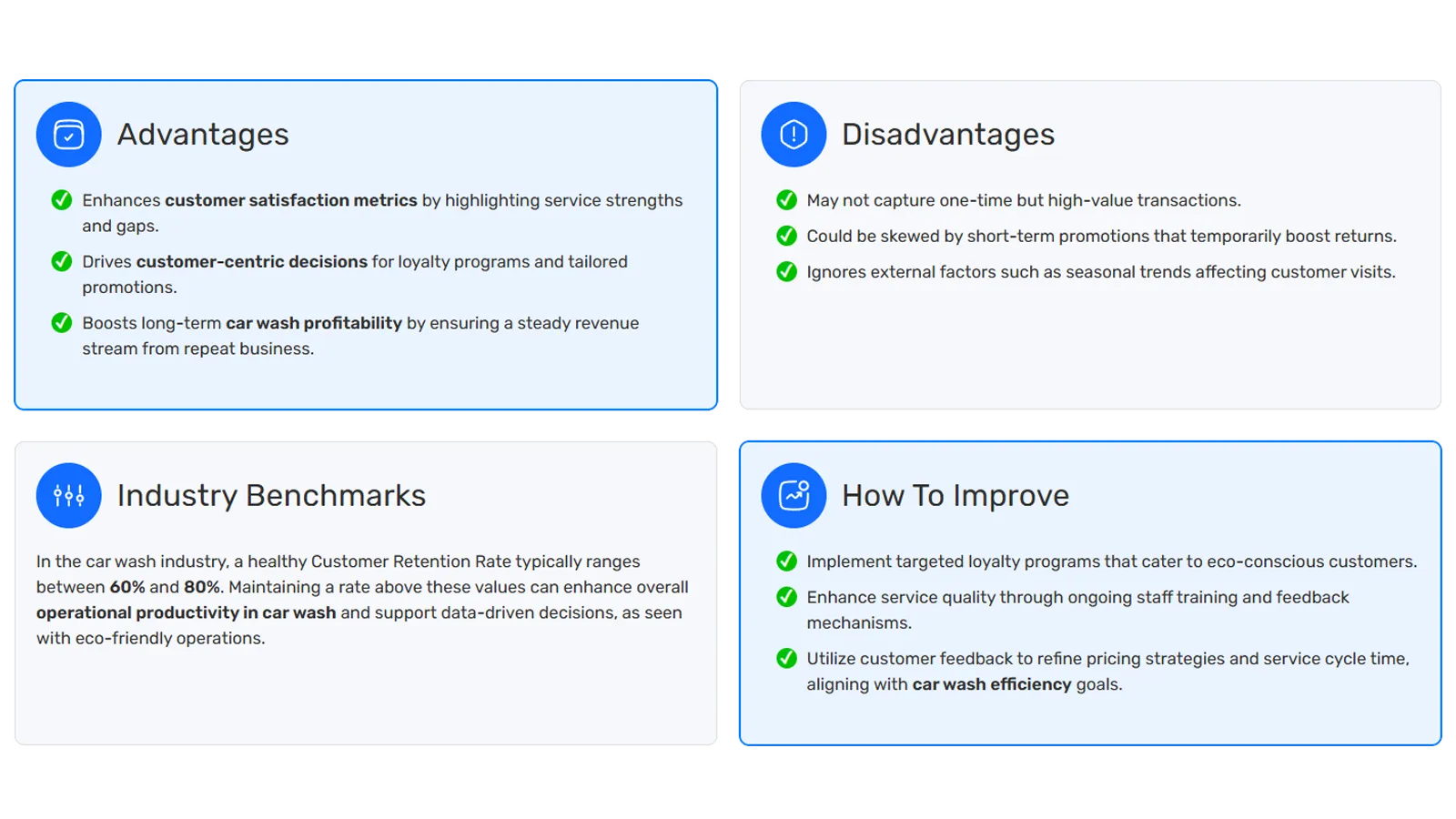
Membership retention trends help test the durability of recurring revenue.
Final Takeaway
To value a car wash business intelligently, start with verified and normalized cash flow, then test that result against market transactions, asset values, real-estate or lease terms, equipment condition, customer retention, competition, and compliance risk.
The best purchase price is not the lowest advertised number. It is the price that leaves enough cash flow to pay financing, fund maintenance, replace aging equipment, and compensate the buyer for operational risk.
Build a documented valuation range, inspect the site independently, and make the offer conditional on verified financial, lease, equipment, and environmental information. That process gives you the clearest path to a profitable car wash acquisition.








