Of all the topics that trip up Iowa drivers, window tint laws might be the sneakiest. Iowa window tinting legal limits and 70 percent light transmission sound like a simple answer, but they aren't. The 70% VLT requirement only applies to certain windows on your vehicle. Tint your rear windows the same shade and you're fine. Tint your front windows just one shade too dark and you're looking at a ticket.
Our research shows that Iowa Code § 321.438 specifically governs visible light transmission for motor vehicles. The number you'll hear most often, 70%, refers to how much light must pass through the film. It does not refer to how dark the film appears. That distinction makes all the difference when you're standing at a tint shop or facing a traffic stop. Let's break down exactly what the law says and how it applies to your car.
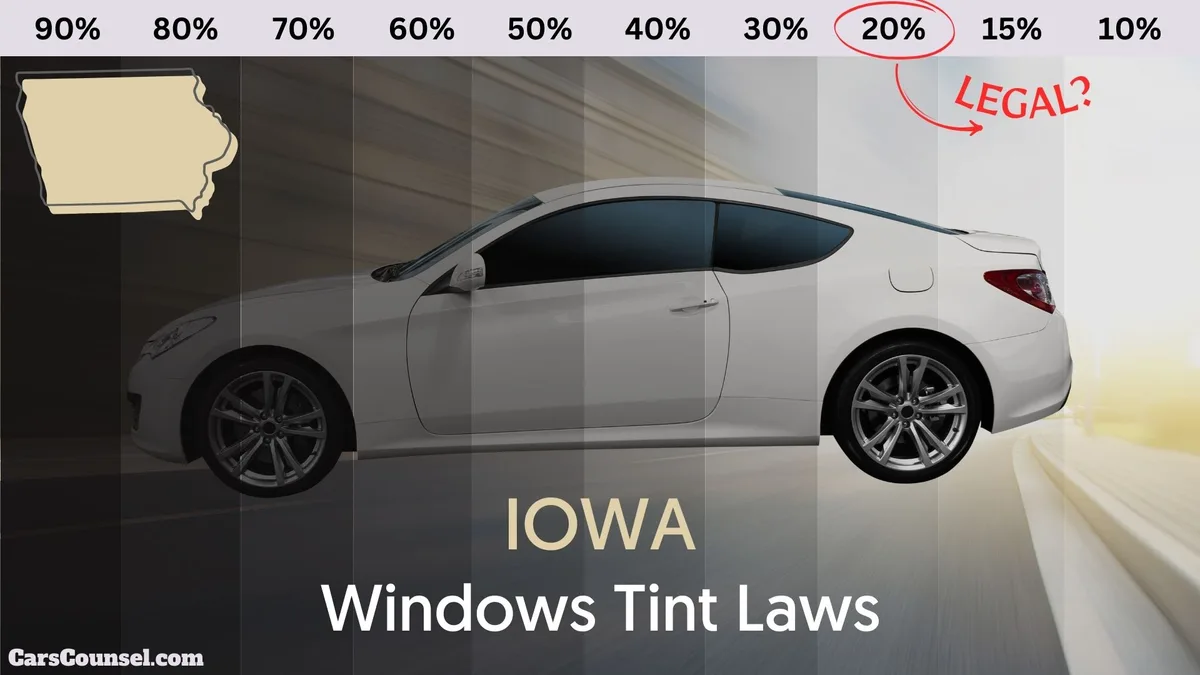
Image source: Bing (Web (fair-use with source credit))
## Quick Answer
Iowa window tinting legal limits and 70 percent light transmission require front windows to let in at least 70% of light. Rear windows have no VLT restriction. Windshield tint is only allowed above the AS-1 line. Medical exemptions can permit darker front tint. Commercial vehicles follow different rules.
## Iowa Window Tint Laws: What's Legal and What's Not in 2024
The foundation of Iowa's tint law is clear once you know where to look. The state sets a minimum visible light transmission (VLT) of 70% for your windshield and both front side windows. Everything behind the driver can be as dark as you want.
Here's the breakdown in a table that's easier to scan:
| Window Position | Minimum VLT Allowed | Notes |
|-----------------|---------------------|-------|
| Windshield | 70%+ | Non-reflective tint only on the AS-1 line (top 5 inches) or the area above it |
| Front side windows | 70%+ | Driver and passenger windows both must meet this limit |
| Rear side windows | No limit | Any darkness level is legal |
| Rear window | No limit | Must have dual side mirrors if the rear window is tinted |
That's the core of the rule. But there are a few other restrictions that catch people off guard. Reflective tint, the kind that looks like a mirror, can't be more than 35% reflective. Red, amber, and blue tints are banned entirely. The law applies to any vehicle registered in Iowa plus out-of-state drivers using Iowa roads.
One thing that surprises many owners is that factory tint almost never breaks the law on front windows. Automakers typically stay well above the 70% threshold. But if a previous owner added aftermarket film that drops the VLT below 70%, you're the one who'll pay the fine.
## Why Iowa's 70% VLT Rule Confuses Most Drivers
The phrase "70% tint" is the source of a ton of confusion. In everyday conversation, people say "I want 70% tint" when they actually mean "I want film that blocks 70% of light." But 70% VLT means exactly the opposite. It lets 70% of light through. That's a very light tint that's almost clear.
Think of it like this:
- **70% VLT** = light shade, barely visible from outside
- **30% VLT** = dark shade, blocks 70% of light
You'll hear both numbers thrown around. A shop in a neighboring state where 35% VLT is legal might casually say "70% is legal here" when they mean the total darkness limit. But in Iowa, the legal limit is the amount of light that must come through. That's a different number entirely.
This confusion leads to a common scenario. A driver goes to a tint shop and says "give me the legal limit." The installer applies a film that measures 30% VLT, or 70% blockage, on the front windows. That driver is now in violation because the light transmission is only 30%, far below Iowa's 70% minimum. The fix is to always ask for the film's spec sheet and confirm the VLT number, not the slang number.
Your best bet is to stick with a film certified to meet Iowa's standard. Many manufacturers make 70% VLT film specifically for states like Iowa. Verified buyer feedback indicates that 70% film still provides good UV protection and heat rejection, even if it doesn't look dark.
## How to Check If Your Tint Is Legal in Iowa Step by Step
You can check your tint's legality yourself with a few tools. Here's the process we recommend.
**1. Know your window positions.** The law cares about windshield and front side windows. Rear windows are essentially unregulated for darkness.
**2. Get a VLT meter.** These handheld devices read the exact percentage of light passing through the glass. Many auto parts stores carry them. Some tint shops will test your windows for free.
**3. Measure each front window.** Take a reading on the driver's side and passenger's side. Both must be at or above 70% VLT.
**4. Check the windshield.** The AS-1 line, the small etching near the top of your windshield, marks the boundary. Tint above that line is fine as long as it's non-reflective. Tint below it is a violation.
**5. Evaluate reflectivity.** Hold a light source at an angle. If the film reflects like a mirror, it's probably over the 35% limit. A meter can confirm.
**6. Verify color.** If your tint has a noticeable red, amber, or blue hue, especially on the windshield, it's likely illegal.
**7. Consider a professional test.** If you're unsure, swing by a local inspection station or an Iowa State Patrol office. Some locations offer testing for a small fee.
**Decision tree guide:**
- Front window VLT above 70%: Legal
- Front window VLT below 70%: Two options. Remove the tint or apply for a medical exemption.
- Rear window VLT any level: Legal with no restriction
- Windshield tint below AS-1 line: Illegal regardless of VLT
If you're buying a used car, run this check before you sign the paperwork. An illegal tint from the previous owner becomes your problem once the title transfers.
## Iowa Window Tint Limits by Vehicle Type
### Sedans, SUVs, and Trucks: What's Allowed Where
For most standard passenger vehicles, the same rules apply. Front side windows need 70% VLT. Rear side and rear windows have no limit. Trucks and SUVs often have different body styles, but the law treats them the same as passenger cars for tint purposes. Multi-purpose vehicles like hearses, limousines, or certain commercial vans may have separate allowances. If your vehicle falls into that category, check the specific classification on your registration.
### Windshield Tint Rules: The 5-Inch AS-1 Line Explained
Look at the top of your windshield. You'll probably see a small marking that says "AS-1" or has a series of dots. That's the allowable tint zone.
The rule is straightforward. You can apply a non-reflective tint only within the top 5 inches of the windshield or above the AS-1 line, whichever is greater. Below that line, no tint at all. The purpose is to keep the driver's view unobstructed while still offering some sun glare protection up top.
Some vehicles don't have an AS-1 line, especially older models. In that case, stick with the 5-inch rule. A tint shop can measure it for you during installation.
### Front vs. Rear Windows: Why the Rules Differ
Why can rear windows be any darkness while fronts are capped at 70%? The answer is driver visibility. Your front side windows are your primary lane-change and cross-traffic view. Dark tint on those windows significantly reduces your ability to see pedestrians, cyclists, and other vehicles at night.
Rear windows are less critical for direct driving vision. The law also provides an exception. If you tint your rear window, you must have dual side mirrors. Most modern vehicles already have driver and passenger mirrors, so that's usually not an issue.
The split rule also reflects a privacy balance. Tinting the back of your SUV can protect cargo and passengers without compromising the driver's forward field of view. Iowa decided that the privacy benefit in the rear is worth allowing unrestricted darkness.
## Medical Exemptions for Darker Tint in Iowa
### Who Qualifies and How to Apply
Iowa does allow front window tints darker than 70% VLT, down to 35%, but only with a medical exemption. The conditions that qualify generally involve light sensitivity due to medical treatment or chronic disease. Common examples include lupus, skin cancer requiring strict UV avoidance, certain eye conditions like cataracts or macular degeneration, and patients on medications that increase sun sensitivity.
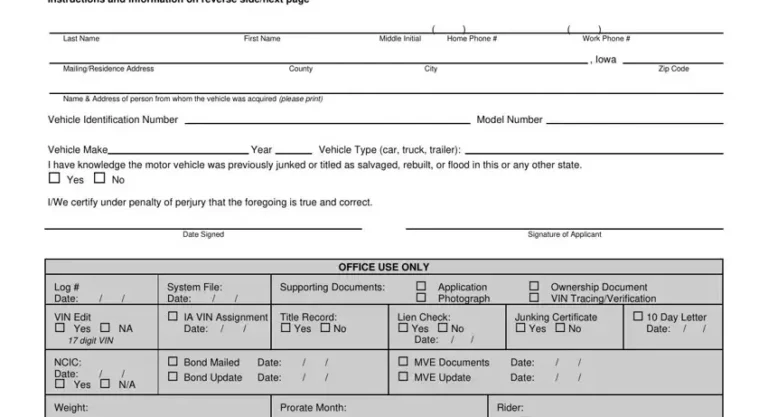
To apply, you need a licensed physician to complete the Iowa DOT Medical Exemption Form. You don't have to go through a special office. Just submit the completed form to the Iowa Department of Transportation. Once approved, you'll receive documentation to keep in your vehicle. Law enforcement will ask for it during a traffic stop if your tint appears darker than 70%.
The exemption applies only to front side windows. Rear windows don't need an exemption because they have no limit anyway. The windshield remains off-limits for any tint below the AS-1 line, regardless of medical need.
### What Your Doctor's Note Must Include
The form isn't complicated, but it must be filled out precisely. Your physician will need to provide your full name and the diagnosis related to light sensitivity, the specific VLT percentage recommended (typically 35% is the standard allowance), the duration of the condition (permanent or temporary), and their signature, license number, and contact information.
A note from a chiropractor, naturopath, or online doctor service usually won't fly. It needs to come from a medical doctor who has treated you for the qualifying condition.
If the exemption is temporary, pay attention to the expiration date. Once it lapses, your tint must be brought back up to 70% VLT or you could face the same penalties as anyone without a note.
## How to Measure Your Tint's VLT Without Guessing
You don't need to be a mechanic to figure out your VLT. The right tool makes it a two-minute job.
### Tools You'll Need and Cheap Alternatives
The most accurate way is with a dedicated VLT meter. These handheld devices use a sensor on one side and a receiver on the other. You clamp them over the glass and get a digital readout. Professional shops use them, and you can buy a basic model for around $30 to $60 online.
No meter? A less precise but still useful check is a tint comparison card. These cards have samples of different VLT levels. Hold the card against the window and match it visually. They're not court-admissible, but they'll tell you if you're far under 70%.
Some auto parts stores in Iowa will test your tint for free if you ask at the service counter. It's worth a phone call before you buy a meter.
### Where to Get Your Tint Professionally Tested
If you want a reading that holds up in traffic court, get a professional measurement. Most tint shops offer free testing. The Iowa State Patrol and many county sheriff's offices also have meters they use for enforcement. You can stop by during business hours and ask for a courtesy check.
Image source: Bing (Web (fair-use with source credit))
The key is to test both front side windows separately. A difference of a few percentage points between the two is normal. Anything more than 5% could mean one window was replaced or re-tinted incorrectly.
## The Risks of Illegal Tint in Iowa
Running darker tint than the law allows isn't a minor fix-it ticket. It can cost you time, money, and your inspection sticker.
### Fines, Fix-It Tickets, and Failed Inspections
The base fine for a window tint violation in Iowa is $127.50. That's for the first offense. Repeat violations can push the fine higher. You'll also get a fix-it ticket giving you a set number of days to remove the illegal tint and prove compliance.
If your vehicle is due for an inspection or you're pulled over for another reason, the officer can add a tint citation to the stop. Some insurance companies consider tint violations as moving violations. That means your rate could go up.
Most law enforcement uses a handheld VLT meter during the stop. They'll hold it against your window, get a reading, and compare it to the legal limit. There's no guesswork. If the meter says 65%, you're in violation.
Image source: Bing (Web (fair-use with source credit))
### How Law Enforcement Checks Tint Darkness
Officers don't stand there trying to decide by sight. They use calibrated meters that provide a digital readout. The meter accounts for factory glass, so the reading reflects the total light transmission through both glass and film.
Vehicle safety inspections in Iowa also check tint compliance. If your tint fails inspection, you'll need to remove it and get reinspected before you can register the vehicle or get a new sticker.
## Iowa Tint Laws vs. Neighboring States: What Changes at the Border
One of the most common mistakes drivers make is assuming the law is the same everywhere. It's not. If you drive a vehicle registered in Iowa but travel regularly to Illinois, Minnesota, Nebraska, South Dakota, or Wisconsin, you need to know their rules too.
Here's a quick comparison of front side window limits in neighboring states:
| State | Front Side Window VLT Limit |
|-------|-----------------------------|
| Iowa | 70% |
| Illinois | 35% |
| Minnesota | 50% |
| Nebraska | 35% |
| South Dakota | 35% |
| Wisconsin | 50% |
See the issue? Illinois allows front window tint as dark as 35% VLT. If you buy a car in Illinois with 35% front tint, it's legal there. The moment you drive it into Iowa, you're in violation. Per Iowa Code § 321.438, out-of-state drivers are still expected to comply with Iowa law while on Iowa roads. The ticket goes to you, not the car.
Your best bet is to check the laws of any state you drive through. You can either pick a film that works everywhere (70% VLT is safe in all six states) or plan to remove the tint before crossing the border.
## Choosing the Right Tint for Iowa's Climate
Iowa summers are hot and humid. Your car's interior can hit 150 degrees Fahrenheit on a July afternoon. The right film does more than block light. It controls heat, UV radiation, and glare.
### Best Films for Heat Rejection in Summer
Not all films are the same. The three main types you'll see at shops are dyed film, metalized film, and ceramic film.
Dyed film is cheap but fades over time. It blocks 30% to 50% of heat. It's a good option if you're on a budget and don't mind replacing it in a few years.
Metalized film uses metal particles to reflect heat. It's more durable but can interfere with GPS and cell signals. It works well for rear windows.
Ceramic film is the top tier. It blocks 99% of UV rays and up to 60% of heat. It doesn't fade or interfere with electronics. It costs more, but verified buyer feedback indicates it's worth it for Iowa's temperature swings.
Image source: Bing (Web (fair-use with source credit))
### UV Protection vs. Privacy: What Matters More?
If privacy is your primary goal, focus on the rear windows where darkness is unlimited. That's where you can use a 5% or 15% film for complete privacy. But for the front windows, privacy isn't really an option. The 70% VLT limit means those windows will always be relatively transparent.
That's okay. Your priority for the front should be UV protection and heat rejection. Those films block 99% of UVA and UVB rays while still meeting legal light transmission. Your skin and your car's interior will thank you.
## Professional vs. DIY Tint: Which Saves You Money and Headaches?
Tinting your own windows sounds like a weekend money-saver. In some cases it is. In others, it's a mess you'll pay more to fix.
**DIY benefits:**
- Lower upfront cost at $50 to $100 per roll
- You control the schedule
- Plenty of online tutorials show the steps
**DIY drawbacks:**
- Bubbles, wrinkles, and peeling are common for first-timers
- You need a clean, dust-free workspace
- Cutting the film to fit curved windows is tricky
- If you mess up, the film is wasted
**Professional installation benefits:**
- Warranty on labor and film
- Precision cutting and fitting
- No bubbles or debris trapped under the film
**Professional installation drawbacks:**
- Higher upfront cost at $150 to $600 for a full car
- You have to schedule and wait
For a first attempt, we recommend starting with a smaller vehicle. Compact cars have simpler window shapes. If you're tinting an SUV with large curved rear windows, a pro is usually a better bet.
One more factor is compliance. A professional shop will know Iowa's limits. They'll also provide a compliance sticker if required. A DIY kit might not include that documentation.
## Common Tint Mistakes That Get Iowa Drivers Pulled Over
The most frequent violation isn't dark tint. It's factory tint that's been modified incorrectly.
Many newer vehicles come with factory-installed tint that meets Iowa's 70% VLT requirement. But when owners add aftermarket film on top, they don't account for the existing tint. Two layers of 70% film don't equal 70% transmission. They multiply.
For example, factory glass might transmit 80% of light. Adding a 70% VLT film on top gives you 56% total transmission. That's below Iowa's limit. The fix is to either remove the factory tint first or choose a lighter aftermarket film.
Another common mistake is ignoring the AS-1 line. Drivers sometimes tint the full windshield for UV protection, not realizing that any tint below the AS-1 line is illegal regardless of VLT percentage.
## How Much Does Legal Window Tint Cost in Iowa?
Prices vary by film type and vehicle size. Here's what to expect at Iowa shops.
Basic dyed film runs $100 to $200 for a sedan. Ceramic film runs $250 to $500 for a sedan. Full vehicle coverage for an SUV or truck runs $300 to $600.
Most shops offer package deals for all windows. Ask about warranties. Many ceramic films come with lifetime guarantees against fading and peeling.
## What to Do If Your Tint Fails Inspection
You'll get a fix-it ticket with a deadline. Here's the process.
First, remove the illegal tint. You can do this yourself with a steamer and adhesive remover, or a shop can do it for around $50 to $100.
Second, have the windows re-tested. Any tint shop with a VLT meter can confirm the new reading.
Third, get a compliance certificate from the shop. This proves the work was done.
Fourth, return to the inspection station with proof. Some counties allow you to pay a reduced fine if you fix it quickly. Others require full payment regardless.
If the violation happened during a traffic stop rather than an inspection, you'll need to show proof of correction to the court. Keep all receipts and meter readings.
## Iowa Window Tint Laws FAQ
### Can You Tint Your Windshield in Iowa?
Only above the AS-1 line. That's typically the top 5 inches. Any tint below that line is illegal.
### Are Mirrored or Colored Tints Legal?
No. Reflective tints over 35% are banned. Red, amber, and blue tints are also illegal in Iowa.
### Do You Need a Tint Sticker in Iowa?
No. Iowa does not require compliance stickers for window tint. Your documentation is the film's spec sheet or your medical exemption paperwork.
### How Dark Can You Go with a Medical Exemption?
Down to 35% VLT on front side windows. Rear windows remain unrestricted even without an exemption.
### Does Factory Tint Count Toward the VLT Limit?
Yes. The VLT meter measures total light transmission through the glass and any film combined. Factory glass alone usually tests around 75% to 80% VLT.
### Can You Remove Tint Yourself Without Damaging the Rear Defroster?
Yes, but carefully. Use a steamer or heat gun on low setting to soften the adhesive. Pull the film slowly at a 45-degree angle to avoid lifting the defroster lines.
## Final Checklist: Is Your Iowa Window Tint Legal?
Use this checklist to confirm compliance before your next inspection or traffic stop.
- Front side windows measure 70% VLT or higher
- Windshield has no tint below the AS-1 line
- No red, amber, or blue tint on any window
- Reflectivity is under 35%
- Medical exemption paperwork is in the vehicle (if applicable)
- Rear window tint has dual side mirrors installed
- Aftermarket film has a spec sheet showing the VLT percentage
- Both front windows test within 5% of each other
If you can check every box, you're good to go. If any item is a no, you know exactly what needs fixing. Iowa's tint laws aren't complicated once you understand the numbers. The key is knowing your VLT, measuring it properly, and keeping your documentation handy.


ByMax Lee