ByMax Lee
Iowa Moped Laws: Riding Rules & Rider Help Guide
If you're trying to figure out Iowa moped operation rules on level ground and rider assistance, you've probably run into some confusing language in the state code. The terms "level ground" and "rider assistance" aren't just technical nitpicking, they're the difference between riding legally and getting a ticket. Here's the thing: Iowa draws a hard line between what counts as a bicycle, an electric bicycle, and a motorized bicycle (moped).
And that line depends on how fast your ride can go on flat pavement and how much help the motor gives you.
As of 2026, Iowa law sets the magic number at 20 miles per hour for most electric bikes. Anything that can exceed 20 mph on level ground, whether via throttle or pedal assist, starts falling into moped or motorcycle territory, with license, registration, and insurance requirements attached. Before you ride, it's worth understanding exactly where your machine lands in the state's three-tier classification system.
Quick Answer
Can you ride an e-bike or moped in Iowa without a license? It depends on your bike's top speed and how it assists you. Class 1 and Class 2 electric bicycles stay under 20 mph.
You can ride these without a license or registration. Mopeds and faster e-bikes need a valid driver's license and vehicle registration. Rider assistance type also matters: throttle-only bikes may be treated differently than pedal-assist.
How Iowa Classifies Mopeds, E-Bikes, and Scooters (And Why It Matters)
Iowa follows the three-class electric bicycle system that most states use, plus a separate category for gas-powered mopeds. The classification determines everything, whether you need a license, where you can ride, and what equipment your bike must have. Miss the distinction and you could end up with a ticket for riding an unregistered vehicle.
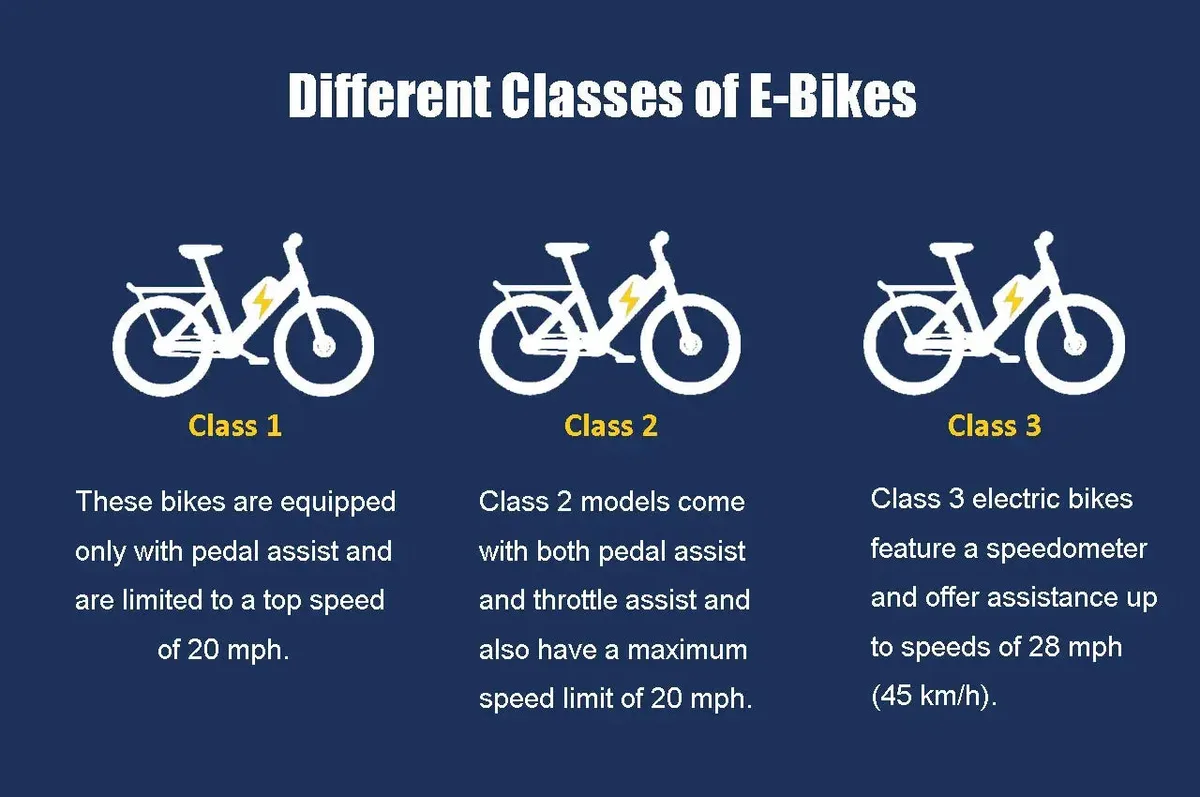
Here's how the main categories break down:
| Type | Top Speed (level ground) | Motor Limit | Pedals Required? | License Needed? | Registration Needed? |
|---|---|---|---|---|---|
| Class 1 e-bike | 20 mph (pedal-assist only) | 750W | Yes | No | No |
| Class 2 e-bike | 20 mph (throttle or pedal-assist) | 750W | Yes | No | No |
| Class 3 e-bike | 28 mph (pedal-assist only) | 750W | Yes | Yes (driver's license) | No |
| Motorized bicycle (gas moped) | 39 mph | 50cc / 2 hp | Yes | Yes (driver's license) | Yes |
| Electric scooter (no pedals) | Varies (often 20–30 mph) | Varies | No | Yes (may be treated as motor vehicle) | May require registration |
A few important notes. Class 1 and Class 2 e-bikes are essentially treated as bicycles under Iowa law. You can ride them on bike paths and most roads, and you don't need any special paperwork.
Class 3 e-bikes bump the speed up to 28 mph, but the trade-off is a driver's license requirement and an age minimum of 16.
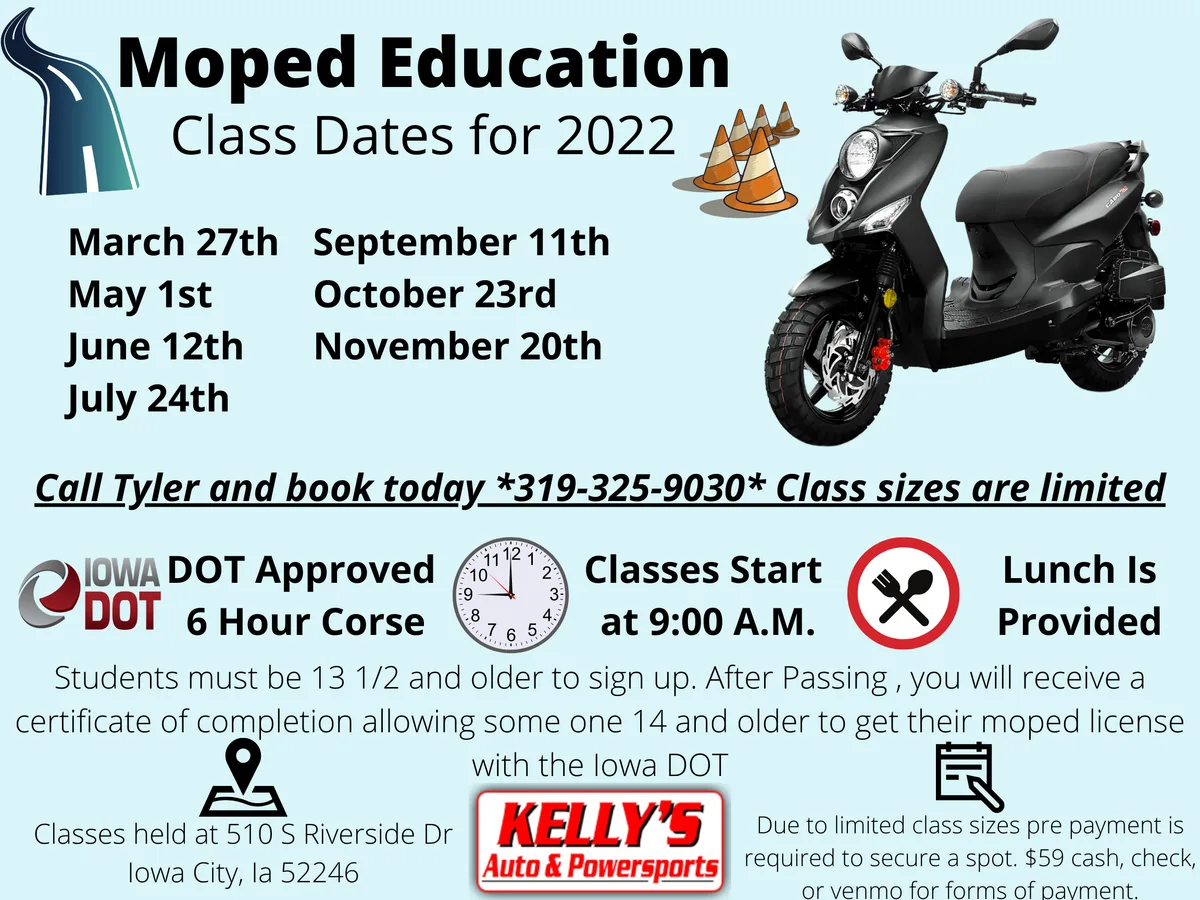
Gas mopeds (motorized bicycles) are a different beast. Iowa defines them as vehicles with an engine displacement of 50cc or less and a top speed of 39 mph on level ground. These require a valid driver's license, annual registration, and, depending on your insurance company, liability coverage.
Electric scooters without pedals can be a gray area; the Iowa DOT often treats them as motor vehicles, so you'll need to register them and hold a license.
Why does all this matter? Because the classification is the first thing a police officer will check if you're pulled over. Your owner's manual or the sticker on your bike's frame usually lists the class and top speed.
Keep that information handy.
The "Level Ground" Rule: What It Really Means for Speed Tests
Iowa law uses the phrase "maximum speed on level ground" as the benchmark for classifying your ride. That sounds straightforward, but it has specific meaning in enforcement and design.
Level ground means a flat, dry paved surface with no noticeable incline or decline. It also assumes a rider of average weight (around 165 pounds) in normal riding position, with no significant wind in either direction. Manufacturer speed ratings are tested under these controlled conditions.
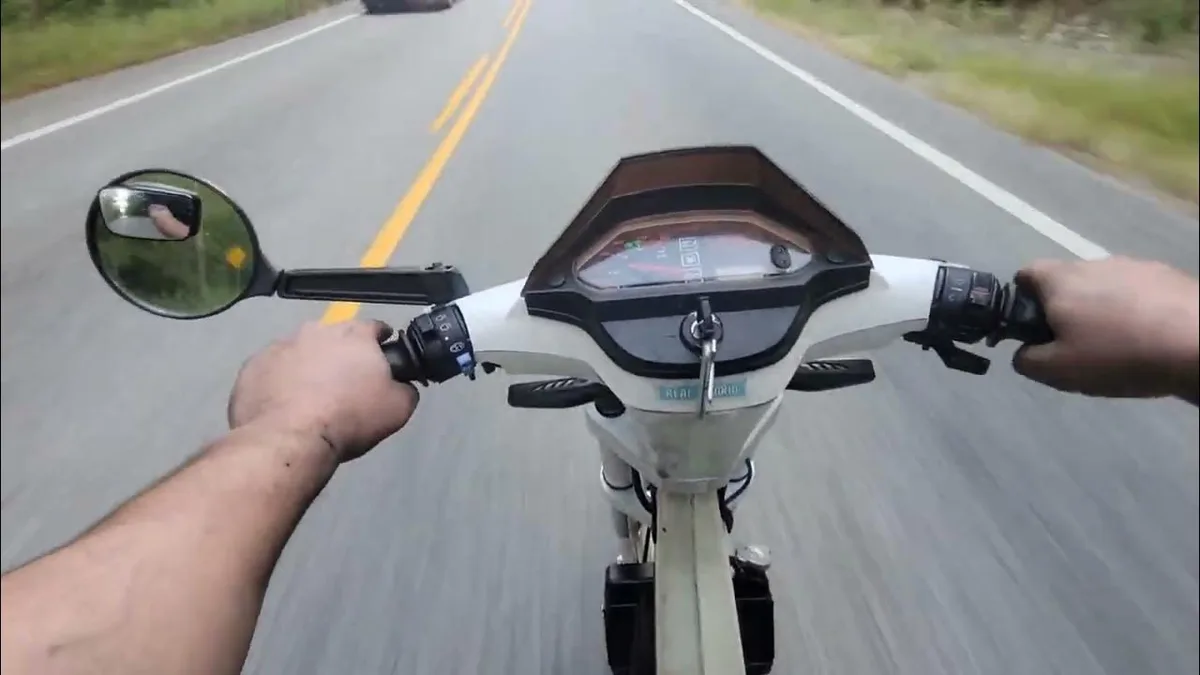
Here's why it matters: if your e-bike or moped can exceed the class limit on a flat road, it's legally considered the next class up, even if you normally ride slower. For instance, a "20 mph" e-bike that actually hits 22 mph on a flat road could be treated as a motorized bicycle, requiring a license and registration.
What about downhill? That doesn't count. The law cares about the vehicle's capability on level ground, not what happens when gravity gives you a push.
So if your bike only exceeds 20 mph going downhill but stays under on flat pavement, you're still in the Class 1 or 2 category.
In practice, most factory-built e-bikes comply with their stated class. The issue usually comes up with modified bikes, adding a larger motor, upgrading the controller, or removing the speed limiter. If you've made any modifications, you should test your bike on a measured flat stretch to see where it truly lands.
Rider Assistance Explained: Pedal-Assist vs. Throttle-Only
The type of rider assistance your bike uses directly affects how Iowa classifies it. The two main systems are pedal-assist (PAS) and throttle-only, and they're not treated equally in every situation.
Pedal-assist means the motor only engages when you're pedaling. The harder you push, the more power the motor supplies. In Iowa, pedal-assist is the default mode for Class 1 and Class 3 e-bikes.
Class 2 e-bikes can have either pedal-assist or a throttle, as long as the motor cuts off at 20 mph.
Throttle-only means you can engage the motor without pedaling at all, twist a grip or push a button and the bike moves under motor power alone. Iowa places throttle-only bikes in Class 2 (if they stay under 20 mph) or treats them as motorized bicycles if they exceed that speed. A bike with a throttle and no functional pedals may not be considered an e-bike at all; it could be classified as a motor vehicle, especially if it's built like a scooter.
Here's a quick comparison of how assistance mode affects legal treatment:
| Assistance Type | Typical Class | Pedals? | License Required? | Notes |
|---|---|---|---|---|
| Pedal-assist only (≤20 mph) | Class 1 | Yes | No | Most common for trail riding |
| Pedal-assist + throttle (≤20 mph) | Class 2 | Yes | No | Throttle must cut off at 20 mph |
| Pedal-assist only (≤28 mph) | Class 3 | Yes | Yes | License required, no throttle allowed |
| Throttle-only (no pedals) | Motor vehicle | No | Yes | Usually requires registration |
| Throttle with pedals (>20 mph) | Motorized bicycle | Yes | Yes | Falls into moped category |
A common source of confusion: some bikes come with a throttle that works even when you're not pedaling. If that throttle can push you past 20 mph on level ground, the bike may not qualify as a Class 2 e-bike, it could be treated as a motorized bicycle, requiring a license and registration. Always check the manufacturer's specifications for the class rating.
Step-by-Step: Do You Need a License, Registration, or Insurance?
This is the core question for most riders. The answer depends on three factors: your bike's top speed, whether it has pedals, and whether the motor can be engaged without pedaling. Use this step-by-step process to figure out your requirements.
Step 1, Check the top speed on level ground.
If your bike stays under 20 mph, move to Step 2. If it goes 20, 28 mph, it's a Class 3 e-bike. If it goes 28, 39 mph, it's a motorized bicycle (gas moped) or an electric equivalent.
Over 39 mph and it's a motorcycle.
Step 2, Check for pedals.
Bikes with fully functional pedals and a motor under 750W are treated as e-bikes (Class 1, 2, or 3). Bikes without pedals, like scooter-style mopeds, are treated as motor vehicles, regardless of speed.
Step 3, Determine rider assistance type.
If the bike is pedal-assist only and stays under 20 mph, you're in the clear, no license, no registration. If it has a throttle, it's Class 2 (under 20 mph) or a motor vehicle (over 20 mph). Throttle-only bikes with no pedals always require a license.
Step 4, Check age requirements.
Class 1 and 2 e-bikes have no minimum age, though local ordinances may set one. Class 3 e-bikes require the rider to be at least 16. Motorized bicycles require a valid driver's license (minimum age 16).
Step 5, Register if required.
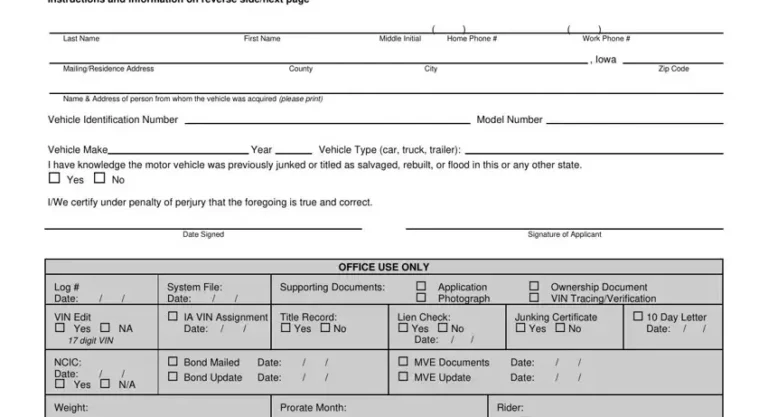
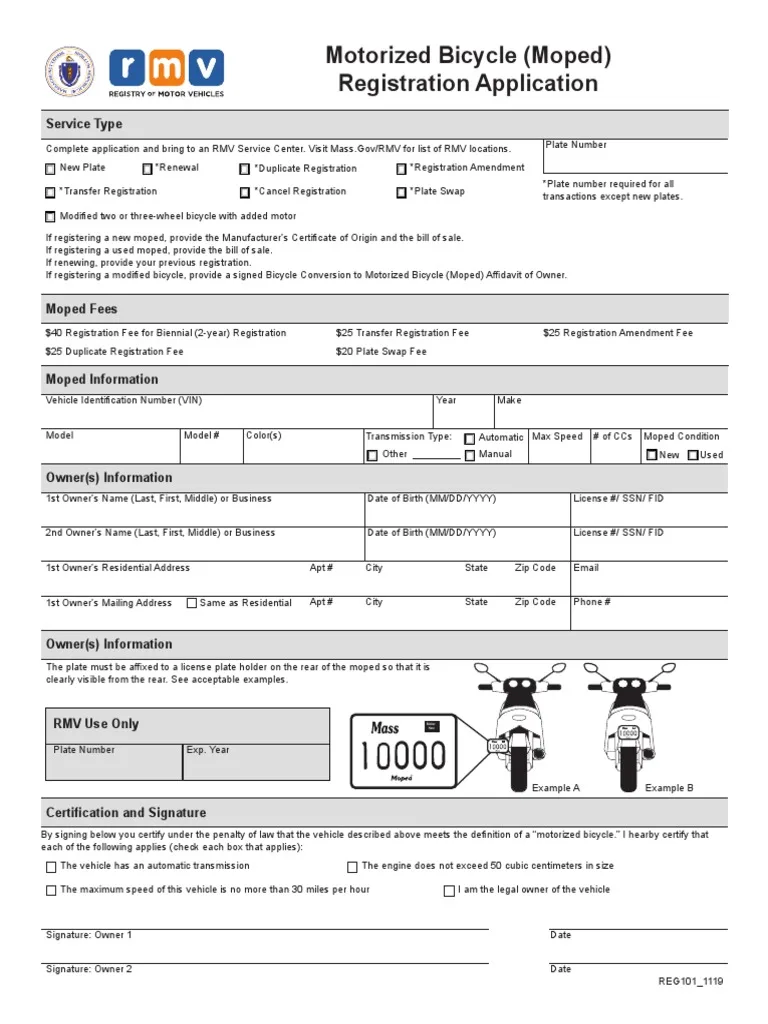
Only motorized bicycles and motor vehicles need registration. Class 1, 2, and 3 e-bikes are exempt. Iowa's annual moped registration costs $20, a flat fee that doesn't vary by vehicle age or weight the way some states calculate it.
First-time titling and registration runs around $25, far less than the $225 initial fee some states charge.
Step 6, Get insurance if needed.
Iowa law doesn't require liability insurance for e-bikes. For motorized bicycles (gas mopeds), insurance is not mandatory by state law, but your lender or leasing company may require it. Even if not required, many riders choose to carry coverage to protect against accidents or theft.
The table below summarizes what you need based on your ride:
| Scenario | License | Registration | Insurance (Required?) |
|---|---|---|---|
| Class 1 e-bike (≤20 mph, pedal-assist) | No | No | No |
| Class 2 e-bike (≤20 mph, throttle) | No | No | No |
| Class 3 e-bike (≤28 mph, pedal-assist) | Yes (driver's license) | No | No |
| Motorized bicycle (gas moped, 39 mph) | Yes | Yes | Not state-required, but recommended |
| Electric scooter (no pedals, any speed) | Yes | Usually required | Depends on speed/weight |
If you're still unsure where your bike fits, contact the Iowa DOT Motor Vehicle Division or check the manufacturer's certification label. It's better to confirm before you ride than to risk a ticket.
Where You Can (and Can’t) Ride in Iowa
Iowa lets e-bikes use bike lanes and most roads. Class 1 and Class 2 models can access multi-use paths unless local signs say otherwise. Class 3 e-bikes face more restrictions.
They are often banned from off-road trails and some bike paths.
Sidewalk rules vary by city. Des Moines prohibits motorized vehicles on sidewalks. That includes mopeds and e-bikes with a throttle.
Cedar Rapids takes a different approach. It allows e-bikes on sidewalks as long as you keep the speed under 15 mph and yield to pedestrians.
Gas mopeds follow motorcycle rules. They must stay in the right lane on most highways. They cannot use bike lanes.
Before you ride around town, check the local ordinance on the Iowa DOT website or call the police department’s non-emergency line.
Age, Helmet, and Equipment Requirements You Must Follow
Iowa does not set a statewide minimum age for Class 1 or Class 2 e-bikes. Individual cities might. For Class 3 e-bikes you must be at least 16 years old and hold a valid driver’s license.
Gas mopeds also require a license and a minimum age of 16.
Helmet laws are age-based. If you are under 18 and riding a motorized bicycle or moped you must wear a helmet. There is no helmet requirement for e-bike riders over 18.
Aggregate safety reports strongly recommend wearing one regardless of age.
Equipment rules matter. Every bike needs a white front light and a red rear reflector for nighttime riding. Mopeds also require a horn, a rearview mirror, and functioning turn signals if the vehicle came equipped with them.
Failing to have these items can earn you a fix-it ticket or a fine. Keep in mind that vehicle registration costs across different states vary widely, so compare what Iowa asks against other places you might ride.
Common Mistakes That Get Riders Ticketed (Or Worse)
The most frequent citation our research uncovered is riding an unregistered motorized bicycle. Many people buy a 30 mph e-bike or gas scooter online. They assume the law treats it the same as a bicycle.
It does not.
A second common oversight is modifying a Class 2 e-bike. If you remove the speed limiter your bike legally becomes a moped. You now need a license and registration.
Some riders skip the registration step to avoid the first time titling fees, but the fine for getting caught without registration is higher than the cost of doing it right.
Riding on the sidewalk in a city that bans e-bikes is another quick way to get a ticket. Always pay attention to posted signage in parks and downtown areas.
How to Test Your Moped’s Speed on Level Ground (Without Getting Pulled Over)
You need a flat road and a reliable speedometer. Your bike’s built-in display might be optimistic. Use a GPS speedometer app on your phone for an independent measurement.
Find an empty parking lot or a long driveway with no slope. Charge your battery fully. Make sure your tires are inflated to the recommended pressure.
Ride the bike at full throttle or full pedal assist for at least 10 seconds on the flat stretch.
Note the top speed displayed on the GPS app. Repeat the run three times and take the average of the three runs. If the average is 20.5 mph or higher on level ground, your bike technically exceeds the Class 2 limit.
You should check the registration requirements for a motorized bicycle.
E-Bike vs. Moped vs. Scooter: Which One Are You Actually Riding?
This distinction matters more than the brand or the style of the frame. The legal definition comes down to speed, pedals, and motor power.
An e-bike has pedals, a motor under 750 watts, and a top speed under 20 mph for Classes 1 and 2. A moped (motorized bicycle) has pedals, a motor under 50cc or 2 horsepower equivalent, and a top speed between 20 and 39 mph. An electric scooter typically lacks pedals.
Without pedals, Iowa treats it as a motor vehicle.
If you are unsure what you own, check the manufacturer’s certification sticker on the frame. It lists the class and the top speed rating. When comparing vehicles, remember that rules for other low-speed vehicles follow different standards entirely, so do not apply the same thinking.
E-bikes are largely exempt from the vehicle registration fees that apply to mopeds and scooters in Iowa.
What Happens If You Break the Rules? Fines, License Points, and Legal Risks
You’ll face fines if you ride without proper registration or a license. Iowa sets the base penalty at $100 for an unregistered motorized bicycle. That jumps to $200 if you’re caught riding without a valid driver’s license.
License points are another risk. Operating a moped without a license can add two points to your driving record. Accumulate too many points and your license could be suspended.
Insurance companies also track these violations. A single ticket can raise your premium by 20% or more.
Real Scenarios: How Iowa Police Enforce Moped Laws
Officers typically pull riders over for obvious violations. Speeding in a school zone or riding on a prohibited sidewalk are common triggers. They’ll ask for your license, registration, and proof of insurance if required.
Some departments use radar guns to check speeds. If your e-bike hits 25 mph on a flat road, they may classify it as a moped. That means you’ll need to show registration and a valid license.
Refusing to provide these can lead to a citation or even impoundment.
FAQs: Your Top Questions Answered
Do I need a license for a 20 mph e-bike?
No. Class 1 and Class 2 e-bikes under 20 mph don’t require a license in Iowa.
Can I ride a moped on the sidewalk in Iowa?
It depends on the city. Des Moines bans it. Cedar Rapids allows it if you stay under 15 mph.
What’s the difference between a Class 2 and Class 3 e-bike?
Class 2 tops out at 20 mph with throttle or pedal assist. Class 3 goes up to 28 mph but only with pedal assist.
Do I need insurance for my moped?
Iowa doesn’t require it for e-bikes. Gas mopeds may need coverage if financed.
How do I register my moped in Iowa?
Visit any county treasurer’s office. Bring proof of ownership and a valid ID. The fee is $20 annually.
What’s the penalty for riding without a helmet?
There’s no statewide fine for adults. Riders under 18 face a $25 citation.