ByMax Lee
Guide to Arizona HOV Lane Hours and Passenger Rules in 2026
If you've ever merged into an Arizona HOV lane and wondered if you were doing it right, you're not alone. Arizona HOV lane hours and passenger rules trip up plenty of drivers, especially if you're new to the state or just starting a commute on the I-10 or US 60. Getting it wrong can cost you a couple hundred bucks and a moving violation on your record.
As of 2026, Arizona maintains over 350 lane miles of HOV pavement across the Phoenix and Tucson metro areas. Those diamond lanes move carpools faster, but the rules vary by freeway, time of day, and even what you're driving. Let's break down exactly when you can use them, who needs to be in the car, and what happens if you don't follow the rules.
Quick Answer
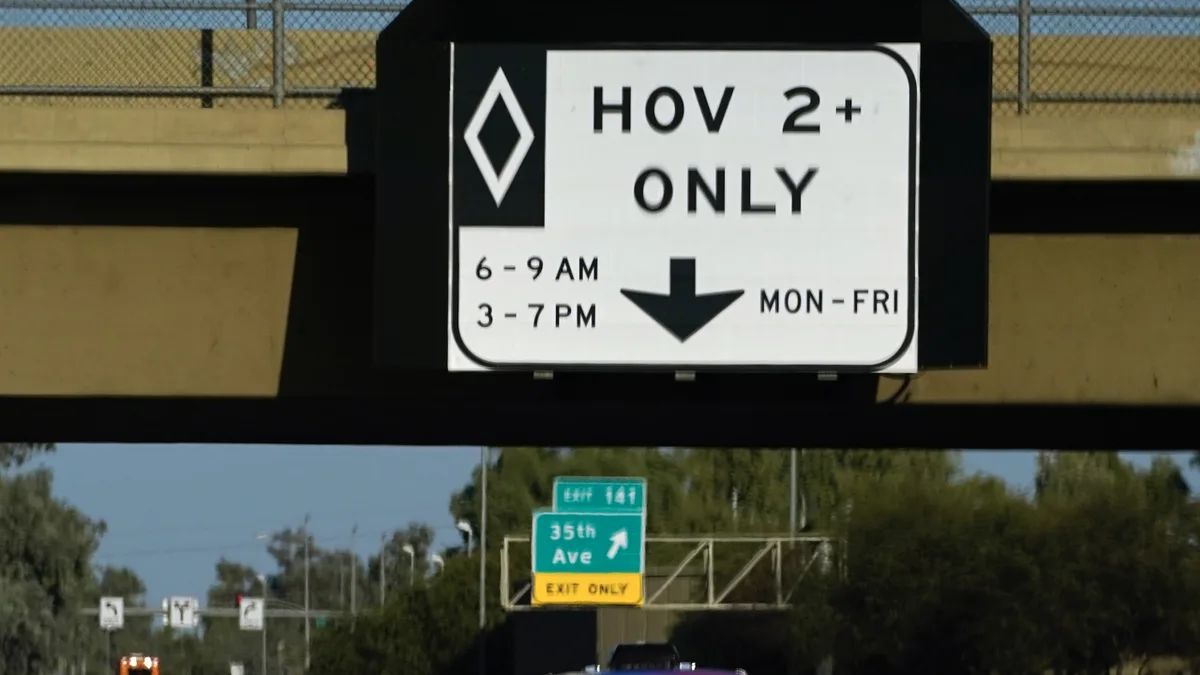
Arizona HOV lanes operate on weekdays only. Phoenix hours are 6, 9 AM and 3, 7 PM. Tucson hours are 6, 9 AM and 3, 6 PM.
You need two occupants minimum. Motorcycles and clean fuel vehicles can drive solo.
Why Getting Arizona HOV Lane Rules Right Matters
A first-time HOV violation in Arizona carries a base fine around $200, plus court fees and assessments that push the total higher. You also get two points on your driving record. Accumulate enough points, and your insurance rates spike.
Beyond the cost, there is a safety angle. HOV lanes are separated from general traffic by double solid lines in some sections. Illegally entering or exiting them can cause collisions.
Law enforcement patrols these lanes regularly. Photo enforcement exists on some Phoenix corridors. The "I didn't see the sign" excuse rarely works.
When solo drivers cheat, the whole system slows down for the people who are actually carpooling. Arizona's goal is to move more people per vehicle, not just more vehicles. That is why the rules are enforced strictly.
For official HOV lane maps and current restrictions, visit ADOT's website at azdot.gov. They publish the most up-to-date information for every freeway segment.
What Are HOV Lanes in Arizona? (A Quick Breakdown)
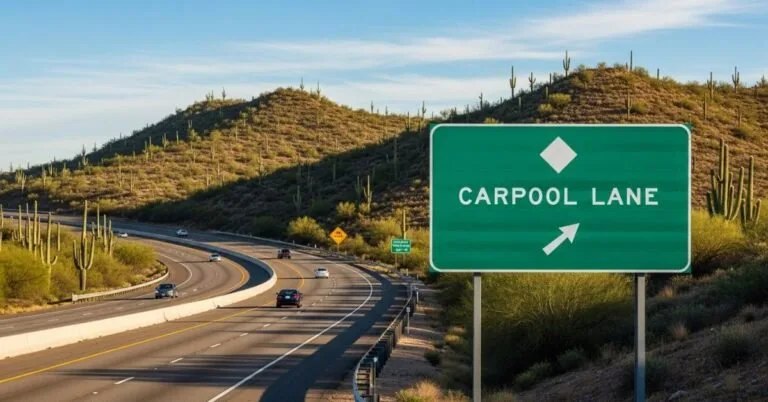
HOV stands for High-Occupancy Vehicle. In Arizona, these lanes are marked with a white diamond symbol on the pavement and on overhead signs. You will see them on major freeways in Phoenix and Tucson.
The lanes reward carpooling. If you have the right number of people in the car, you skip the stop-and-go traffic in general purpose lanes. The time savings can be significant.
Expect 10 to 20 minutes on a typical commute.
Here is where you will find them:
Phoenix metro area
- I-10 (Maricopa Freeway and Papago Freeway segments)
- US 60 (Superstition Freeway)
- I-17 (Black Canyon Freeway)
- Loop 101 (Agua Fria and Price freeways)
- Loop 202 (Santan and Red Mountain freeways)
- SR 51 (Piestewa Freeway)
Tucson area
- I-19 and I-10 segments near downtown
Most Arizona HOV lanes are buffer-separated with a striped buffer zone or double solid lines. In some areas, the lane is reversible. It changes direction depending on the time of day.
Those are less common but exist on a few Phoenix freeways.
Always check the signage before entering. The lane may be open to all traffic during off-peak hours. Then it switches to HOV-only during rush periods.
Signs at the on-ramp tell you the current restriction.
Arizona HOV Lane Hours: Phoenix vs Tucson (What You Need to Know)
The hours differ between the two major metro areas. Let's lay it out clearly.
| Location | Morning Peak | Afternoon Peak | Weekend/Holiday |
|---|---|---|---|
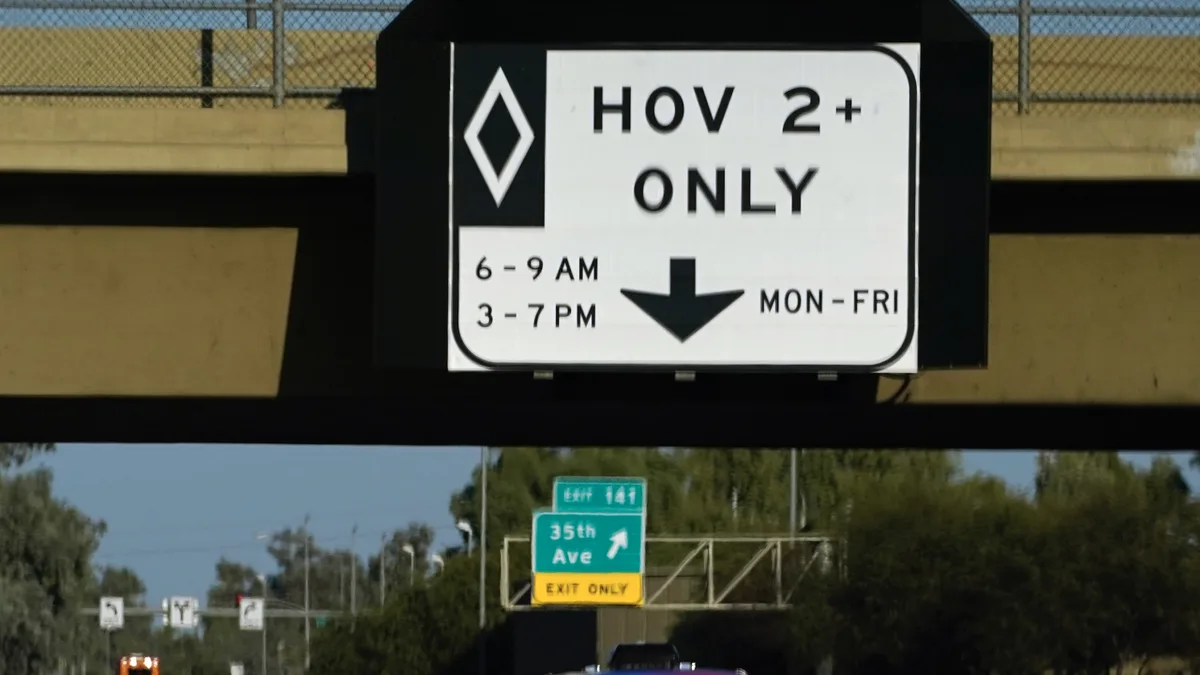
| Phoenix | 6:00 AM – 9:00 AM | 3:00 PM – 7:00 PM | Open to all traffic |
| Tucson | 6:00 AM – 9:00 AM | 3:00 PM – 6:00 PM | Open to all traffic |
The afternoon window in Tucson ends an hour earlier than Phoenix. That is a common trip-up for drivers who travel between the two cities.
Outside these hours, HOV lanes revert to general purpose lanes. Any vehicle can use them. But be careful.
The signs at some freeway segments display the hours electronically. They can change during special events or construction. Always glance at the message board.
Weekends and major holidays are open to all vehicles. No passenger limit applies. The holiday exceptions include New Year's Day, Memorial Day, Independence Day, Labor Day, Thanksgiving, and Christmas.
What about shoulder lanes that become HOV lanes? On some Phoenix freeways, the right shoulder converts to an HOV lane during peak hours. These are marked with dynamic message signs.
They are not active 24/7. Pay attention to the sign before you pull onto the shoulder.
One more nuance. Some HOV lanes in Phoenix operate as 2+ only during peak hours but allow all traffic during midday. Check the posted signs if you are driving at 10 AM or 2 PM.
Passenger Rules: Who Counts and Who Doesn't
The basic rule is simple. You need at least two people in the vehicle, including the driver. That is the 2+ standard for most HOV lanes in Arizona.
Here is who counts:
- Adults and teenagers. Any human passenger.
- Infants and children. Even a newborn in a car seat counts.
- Foster children. They count as passengers.
- Rideshare passengers. If you are driving for Uber or Lyft and have a paying passenger, they count. You must be actively transporting them. Being logged into the app with an empty back seat does not work.
Here is who does not count:
- Pets. Your dog, cat, or any animal does not qualify.
- Stuffed animals or mannequins. People have tried. It does not work.
- Unborn children. The vehicle must contain a living, breathing human outside the driver.
- Parked or inoperable vehicles. The passenger must be in the moving vehicle.
The passenger must be in the vehicle for the entire HOV segment. You cannot pick someone up at a park-and-ride lot halfway through and then merge into the HOV lane. Enter the lane only when you have the full occupant count from the start.
Vehicle Types That Can Use HOV Lanes (Even Solo Drivers)
Not everyone needs a passenger. Arizona allows certain vehicles to use HOV lanes with just the driver.
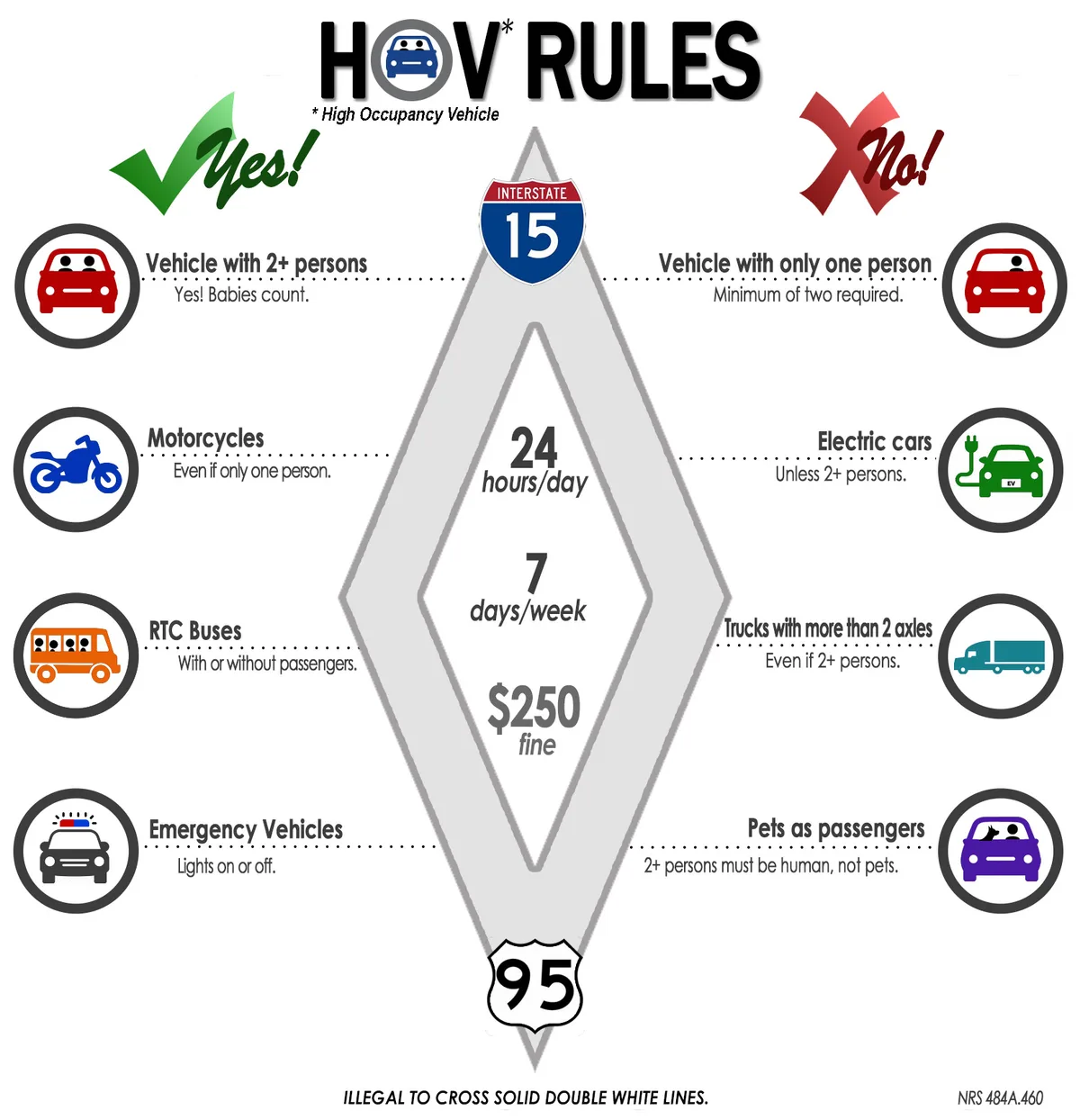
Motorcycles. Motorcycles can use HOV lanes any time, regardless of passenger count. One rider, zero passengers. Full access.
Buses and vans. Public transit buses and vanpool vehicles designed to carry 7 or more people are always allowed. No occupancy requirement.
Clean fuel vehicles. Arizona offers special clean fuel license plates for qualifying vehicles. These include:
- Battery electric vehicles (BEVs) like a Tesla Model 3 or Chevrolet Bolt
- Plug-in hybrid electric vehicles (PHEVs) like a Toyota Prius Prime or Ford Escape PHEV
- Certain natural gas vehicles (NGVs)
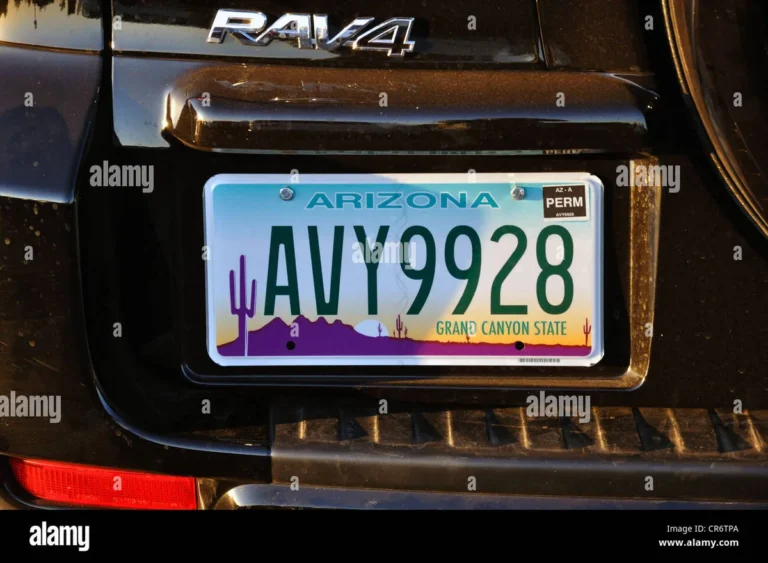
To get the benefit, apply for clean fuel plates through ADOT. The vehicle must meet criteria set by the Arizona Department of Environmental Quality. Once you have those plates, you can use HOV lanes solo during peak hours.
A quick word of caution. The clean fuel vehicle exemption does not apply to standard hybrids that are not plug-in. A regular Toyota Camry Hybrid or Honda Accord Hybrid without a charging port does not qualify.
Only vehicles with a valid clean fuel plate can drive solo.
The Biggest Mistakes Drivers Make with HOV Rules
Even experienced drivers slip up on HOV rules. Here are the most common errors we see on Arizona freeways.
Counting the wrong passenger. Your dog does not count. A mannequin does not count. A car seat without a child in it does not count.
The passenger must be a living human. Enforcement officers have seen every creative workaround.
Merging too early or too late. Many HOV lanes have solid double white lines at entry points. Crossing those lines illegally is a separate violation. Enter and exit only where dashed lines or designated openings exist.
Assuming all hybrids qualify. A standard Toyota Camry Hybrid without a plug does not get solo access. Only vehicles with clean fuel plates from ADOT can drive alone. The hybrid badge alone means nothing.
Driving in the HOV lane outside posted hours. Outside peak windows, the lane is open to everyone. But some drivers stay in the lane during restricted hours thinking they will not get caught. They do.
Using the HOV lane as a passing lane. The HOV lane is not a high-speed lane. It is a carpool lane. Obey the posted speed limit.
Officers patrol these lanes specifically for speeders.
If you are unsure about your route, review the ADOT maps before you leave. It beats a ticket.
What Happens If You Break the Rules? Fines, Points, and More
Arizona takes HOV violations seriously. The penalties add up fast.
| Violation | Base Fine | Court Costs and Surcharges | Total (Approximate) | Driver License Points |
|---|---|---|---|---|
| HOV occupancy violation | $200 | $100+ | $300+ | 2 points |
| Improper entry/exit of HOV lane | $150 | $75+ | $225+ | 2 points |
| Speeding in HOV lane | Varies by speed | Varies | $200+ | 3+ points |
Those totals include the civil penalty plus court assessments. The exact amount depends on the jurisdiction and the specific court. Some cities add their own surcharges.
Two points on your license is a moving violation. Accumulate eight points in 12 months. ADOT may suspend your license.
Even before suspension, your insurance provider will notice. A single moving violation can raise rates by 15 to 25 percent for three years.
Photo enforcement cameras exist on several Phoenix freeway HOV lanes. They capture your license plate and send the citation by mail. The ticket looks the same as one from a live officer. You can contest it, but the photo evidence is usually strong.
If you get a citation, you can pay it online through the Arizona Judicial Branch portal. You can appear in court to contest it. Or you can take a defensive driving course to have the points dismissed.
The course option is available once every 12 months for most moving violations.
The best strategy is simple. Follow the rules from the start. Know your hours.
Know your passenger count. Stay out of the lane if you are unsure.
How to Check HOV Lane Status Before You Drive
Arizona provides several ways to confirm HOV lane rules for your route before you hit the freeway.
ADOT website. The Arizona Department of Transportation publishes HOV lane maps and current restrictions. Find specific freeway segments and their hours. Bookmark the page if you commute daily.
Real-time traffic apps. Google Maps, Apple Maps, and Waze all show HOV lane locations and restrictions. Some apps route you into the HOV lane if you indicate you have enough passengers. The data updates for construction or incidents.
Dynamic message signs. Overhead electronic signs display the current restriction as you approach an HOV lane entry point. They might say "HOV 2+ ONLY" or "OPEN TO ALL TRAFFIC." Read them every time you drive. Hours can shift for special events.
511 Arizona. Dial 511 from any phone in Arizona for real-time traffic information. The system covers incidents, construction, and lane closures. It is a free service from ADOT.
Social media. ADOT has Twitter/X accounts for Phoenix and Tucson traffic. They post alerts about crashes, closures, and HOV lane changes during peak hours. Follow the relevant account for your metro area.
Do not rely on memory alone. Conditions change. Check before you go.
HOV Lane Tips for Commuters, Families, and New Residents
Different drivers have different needs. Here is practical advice for the three groups that use Arizona HOV lanes most.
For daily commuters. Find a carpool partner or two. Use a rideshare matching service through Valley Metro or your employer. Even two days a week in the HOV lane saves time and fuel.
If you drive an EV with clean fuel plates, you already have solo access. Make sure your registration is current and your plates are visible.
For families. Every person in the car counts, even infants. A family of three automatically qualifies for the HOV lane. Use it.
The time savings mean less stress for everyone. Just make sure the child is properly secured in a car seat. The HOV lane does not exempt you from child safety laws.
For new residents. You might come from a state without HOV lanes or with different rules. Do not assume the rules are the same. Arizona's hours, passenger rules, and clean fuel exemptions are specific to this state.
Spend 10 minutes on the ADOT website before your first commute. It will save you hundreds of dollars in potential fines.
A few general tips apply to everyone.
- Keep your vehicle clean and legal. A dirty or obscured license plate can trigger additional issues.
- Never stop in the HOV lane for any reason. It is a moving lane. Pull off to the shoulder if you have an emergency.
- If you use a pressure washer for regular maintenance, a gentle approach protects your paint.
Frequently Asked Questions About Arizona HOV Lanes
Do HOV lanes operate on weekends in Arizona?
No. Arizona HOV lanes are restricted only on weekdays during posted peak hours. On weekends and state holidays, all vehicles can use the lanes regardless of occupancy.
Can I use the HOV lane if I am driving an electric car?
Yes, but only if you have clean fuel license plates from ADOT. A standard electric vehicle without those plates does not qualify for solo access. You need to apply through ADOT and meet the criteria set by the Department of Environmental Quality.
Does a baby in a car seat count as a passenger?
Yes. Infants and children of any age count toward the minimum occupancy requirement. The child must be properly secured in an approved car seat.
The HOV lane rule does not override child safety laws.
What is the fine for an HOV violation in Arizona?
The base fine is approximately $200. With court costs and surcharges, the total typically lands between $300 and $400. You also receive two points on your driving record.
Do motorcycles need a passenger in the HOV lane?
No. Motorcycles can use Arizona HOV lanes at any time, regardless of occupancy. One rider, zero passengers.
That is state law.
How do I get a clean fuel plate for HOV access?
Apply through ADOT with proof that your vehicle meets clean fuel standards. The vehicle must be a battery electric, plug-in hybrid, or natural gas vehicle. You pay a registration fee and receive special plates that identify your vehicle as eligible for solo HOV use.
Final Recs: Safe, Legal, and Smart HOV Lane Use in Arizona
Follow the posted hours. Verify your passenger count before merging. Those two habits will keep you ticket-free.
If you drive an EV or motorcycle, use your solo access wisely but stay within the rules. If you carpool, enjoy the time savings. If you are new to Arizona, learn your specific route before your first commute.
The HOV lane is a tool, not a loophole. Use it correctly and it saves you time. Abuse it and it costs you money.
The choice is straightforward.