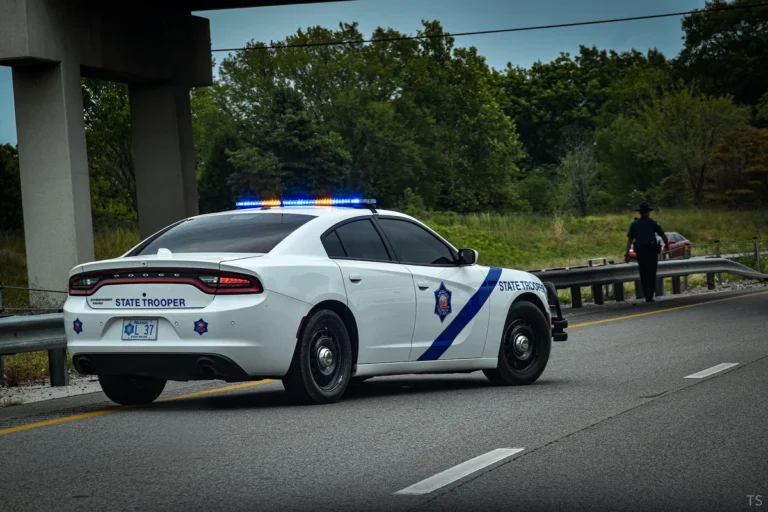
You’re driving down I-40 near Conway. Up ahead, a line of trucks with amber lights flashes. No orange barrels.
No big signs. Just a crew slowly painting the center line. If you blow past them at 75, you’re not just being reckless.
You’re about to get hit with double fines under the Arkansas mobile work zone double fines safety law 2025.
The Arkansas Department of Transportation reports that mobile work zones account for a growing share of roadside worker injuries. The state legislature responded with a targeted penalty increase that catches many drivers off guard. Here is exactly what this law means for you, where it applies, and how to avoid a costly ticket.
Quick Answer
Arkansas doubled fines in mobile work zones starting in 2025. A mobile work zone is any moving operation with flashing lights and workers present. Speeding, tailgating, or reckless driving there gets you a ticket twice the normal cost.
No physical barriers are needed. If you see amber lights on a moving vehicle near the shoulder, treat it as a work zone.
How the 2025 Law Redefines “Work Zone” for Mobile Operations
The old rule only covered stationary construction zones like bridge repairs or lane closures. Those sites have barrels, cones, and advance warning signs planted in the ground. The new law closes a dangerous gap.
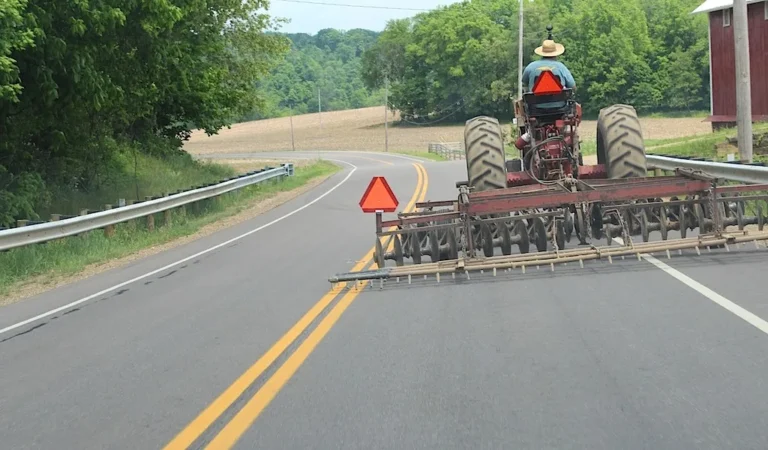
A mobile work zone is legally defined as any temporary, moving operation on a public road where workers perform tasks while traffic continues moving past them. Examples include:
- Striping crews painting lane lines at 5 mph
- Mowing crews trimming grass along the shoulder
- Pothole patching trucks that stop and go
- Sign crews installing or repairing roadside signs
- Debris removal teams sweeping the highway
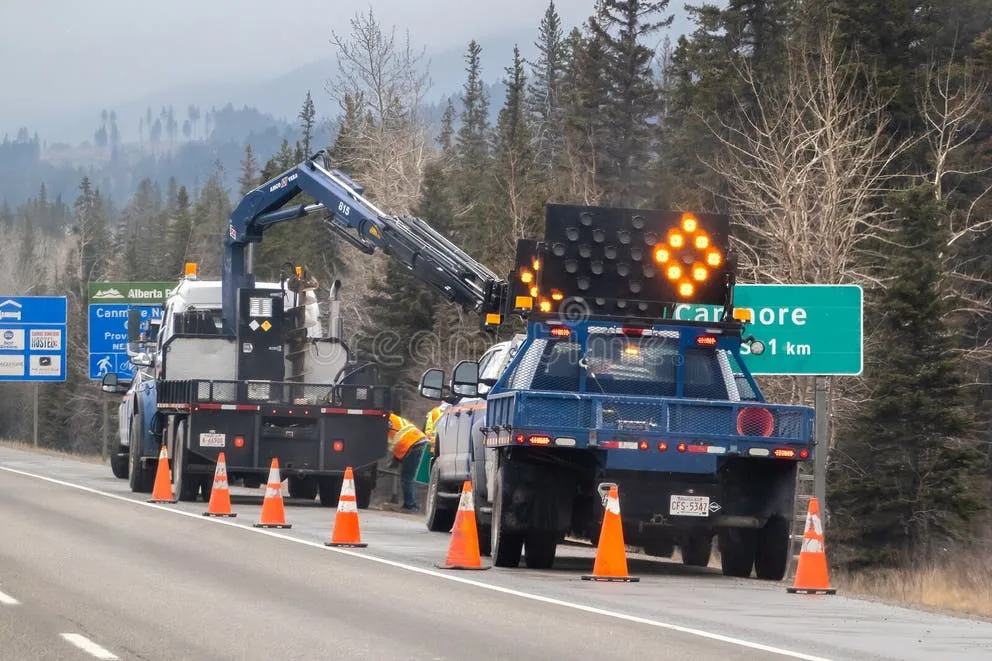
Image source: Bing (Web (fair-use with source credit))
The key trigger is worker presence plus warning lights. If a crew member is visible and the work vehicle has amber or white rotating lights active, the double-fine zone is live. No orange barrels needed.
No stationary sign required.
This matters because mobile zones are far more dangerous than fixed sites. Workers are exposed to high-speed traffic with zero concrete barriers. The National Highway Traffic Safety Administration notes that work zone fatalities often involve vehicles striking workers or equipment.
Mobile zones lack the physical protection of stationary lanes.
Where Double Fines Actually Apply (and Where They Don’t)
Image source: Wikimedia Commons / Mjrmtg
| Location | Double fines apply? | Why |
|---|---|---|
| Interstate with moving striping crew, lights on, workers present | Yes | Mobile work zone active |
| Highway shoulder with mowing crew, no lights but workers visible | Usually yes | Lights are required by law; if lights are on, zone is active |
| Road with orange barrels and no moving vehicles | No (but still a stationary work zone) | Mobile definition requires movement |
| City street where a crew patches potholes with lights flashing | Yes | Vehicle is moving or stopping repeatedly |
| Private parking lot | No | Law applies to public roads only |
| Rural county road with occasional mail truck (no work crew) | No | Not a work operation |
The law applies to all public roads in Arkansas, interstates, state highways, county roads, and municipal streets. It does not apply to private property or parking lots.
A common point of confusion: what if you see flashing lights but no workers? Arkansas State Police guidance indicates that if the lights are on and the vehicle is part of an active work operation, double fines can still be enforced. The law assumes the zone is live when warning equipment is deployed.
Best practice: slow down anyway.
Step-by-Step: What to Do When You See a Mobile Work Zone
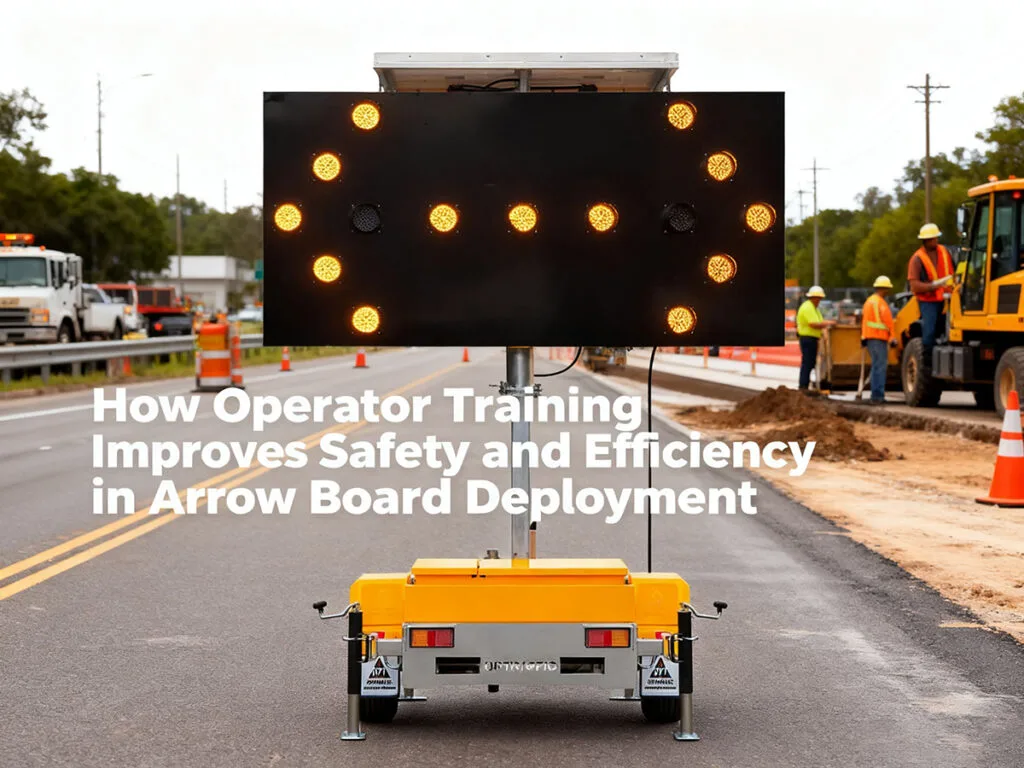
Image source: Bing (Web (fair-use with source credit))
Follow these steps to stay safe and avoid a citation:
- Identify the zone. Look for flashing amber or white lights on a slow-moving vehicle. Arrow boards are a strong clue.
- Scan for workers. Check if any crew members are on foot, on equipment, or beside the vehicle. If you see a person in a reflective vest, the zone is live.
- Reduce speed immediately. Drop at least 10 mph below the posted limit. If the speed limit is 70, aim for 60 or lower.
- Change lanes if safe. Arkansas’s Move Over law already requires you to shift away from stopped emergency vehicles. The same courtesy applies to work vehicles.
- Maintain a safe following distance. Stay at least 200 feet behind the work vehicle. Tailgating is a common citation under this law.
- Avoid distractions. Put your phone down. Keep both hands on the wheel.
- Resume normal speed only after you pass the last worker or vehicle. Do not accelerate while still alongside the crew.
Most drivers who get ticketed fail steps 3 and 6. They either do not slow down enough or they are distracted and miss the warning signs entirely.
Common Driver Mistakes That Trigger Double Fines
Knowing what not to do is just as important as knowing the rules. Based on reports from Arkansas State Police, these are the top mistakes:
- Assuming no barrels means no work zone. This is the single biggest trap. Drivers see open road ahead and speed up, unaware that the work zone is defined by lights and movement, not cones.
- Not slowing down for vehicles with flashing lights that are also moving. Many drivers think the Move Over law only applies to stationary emergency vehicles. The new work zone law covers moving work vehicles too.
- Tailgating. If you follow a striping truck at 60 mph with only two car lengths of space, you are following too closely for a work zone. Double fine applies.
- Passing illegally. Do not cross a solid line or use the shoulder to get around a work vehicle. This is reckless driving and gets you the double penalty plus possible criminal charges.
- Ignoring arrow boards. Some arrow boards are mounted on the back of a truck that is moving slowly. If the arrow points left or right, it signals a lane shift ahead. Reduce speed and merge.
- Speeding up after passing the first worker. Mobile work zones can stretch for miles. The fines apply for as long as you are within the active area, not just at the lead vehicle.
Staying safe is straightforward: treat every amber light ahead as a warning to slow down.
Benefits & Drawbacks: Why This Law Matters for Workers and Drivers
Every law has trade-offs. The benefits are clear for workers. Crews face constant risk from high-speed traffic.
The double fine creates a stronger deterrent. States with similar penalties report fewer close calls and reduced worker injuries.
For drivers, the drawbacks are mostly financial. A momentary lapse can cost you hundreds of dollars. Out-of-state drivers are especially vulnerable because they may not know the law applies to mobile zones.
Many still associate work zones with orange barrels and stationary signs.
| Stakeholder | Benefit | Drawback |
|---|---|---|
| Road workers | Greater protection; fewer injuries | None directly |
| Law enforcement | Clear legal framework for citations | More complex zone identification |
| Arkansas drivers | Safer roads; reduced accident risk | Higher fine potential |
| Out-of-state drivers | Safer travel through Arkansas | Unfamiliar with mobile zone rules |
The law is designed to change driver behavior. If you adjust your habits now, you avoid the penalty entirely.
Cost Breakdown: What a Ticket Could Really Cost You
A double fine ticket is not just the base amount doubled. The total cost includes three layers: the fine itself, driver’s license points, and insurance surcharge.
| Layer | Estimated cost range | Notes |
|---|---|---|
| Base fine (speeding 10 over) | $100 – $200 | Varies by county and judge |
| Double penalty multiplier | 2x | Total becomes $200 – $400 |
| Court costs and fees | $50 – $150 | Added to every citation |
| Driver license points | 3 – 6 points | 12 points triggers suspension |
| Insurance surcharge (3 years) | $300 – $900 | Varies by insurer and driving record |
Let’s run a realistic scenario. You get caught doing 75 in a 65 mph zone through a mobile work zone on I-30. Your base fine is $150.
Doubled, it becomes $300. Court costs add $75. That is $375 out of pocket.
The points are more painful in the long run. A 3-point violation raises your insurance premium by roughly 20 to 30 percent for three years. If you currently pay $1,200 per year, the surcharge could add $360 to $540 total.
Combined with the fine and court costs, that single ticket costs you between $735 and $915.
If the violation is reckless driving, the numbers jump higher. Base fines start around $200 and double to $400. Points range from 4 to 6.
Insurance surcharges can exceed $1,000 over three years. A single reckless driving ticket in a mobile work zone can total over $1,500.
Comparing Mobile vs. Stationary Work Zones: Key Differences
This comparison helps you identify which type of zone you are approaching. The response you need is different for each.
| Feature | Mobile work zone | Stationary work zone |
|---|---|---|
| Visual cue | Flashing amber lights on moving vehicles | Orange barrels, cones, static signs |
| Worker location | Beside or on moving vehicle | Fixed area with barricades |
| Zone length | Moves with the operation (can be miles) | Defined, marked with signs |
| Speed reduction expectation | Usually 10 – 20 mph below limit | Often posted reduced speed ahead |
| Double fines apply? | Yes, if lights and workers present | Yes, if workers present |
| Most common violation | Speeding past moving crew | Tailgating in lane closure |
Mobile work zones require faster recognition. You have less time to react because the zone is not marked by stationary barriers. The arrow board on the back of a striping truck is your main warning.
Stationary work zones give you more visual cues. Cones, barrels, and advance warning signs appear far ahead. The speed reduction is often posted on a changeable message board.
If you see a vehicle with flashing lights and no orange barrels around it, treat it as a mobile zone. Slow down immediately.
Who This Law Affects Most
The law applies to every driver on Arkansas public roads. But some groups feel the impact more than others.
Commercial truck drivers face the highest stakes. A citation in a mobile work zone can go on your CDL record. Points accumulate faster.
Insurance costs for trucking companies already run high. One double-fine ticket can trigger a policy review or surcharge.
Fleet managers should update their driver handbooks immediately. Include the mobile work zone definition in training materials. Brief drivers on the visual cues and penalties.
Some fleets now install cab alerts that warn drivers when they approach work vehicles.
Out-of-state drivers passing through Arkansas are at the highest risk. They may not know the law exists. They see a line of trucks with lights and assume it is just slow traffic.
By the time they realize it is a work zone, a trooper may already have them clocked.
Everyday Arkansas commuters benefit from safer roads but face the inconvenience of slower traffic. The rule is simple: slow down when you see amber lights.
Safety & Compliance: Legal Warnings Every Arkansas Driver Should Know
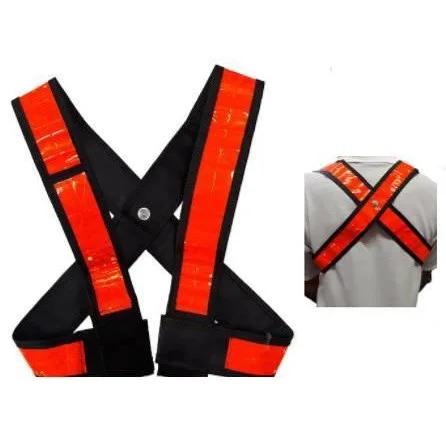
Image source: Bing (Web (fair-use with source credit))
Compliance is not optional. Arkansas State Police actively patrol work zones, including mobile operations. Here are the key legal warnings.
You cannot claim ignorance of the zone. The law states that a mobile work zone is active when warning lights are displayed and workers are present. If you saw the lights, you were warned. Courts do not require advance static signage.
Double fines apply even if no reduced speed limit is posted. The normal speed limit remains in effect. There is no reduced speed sign requirement.
Reckless driving in a mobile work zone is a criminal offense. It can carry jail time up to 90 days and fines up to $1,000 before the double penalty. The double penalty makes that up to $2,000 plus possible jail time.
Your insurance company will be notified. Arkansas law requires insurers to check driving records. A double-fine citation shows up as a moving violation. Expect a premium increase at your next renewal.
If you cause an accident in a mobile work zone, the penalties escalate. Beyond the double fine, you may face civil liability for worker injuries. That can mean thousands of dollars in medical bills and lost wages.
For official details, visit the Arkansas Department of Transportation or the Arkansas State Police.
Expert Tips: How to Avoid a Citation and Protect the Crew
You already know the basics. Here are the finer points experienced drivers use to stay clear of trouble.
Set your cruise control lower than usual. If you normally set it at 68 in a 65 zone, drop to 60 when you see flashing lights. Cruise control keeps your speed consistent.
Scan the shoulder ahead of curves. Mobile work zones often hide around bends or over hills. Look for the glow of amber lights reflecting off guardrails or signs. That early warning gives you extra seconds.
Communicate with your vehicles. If you drive a newer car with adaptive cruise control or lane keeping assist, turn those features on. They can automatically adjust your speed when you approach slower traffic. But never rely on them alone.
Real Scenarios: Three Common Mobile Work Zone Encounters
Scenario 1: The Striping Truck on I-40
You are headed east toward Memphis. A truck with amber lights is moving at 8 mph painting the center line. Two workers walk behind it.
The speed limit is 70. You slow to 55 and move to the left lane. You pass cleanly.
No ticket.
Scenario 2: The Mowing Crew on a Rural Highway
You crest a hill on Highway 5 near Bull Shoals. A tractor with a mowing attachment is on the shoulder with lights flashing. No workers visible from the road.
You maintain 65 in a 55 zone. A trooper pulls you over. The fine is double because it is a mobile work zone with lights active.
Scenario 3: The Pothole Patcher in City Traffic
You are driving through Fayetteville on College Avenue. A city truck is stopped, then creeping forward, filling potholes. Lights are on.
You tailgate at 20 feet behind. A police officer cites you for following too close in a work zone. Double fine applies.
FAQs: Arkansas Mobile Work Zone Double Fines 2025
What counts as a mobile work zone?
Any moving operation on a public road where workers perform tasks and warning lights are displayed. Striping, mowing, patching, sign work, and debris removal all qualify.
Do I have to slow down even if no speed limit sign says “work zone ahead”?
Yes. The law does not require static signage for mobile zones. Flashing lights on the work vehicle are the official warning.
Can I get a ticket if no workers are visible?
Yes, if the lights are active and the vehicle is part of an active work operation. Troopers can still cite you based on the equipment display.
How many points go on my license?
Speeding in a work zone adds 3 to 6 points depending on how fast you were going. Reckless driving adds 4 to 6 points. Accumulating 12 points triggers a license suspension.
Does this law apply to rental cars or out-of-state plates?
Yes. The law applies to every vehicle on Arkansas public roads. Out-of-state drivers are not exempt.
What should I do if I get a ticket?
Pay the fine or contest it in court. Contact a traffic attorney if you want to fight the citation. The double fine cannot be reduced unless the officer made a procedural error.
Final Verdict: One Simple Rule to Stay Safe and Ticket-Free
Here is the only rule you need to remember: if you see amber lights on a moving vehicle near the road, slow down 10 mph below the limit and stay alert until you are past the last worker or warning device.
That single action protects workers, avoids double fines, and keeps your insurance rates low. Arkansas designed this law to save lives. Treat every flashing light like a warning sign.
Drive safe out there.