If you own a truck or heavy-duty van in Arkansas that tips the scales over 8,000 pounds, the Arkansas commercial vehicle registration requirements over 8000 pounds probably apply to you. Whether you’re hauling equipment for your landscaping business or running a small delivery fleet, getting this wrong can mean fines, failed inspections, or even having your vehicle impounded.
Arkansas Code Title 27 spells out the rules. As of 2026, the state has a clear weight-based classification system that determines what plates you need and what fees you’ll pay. Let’s walk through what counts, which plate class fits your situation, and the exact steps to get it done.

Why getting this right matters
Registering a commercial vehicle isn’t just paperwork. It’s a legal requirement that affects everything from your insurance to your ability to operate on Arkansas roads. If you skip it or use the wrong plate class, you’re looking at fines starting around $100, possible impoundment, and delays at weigh stations.
The Arkansas Highway Police stop commercial vehicles every day to check credentials. If you’re operating interstate, you also need federal requirements like a USDOT number. Most registration problems come from one simple mistake: assuming a heavy pickup can stay on passenger plates.
Arkansas law says otherwise once you hit 8,001 pounds GVWR. For more tips on keeping your commercial vehicle in top shape, check out our blog for practical advice.
Quick answer: Do you need commercial plates?
If your vehicle’s Gross Vehicle Weight Rating is over 8,000 pounds, you need commercial registration in Arkansas. That’s the law. The only exceptions are certain farm vehicles used exclusively for agriculture.
Your GVWR is printed on the driver’s side doorjamb sticker. Check it before you do anything else.
What counts as “over 8,000 pounds” – GVWR vs actual weight
Arkansas uses the Gross Vehicle Weight Rating, not the actual weight of your vehicle when empty. GVWR is the maximum total weight your vehicle is designed to carry. It’s set by the manufacturer and stamped on the compliance label inside the driver’s door frame.
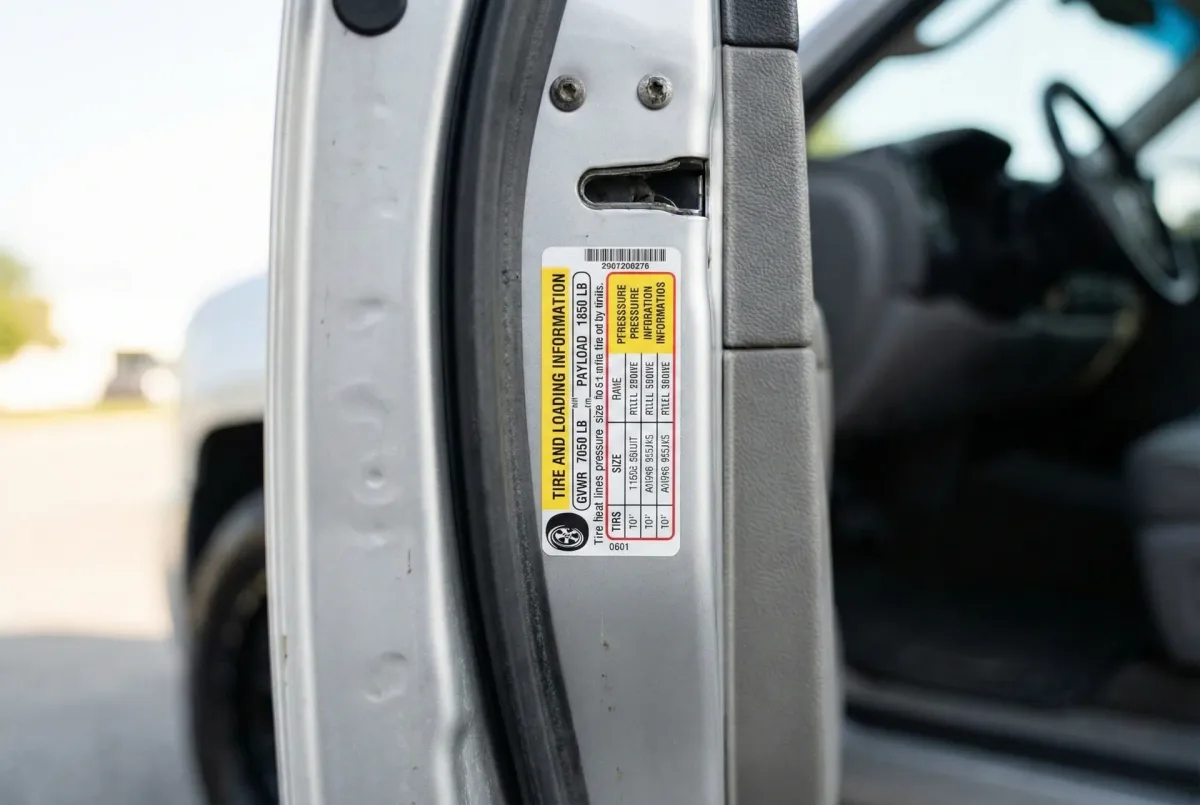
So if your empty pickup weighs 6,000 pounds but has a GVWR of 8,500 pounds, it’s a commercial vehicle in Arkansas. The state doesn’t care what you’re hauling today. It cares what you could haul.
Here’s a quick breakdown:
| GVWR Range | Class | Typical Vehicles | Commercial Registration? |
|---|---|---|---|
| 8,001 – 10,000 lbs | 2b | Heavy pickups, large vans | Yes |
| 10,001 – 14,000 lbs | 3 | Box trucks, flatbeds | Yes |
| 14,001 – 19,500 lbs | 4 | Larger box trucks | Yes |
| 19,501 – 26,000 lbs | 5 | Medium-duty trucks | Yes |
| Over 26,000 lbs | 6–8 | Semis, dump trucks | Yes (plus CDL, IRP, IFTA) |
If your GVWR is exactly 8,000 pounds or below, you can stay on passenger plates. Cross 8,001, and you’re in commercial territory.
Arkansas commercial plate classes: Which one fits you?
Once you’ve confirmed your GVWR is over 8,000 pounds, pick the right plate class. Arkansas offers several categories with different fees and usage rules.
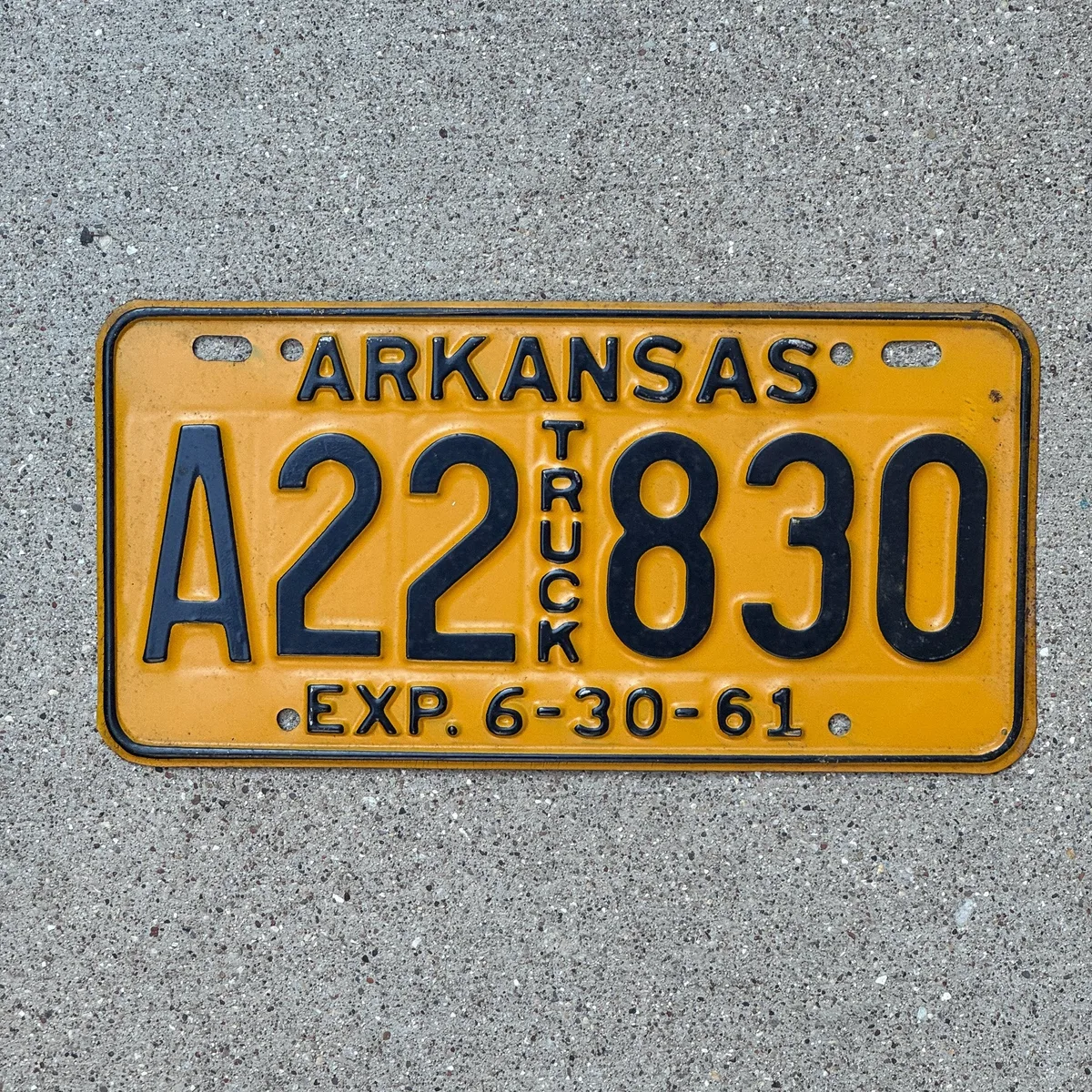
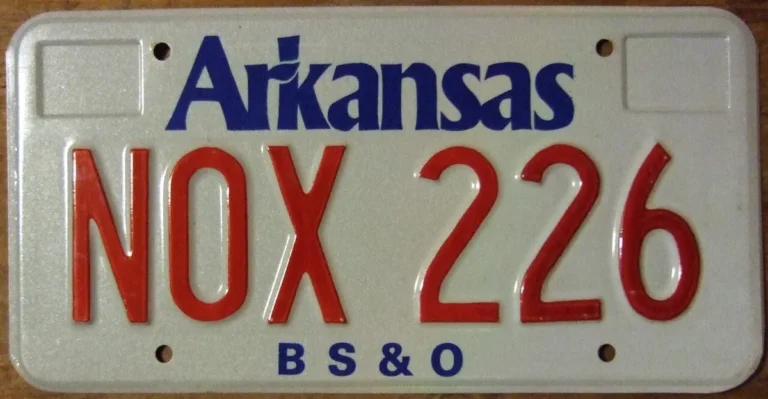
Plate A, Private Commercial (most common). Use this if the vehicle is for your own business. You don’t haul for other people. Examples: a contractor’s pickup, a plumber’s van.
Plate C, For-Hire. Needed if you haul goods or people for money. This includes moving companies and delivery services. Fees are higher, and you need more insurance.
Plate F, Farm. For vehicles used exclusively for agriculture. Fees are much lower, but you must prove you’re a farmer. No non-farm use allowed.
Plate B, Bus. For school, church, or charter buses over 8,000 pounds.
| Plate Class | Best For | Fee Level | Restriction |
|---|---|---|---|
| A | Private business | Moderate | No for-hire |
| C | For-hire carriers | Higher | More insurance |
| F | Farm use | Low | Agricultural only |
| B | Bus operations | Varies | Passenger transport |
Step-by-step registration process
Step 1: Gather your documents. You’ll need the vehicle title, bill of sale (if new), lien release (if applicable), Arkansas driver’s license, proof of insurance, and the GVWR sticker or manufacturer’s certificate. Complete Form 10-300 (Application for Certificate of Title and Registration).
Step 2: Determine fees. Fees depend on plate class and GVWR. For Plate A, expect roughly $17 to $40 per 1,000 pounds of GVWR per year. A 10,000-pound truck runs $170 to $400.
Plate C costs 30 to 50 percent more. Plate F is 50 to 60 percent less.
Step 3: Visit your county motor vehicle office. Bring everything. They’ll verify, collect fees, and issue plates. Same day in person.
Step 4: Get a safety inspection. Required annually for most commercial vehicles over 8,000 pounds. Cost: $10 to $20 at any licensed station.
Step 5: Handle federal requirements if interstate. If you cross state lines or your GVWR exceeds 26,000 pounds, you may need IRP, IFTA, and a USDOT number. Apply through the FMCSA and Arkansas DFA.
Step 6: Renew annually. Set a reminder. Late renewals add $10 to $50 in penalties plus interest.
Federal requirements you can’t ignore
If you operate across state lines or your vehicle exceeds certain weight thresholds, Arkansas registration alone isn’t enough.
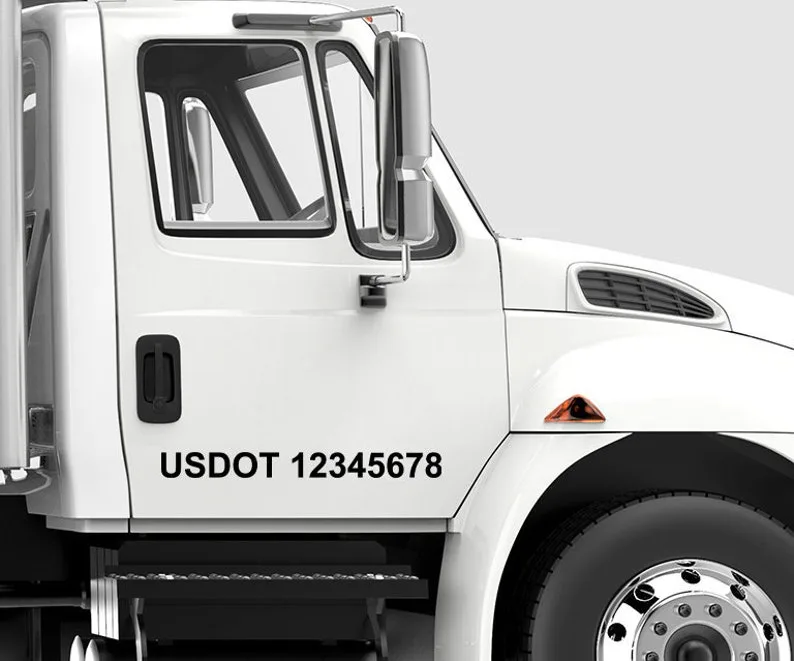
USDOT Number. Required for interstate commerce over 10,000 pounds GVWR. Apply free at the FMCSA website. Display the number on both sides of your vehicle.
IRP (International Registration Plan). If you operate in two or more states, you need apportioned plates. Apply through Arkansas DFA’s IRP section.
IFTA (International Fuel Tax Agreement). For vehicles over 26,000 pounds GVWR or with more than two axles. File quarterly returns on fuel purchased across states.
Form 2290, Heavy Vehicle Use Tax. IRS requires this for vehicles with a taxable gross weight of 55,000 pounds or more. File by August 31 each year. Fees range from $100 to $550.
Common mistakes that cost money and time
Mistake 1: Using passenger plates on a heavy pickup. The most frequent error. Arkansas uses GVWR, not actual weight. Check the sticker.
Mistake 2: Mixing up GVWR and actual weight. Empty weight doesn’t matter. GVWR is the number that counts.
Mistake 3: Non-farm use of farm plates. Audit risk. If you haul for anyone else, you owe back fees plus penalties.
Mistake 4: Ignoring interstate requirements. No USDOT, IRP, or IFTA when crossing state lines leads to multi-agency trouble.
Mistake 5: Letting registration lapse. Late renewals bring fines. Set a 30-day reminder.
Mistake 6: Wrong weight class on Form 10-300. Use the exact GVWR from the door sticker.
Special situations: Farm trucks, interstate, for-hire
Farm trucks (Plate F). Prove you’re a farmer with a Schedule F or farm tax exemption certificate. The truck must be used exclusively for agriculture.
Interstate hauling. Set up IRP, IFTA, and USDOT from the start. Use a mileage tracking app for IFTA records.
For-hire carriers (Plate C). You need higher insurance, typically $300,000 per occurrence, and a USDOT number.
When you should talk to a professional
Most registrations you can handle yourself. But consider a tag agent if you’re dealing with a salvage title, an out-of-state title, or setting up IRP, IFTA, and USDOT all at once. Tag agents charge $10 to $30 on top of state fees and can process paperwork faster in some cases.
Frequently asked questions
What happens if I register my 8,500-pound truck under passenger plates?
You risk a citation and fines. Arkansas law requires commercial registration for any vehicle with a GVWR over 8,000 pounds. Officers can run your plate and see the mismatch.
The penalty usually starts around $100.
Do I need a CDL to drive a commercial vehicle over 8,000 pounds in Arkansas?
A CDL is required for vehicles over 26,000 pounds GVWR or those carrying hazardous materials. For most trucks between 8,001 and 26,000 pounds, a regular driver’s license is enough.
How long does it take to get Arkansas commercial plates?
Same day if you visit your county office with all documents. Mail applications take 2 to 4 weeks. Online renewals process in a few business days.
Can I register a commercial vehicle online in Arkansas?
First-time registrations usually require an in-person visit because the office needs to verify documents and inspect the VIN. Renewals can be done online through the DFA portal.
What insurance do I need?
Arkansas requires minimum liability of $25,000 per person, $50,000 per accident, and $25,000 property damage. For for-hire carriers, you need at least $300,000 per occurrence.
Final checklist
- Confirm GVVR on door jamb sticker.
- Choose correct plate class (A, C, F, B, or D).
- Gather title, bill of sale, lien release, license, insurance.
- Complete Form 10-300.
- Visit county office or tag agent.
- Pay registration fee and any use tax.
- Get annual safety inspection.
- If interstate, set up USDOT, IRP, IFTA.
- File Form 2290 if gross weight is 55,000 pounds or more.
- Set renewal reminder 30 days before expiration.
Know your GVWR, pick the right plate, and keep your paperwork straight. If you get stuck, a tag agent or the DFA website can help. Stay legal and keep rolling.
- Confirm GVVR on door jamb sticker.
- Choose correct plate class (A, C, F, B, or D).
- Gather title, bill of sale, lien release, license, insurance.
- Complete Form 10-300.
- Visit county office or tag agent.
- Pay registration fee and any use tax.
- Get annual safety inspection.
- If interstate, set up USDOT, IRP, IFTA.
- File Form 2290 if gross weight is 55,000 pounds or more.
- Set renewal reminder 30 days before expiration.
Know your GVWR, pick the right plate, and keep your paperwork straight. If you get stuck, a tag agent or the DFA website can help. Stay legal and keep rolling.