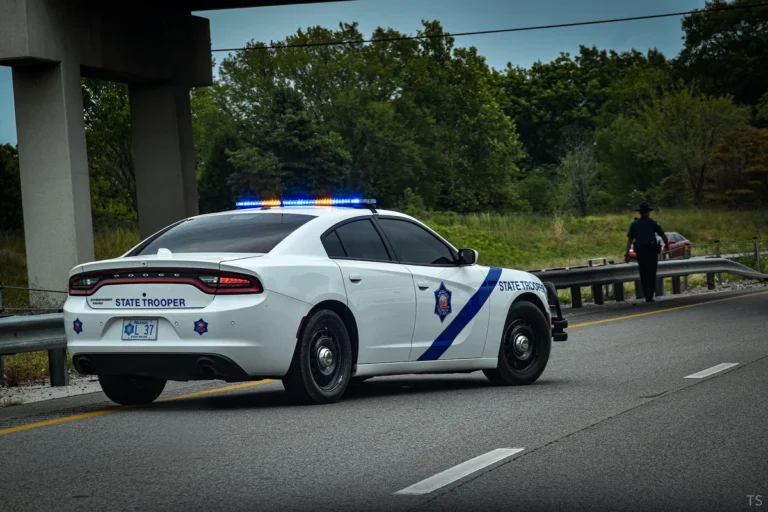
You are pulling a trailer down I-40 outside Little Rock, and you see those blue lights in your mirror. Your mind races: Are my safety chains crossed? Are all the lights working? If that sounds familiar, you are not alone.
Arkansas trailer towing safety chain and lighting regulations are not just suggestions. They are state law, and getting them wrong can cost you money, time, and maybe more.
As of 2026, Arkansas Code Title 27 spells out exactly what your trailer needs before you hit the road. Whether you are hauling a boat to Greers Ferry or a utility trailer from the hardware store, the rules keep the trailer attached and visible. Let's walk through what the law says and how to get it right every time.
Quick Answer: What Arkansas Law Requires
Arkansas requires safety chains on every towed trailer. Chains must be crossed under the hitch. Lighting must include tail, brake, turn, and license plate lights.
Reflectors are required on trailers over 80 inches wide. Trailers over 3,000 pounds need a breakaway switch. These rules apply to all trailers on public roads.
Why Getting This Right Matters — Fines, Liability, and Safety
A ticket for improper safety chains in Arkansas can run up to $500 plus court costs. That is a Class C misdemeanor. But the real cost is worse.
A trailer that detaches at highway speed can kill someone. You are legally responsible for that load, and an accident caused by faulty equipment opens you to civil liability.
Most enforcement stops happen for simple things: chains not crossed, lights burned out, or a missing breakaway cable. Arkansas State Police also check during routine inspections, especially during lake season. A weekend of fishing turns expensive fast when you get a citation before you launch the boat.
Beyond the legal side, proper lighting prevents rear-end collisions. Driving behind a trailer with no brake lights at night means you will not see the driver slow down until it is too late. The law exists to protect everyone on the road, including you.
Core Facts: Arkansas Statutes You Need to Know
Let's break down the exact requirements from the Arkansas Code. These sections matter for everyday towing.
Safety Chain Requirements (Ark. Code § 27-37-301)
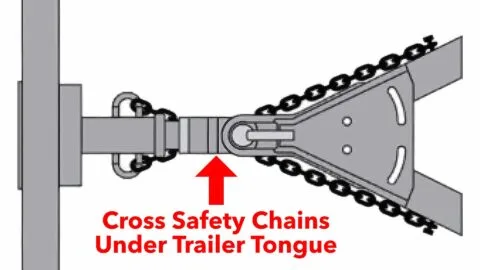
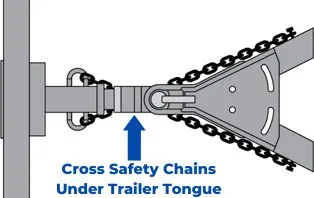
Every trailer must have at least two safety chains. The chains must be strong enough to hold the trailer's gross weight if the hitch fails. They must be crossed beneath the coupler in a cradle pattern.
This prevents the tongue from dropping to the ground if the hitch pops loose.
Chain length matters. Too short and they bind on turns. Too long and they drag, causing sparks or road damage.
Manufacturer specifications say to adjust so the chains have about two inches of slack when the trailer is level and hitched.
The hooks must have safety latches. Standard S-hooks or snap hooks are okay, but make sure they are not worn or rusted. Use quick links with threaded collars for a more secure connection.
Never use zip ties or wire as substitutes.
Lighting and Reflector Requirements (Ark. Code § 27-37-302)
Your trailer lighting must match your vehicle's signals. Here is what is required:
| Light Type | Requirement |
|---|---|
| Tail lights | Two red lights visible from 500 feet |
| Brake lights | Two red lights that activate with vehicle brakes |
| Turn signals | Amber or red lights front and rear |
| License plate light | White light illuminating plate, visible from 50 feet |
| Side marker lights | Amber front, red rear for trailers over 80 inches wide |
| Reflectors | Red on rear, amber on sides, white on front |
LED lights are legal and preferred because they last longer and are brighter. The wiring harness must have a secure 4‑pin, 5‑pin, 6‑pin, or 7‑pin connector depending on your trailer's features. If you have electric brakes, you need the 7‑pin round connector.
Breakaway Switch Rules for Trailers Over 3,000 lbs
If your trailer's Gross Vehicle Weight Rating (GVWR) exceeds 3,000 pounds, Arkansas law requires a breakaway switch and a separate battery. The switch connects to your vehicle with a cable. If the trailer detaches, the cable pulls the pin, activating the trailer brakes automatically.
This is essential on steep grades like those in the Ozarks.
Check the battery every spring. It can drain over winter, and a dead battery means no brakes when you need them most.
Step‑by‑Step: How to Hook Up Your Trailer the Legal Way
Getting it right takes less than five minutes if you follow this sequence. Do not skip steps.
Step 1: Hitch and Coupler Check
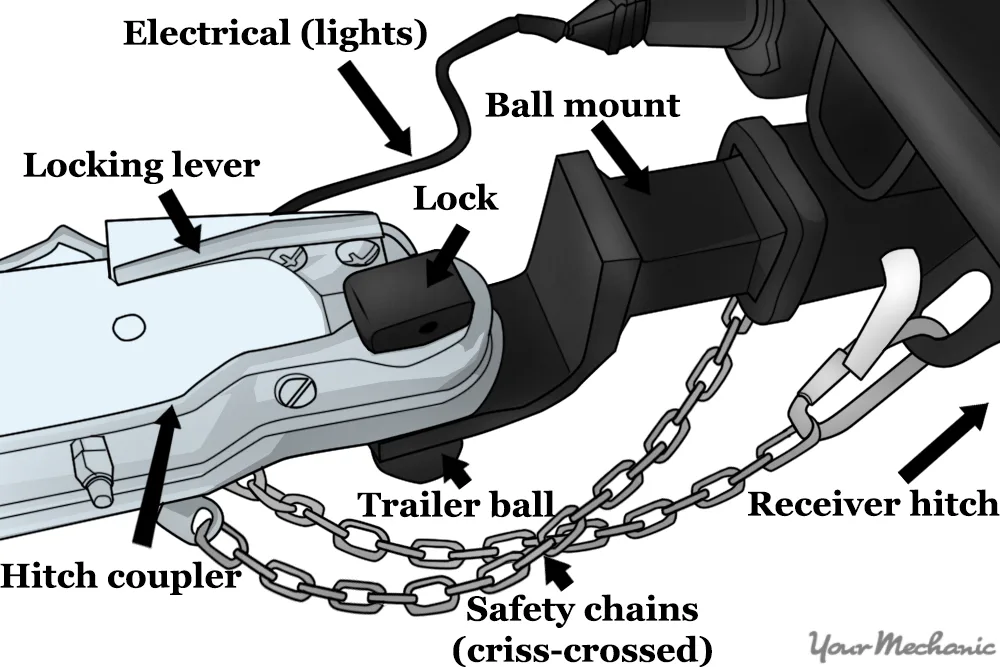
Make sure the coupler is the right size for your ball. The ball must be clean and greased. Lower the coupler onto the ball and lock it.
Insert the safety pin or clip. Give the trailer a tug to confirm it is seated. A loose hitch is the number one cause of detachment.
Step 2: Cross the Safety Chains
Take the right chain and hook it to the left side of your vehicle's hitch receiver. Take the left chain and hook it to the right side. This crossing creates a cradle that catches the tongue if the coupler fails.
Without crossing, the tongue drops straight down and can dig into the pavement.
Adjust the chain length so the hooks have a little slack but do not drag. Check that the hooks are fully closed and latched. If they are worn out, replace them.
Step 3: Connect the Breakaway Cable
If your trailer has a breakaway switch, attach the cable loop to your vehicle's hitch frame. Do not attach it to the safety chains or the coupler. The cable needs a separate anchor point so it pulls if the trailer separates.
Make sure the cable is not long enough to drag or get caught on anything.
Step 4: Plug In and Test All Lights
Match your wiring connector. Common configurations:
- 4‑pin flat: basic lights (tail, brake, turn, ground)
- 5‑pin flat: adds electric brakes
- 6‑pin round: adds backup light and auxiliary
- 7‑pin round: adds electric brakes, backup, and auxiliary
Plug it in, then have someone stand behind the trailer. Test each function: running lights, left turn, right turn, brake lights, and hazard flashers. Check the license plate light too.
It is an easy ticket to avoid. If you do not have a helper, use a water spray gun for car wash to clean dirt off the lights first so you can see them in your mirror.
Common Lighting Mistakes That Get You Pulled Over
Even experienced towers mess these up. Here is what gets flagged most often.
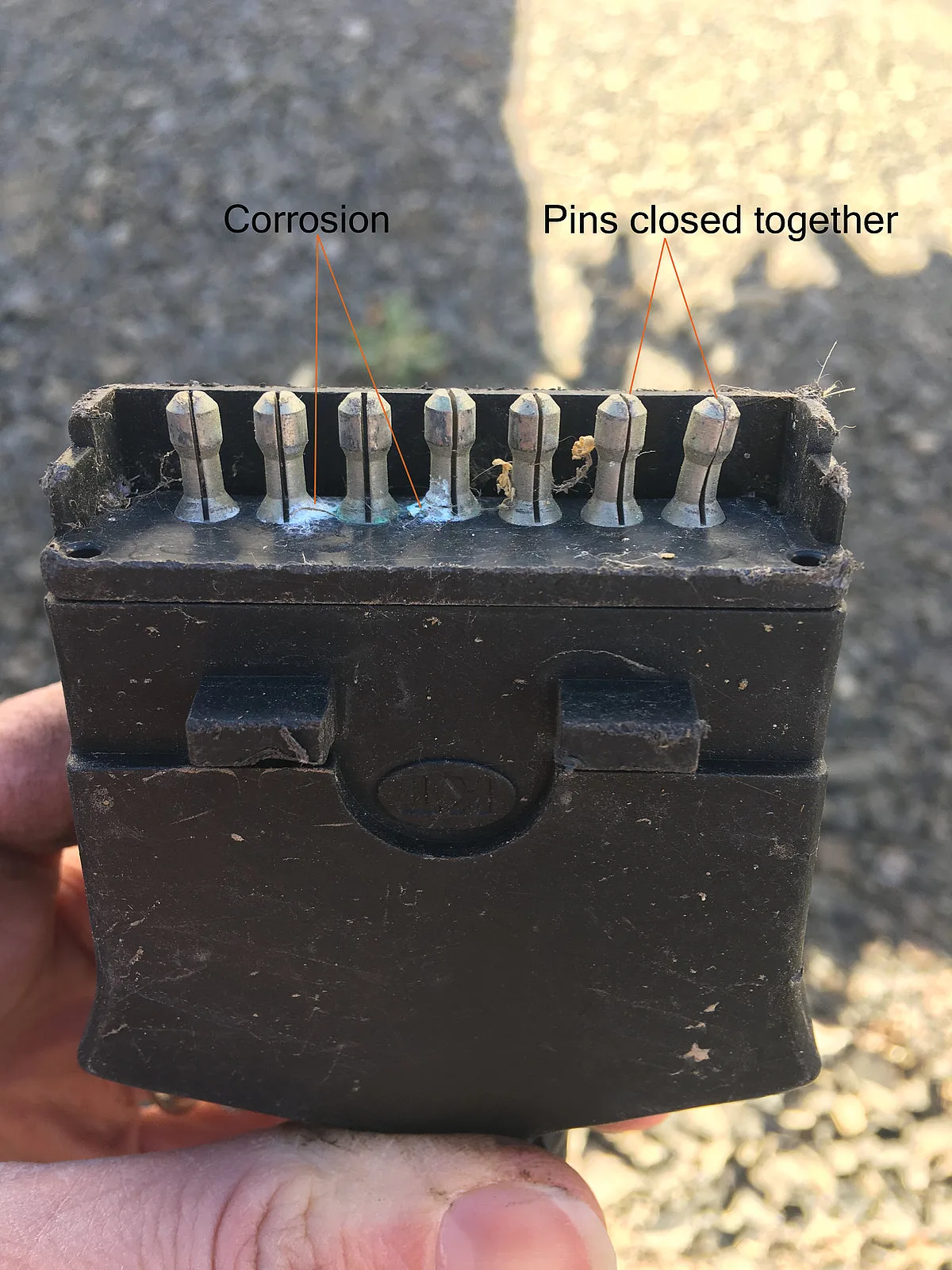
Wrong or corroded connector. Arkansas humidity eats wiring connections. If your pins are green or white with corrosion, you get intermittent lights or none at all. Spray dielectric grease into the connector every few months.
If the pins are bent, replace the plug.
Burnt‑out license plate light. This one is tiny but required. Many people forget it exists. A $5 bulb can save you a $200 ticket.
Check it every time you inspect your trailer lights.
Poor ground connection. Trailer lights ground through the frame. Rust or paint at the mounting point kills the ground, causing dim or erratic lights. Sand the contact area down to bare metal and use a star washer.
Using the wrong adapter. A 4‑pin to 7‑pin adapter is common, but cheap adapters can cause voltage drop. If your lights look dim, the adapter might be the issue. Upgrade to a molded adapter or hardwire a correct plug.
Overloading the circuit. Adding LED lights is usually fine. But if you keep incandescent bulbs and also add extra clearance lights, you can blow fuses. Know your vehicle's towing circuit rating.
Most are 20 amps for lighting. If you need more, install a relay.
Before you hit the road, clean the lenses. Road grime kills visibility. A wash with Perfextion Car Wash Shampoo In Foaming Gun removes the film without scratching the plastic.
Safety Chain Errors That Can Cause a Crash
Even with chains attached, mistakes happen. Here is what goes wrong most often.
Chains that are too short. If the chains hold tension during turns, they can snap or yank the hitch sideways. You need enough slack for the trailer to pivot. Two inches of droop when the trailer is level is the target.
Chains that drag the pavement. Dragging chains throw sparks. That is a fire hazard if you are hauling hay, fuel, or anything flammable. It also grinds the links thin.
Check that the lowest point of the chain sag is a few inches off the ground, even when the trailer is fully loaded.
Using the wrong hooks. Standard S-hooks can slip off the hitch if the opening is too wide. Snap hooks with a spring latch are better, but they wear out. When the spring gets weak, the hook pops open over bumps.
Replace them yearly or switch to quick links with threaded collars.
Not crossing the chains. This is the biggest one. Uncrossed chains let the tongue drop straight to the road. The trailer then digs in and flips, or it shears the chains.
Crossing forms a cradle that catches the coupler. It is a two-second step that saves everything.
Rust and wear. Arkansas humidity is brutal on chains. Surface rust is fine, but deep pitting or cracked links mean replacement. Grade 70 transport chain is the standard for trailer safety.
Do not use hardware store grade 30 chain. It is too weak.
Tools and Parts You Should Keep in Your Tow Vehicle
A small kit saves the day when something goes wrong at the ramp or on the shoulder.
| Item | Why You Need It |
|---|---|
| Spare bulbs (1157 or LED equivalent) | Quick fix when a brake light burns out |
| Dielectric grease | Prevents corrosion on connector pins |
| Digital multimeter | Test for power at the plug |
| Zip ties (heavy duty) | Temporary wire routing or securing loose lines |
| Spare fuse kit (20A, 15A, 10A) | Blown fuse kills all trailer lights |
| Small wire stripper/crimper | Fix a broken wire at the connector |
| Needle‑nose pliers | Bend pins or remove stuck bulbs |
| Chain hook replacements | Quick‑link or snap hook for worn hardware |
Keep these in a plastic toolbox under the back seat. A hose car wash sprayer can also rinse dirty connectors before you plug in. Salt and grit cause intermittent connections.
How Much Can a Ticket Cost? Fines and Penalties in Arkansas
A violation of Arkansas safety chain or lighting laws is a Class C misdemeanor. The base fine is usually $100 to $250 depending on the county. Then add court costs, which run another $100 to $200.
Total out-of-pocket can hit $500 or more.
Repeat violations or situations where your trailer causes an accident can escalate. You could face reckless driving charges if the chain failure or missing lights contributed to a crash. That carries higher fines and possible license points.
Arkansas State Police also have the authority to put your trailer out of service on the spot. If your lights are dead or your chains are missing, you are not moving until you fix it. That means a tow truck, a trip to the auto parts store, and a long afternoon.
One commonly ticketed item is the license plate light. Officers walk around the back during a traffic stop. If they cannot read your plate, that is an additional citation.
Keep the lens clean and the bulb working.
Real Scenario: What Happens When You Skip the Chains
Picture this: a Friday evening in June, pulling a 16-foot boat to Lake Ouachita. You are in a hurry. You hook the coupler, lock it, plug in the lights, but skip the safety chains.
The ball is a little worn, but it looks fine.
Forty miles down Highway 270, you hit a dip. The coupler jars loose. The trailer tongue drops, digs into the asphalt, and the boat whips into the oncoming lane.
No chains means no safety net.
The damage: a destroyed trailer coupler, scratched boat hull, and possibly a collision. The ticket for no chains runs $400. Insurance may cover it, but your premium goes up.
Now run the same scenario with chains crossed and a breakaway cable attached. The chains catch the tongue. The breakaway switch activates the trailer brakes.
The trailer stops behind your truck instead of flying into traffic. It takes under one minute to hook up chains correctly.
Maintenance Checklist for Year-Round Compliance
Trailer equipment wears out. A quick monthly check keeps you legal and safe.
Every month or before any long trip:
- Inspect chains for cracked links, rust pits, or bent hooks.
- Clean and test all lights. Clean the connector pins with a wire brush.
- Apply dielectric grease to the plug.
- Check the breakaway battery voltage. It should read above 12.4 volts.
- Test the breakaway switch by pulling the pin. The trailer brakes should engage.
- Verify the coupler latch moves freely and locks fully.
- Check tire pressure and tread.
Once a year (spring is best):
- Replace chains if they show any significant rust or wear.
- Replace incandescent bulbs with LEDs if you have not already.
- Sand any rust spots on frame grounding points and reattach lights.
- Grease hitch ball and coupler.
- Check all wiring for cracks or chafing. Arkansas sun bakes the insulation over time.
A quick wash after a trip helps too. Road salt, mud, and lake water accelerate rust. Use a foaming car wash shampoo to clean the trailer frame and lights without scratching.
Rinse the connector area thoroughly.
Trailer equipment wears out. A quick monthly check keeps you legal and safe.
Every month or before any long trip:
- Inspect chains for cracked links, rust pits, or bent hooks.
- Clean and test all lights. Clean the connector pins with a wire brush.
- Apply dielectric grease to the plug.
- Check the breakaway battery voltage. It should read above 12.4 volts.
- Test the breakaway switch by pulling the pin. The trailer brakes should engage.
- Verify the coupler latch moves freely and locks fully.
- Check tire pressure and tread.
Once a year (spring is best):
- Replace chains if they show any significant rust or wear.
- Replace incandescent bulbs with LEDs if you have not already.
- Sand any rust spots on frame grounding points and reattach lights.
- Grease hitch ball and coupler.
- Check all wiring for cracks or chafing. Arkansas sun bakes the insulation over time.
A quick wash after a trip helps too. Road salt, mud, and lake water accelerate rust. Use a foaming car wash shampoo to clean the trailer frame and lights without scratching.
Rinse the connector area thoroughly.
When to Consult a Professional or Arkansas State Police
Most trailer setup is straightforward. But some situations need expert help.
If you are unsure about wiring. A multimeter and a wiring diagram solve most issues. But if you have a 7‑pin system with electric brakes and the brakes do not engage, take it to a trailer shop. Brake controllers need correct calibration.
A mistake there can cause jackknifing on wet roads.
If your trailer has never been inspected. Older trailers often have homemade wiring or rusted frame mounts. An RV dealer or trailer repair shop can check the frame ground, the breakaway switch, and the chain attachment points. It costs around $75 to $100 and takes an hour.
If you get a citation you think is wrong. Arkansas State Police can explain the specific code you violated. You can also contact the Arkansas Department of Finance and Administration Motor Vehicle Division for clarification on equipment requirements. They publish the full statutes online.
If you plan to tow commercially. Farm exemptions and commercial vehicle rules differ. Talk to the Arkansas State Police Commercial Vehicle Enforcement division before you haul. They can tell you if you need a CDL or additional lighting.
Frequently Asked Questions
Do I need safety chains for a small utility trailer?
Yes. Arkansas law requires safety chains on every towed trailer regardless of size. Even a 4×8 utility trailer needs two crossed chains.
There is no weight exemption.
Are LED lights legal in Arkansas?
Yes, LED trailer lights are fully legal. They are recommended because they last longer and are brighter than incandescent bulbs. They also draw less current, reducing the chance of blown fuses.
Just make sure they are DOT approved.
Can I use a 4‑pin connector on a trailer with electric brakes?
No. A 4‑pin flat connector only carries tail, brake, turn, and ground signals. Electric brakes require a 5‑pin or 7‑pin connector with a dedicated brake output.
Use a 7‑pin round connector for full functionality.
Is there an exemption for farm or agricultural trailers?
Yes, some farm trailers used primarily for agricultural purposes may have reduced lighting requirements. However, safety chains are still required. Check with the Arkansas State Police or your county extension office for specific farm exemptions.
Do I need a separate license to tow a trailer in Arkansas?
For non-commercial trailers under 26,000 pounds, a standard Class D driver's license is sufficient. If your combined vehicle and trailer weight exceeds 26,000 pounds, you need a Class A CDL. Verify your specific setup with the Arkansas DFA.
How often should I replace safety chains?
Replace safety chains every three to five years or sooner if you see rust pitting, cracked links, or bent hooks. Grade 70 transport chain is the standard. Inspect them at the start of each towing season.
Final Verdict: The Three Things to Double-Check Before Every Tow
You have the rules. You have the steps. Here is your pre-trip checklist.
One: Cross the chains. Walk around the hitch. Make sure the right chain goes to the left side and left to the right. That cradle catches the tongue if the hitch fails.
It takes five seconds.
Two: Test every light. Have someone stand behind the trailer. Turn on running lights, left turn, right turn, brake, and hazards. Check the license plate light.
If you are alone, back up to a reflective surface or use a car wash foam gun to clean the lenses so you can see them in your mirror.
Three: Pull the breakaway pin. If you have a breakaway switch, test it. The trailer brakes should lock. If they do not, your battery is dead or the connection is bad.
Fix it before you move.
That is it. Three checks, under two minutes. They keep you legal, safe, and out of the ditch.
Arkansas roads are beautiful. Keep your trailer where it belongs, behind you.