Black Friday deals are live on Amazon · limited-time discounts, grab them before they’re gone
Grab the deals

ByMax Lee
Can You Use Touchless Car Wash With Ceramic Coating? Essential Tips
Yes, you can use a touchless car wash with ceramic coating. In many cases, it is safer for the paint than an automatic wash with rotating brushes because nothing physically rubs against the coated surface.
However, “touchless” does not automatically mean “coating-safe.” The cleaning chemicals, water pressure, drying process, and maintenance products all affect how well the coating performs. A poorly chosen wash may leave residue, reduce water beading, or gradually weaken the coating’s hydrophobic behavior. You can also read our guide on how to use a touchless car wash.
The best approach is to use a touchless wash for routine cleaning, inspect the result afterward, and reserve a careful hand wash for heavy contamination.
What Ceramic Coating Actually Does
A ceramic coating is a cured, chemically bonded protective layer applied over automotive paint. It creates a smoother, more chemically resistant surface than unprotected clear coat and typically improves:
- Water beading and runoff
- Resistance to road grime and some contaminants
- Gloss and color depth
- Ease of washing
- Protection from routine environmental exposure
Ceramic coating is not a force field. It does not prevent rock chips, deep scratches, water-spot etching, or every type of chemical damage. It also does not make the vehicle maintenance-free. You can also read our guide on how to wash ceramic coated car in winter.
In practice, the coating’s hydrophobic performance can decline because of traffic film, mineral deposits, oily residue, or incompatible wash products even when the coating itself is still present. A common mistake is to assume reduced beading always means the coating has failed. Often, the surface simply needs decontamination or a coating-safe maintenance wash.
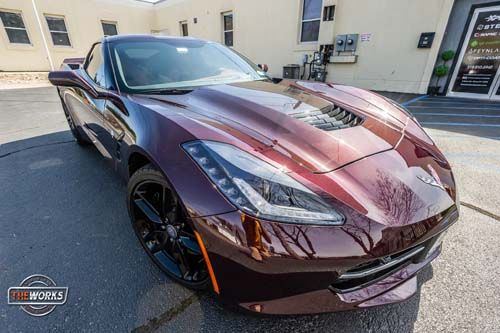
The smooth, reflective finish of a professionally coated vehicle.
Credit: www.theworksautocenter.com
How a Touchless Car Wash Works
A touchless car wash cleans the vehicle without brushes, spinning cloth strips, or wash mitts contacting the paint. A typical cycle may include:
- A pre-rinse to loosen loose dirt
- An alkaline or detergent-based pre-soak
- High-pressure water
- A rinse or spot-free rinse
- Optional wax, sealant, or drying agent
- Air drying or a short drive to remove remaining water
The main advantage is the absence of friction. Dirt cannot be dragged across the paint by a contaminated brush or shared wash mitt. You can also read our guide on will automatic car wash remove ceramic coating.
The limitation is that touchless systems must rely more heavily on water pressure and chemical cleaners. If the vehicle has baked-on road film, dried bird droppings, tree sap, or mud, the wash may loosen the contamination without removing all of it.
Is a Touchless Car Wash Safe for Ceramic Coating?
Generally, yes. A touchless wash is a reasonable maintenance option for a ceramic-coated vehicle, especially when:
- The car has light or moderate dirt
- The wash uses a sensible chemical program
- The coating is fully cured
- The water pressure is used from a safe distance
- You inspect and dry the vehicle after washing
The greatest benefit is avoiding mechanical contact. Brushes and reused cloth strips can create fine marring or swirl marks, even if the vehicle has a hard ceramic coating.
Still, the word “touchless” only describes the lack of physical contact. It does not guarantee gentle chemistry. Repeated exposure to very strong alkaline pre-soaks, acidic wheel cleaners, or harsh tunnel-wash additives may reduce water repellency and shorten the useful performance of some coatings.
That does not usually mean one wash will strip a properly installed coating. The more realistic concern is cumulative chemical stress, residue, and poor maintenance.
For product-specific restrictions, follow the coating installer’s instructions or the manufacturer’s official care guidance. Formulations, curing requirements, and approved maintenance products vary between coatings.
Which Touchless Wash Program Should You Choose?
When several wash options are available, choose the least aggressive program that will remove the vehicle’s actual level of dirt.
Prefer a basic or standard wash
A basic touchless cycle is often preferable to a premium package that adds unknown “hot wax,” tire dressing, or concentrated chemical treatments. Extra products are not automatically harmful, but they may leave a film that reduces the coating’s natural water behavior.
Be cautious with strong pre-soaks
Pre-soak chemistry is useful for breaking down road film, but repeated use of highly concentrated cleaners can be unnecessarily harsh. You may not be able to see the product’s pH or concentration at a self-service bay, so avoid using the most aggressive setting unless the vehicle is genuinely heavily soiled.
Use the spot-free rinse
A reverse-osmosis or deionized-water rinse can reduce mineral spotting, particularly if you cannot dry the car immediately. It is helpful in areas with hard water, but it does not replace proper drying after a dirty wash.
Avoid brush or cloth add-ons
Do not select an option that introduces brushes, foam brushes, shared towels, or hand-wipe services. These steps defeat the primary paint-safety advantage of a touchless wash.
Does High-Pressure Water Damage Ceramic Coating?
Normal high-pressure rinsing does not usually damage a properly cured ceramic coating. The greater risk comes from using the nozzle too close, directing water at a damaged coating edge, or forcing water beneath loose trim and badges.
Use these precautions:
- Keep the nozzle moving rather than holding it in one spot.
- Do not press the nozzle against the paint.
- Maintain a sensible distance from the surface.
- Avoid spraying directly into damaged clear coat, peeling paint, or lifted vinyl.
- Take extra care around sensors, weather seals, loose emblems, and convertible-top seams.
- Do not use a pressure washer to replace proper cleaning when abrasive dirt remains bonded to the paint.
At a commercial wash, the equipment is generally configured for vehicle cleaning. At home, an adjustable pressure washer and a wide fan spray provide more control than a narrow, concentrated nozzle.
Touchless Washing Versus Hand Washing
Neither method is perfect. The right choice depends on how dirty the vehicle is and how much control you need.
| Method | Main advantages | Main limitations |
|---|---|---|
| Touchless wash | Fast, convenient, no shared brushes touching the paint | May use strong chemicals and may not remove bonded contamination |
| Careful hand wash | Better control, safer product selection, more thorough cleaning | Requires clean equipment and correct technique |
| Automatic brush wash | Convenient and widely available | Higher risk of marring, embedded dirt transfer, and swirl marks |
For a very lightly dusty vehicle, a touchless wash may be all that is needed. For heavier contamination, a careful hand wash is often more effective because you can safely pre-rinse, use lubrication, and clean one panel at a time.
If you hand wash at home, follow a paint-safe wash routine with clean microfiber equipment. Never wipe dry, gritty paint simply because the vehicle has ceramic coating.
When a Touchless Wash Is Not Enough
A touchless wash may leave contamination behind when the vehicle has:
- Dried bird droppings
- Tree sap
- Road tar
- Brake dust
- Salt film
- Insect remains
- Mud packed into wheel arches
- Mineral deposits or water spots
Do not aggressively scrub these areas immediately after the wash. First, allow a suitable coating-safe cleaner or lubricant to soften the contamination. For bird droppings and insects, soaking is safer than applying more pressure.
If the surface still feels rough after washing, the issue may be bonded contamination rather than a failed coating. A professional detailer can determine whether the vehicle needs chemical decontamination, clay treatment, polishing, or a coating inspection.
A Practical Touchless-Wash Procedure
Use this process whenever you visit a touchless wash:
1. Inspect the vehicle first
Look for heavy mud, fresh bird droppings, sap, or loose trim. A touchless cycle may not safely remove these areas completely.
2. Remove loose debris
Use the initial rinse to flush away grit before the detergent cycle. Pay attention to wheel wells, rocker panels, and the lower rear bumper, where abrasive dirt collects.
3. Select a moderate cleaning cycle
Choose a standard wash with a spot-free rinse when available. Avoid unnecessary premium chemical applications unless you understand what they contain.
4. Allow the detergent to work
Do not rush the wash if the equipment provides dwell time. The cleaning solution needs time to soften traffic film, but it should not be allowed to dry on the vehicle.
5. Rinse thoroughly
A complete rinse is particularly important after a stronger pre-soak. Remaining chemical residue can create streaks or interfere with the coating’s surface behavior.
6. Dry the vehicle
Use the dryer if it is effective, then inspect the paint in good light. If you dry at home, use a clean, high-quality drying towel with minimal pressure. Compressed air can help clear water from mirrors, grilles, badges, and panel gaps; a suitable air-compressor setup is useful for this type of detail work.
7. Check the finish
Look for remaining spots, streaks, or contamination. Do not apply a dressing or topper merely to hide a dirty surface.
How Often Should You Use a Touchless Wash?
There is no universal schedule because driving conditions vary. Wash when the vehicle has accumulated visible road film, salt, mud, or organic contamination rather than waiting for a fixed interval.
A vehicle driven daily in winter weather may need frequent cleaning, while a garage-kept weekend vehicle may need much less. Regular light cleaning is generally preferable to allowing contamination to bake onto the paint and then using an aggressive wash to remove it.
If you routinely use touchless washes, monitor the coating’s behavior:
- Does water still sheet or bead after the surface is clean?
- Does the paint feel smooth after washing?
- Are streaks caused by residue rather than coating failure?
- Is the vehicle becoming harder to clean?
A decline in beading after a wash may indicate residue or mineral buildup. Clean the surface correctly before deciding that the coating needs replacement.
Ceramic-Coating Maintenance Mistakes to Avoid
Using an automatic brush wash
The coating may reduce the appearance of minor marks, but it cannot prevent contaminated brushes from creating marring.
Scrubbing dry contamination
Dry wiping bird droppings, dust, or road grit can create scratches through the coating and potentially into the clear coat.
Applying household cleaners
Dish soap, degreasers, glass cleaners, and general-purpose products may contain solvents or additives that are not intended for automotive paint. Use products labeled for vehicle exteriors and compatible with ceramic coatings.
Applying a topper too frequently
A coating maintenance spray can improve slickness or water behavior, but excess product may create smearing and attract dust. Use only as directed and apply it to a clean surface.
Ignoring water spots
Mineral deposits can etch into the surface when left in hot sunlight. A spot-free rinse helps, but prompt drying remains important.
Expecting the coating to protect against impact damage
Ceramic coating is not paint-protection film. It does not reliably stop stone chips, deep scratches, or parking-lot damage.
How Weather and Road Conditions Change the Best Choice
Winter road salt and brine should be rinsed away regularly because they can accumulate in seams, wheel wells, and underbody areas. In this situation, a touchless wash is useful for quickly flushing away corrosive residue without dragging it across the paint.
In hot weather, avoid allowing detergent or rinse water to dry on warm panels. Wash during cooler conditions or use the wash’s shaded bay if available.
After driving through mud, avoid relying on a single quick cycle. A pre-rinse and careful hand wash may be necessary. If you regularly travel on mountain routes, confirm that the vehicle remains properly equipped for local conditions; these road-readiness specifications are separate from coating care but can matter for safe vehicle use.
What to Do If the Coating Appears to Stop Beading
First, wash the vehicle thoroughly using a coating-safe method. Then inspect the surface in daylight.
If beading returns, the coating was probably covered by residue or contamination. If the surface remains dull, rough, or unusually difficult to clean, possible causes include:
- Mineral deposits
- Road-film buildup
- Incompatible wax or sealant residue
- Chemical exposure
- Physical damage
- Natural aging of the coating
A professional detailer can perform a surface inspection and determine whether the coating needs decontamination, a maintenance topper, localized repair, or full replacement. Avoid polishing the vehicle yourself unless you understand that abrasive polishing can remove part or all of the coating.
Frequently Asked Questions
Can you use a touchless car wash with ceramic coating?
Yes. Touchless washing is generally compatible with ceramic coating because it avoids brushes and other contact that can create swirl marks. Choose a reasonable chemical program, rinse thoroughly, and dry the vehicle carefully.
Will a touchless car wash remove ceramic coating?
A normal touchless wash should not remove a properly cured professional ceramic coating in one visit. However, repeated exposure to aggressive chemicals, strong degreasers, or incompatible products can reduce hydrophobic performance over time. A loss of beading may also result from residue rather than coating removal.
Is touchless washing better than hand washing?
Not in every situation. Touchless washing is safer from a contact-scratch perspective and is convenient for routine cleaning. Hand washing provides better control and is usually more effective when the vehicle has bonded dirt, sap, insects, or heavy road film.
Can touchless car washes cause water spots?
Yes. Water spots can form when mineral-rich rinse water dries on the paint, especially in hot weather. Use a spot-free rinse where available and dry the vehicle promptly.
Should you use the wax option at a touchless wash?
It depends on the product and the coating manufacturer’s instructions. Some wash waxes are harmless but may leave a temporary film; others may interfere with the appearance or behavior of the coating. The safest default is to skip unknown additives unless you know they are compatible.
How often can a ceramic-coated car go through a touchless wash?
Use it whenever the vehicle needs cleaning. There is no mandatory maximum frequency, but repeated use of harsh chemical programs is not ideal. Select a moderate cycle and alternate with a proper hand wash when the vehicle needs more thorough care.
Can you use a pressure washer on ceramic coating?
Yes, provided the equipment is used sensibly. Keep the nozzle away from the paint, use a broad spray pattern, and avoid directing water at damaged surfaces or loose trim. High pressure does not compensate for inadequate lubrication when removing bonded dirt.
Do you still need to dry a ceramic-coated car?
Yes. Ceramic coating helps water run off, but it does not eliminate water spots or water trapped in trim and panel gaps. Use a clean drying towel or air blower and avoid wiping dirty paint.
Final Verdict
You can use a touchless car wash with ceramic coating, and it is often a sensible option when you want to avoid brushes and shared wash equipment. The important distinction is that touchless does not always mean gentle: chemical strength, rinse quality, water pressure, and drying technique still matter.
Choose a moderate wash, avoid brush add-ons, rinse thoroughly, and dry the vehicle without rubbing abrasive dirt across the paint. For heavy contamination, use a careful hand wash or professional detail rather than repeatedly selecting the most aggressive touchless program.
Used thoughtfully, touchless washing can keep a ceramic-coated vehicle clean while preserving the coating’s gloss, slickness, and water-repellent performance.








