ByMax Lee
Florida Express Lane Rules & Weaving Penalties Explained
Florida express lane usage guidelines and weaving violation penalties can save you time or cost you hundreds in fines if you get them wrong. These lanes move faster, but only if you follow the rules like proper merging and toll payment. As of 2026, Florida’s express lanes rely on SunPass or pay-by-plate systems, and weaving between lanes is a citable offense.
The Florida Department of Transportation sets strict rules to keep traffic flowing safely. Miss a toll or cut across lanes, and you could face penalties under state law.
Quick Answer
Florida express lanes require a SunPass or pay-by-plate toll payment. Weaving between lanes is illegal and can result in fines. Express lanes use dynamic tolling based on traffic.
HOV lanes may have occupancy requirements.
Bing (Web (fair-use with source credit))
How Express Lanes Work in Florida
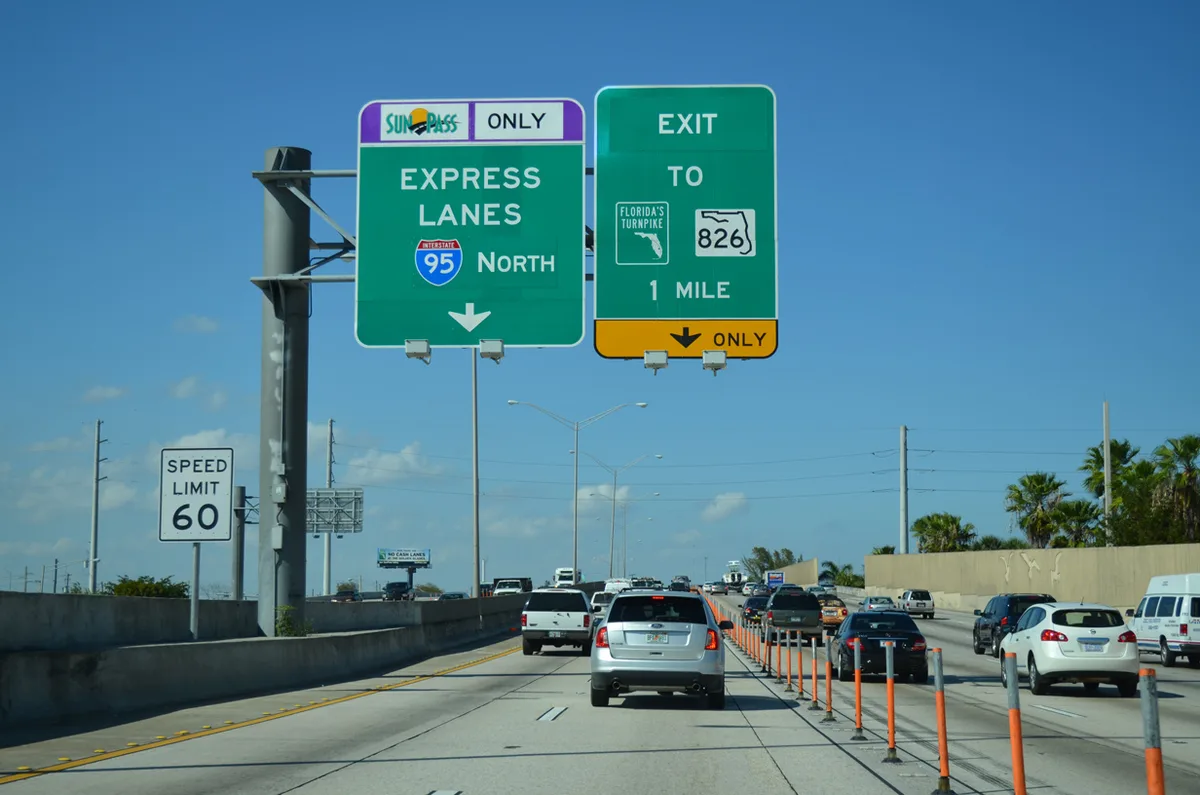
Express lanes are managed lanes designed to reduce congestion. They use variable tolling, meaning prices rise or fall based on real-time traffic. You’ll find them on major highways like I-95, I-4, and the Florida Turnpike.
These lanes are separated by barriers or double white lines. Entry and exit points are marked with signs and road paint. If you don’t have a SunPass, cameras will record your license plate for pay-by-plate billing.
SunPass, Pay-by-Plate, and Other Toll Payment Options
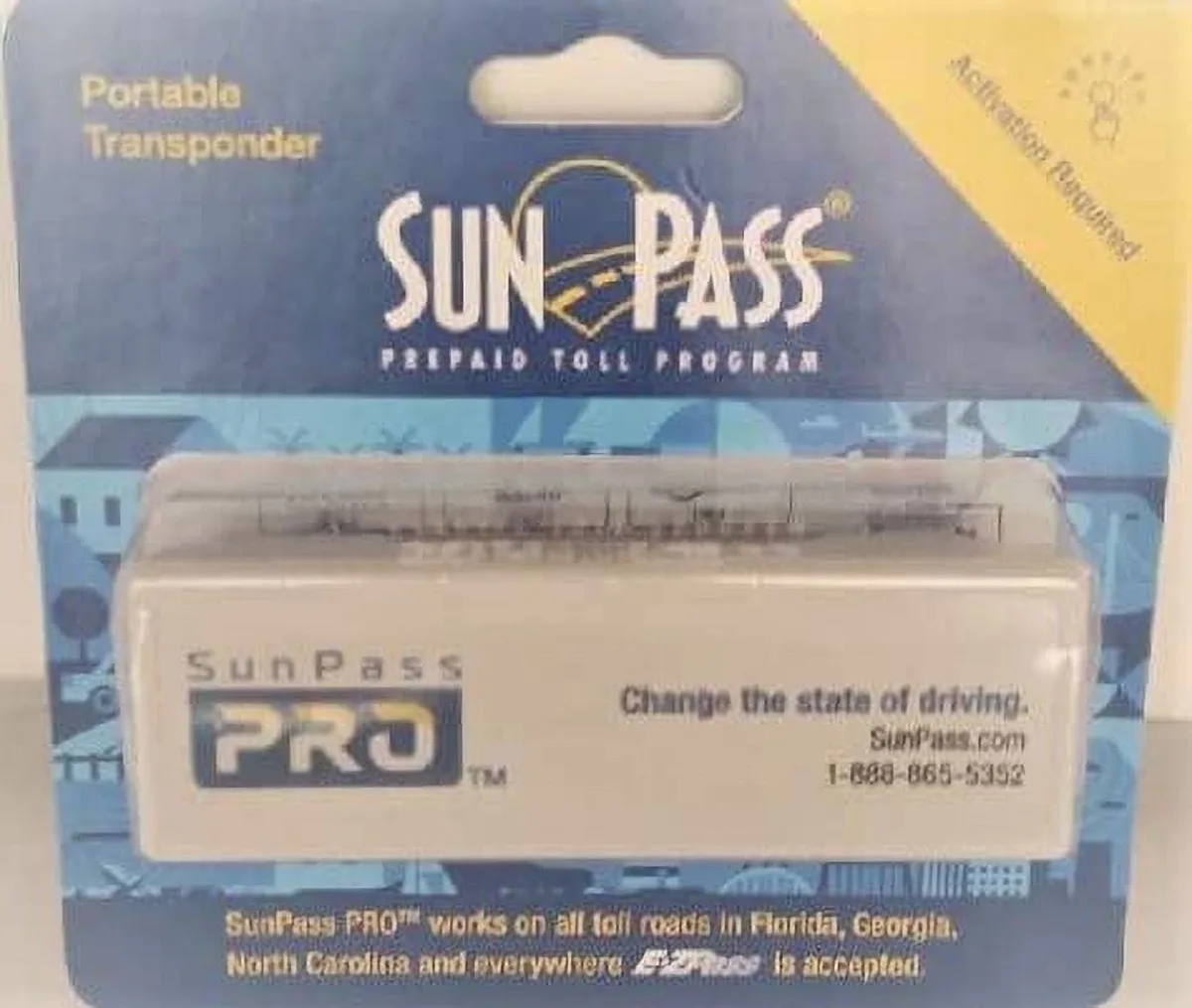
Florida’s express lanes accept two main payment methods: SunPass and pay-by-plate. SunPass is the state’s electronic tolling system, using a small transponder mounted on your windshield. It deducts tolls automatically as you pass through.
Bing (Web (fair-use with source credit))
Pay-by-plate works without a transponder. Cameras capture your license plate, and you’ll receive a bill in the mail. This method often includes an additional administrative fee, so SunPass is usually cheaper.
Out-of-state transponders like E-ZPass may also work on some Florida roads.
For more on vehicle-related rules, check out trailer towing safety requirements in other states.
HOV vs. Express Toll Lanes: Key Differences
HOV lanes are free but require a minimum number of passengers, usually 2 or 3. Express toll lanes charge a fee but don’t have occupancy requirements unless marked as HOV/toll hybrid lanes.
HOV lanes are often open only during peak hours. Express toll lanes operate 24/7. Some express lanes convert to HOV-only during certain times, so always check the signs.
Violating HOV rules can result in fines similar to toll evasion.
Weaving Violations: What Counts and Why It’s Dangerous
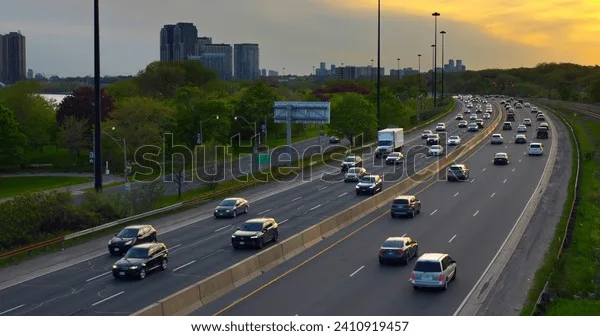
Weaving means cutting across lanes abruptly, often to avoid tolls or exit quickly. In Florida, this is illegal under Florida Statute 316.089, which prohibits unsafe lane changes.
Bing (Web (fair-use with source credit))
Weaving disrupts traffic flow and increases accident risks. It’s also a common reason for express lane congestion, defeating the purpose of faster travel. Law enforcement actively monitors these lanes, and citations are common.
Florida Weaving Violation Penalties (Fines, Points, and More)
Weaving is treated seriously under Florida law. State statute gives officers discretion to cite unsafe lane changes that disrupt traffic flow.
Here’s what you’re looking at if you get caught:
| Penalty | Details |
|---|---|
| Fine | $116 to $166 depending on county and surcharges |
| Points on license | 3 points added to your driving record |
| Insurance impact | Premium increase for 3 to 5 years |
| School surcharge | Additional $30 fee in some jurisdictions |
Points matter. Accumulate 12 in a year, and the state can suspend your license. A weaving citation doesn’t just cost money.
It stays on your record and keeps insurance rates higher.
If the weaving causes an accident, penalties jump. Reckless driving charges can apply. That means possible jail time and fines up to $500.
How to Enter and Exit Express Lanes Safely
The safest way to use express lanes is to plan ahead. Identify the entry point before you reach it. Double white lines mean no crossing.
You must enter and exit only at marked zones.
Here’s the process:
Know your entrance. Most express lanes have signs 1 to 2 miles ahead. Get in the correct lane early. Last second lunges are exactly what weave.
Match the speed. Express lanes move faster than general lanes. Use the merge area to accelerate safely. Hitting the flow is easier than fixing a sudden gap.
Exit with purpose. Put on your signal no more than 3 seconds before moving. Check mirrors and blind spots. Cross only at the dashed line zone before a barrier.
Dynamic tolling and sudden lane restrictions make timing important. Keep a buffer between you and the car ahead. If you realize you need to exit too late, stay in the express lane.
The next exit is safer than a risky lane swap.
Dynamic Tolling: How Prices Change and How to Save
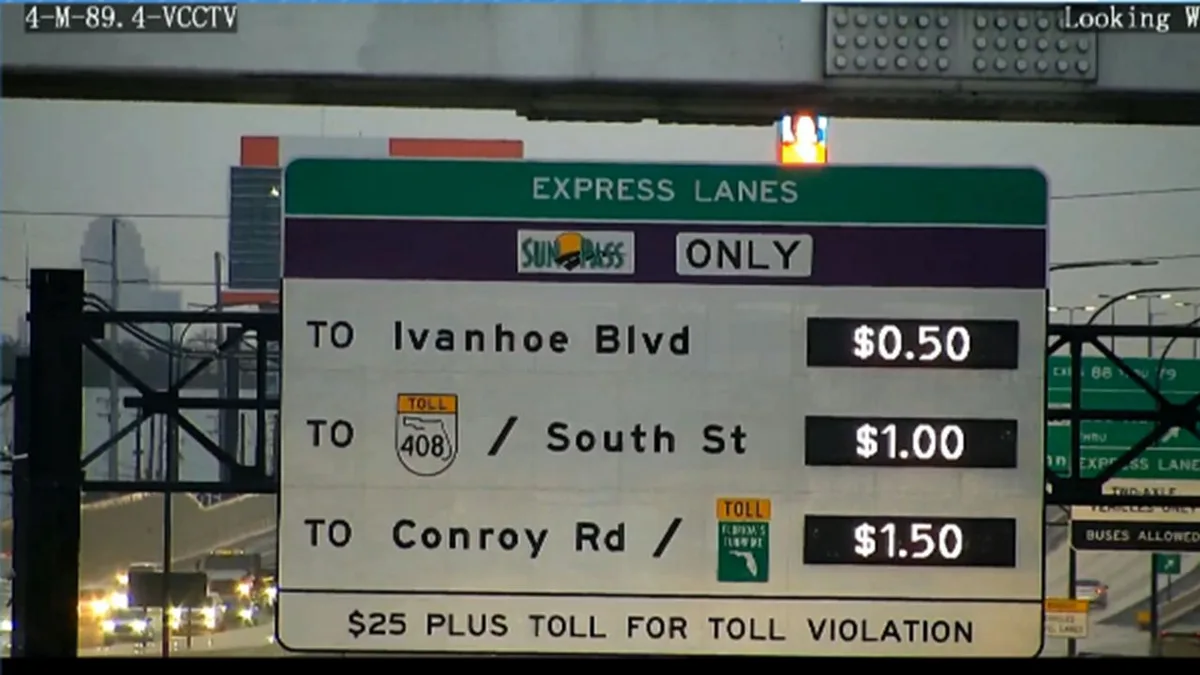
Dynamic tolling adjusts price based on demand. In peak hours, express lanes can cost more. In light traffic, prices drop.
The goal is to keep the express lane moving at a minimum speed, usually 50 mph or faster.
Bing (Web (fair-use with source credit))
Prices are shown on dynamic signs before each entrance. A price per segment appears, usually $0.50 to $4.00 per segment. You choose whether to use the lane.
Here are a few ways to save:
- Carpool. Some express lanes offer free access for registered 3+ passenger HOV vehicles.
- SunPass discount. Transponder usage avoids the pay by plate fee. You save on the base toll.
- Use the lane outside peak. Midday and weekends often mean lower rates.
Dynamic pricing changes as often as every 5 minutes. The displayed price is locked when you enter. You won’t see a surprise increase after you’re in.
Common Mistakes That Lead to Fines (And How to Avoid Them)
Even careful drivers mess up with express lane rules. Here are the mistakes that show up in most citations.
| Common Mistake | Why It Happens | How to Avoid |
|---|---|---|
| Late entry across double line | Inattention to upcoming exit | Check signs 1 mile ahead |
| No transponder in vehicle | Wrong car or rental | Verify the transponder is in the car |
| HOV lane single occupant | Assuming HOV is toll free | Confirm passenger minimum for the lane |
| Stopping in lane | Heavy traffic ahead | Drive to the next exit if needed |
| Pay by plate ignored | Out of state plates | Check bill online or sign up for toll alerts |
Another tricky one is the pay-by-plate fee added for invoice by mail. You can avoid this by ordering a SunPass online. Set up auto pay so the balance is always topped up.
If you are from out of state, make sure your rental car agreement covers tolls. Many rental companies charge extra fees on top of the toll itself.
For more details on avoiding unnecessary charges, read about proper registration changes before deadlines.
What Happens If You Don’t Pay a Toll or Get Caught Weaving
If you run a toll without payment, the system captures your plate. You get a notice of toll violation in the mail. A fine of $25 to $100 is added to the base toll, depending on how many unpaid violations accumulate.
Weaving citations arrive through traffic stops or even camera enforcement in some zones. The officer hands you a ticket, or a mailed citation appears if a camera captured it.
Consequences for unpaid obligations add up fast:
- Failure to pay toll violations can block your vehicle registration renewal.
- Weaving citations include points on your license.
- Unresolved fines can be sent to a collection agency.
- The state can suspend your license for multiple offenses.
If you get a violation notice, pay it promptly. If you think it is an error, you have the right to contest. Submit a written challenge with evidence, like transponder records or dash cam video.
Express Lane Etiquette: Unwritten Rules for Smoother Driving
Don’t block the express lane entrance. If you’re not entering, stay out of the merge area. This keeps traffic flowing for everyone.
Signal early when changing lanes. Other drivers need time to react. Sudden moves cause chain reactions and slow everyone down.
Leave space for merging vehicles. If you’re in the express lane, move over when safe to let others in. This small courtesy prevents bottlenecks at entry points.
Florida Express Lane Locations: Where You’ll Find Them
Express lanes are expanding across Florida. Here are the major corridors with managed lanes:
| Highway | Location | Notes |
|---|---|---|
| I-95 | Miami to Palm Beach | Dynamic tolling, HOV options |
| I-4 | Orlando to Tampa | Variable pricing, SunPass required |
| Florida Turnpike | Statewide | Multiple express segments |
| I-75 | Fort Myers to Naples | Limited access points |
| SR 826 / SR 836 | Miami-Dade | Heavy congestion relief |
Each system has its own rules. Check the Florida Department of Transportation for the latest maps and entry points. Some lanes are express only during peak hours.
Frequently Asked Questions
Do I need a SunPass to use express lanes?
Yes, or you’ll be billed by plate with extra fees. SunPass is cheaper and avoids administrative charges.
How much do express lanes cost?
Prices vary by time and traffic. Expect $0.50 to $4.00 per segment during peak hours.
Can I use express lanes without paying?
No. Toll evasion results in fines and possible registration holds.
What’s the penalty for weaving in Florida?
A weaving citation typically costs $116 to $166. It also adds 3 points to your license.
Are HOV lanes the same as express lanes?
Not always. Some express lanes have HOV requirements, but most are toll-based. Check the signs.
Can out-of-state drivers use Florida express lanes?
Yes, but you’ll need a compatible transponder or pay by plate. Some states have reciprocity with SunPass.