ByMax Lee
Guide to California 10 Day Address Change Notification Requirement for DMV
Bing (Web (fair-use with source credit))
Moving to a new home in California is exciting, but it comes with a legal obligation that many people overlook. The California 10 day address change notification requirement for DMV means you have just ten days to tell the DMV where you live after you move, and this rule applies to both your driver's license and your vehicle registration.
As of 2026, this requirement is still firmly in the California Vehicle Code. Failing to follow it can lead to fines, missed renewal notices, and even complications with law enforcement. Let's walk through exactly what you need to know, how to do it, and what happens if you don't.
Quick Answer
You must notify the California DMV of your new address within ten days of moving. This applies to your driver's license and vehicle registration. You can do this online, by mail, or in person.
There is no fee for the change itself. Do this quickly to avoid penalties and missed mail.
Why the 10-Day DMV Address Rule Actually Matters
This isn't just some bureaucratic suggestion. It's a law written into the California Vehicle Code, and it exists for a very practical reason. The DMV needs to know where you are so they can send you important things like registration renewal notices, toll road invoices from FasTrak, and even court summons if you're ever involved in a traffic incident.
Think about it. If your address is wrong in the DMV's system, that renewal notice for your car's registration goes to your old house. You might not realize it's late until you get pulled over or face a late fee.
That's a headache you can avoid completely.
The ten-day clock starts ticking the day you physically move, not the day you remember to do the paperwork. That's a critical distinction many people miss.
What California Law Actually Says — The Exact Requirement
Here's the specific legal language you need to know. Two different sections of the California Vehicle Code cover this.
For your driver's license, Section 14600 says you must notify the DMV within ten days of changing your residence address. For vehicle registration, Section 4159 imposes the same ten-day requirement.
The law is clear: you have to notify the DMV, not just the post office. A lot of people assume that filing a change of address with the USPS handles everything, but it doesn't. The postal service will forward your mail, but the DMV has its own separate system for tracking where you live.
That's why you can't just update your mail forwarding and call it done. You need to go directly to the DMV's system.
The Three Ways to Change Your Address: Online, Mail, or In Person
Bing (Web (fair-use with source credit))
You have three real options for notifying the DMV, and each one works differently. Here's the breakdown.
| Method | Processing Time | Convenience | Best For |
|---|---|---|---|
| Online | Instant confirmation, record updates in 24-48 hours | Fastest and easiest | Most people |
| In Person | Same day if you have an appointment | Reliable and thorough | Complex situations |
| By Mail | 2-4 weeks | Slowest but no computer needed | People without internet access |
Online is by far the most popular method. You go to the official DMV website, fill out the form, and get a confirmation number immediately. That confirmation number is your proof that you did it on time, so save it.
In person works too, but you'll want an appointment. Walk-in visits at some California DMV field offices can mean long waits, so schedule ahead if you can.
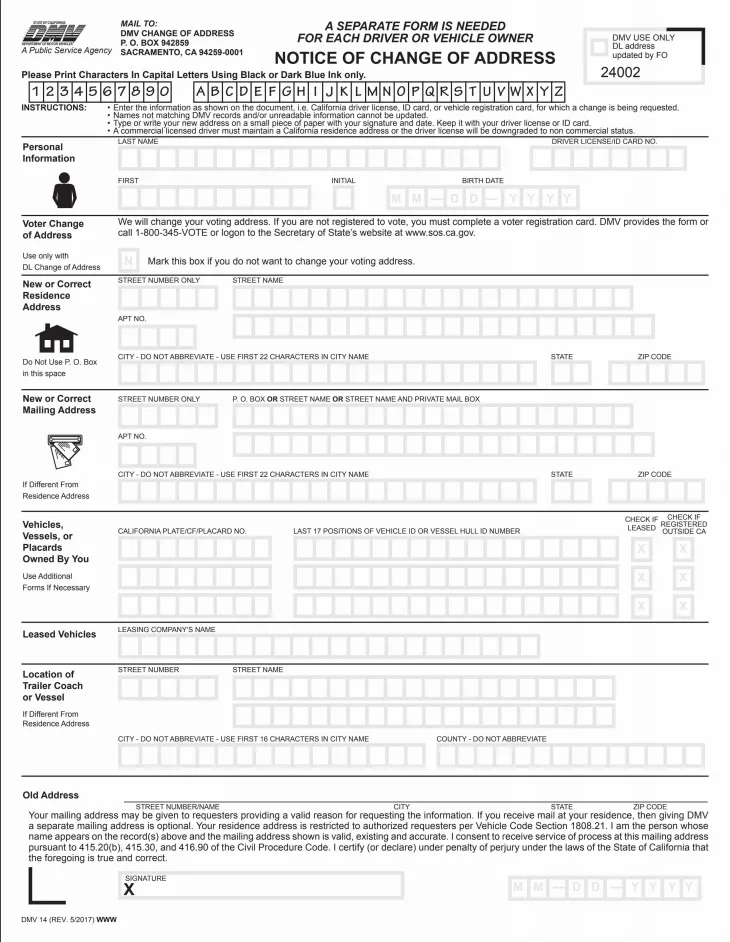
By mail is the slowest option. You download the form, print it, fill it out, and mail it to the address listed on the form. The problem here is that the DMV has to process the mail, and that can take weeks.
You're still compliant if you mail it within ten days, but the system might not reflect the change for a while.
Step-by-Step: How to Update Your Driver's License and Registration
Wikimedia Commons / Numbersinstitute (CC BY-SA)
Here's the actual step-by-step process, and it's simpler than most people think.
Step 1: Gather your information. You need your California driver's license number, your vehicle's license plate number, and the Vehicle Identification Number (VIN). You'll also need to know your insurance company's name.
Step 2: Choose your method. Go to the DMV website and use the "Change of Address" tool. It takes about five minutes. You'll enter your old address, your new address, and confirm your personal information.
Step 3: Update both separately. This is the part people miss. The online system lets you update your driver's license and your vehicle registration in one session, but they are technically separate records. Make sure you check both boxes during the process.
Step 4: Get your confirmation number. Write this down. Save the email. The confirmation number is your proof that you filed within the ten-day window.
If you ever get a citation for an old address, that number shows you were compliant.
Step 5: Update your insurance. Your car insurance company also needs your new address. Rates can change based on where you live, so don't skip this. Check with your agent to make sure the change is reflected.
One Step People Always Forget (That Comes Back to Bite Them)
There's one thing that consistently trips up California drivers. If you have a loan on your vehicle, the DMV isn't the only one who needs to know. The lienholder, which is the bank or credit union that holds your car's title, also needs to be notified of your address change.
Why does this matter? Because if the DMV can't reach the lienholder at the correct address, they might not process your registration renewal properly. It's a small detail, but it can cause real problems down the line.
Also, if you have multiple vehicles registered in your name, you need to update each one individually. The online system usually handles this in one attempt, but double-check that every car in your household has the right address on record.
What Happens If You Miss the 10-Day Deadline
Bing (Web (fair-use with source credit))
Let's be honest about the consequences. Missing the deadline isn't an automatic major fine, but it can cause a cascade of problems.
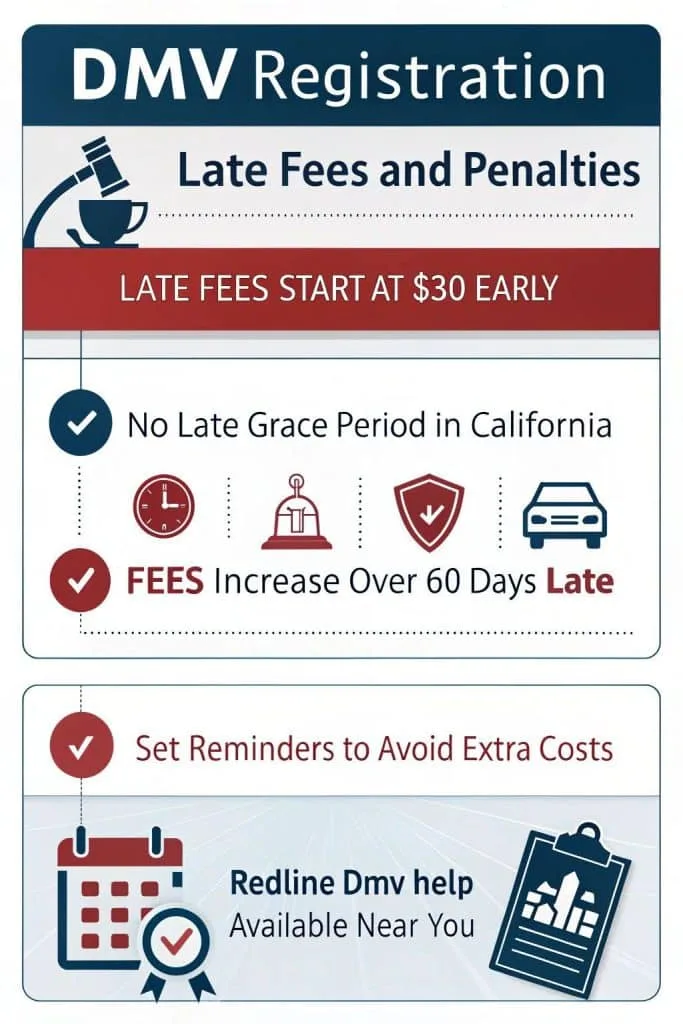
First, your registration renewal notice goes to the wrong address. You don't see it, so you don't pay it. Now your registration is technically late.
If you get pulled over, that's a fix-it ticket or a fine.
Second, toll road bills from systems like FasTrak also go to your old address. Miss those, and the penalties add up quickly. Some California toll agencies will add fees for late payments, and those fees are your responsibility even if the notice went to your old house.
Third, if you ever have a court appearance or traffic citation, the notice goes to your old address. That can lead to a failure-to-appear situation, which is much more serious.
The bottom line is that the ten-day rule exists for a reason. It keeps your DMV record accurate and current. Missing it just creates paperwork and expense that you could avoid with a five-minute online form.
Common Mistakes That Cost You Time and Money
Here are the mistakes we see most often in our research. They are all completely avoidable.
Mistake 1: Only changing your address with the post office. The USPS does not share your address with the DMV. They are completely separate systems. You must go to the DMV website directly.
Mistake 2: Thinking online is instant. It is, but only if you do it correctly. Some people start the online process, get distracted, and never finish. The confirmation number is what proves you did it.
Mistake 3: Using third-party websites. There are websites that look like the official DMV site but charge you fees. The real DMV site never charges for an address change. If you see a fee, you are on the wrong page.
Mistake 4: Forgetting about multiple cars. If you have two cars registered in your name, you need to update both. The online system will ask, but it is easy to click through too quickly.
Mistake 5: Ignoring the ten-day clock. The clock starts when you move. If you wait two weeks to file, you are already late. Do it the day you change your address, or at least within the first few days.
Special Situations: New Residents, Military, Vehicles With Loans
Different circumstances change how the ten-day rule applies. Let's break down the three most common special situations.
New residents moving into California have a different timeline than current residents. You have ten days to get a California driver's license once you establish residency. You also have 20 days to register your out-of-state vehicle.
The address change rule still applies after that, but the initial setup has its own deadlines.
Military personnel get some flexibility. If you're on active duty and your home of record is still your previous state, you may not need to update your California address at all. But if you're living in California full-time, the ten-day rule applies like anyone else.
Vehicles with loans need extra attention. The lienholder must have a correct address on file. When you change your address with the DMV, the system typically notifies the lienholder.
But it's smart to call your bank or credit union directly and confirm. A wrong address can delay your registration renewal.
How to Check If Your Address Change Went Through
After you file, you want to know it actually worked. Here is how to verify.
Log into your DMV online account and look at your driver's license and vehicle registration records. The new address should appear there. If it does not, the change did not process.
Wait for your confirmation letter or email. The DMV will send some form of acknowledgment when they update their records. If you do not see that within a week or two, it is worth checking again.
Check your car insurance records too. The insurance company needs the right address to keep your policy accurate and your rates correct. Some insurers will flag a mismatch between your DMV address and your policy address.
Call the DMV directly if you are unsure. Their customer service line can confirm whether your address is current in their system. The number is 1-800-777-0133.
Your Quick Checklist — Do This Before You Unpack
Here is a simple list to run through the day you move.
- Go to the DMV website and update your driver's license address
- Go to the DMV website and update your vehicle registration address
- Save your confirmation number
- Update your car insurance with the new address
- Check your insurance rates for any change based on your new location
- Notify your lienholder if you have a car loan
- Update your mailing address with the post office for other mail
That is it. The whole process takes about ten minutes, and it saves you from a lot of potential headaches down the road. Do it early, do it right, and you are good.
Here is a simple list to run through the day you move.
- Go to the DMV website and update your driver's license address
- Go to the DMV website and update your vehicle registration address
- Save your confirmation number
- Update your car insurance with the new address
- Check your insurance rates for any change based on your new location
- Notify your lienholder if you have a car loan
- Update your mailing address with the post office for other mail
That is it. The whole process takes about ten minutes, and it saves you from a lot of potential headaches down the road. Do it early, do it right, and you are good.
Frequently Asked Questions
How long do I have to change my address with the California DMV?
You have exactly ten days from the date you move. The clock starts on move-in day, not the day you remember to file. Do it as soon as possible to avoid any gaps.
Is there a fee to change my address with the DMV?
No. There is no fee for a standard address change on your driver's license or vehicle registration. If you see a website charging a fee, it is not the official DMV site.
Can I change my address online with the California DMV?
Yes. The online system is the fastest and most convenient method. You get a confirmation number immediately, and the record updates within 24 to 48 hours.
What happens if I don't change my address with the DMV?
Your registration renewal notices, toll road bills, and court notices will go to your old address. You could face late fees, penalties, or even a failure-to-appear situation if you miss a court date.
Do I need to change my address with the DMV and the post office?
Yes, both. The post office will forward your mail, but the DMV has its own separate system. You must notify the DMV directly to keep your driving records and registration records accurate.
How do I update my address for multiple vehicles?
The online system lets you update multiple vehicles in one session. Make sure you check each one. If you miss one, it will still have your old address on file.
What if I move again soon after?
If you move again, the ten-day clock resets. You need to file another address change with the DMV for each new move. The same rule applies every time you change your residence.