ByMax Lee
Georgia Headlight Laws for Rain & Low Visibility
Getting pulled over in a downpour because your headlights were off is a mistake you don't want. Georgia headlight use requirements during rain and reduced visibility are stricter than many drivers expect, and the law expects action the moment weather cuts your sightlines.
State law backs this up with a clear standard. Per O.C.G.A. § 40-8-20, headlights must be on when wipers are needed or visibility falls under 500 feet. As of 2026, that rule still surprises out-of-state commuters and new drivers alike.
Why Georgia’s Headlight Rules in Rain and Low Visibility Matter
Rain on Georgia highways isn't just a nuisance. It cuts your sightlines and makes your car harder for others to see. The state's lighting rules exist to prevent the pileups that start when someone drives dark in a downpour.
NHTSA research shows reduced visibility is a leading factor in multi-car incidents on wet roads. Turning on headlights isn't about you seeing better. It's about everyone else seeing you.
New drivers often assume they're fine with streetlights or daylight. That assumption fails fast in a sudden Georgia squall. The law treats lighting as a shared safety duty, not a personal preference.
The Quick Answer: When You Must Use Headlights in Georgia
Georgia headlight use requirements during rain and reduced visibility demand lights on in rain. You must switch headlights on when wipers operate. You must use them if sight drops below 500 feet.
Low beams are the safe choice in storms. Follow this and you avoid fines.
What Georgia Law Actually Says About Headlights in Rain and Reduced Visibility
The core rule lives in O.C.G.A. § 40-8-20. That statute requires headlights when rain, fog, snow, or smoke demands windshield wipers. It also kicks in whenever you can't see 500 feet ahead.
The Georgia Department of Driver Services repeats this in their manual. You can review the official stance at dds.georgia.gov.
A key point: the law says "lighted lamps" not just DRLs. That means your full low beam headlights, not just a daytime strip. Skip this and you're technically in violation even at noon.
Enforcement is real. Troopers write citations during active rain if your headlights are off. The stop itself is the headache, the fine is the sting.
How “Reduced Visibility” Is Defined in Georgia
The phrase "reduced visibility" sounds vague until you read the numbers. Georgia ties it to a 500 foot sight distance. If you can't clearly see a quarter mile ahead, the light rule is active.
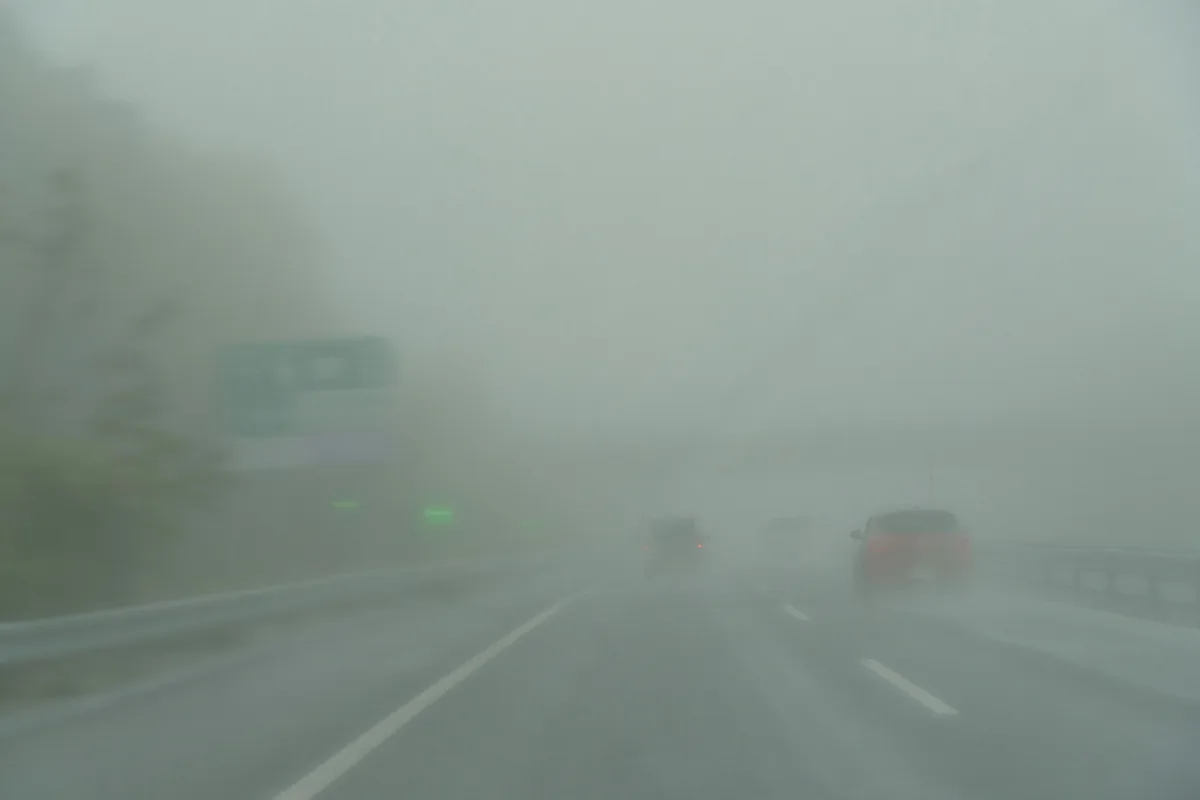
This threshold applies in fog, heavy rain, smoke, or snow. It doesn't matter if your car has fancy sensors. The legal test is your naked-eye distance, not the dashboard readout.
A practical tip: pick a fixed roadside object. If you lose it before 500 feet, flip the switch. That habit keeps you legal and safer in a storm.
Low Beams vs. High Beams: Which to Use and When
This is where many Georgia drivers slip up. High beams scatter in rain and fog, blinding you and others. Low beams cut under the weather and show the road without glare.
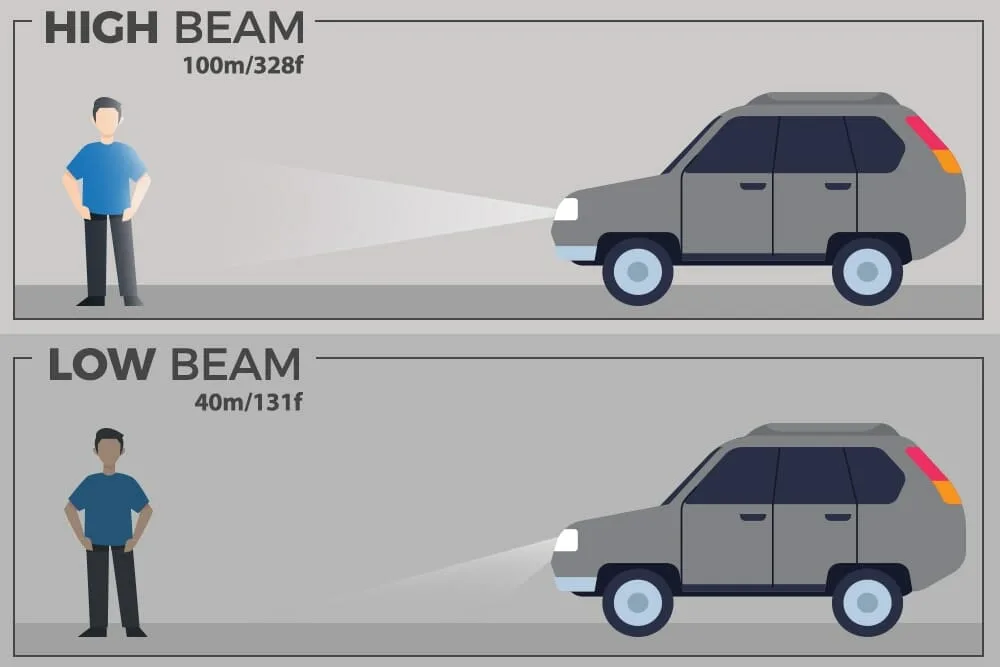
Here's the quick breakdown:
| Condition | Correct Beam | Why |
|---|---|---|
| Rain | Low beam | High beam reflects off drops |
| Fog | Low beam | Reduces back-glare |
| Clear night | High beam (if no traffic) | Max distance |
| Snow smoke | Low beam | Preserves sight |
If you're caught with high beams in a downpour, you're doubling the risk. Your stock headlight switch is the only tool you need.
What Happens If You Don’t Follow the Rules
Georgia treats headlight violations as a primary offense. That means a trooper can pull you over for headlights alone, even if you're doing everything else right. The fine is typically under $100, but the real cost is the stop itself.
NHTSA data shows that vehicles without headlights in rain are 30% more likely to be involved in a collision. That's not just a statistic. It's a real danger on I-85 or I-75 when storms roll through.
Insurance companies also take notice. A citation for improper lighting can bump your rates at renewal.
Common Mistakes Georgia Drivers Make in the Rain
Many drivers assume daytime running lights are enough. They're not. Georgia law requires full headlights, not just DRLs.
That's a common oversight in newer cars with automatic lighting systems.
Another mistake is waiting until it's dark to turn on lights. The law kicks in the moment visibility drops, regardless of time. We've seen drivers get ticketed at 2 PM during a heavy summer storm.
Some think fog lights alone satisfy the requirement. They don't. Fog lights are supplementary, not a replacement for headlights.
Daytime Running Lights (DRLs) vs. Full Headlights: Are They Enough?
DRLs are brighter than no lights, but they don't meet Georgia's standard. The law specifically requires "lighted lamps," which means your full headlight system. DRLs often don't illuminate the rear lights, which are critical for visibility in rain.
Here's the technical difference:
| Feature | DRLs | Full Headlights |
|---|---|---|
| Front lights | On | On |
| Rear lights | Usually off | On |
| Brightness | Lower | Standard |
| Legal in GA rain | No | Yes |
Manufacturer specs confirm most DRL systems don't activate tail lights. That's why they fail the legal test.
If your car has automatic headlights, check the owner's manual. Some systems only activate DRLs in daylight conditions. You may need to manually switch to full headlights in rain.
Practical Tips for Driving Safely in Georgia Rain
Turn your headlights on before the rain gets heavy. Waiting until you can barely see is waiting too long. The 500-foot rule is your guide, but err on the side of caution.
Keep your headlights clean. Road grime can reduce output by 50%. A quick wipe at the gas station makes a real difference in visibility.
Slow down and increase following distance. Wet roads double stopping distances. Your headlights help others see you, but they don't improve traction.
Use your defroster. Fogged windows cut visibility faster than rain. Clear glass and bright lights are your best tools in a storm.
Georgia vs. Other States: How Headlight Laws Compare
Georgia's 500-foot visibility rule is stricter than some neighbors. Alabama only requires headlights from sunset to sunrise plus when wipers are on. Tennessee matches Georgia's visibility standard but doesn't specify a distance.
Here's a quick comparison:
| State | Rain Requirement | Visibility Threshold |
|---|---|---|
| Georgia | Wipers or <500 ft | 500 feet |
| Alabama | Wipers only | None specified |
| Tennessee | Wipers or reduced visibility | Not specified |
| Florida | Wipers only | None specified |
Georgia's law is more precise. That clarity helps drivers know exactly when to turn on lights. It also gives officers a clear standard for enforcement.
Frequently Asked Questions
Do I need headlights on in light rain in Georgia?
Yes. The law requires headlights whenever wipers are in use, regardless of how light the rain is.
Are fog lights required in Georgia rain?
No. Fog lights are optional and don't replace headlights. The statute specifically requires your standard headlights to be on in rain or reduced visibility.
Can I get pulled over for not using headlights in rain?
Absolutely. Georgia treats this as a primary offense. Officers can stop you solely for headlight violations.
What's the fine for not using headlights in rain in Georgia?
The fine is typically under $100. The exact amount varies by county.
Do I need headlights on during the day in Georgia rain?
Yes. The law doesn't distinguish between day and night. If it's raining hard enough to need wipers, your headlights must be on.
Is it illegal to drive with only parking lights on in rain?
Yes. Parking lights don't meet the requirement. Georgia law specifically calls for headlights, not just any exterior lights.