Georgia window tinting legal limits and 32 percent light transmission are the key details every driver needs to know before tinting their car windows. The state sets strict rules on how dark your tint can be, and getting it wrong can mean fines or failed inspections.
As of 2026, Georgia law allows front side windows to have a minimum of 32% light transmission, while rear windows have more flexibility. This percentage, called Visible Light Transmission (VLT), determines how much light passes through the tint.
Quick Answer
Georgia window tinting legal limits and 32 percent light transmission mean front side windows must allow at least 32% of light through. Rear side and rear windows can be darker. Windshield tint is only allowed above the AS-1 line.
Violations can result in fines.
What Georgia’s 32% Window Tint Law Actually Means
The 32% rule applies specifically to the front side windows (driver and passenger). This is the minimum Visible Light Transmission (VLT) allowed by law. VLT measures how much light passes through the window, so a 32% tint blocks 68% of light.
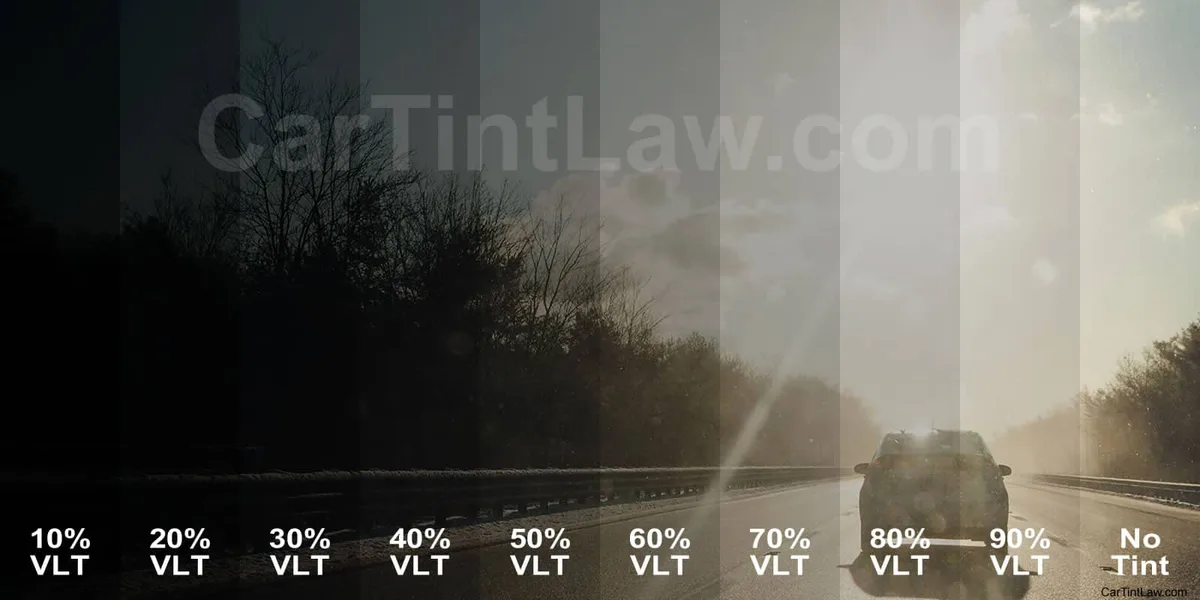
Georgia’s law is designed to ensure drivers maintain clear visibility, especially at night or in low-light conditions. The rule is enforced under Georgia Code § 40-8-73.1, which outlines the state’s window tinting regulations. You can review the full legal text on the Georgia General Assembly website.
The Quick Answer: Is 32% Tint Legal in Georgia?
Yes, 32% tint is legal for front side windows in Georgia. This is the darkest tint allowed for these windows. Any darker, and you risk a fine or failing a vehicle inspection.
Rear side windows and the rear window can have darker tints, as long as the vehicle has side mirrors. This gives drivers more flexibility for privacy and heat reduction in the back of the vehicle.
How Georgia Defines Legal Window Tint (VLT, Reflection, Color)
Georgia’s window tint laws focus on three main factors: VLT, reflection, and color. VLT is the most critical, as it directly impacts visibility. The state requires front side windows to allow at least 32% of light through.
Reflection is another key factor. Georgia prohibits tints that are highly reflective, as these can blind other drivers. Metallic tints, for example, often have higher reflection and may not comply with state laws.
Color restrictions are also in place. Georgia does not allow red, amber, or yellow tints on front side windows. These colors can interfere with traffic signals and emergency vehicle lights.
Front Side Windows vs. Rear Windows: The Exact Rules
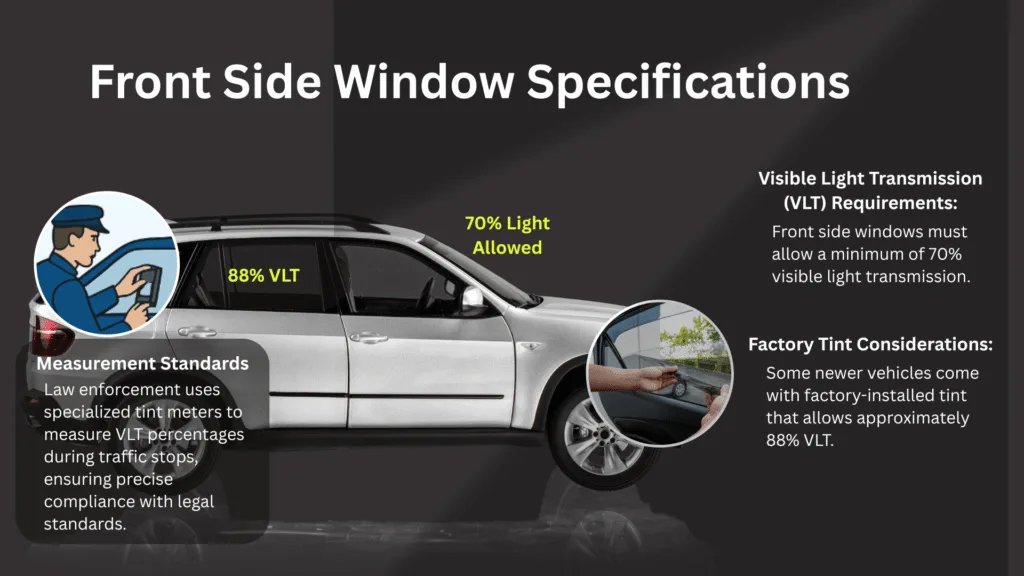
Front side windows must allow at least 32% of light through. This applies to both the driver and passenger windows. The rule is strict, and there are no exceptions for these windows unless you have a medical exemption.
Rear side windows and the rear window can have any level of darkness, as long as the vehicle has side mirrors. This means you can use limo tint (5% VLT) on these windows if you prefer maximum privacy and heat rejection.
For SUVs, vans, and trucks, the rules are slightly different. The front side windows still require 32% VLT, but the rear windows can be as dark as you like, regardless of side mirrors.
Windshield Tint: What’s Allowed Above the AS-1 Line
Georgia allows tint on the windshield, but only above the AS-1 line. This line is typically marked on the windshield by the manufacturer and is usually about 4-6 inches from the top. Tint above this line is often used to reduce glare from the sun.
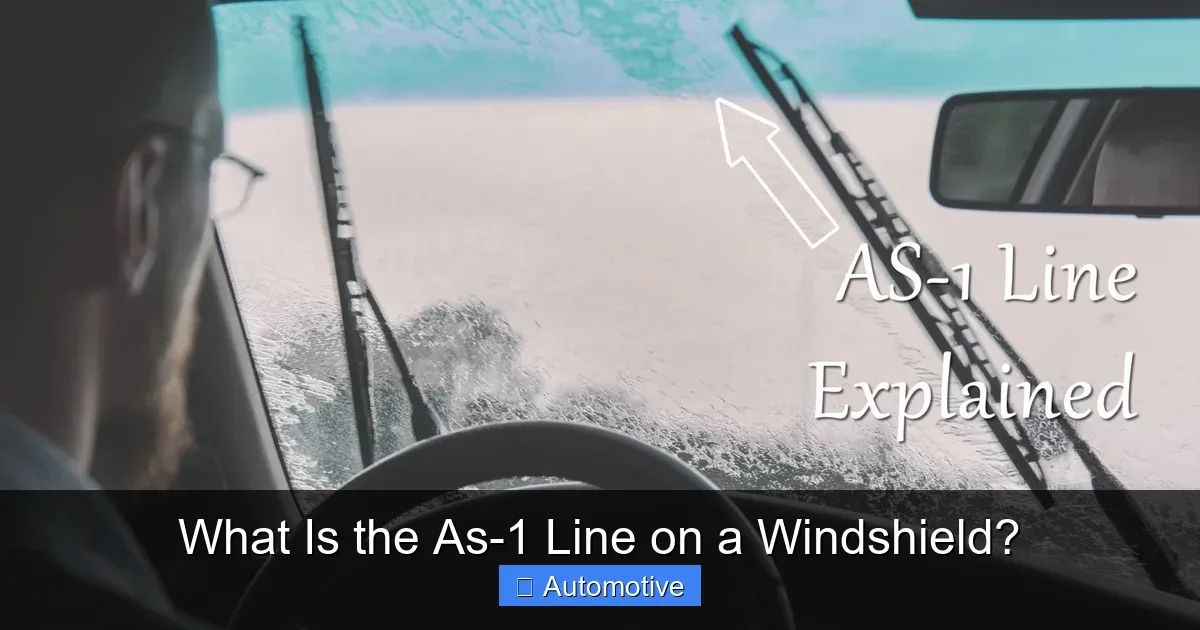
Tint below the AS-1 line is not permitted, as it can obstruct the driver’s view. This rule is strictly enforced, and violating it can result in a fine. The AS-1 line is a federal safety standard, so it’s important to adhere to it.
Medical Exemptions: Who Qualifies and How to Get One
Georgia allows medical exemptions for window tint darker than 32% on front side windows. This applies to drivers or passengers with a documented medical condition that requires reduced light exposure.
A licensed physician must provide a written statement confirming the need. The exemption must be carried in the vehicle at all times. Without it, you can still be cited for illegal tint.
How Police Check Tint Darkness (And What Happens If You’re Over the Limit)
Officers use a VLT meter to measure tint darkness during traffic stops. If your front side windows test below 32% VLT, you’ll likely receive a citation.
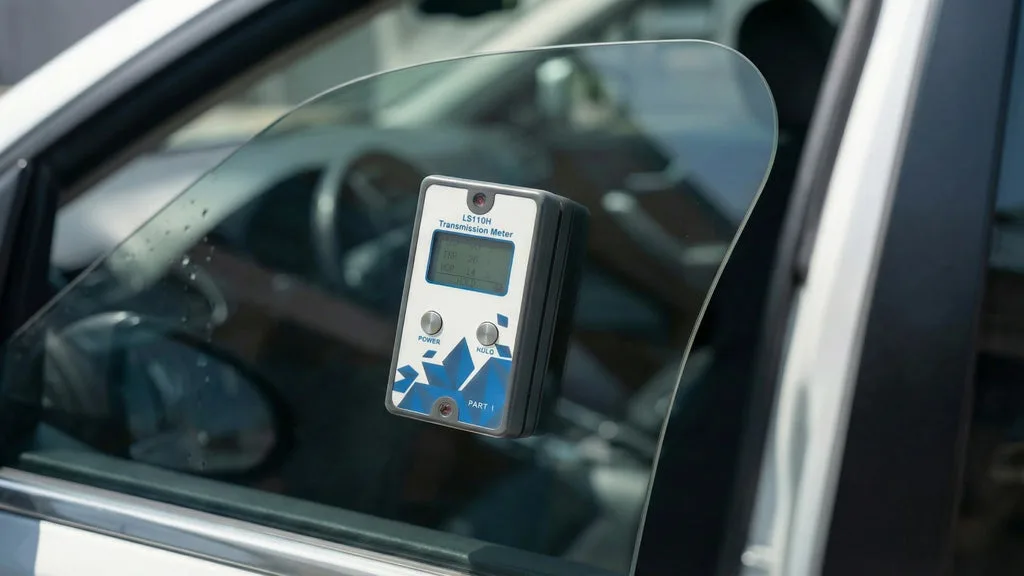
Fines for illegal tint in Georgia typically range from $100 to $1,000. Repeat offenses may lead to higher penalties. The vehicle may also fail its annual inspection until the tint is removed or corrected.
The Georgia Department of Public Safety publishes enforcement guidance for officers on tint stops. You can review their official resources at dps.georgia.gov.
Common Mistakes That Get Georgia Drivers Fined
Many drivers assume factory tint is always legal. This isn’t true if the factory tint plus aftermarket tint combined drop below 32% VLT.
Another common error is ignoring the AS-1 line on the windshield. Tint below this line is illegal, even if it’s just a small strip. Some drivers also forget that reflective or colored tints on front windows are prohibited.
Ceramic vs. Dyed vs. Metallic Tint: Which Stays Legal and Performs Best
Ceramic tint is the safest choice for Georgia drivers. It blocks heat and UV rays without affecting visibility or VLT compliance. It’s also non-reflective, so it meets state laws.
Dyed tint is cheaper but offers less heat rejection. Metallic tint provides good heat reduction but may be too reflective for Georgia’s standards. Always check the manufacturer’s specs for VLT and reflection ratings.
Here’s a quick comparison:
| Tint Type | Heat Rejection | UV Block | Reflection | Cost |
|---|---|---|---|---|
| Ceramic | High | 99% | Low | $$$ |
| Dyed | Low | 50-70% | None | $ |
| Metallic | High | 90% | Medium | $$ |
Step-by-Step: How to Check If Your Tint Is Legal Before Installing
First, confirm the VLT percentage of the tint you plan to use. The product packaging or manufacturer’s website should list this. For front side windows, it must be 32% or higher.
Next, test the current VLT of your windows with a meter. If your factory tint is already at 70% VLT, adding a 50% aftermarket tint could drop you below the legal limit.
Finally, check for reflection and color. Avoid metallic or colored tints for front windows. Stick to neutral shades like gray or charcoal.
What Happens If You Get Pulled Over for Illegal Tint in Georgia
The officer will likely use a VLT meter on your front windows during the stop. If the reading shows below 32% VLT, you'll get a citation on the spot.
You'll need to fix the tint and provide proof of correction. Some counties require a signed statement from a licensed installer. Repeat violations can escalate to higher fines or a court appearance.
Out-of-state vehicles aren't exempt from Georgia law. If you drive through with darker film, local rules apply.
Neighboring States vs. Georgia: How the Laws Differ
Georgia's 32% front window rule is stricter than some neighbors. Florida allows 28% VLT on front side windows, giving drivers slightly more darkness flexibility.
Alabama permits 32% as well, matching Georgia exactly. Tennessee allows 35% on front windows, which is actually lighter than Georgia's limit.
South Carolina is more lenient at 27% VLT for front windows. These differences matter if you commute across state lines or move residences.
| State | Front Side VLT | Note |
|---|---|---|
| Georgia | 32% | Baseline |
| Florida | 28% | Slightly darker |
| Alabama | 32% | Matches GA |
| Tennessee | 35% | Lighter than GA |
| South Carolina | 27% | Most lenient |
FAQs About Georgia’s 32% Tint Rule
Can I have 20% tint on my front windows in Georgia?
No, 20% tint is illegal on front side windows in Georgia. The state requires at least 32% VLT for driver and passenger windows.
Do I need a sticker to show legal tint?
Georgia does not require a tint compliance sticker on the window. If you have a medical exemption, you must carry the physician's written document inside the vehicle.
Is factory tint always legal?
Factory tint is not always legal once aftermarket film is added. The combined layers can drop front windows below 32% VLT. Measure total light transmission with a meter before installing new film.
What tint is best for heat in Georgia?
Ceramic tint gives the best heat rejection while staying legal at 32% VLT. It blocks up to 99% of UV rays without reflective glare. Dyed films cost less but perform poorly in summer.
Can I tint my windshield at all?
You may only tint above the AS-1 line near the windshield top. This mark sits about 4 to 6 inches down from the roof. Tint below that line obstructs view and draws a fine.
Does Georgia check tint at inspection?
Yes, tint is part of the annual visual safety check in Georgia. Front windows reading below 32% VLT cause a failure. You must remove or replace the film before the vehicle passes.
Final Verdict: The Safest Tint Choices for Georgia Drivers
Stick with 32% VLT ceramic film on front side windows for legal peace of mind. It meets the statute and blocks heat without reflection issues.
For rear windows, go as dark as you like if mirrors are present. Keep windshield tint above the AS-1 line only. Following these steps keeps you clear of fines and failed inspections.