Black Friday deals are live on Amazon · limited-time discounts, grab them before they’re gone
Grab the deals

ByMax Lee
How to Make Car Washer Fluid: Easy DIY Guide for Sparkling Windscreens
A clean windscreen is essential for safe driving, especially at night, in rain, or when glare makes road details harder to see. If the washer reservoir is empty, you can make a simple emergency washer solution at home using distilled water, isopropyl alcohol, and a very small amount of mild detergent.
However, homemade fluid is not a universal replacement for commercial screenwash. The right mixture depends on your climate, vehicle, washer system, and the condition of your windscreen. In freezing weather, use a properly rated winter washer fluid rather than relying on an uncertain homemade formula. You can also read our guide on how to put washer fluid in car.
This guide explains how to make car washer fluid, how to use it safely, what ingredients to avoid, and when a store-bought product is the better choice.
Is Homemade Car Washer Fluid Safe for Your Car?
A mild homemade mixture is generally suitable as a short-term solution in warm or moderately cool weather, provided it is mixed correctly and the reservoir is clean. You can also read our guide on how to get a loan to buy a car wash.
The main risks come from:
- Using too much detergent, which can create foam and residue
- Using hard or dirty water, which may leave mineral deposits
- Adding chemicals that damage paint, rubber, plastic, or window tint
- Relying on a weak mixture in freezing temperatures
- Mixing homemade fluid with unknown chemicals already in the reservoir
In practice, the most common mistake is assuming that any liquid that cleans glass is suitable for a washer pump. Household glass cleaners, bleach, concentrated vinegar, ammonia, and strong degreasers are not designed for the small pump, narrow jets, hoses, seals, and painted surfaces in a vehicle.
If the washer system contains an unknown product, drain or dilute it before adding a new formula. Never mix bleach with acids, ammonia, or other cleaners. You can also read our guide on how to keep a black car clean between washes.
The Best Simple Homemade Washer Fluid Recipe
For warm weather or emergency use, make this small batch:
| Ingredient | Amount | Purpose |
|---|---|---|
| Distilled water | 3 cups | Main cleaning liquid |
| 70% isopropyl alcohol | 1 cup | Helps dissolve grime and provides limited cold resistance |
| Mild liquid detergent | 1–2 drops | Helps loosen oily film |
| Clean container | 1 | Safe mixing and storage |
This produces approximately 4 cups of washer fluid. Scale the recipe carefully if you need more.
For a one-gallon batch, use approximately:
- 12 cups of distilled water
- 4 cups of 70% isopropyl alcohol
- 1 teaspoon or less of mild detergent
Do not add a full teaspoon of detergent to a small four-cup batch. Excess soap can cause streaking, bubbles, blocked jets, and a greasy film that becomes especially noticeable when headlights shine through the glass at night.
Why Distilled Water Is Better
Distilled water contains far fewer dissolved minerals than many tap-water supplies. Those minerals can leave spots on the windscreen and gradually contribute to deposits around washer nozzles. You can also read our guide on best cordless pressure washer for cars.
Tap water can work for a temporary refill, but distilled water is the safer choice when you are making fluid for repeated use. If your local water is hard, avoid storing a tap-water mixture for long periods.
Why Add Isopropyl Alcohol?
Isopropyl alcohol helps cut through oily road film and insect residue. It also lowers the freezing point of the mixture, but the protection is limited and difficult to predict accurately because it depends on:
- The alcohol concentration
- The water-to-alcohol ratio
- The actual temperature
- Wind chill and vehicle exposure
- Whether the alcohol is 70%, 91%, or another strength
A 3-to-1 water-to-70% isopropyl alcohol mixture should not be treated as a guaranteed winter formula. For sustained freezing conditions, choose commercial washer fluid labelled for the expected temperature. You can also read our guide on is it bad to wash your car in the cold weather.
What You Need Before Mixing
Gather the following items:
- Distilled water
- 70% isopropyl alcohol
- Mild, low-foaming liquid detergent
- A clean measuring cup
- A clean plastic jug with a secure cap
- A funnel
- A waterproof label
- Safety glasses or gloves if your skin is sensitive
Choose a container that has never held bleach, fuel, pesticides, drain cleaner, or other household chemicals. Residue from a previous product can react with the new mixture or damage the washer system.
Do not reuse a food or drink bottle unless it is clearly labelled and kept completely away from food, children, and pets. Isopropyl alcohol is flammable and harmful if swallowed. You can also read our guide on are car washes tax deductible.
Use clean measuring equipment to keep the mixture consistent and free from contamination.
Credit: www.autozone.com
How to Make Car Washer Fluid Step by Step
1. Clean the Mixing Container
Rinse the container thoroughly and allow it to dry. Any dirt, oil, soap flakes, or old chemical residue can affect the mixture or enter the washer jets.
Inspect the cap as well. A loose cap allows alcohol to evaporate and may let dust or debris into the fluid during storage.
2. Measure the Distilled Water
Pour 3 cups of distilled water into the container using a measuring cup. Measuring is important because adding alcohol “by eye” can produce inconsistent cold-weather performance.
If you are preparing a larger batch, multiply each ingredient by the same amount rather than adding extra detergent.
3. Add the Isopropyl Alcohol
Add 1 cup of 70% isopropyl alcohol. Pour slowly to reduce splashing, and keep the container away from cigarettes, flames, heaters, and sparks.
Work in a well-ventilated area. Isopropyl alcohol vapour is flammable, so do not mix or store the fluid near an ignition source.
4. Add Only a Small Amount of Detergent
Add one or two drops of mild liquid detergent. The detergent is optional; its purpose is to help loosen oily film, not to create a large amount of foam.
Avoid automatic dishwasher detergent, powdered cleaners, concentrated degreasers, and heavily scented products. They may leave residue or contain ingredients that are unsuitable for a vehicle’s rubber and plastic components.
5. Mix Gently
Close the cap and tilt or shake the container gently. Do not vigorously whip the solution into foam.
Label the container with:
- “Windshield washer fluid”
- The ingredients
- The date mixed
- “Flammable—keep away from heat”
- “Keep away from children and pets”
6. Test a Small Amount
Before filling the reservoir completely, pour a small amount into a separate cup and test it on a corner of the windscreen. Check for:
- Excessive foaming
- A cloudy film
- Streaks after wiping
- An unpleasant oily residue
- Poor spray performance
If the mixture leaves a film, discard it and use a lower-detergent formula or commercial washer fluid.
Should You Add Vinegar?
Vinegar is not necessary in a basic washer-fluid recipe. Although its acidity may help loosen some mineral or insect residue, it can produce a strong smell and is not a reliable substitute for a properly formulated screenwash.
Avoid adding vinegar if:
- You do not know what is already in the reservoir
- The vehicle has delicate aftermarket coatings
- The mixture will be stored for a long time
- You are trying to improve freeze protection
Do not combine vinegar with bleach or unknown cleaning chemicals. When a windscreen has stubborn mineral spots, it is usually better to clean the glass separately with a suitable automotive glass cleaner rather than making the washer reservoir more chemically complicated.
What Not to Put in a Washer Reservoir
Avoid these products and ingredients:
- Bleach
- Ammonia-based household glass cleaner
- Hand soap or body wash
- Laundry detergent
- Powdered cleaners
- Dishwashing-machine detergent
- Fuel, kerosene, or solvent
- Undiluted rubbing alcohol
- Salt
- Essential oils
- Antifreeze intended for the engine cooling system
- Strong acids or drain cleaner
Engine coolant is especially dangerous here. It is not designed for windscreen cleaning, may damage paint and rubber, and contains toxic chemicals.
Salt is also a poor choice. It can encourage corrosion and does not create a dependable washer-fluid formula.
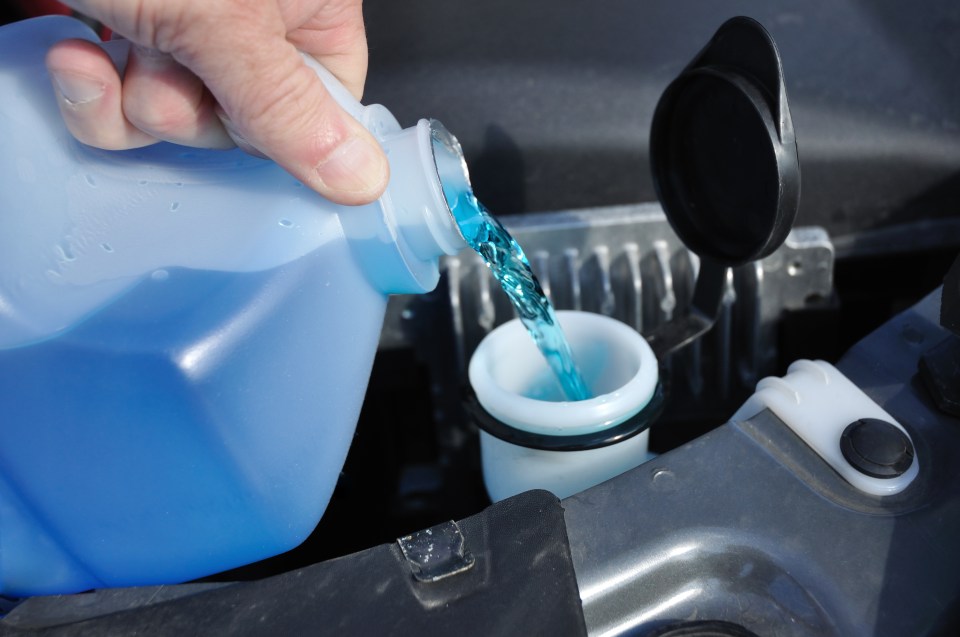
How to Fill Your Car’s Washer Reservoir
The washer reservoir is usually marked with a windscreen symbol and a spray pattern. If you are unsure, check the vehicle owner’s manual rather than opening random fluid caps under the bonnet.
Follow these steps:
- Park on level ground and switch off the engine.
- Allow hot engine components to cool.
- Open the washer-fluid reservoir cap.
- Check whether the existing fluid looks contaminated, oily, or sludgy.
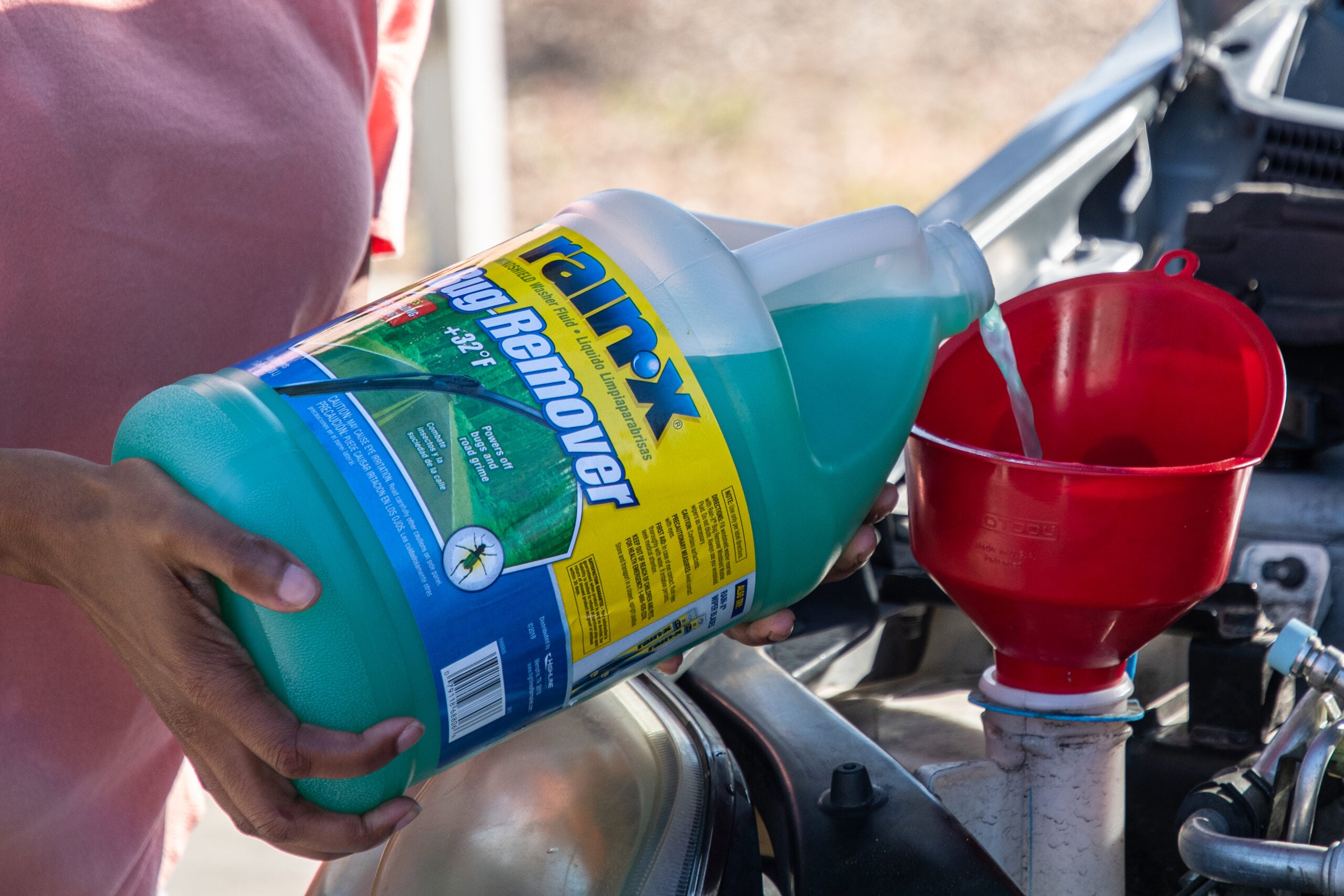
- Use a funnel to pour in the mixture slowly.
- Stop below the reservoir’s maximum-fill line.
- Close the cap securely.
- Test the front and rear washers, if fitted.
- Inspect the spray pattern from inside the vehicle.
If the jets only dribble, one or more nozzles may be blocked. Do not force a sharp metal object into the nozzle because it can permanently change the spray direction. A soft brush, compressed air used carefully, or professional cleaning is safer.
For a cleaner exterior finish, combine glass cleaning with a paint-safe washing method rather than using the washer jets to remove heavy dirt from the entire vehicle.
Cold-Weather Guidance
Homemade washer fluid is the least dependable when temperatures fall below freezing. Alcohol can improve resistance to freezing, but a household recipe does not provide a tested temperature rating.
Use commercial winter screenwash when:
- Overnight temperatures regularly approach freezing
- You drive in snow or ice
- The car is parked outdoors
- You travel through mountains or high elevations
- The washer system must remain reliable during a long journey
Never keep adding alcohol to a homemade mixture without measuring. More alcohol is not automatically better: it may damage some finishes, increase flammability, affect rubber components, or still fail to protect the fluid at the temperature you encounter.
If the reservoir or washer lines have frozen:
- Do not repeatedly operate the pump.
- Move the vehicle into a warmer garage if possible.
- Allow the system to thaw naturally.
- Check the reservoir and hoses for cracks.
- Replace the mixture with correctly rated winter fluid.
Drivers heading into high-elevation or snowy areas should also verify their vehicle’s equipment and operating requirements, including the guidance covered in this mountain driving checklist.
How to Get a Truly Clear Windscreen
Washer fluid cannot fix every visibility problem. A windscreen may still look hazy because of interior vapour, oily dashboard residue, worn wiper blades, or microscopic damage to the glass.
For better results:
- Replace wiper blades when they chatter, smear, or leave untreated arcs.
- Clean the inside and outside of the windscreen with separate clean microfiber cloths.
- Lift the blades and wipe their rubber edges.
- Remove insects and heavy mud by hand before using the washer system.
- Do not run dry wipers over dusty glass.
- Keep the washer nozzles aimed at the driver’s main viewing area.
- Check that aftermarket tint or films are not creating distortion or glare.
A windscreen that remains hazy after cleaning may need professional inspection. Visibility is also affected by legal tint and the condition of other vehicle equipment, so review applicable window visibility rules where relevant.
Clear glass is particularly important when passing slow traffic or driving on rural roads. Maintaining washer fluid is one small part of broader safe rural-road awareness.
Storage and Disposal
Store homemade washer fluid in a tightly closed, clearly labelled container in a cool, ventilated location. Keep it away from:
- Direct sunlight
- Open flames
- Hot vehicles
- Children and pets
- Food and drink
- Animal-accessible areas
Do not pour leftover alcohol-containing fluid onto soil, into a storm drain, or into a waterway. Check your local household hazardous-waste guidance for disposal. The U.S. Environmental Protection Agency provides general information about responsible household chemical management.
Make only the amount you expect to use. A small, fresh batch is easier to inspect and less likely to become contaminated than a large container stored for months.
Homemade Fluid vs. Commercial Washer Fluid
| Consideration | Homemade mixture | Commercial washer fluid |
|---|---|---|
| Cost | Usually inexpensive | Costs more per container |
| Warm-weather cleaning | Can work adequately | Usually consistent |
| Freeze protection | Uncertain | Rated by the manufacturer |
| Foam control | Depends on your recipe | Formulated for washer systems |
| Convenience | Requires measuring | Ready to pour |
| Long-term storage | Requires careful labelling | Usually simpler |
| Severe winter use | Not recommended | Preferred |
Commercial products are the better choice when you need predictable freeze protection, strong bug-removal performance, or reliable operation during severe weather.
A homemade mixture makes the most sense as a measured, short-term solution in mild conditions—not as an improvised replacement for every season.
Troubleshooting Common Problems
The fluid leaves streaks
There may be too much detergent, dirty wiper blades, or an oily film on the glass. Drain the mixture if necessary, clean the windscreen separately, and refill with a lower-detergent formula.
The washer fluid foams
Too much soap is the usual cause. Excess foam can reduce spray consistency and leave residue. Flush the reservoir with clean distilled water before refilling.
The spray jets are blocked
Debris or dried residue may be blocking the nozzles. Inspect the jets and the fluid level. If the pump runs but little fluid emerges, the blockage may be in the hose or filter.
The fluid smells strongly
A noticeable alcohol smell is normal, but a harsh chemical or rotten smell suggests contamination. Do not use a mixture that has changed colour, developed particles, or smells unusual.
The fluid freezes
Stop operating the pump and thaw the system safely. Replace the mixture with a winter-rated product appropriate for the expected temperature.
The windscreen is still dirty
Washer fluid is intended for light road film and routine cleaning. Heavy insect remains, tree sap, mud, and road salt often require manual cleaning with a suitable automotive glass product.
Frequently Asked Questions
Can I use tap water to make car washer fluid?
You can use tap water for a temporary refill, but distilled water is preferable. Minerals in hard water may leave deposits on the glass and washer nozzles, particularly when the fluid is stored or repeatedly topped up.
Is dish soap safe in windshield washer fluid?
Only a very small amount of mild, low-foaming detergent should be used, and it is optional. Too much dish soap can create foam, streaks, and residue. Never use automatic dishwasher detergent or powdered cleaning products.
How much rubbing alcohol should I add?
For a mild-weather emergency mixture, use 3 cups of water with 1 cup of 70% isopropyl alcohol. This is not a guaranteed freezing-temperature formula. Use manufacturer-rated winter washer fluid when freezing conditions are expected.
Can I use rubbing alcohol by itself?
No. Undiluted rubbing alcohol is unnecessary, highly flammable, and may be harsh on some finishes and components. Dilute it with water and use only a modest amount in a properly labelled mixture.
Can I use vinegar instead of alcohol?
Vinegar does not provide the same cleaning or freeze-resistance properties as alcohol. It is not required for a basic recipe and should never be mixed with bleach or unknown chemicals.
Can homemade washer fluid damage window tint?
A mild, properly diluted mixture is less likely to cause problems than strong household cleaners, but aftermarket films vary. Avoid ammonia-based products and test any solution on a small area first. Follow the tint manufacturer’s care instructions.
How often should I refill the reservoir?
Check the level whenever you inspect the vehicle, before long trips, and before severe weather. Refill when the level is low rather than waiting until the spray stops completely.
Should I use homemade fluid in winter?
Only if conditions are mild and above freezing. For snow, ice, or sustained freezing temperatures, use a commercial washer fluid with a suitable temperature rating.
Final Takeaway
Making car washer fluid at home is straightforward: combine distilled water, a measured amount of 70% isopropyl alcohol, and only a drop or two of mild detergent. Use clean equipment, label the container, test the mixture, and avoid bleach, ammonia, engine coolant, and strong household cleaners.
For everyday warm-weather use, this recipe can provide a practical short-term alternative. For freezing temperatures, long journeys, or severe winter conditions, commercial winter washer fluid remains the safer and more reliable choice. A clean windscreen, functioning wipers, and working washer jets all contribute to better visibility—an important part of routine vehicle safety and inspection readiness.








