Yes, 32% window tint is legal in Indiana as of 2026. Indiana window tinting legal limits and 32 percent light transmission meet the state’s minimum requirement for all side and rear windows. The law sets a 32% Visible Light Transmission (VLT) threshold, meaning at least 32% of light must pass through the tint.
This standard applies to passenger vehicles, but the rules differ for windshields and commercial vehicles. Understanding these limits helps avoid fines and ensures your car passes inspection.
Quick Answer
32% tint is legal in Indiana. The state requires a minimum 32% VLT for front, rear, and side windows. Windshields cannot have tint except for a non-reflective strip at the top.
These rules apply to most passenger vehicles as of 2026.
Indiana’s Window Tint Laws at a Glance
Indiana’s window tint regulations are straightforward but strict. The state mandates a 32% VLT minimum for all side and rear windows on passenger vehicles. This means the tint can block up to 68% of light, but no more.
The windshield is off-limits for tinting, except for a small, non-reflective strip along the top. Reflective or mirrored tints are prohibited entirely. These rules are enforced by the Indiana Bureau of Motor Vehicles, and non-compliance can result in fines or failed inspections.
How Light Transmission (VLT) Works for Car Tint
Visible Light Transmission (VLT) measures how much light passes through your window tint. A 32% VLT tint allows 32% of light to enter, while blocking 68%. The lower the percentage, the darker the tint.
VLT is the standard used by most states, including Indiana, to regulate tint darkness. It’s measured with a tint meter, a device that checks compliance during inspections. Tint shops use these meters to ensure your windows meet legal limits before installation.
Indiana’s Exact Tint Limits by Window

Indiana’s laws specify different limits for each window. Here’s the breakdown:
| Window | Minimum VLT | Notes |
|---|---|---|
| Front side windows | 32% | Must allow at least 32% light in. |
| Rear side windows | 32% | Same as front sides. |
| Rear window | 32% | Applies to sedans and SUVs. |
| Windshield | 0% (no tint) | Only a non-reflective top strip allowed. |
These limits apply to aftermarket tints. Factory-tinted windows are often exempt, but it’s best to confirm with the Indiana BMV if your vehicle came with pre-installed tint.
Why 32% Tint Is a Common Choice

32% tint strikes a balance between privacy and legality in Indiana. It’s dark enough to reduce glare and heat but light enough to comply with state laws. Many drivers choose this level because it’s the maximum darkness allowed without risking a citation.
It also offers practical benefits. 32% VLT blocks a significant amount of UV rays, protecting your skin and your car’s interior from sun damage. It reduces heat buildup, making your car more comfortable in summer.
What Happens If Your Tint Is Too Dark?
You’ll face a fine if your tint drops below 32% VLT in Indiana. Law enforcement can pull you over and issue a citation for non-compliant window tint. The exact penalty varies by county, but it typically ranges from $50 to $200.
Your vehicle may also fail its annual inspection. Inspectors use tint meters to verify compliance, and if your windows don’t meet the 32% standard, you’ll need to remove or replace the tint before passing.
Medical Exemptions: When You Can Go Darker
Indiana allows darker tints for medical reasons. If you have a condition that requires reduced light exposure, you can apply for an exemption through the BMV. This requires a doctor’s certification stating the need for darker tint.
The exemption permits tints below 32% VLT, but you must carry the documentation in your vehicle at all times. Without it, you could still be cited. The process is straightforward but requires advance planning.
How to Check If Your Tint Is Legal
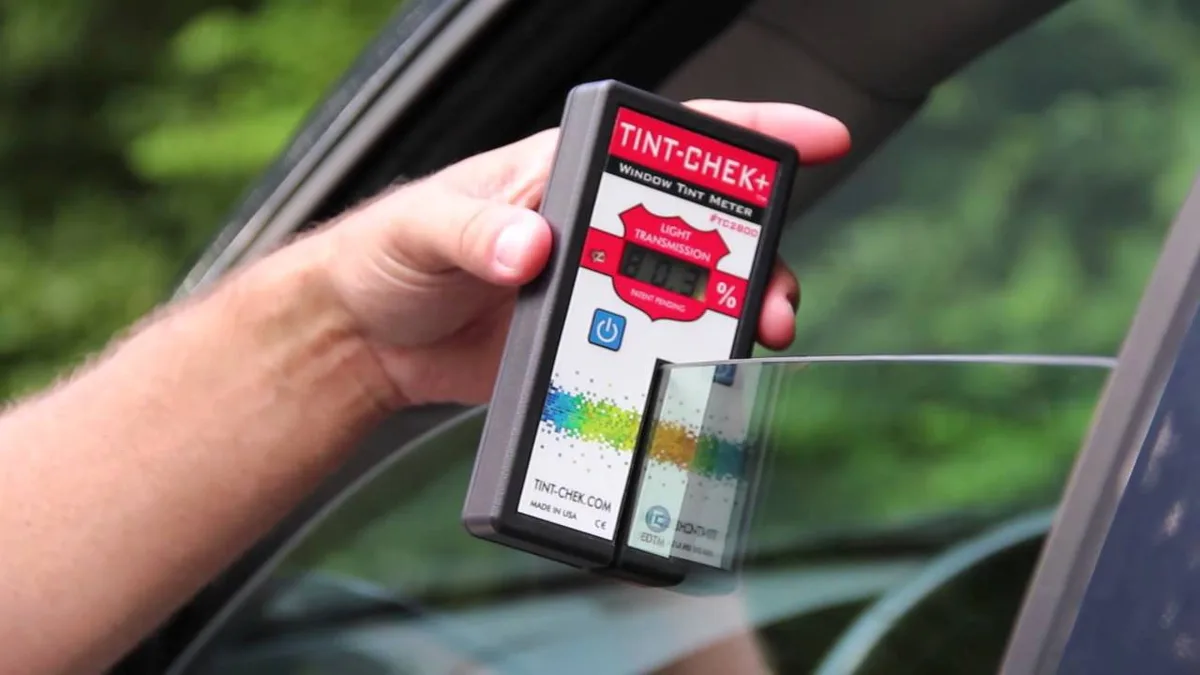
Use a tint meter to verify your windows meet Indiana’s 32% VLT requirement. These devices are available at auto shops and inspection stations. Simply place the meter against the window to get an instant reading.
If you don’t have access to a meter, visit a professional tint shop. They can check your tint and confirm compliance. Many shops offer this service for free if you’re considering new tint.
Certified vs. Non-Certified Tint: What to Look For
Certified tint comes with a sticker or label indicating it meets state regulations. In Indiana, this certification is your proof of compliance. Always ask for certified film when getting your windows tinted.
Non-certified tint may be cheaper, but it’s riskier. Without certification, you have no guarantee the tint meets Indiana’s 32% VLT standard. If you’re pulled over or inspected, you’ll have no documentation to show compliance.
Common Mistakes That Get You Pulled Over
Applying tint that’s too dark is the most common mistake. Many drivers assume any tint is fine as long as it’s not pitch black. Indiana’s 32% rule is strict, and even slightly darker tint can trigger a citation.
Ignoring the windshield rule is another frequent error. Some drivers add a light tint to the entire windshield, not realizing only a small, non-reflective strip at the top is allowed. This can lead to an immediate fine.
Where to Get Compliant Tint Installed in Indiana
Reputable tint shops in Indiana will know the 32% VLT rule and use certified films. Look for businesses that display their BMV compliance certification. They’ll often provide a warranty on the tint and the installation.
Avoid fly-by-night operations or mobile installers without proper credentials. These may use non-certified films that fail inspections. The Indiana BMV website lists approved installers in your area.
FAQs About Indiana Window Tint Laws
Is 20% tint legal in Indiana?
No, 20% tint is not legal for standard passenger vehicles in Indiana. The minimum VLT is 32% for all side and rear windows. Only medical exemptions allow darker tints.
Can I tint my windshield in Indiana?
No, Indiana law prohibits tinting the entire windshield. Only a non-reflective strip along the top is permitted. This strip cannot extend more than 6 inches down from the top.
Do factory tints count toward the 32% limit?
Factory tints are often exempt from the 32% rule. However, adding aftermarket tint to factory-tinted windows may push the total below the legal limit. Check with the BMV or a professional installer.
What’s the penalty for illegal tint in Indiana?
The penalty for illegal tint is typically a fine between $50 and $200. You may also fail your vehicle inspection until the tint is removed or replaced. Repeat offenses can lead to higher fines.
Does Indiana allow reflective or mirrored tint?
No, Indiana prohibits reflective or mirrored tints. The law requires non-reflective films to prevent glare for other drivers. Metallic tints are also restricted.