Black Friday deals are live on Amazon · limited-time discounts, grab them before they’re gone
Grab the deals

ByMax Lee
Is Car Washing Business Profitable: Ultimate Guide to Success
A car washing business can be profitable, but it is not automatically a high-margin business. Profit depends on the operating model, location, pricing, customer volume, labor efficiency, water and wastewater controls, and how consistently the business earns repeat visits.
A small mobile operator may start with relatively low overhead, while an express tunnel can require substantial property, construction, utility, and equipment investment. Both can succeed, but they have different break-even points and risks. You can also read our guide on how to set up car wash business.
This guide explains how car washes make money, what they cost to launch, how to calculate realistic profit, which model may suit you, and the steps that improve your chances of building a sustainable business in 2026.

Credit: www.exppresscarwash.com
What Does a Car Washing Business Include?
A car washing business provides exterior cleaning, interior cleaning, vehicle detailing, or a combination of these services. The operation may be staffed by employees, largely automated, self-service, or performed at the customer’s location. You can also read our guide on will automatic car wash remove ceramic coating.
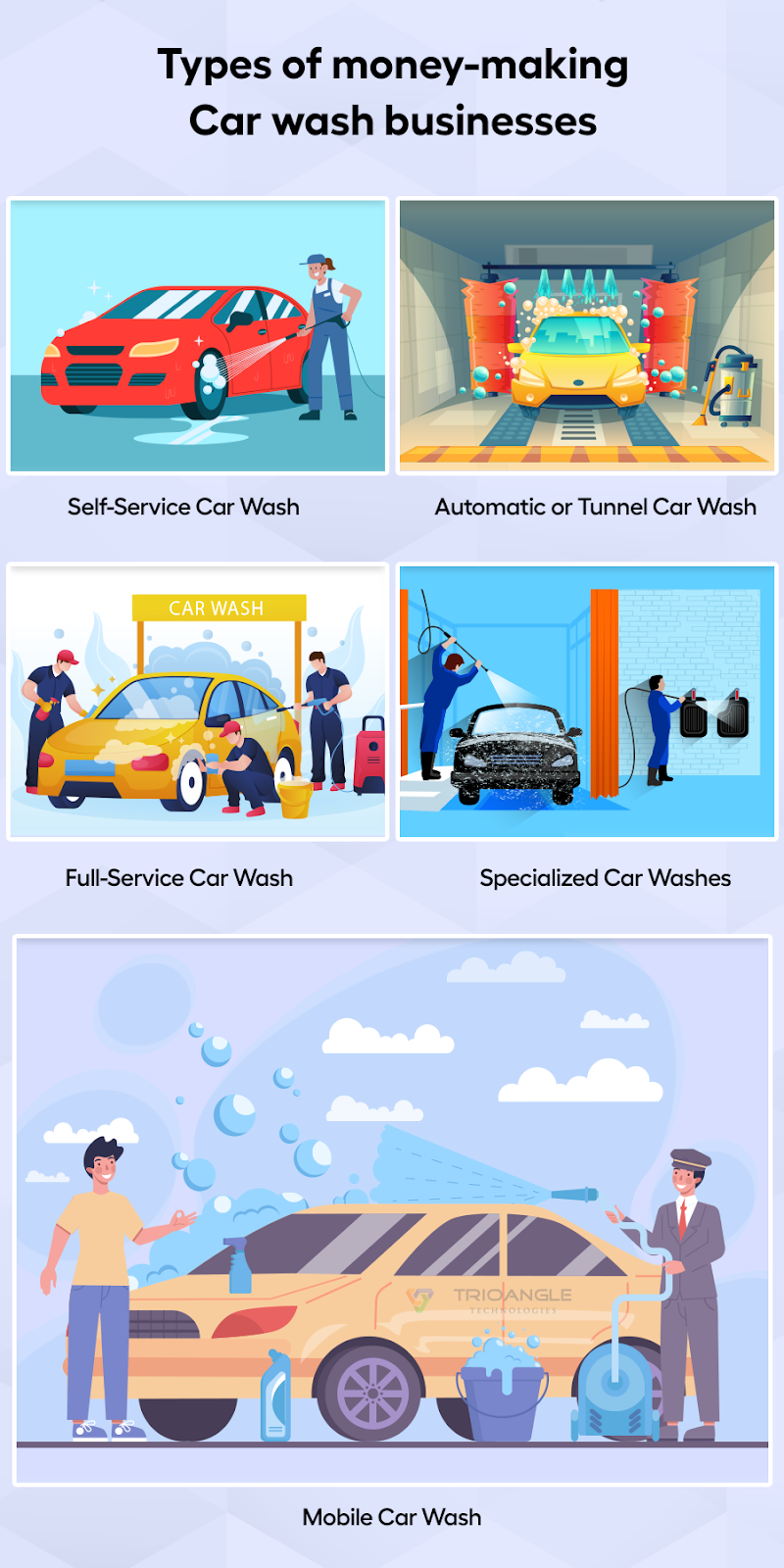
Common business models include:
- Self-service car wash: Customers use wash bays, vacuums, and other equipment themselves.
- Automatic in-bay wash: The customer drives into a bay while an automatic system washes the vehicle.
- Express tunnel wash: Customers purchase a package and drive through a conveyor-based wash.
- Full-service wash: Employees wash, dry, vacuum, and sometimes clean the interior.
- Mobile car wash: Technicians travel to homes, workplaces, offices, or commercial parking areas.
- Detailing studio: The business focuses on higher-value services such as paint correction, upholstery cleaning, ceramic coating preparation, and deep interior work.
The business model affects nearly every financial decision. A mobile service may avoid commercial rent but spend more time driving between appointments. A tunnel wash can process many vehicles per hour but requires significant capital and careful maintenance. A hand-wash or detailing business may charge more per vehicle but generally needs more labor per job.
Before investing, compare each model by startup cost, average ticket, capacity, labor requirement, local regulations, and realistic customer demand. You can also read our guide on how to value a car wash business.
How Do Car Washes Make Money?
The primary revenue source is the sale of individual washes or service packages. Stronger businesses usually add several recurring or complementary revenue streams rather than relying only on low-priced basic washes.
Core revenue sources
- Single-visit exterior washes
- Interior cleaning and vacuuming
- Wax, sealant, tire dressing, and other upgrades
- Deep cleaning and detailing
- Monthly membership plans
- Fleet accounts for businesses with multiple vehicles
- Gift cards and prepaid wash books
- Self-service vacuum, vending, or mat-cleaning fees
- Higher-priced services for trucks, SUVs, vans, and specialty vehicles
Memberships can make revenue more predictable, but they must be priced and monitored carefully. A customer who visits frequently may consume more labor, water, chemicals, and tunnel capacity than the membership price supports. Track visits per member, cancellation rates, average revenue per vehicle, and peak-time usage. You can also read our guide on best vacuum cleaner for car wash business.
A practical pricing structure often includes three or four clearly differentiated options:
- Basic: Essential exterior cleaning.
- Standard: Basic wash plus drying, tire treatment, or underbody cleaning.
- Premium: Additional protection, wax, or interior service.
- Detailing: A scheduled, labor-intensive service with a much higher price.
Avoid offering too many confusing packages. Customers should understand the difference between each tier within a few seconds at the sign, website, or booking screen.
Is a Car Washing Business Profitable?
Yes, a car washing business can be profitable when customer volume and average ticket are high enough to cover fixed and variable costs. The key question is not simply, “How much can one wash earn?” It is:
How many profitable jobs can the business complete each week after all operating expenses?
Consider this simplified monthly example:
| Item | Example |
|---|---|
| Vehicles washed per day | 35 |
| Average sale per vehicle | $18 |
| Operating days per month | 26 |
| Monthly sales | $16,380 |
| Variable costs and labor | -$8,000 |
| Rent, insurance, software, utilities, and other overhead | -$5,500 |
| Estimated operating profit before tax and debt | $2,880 |
This is only a planning example, not a typical guaranteed result. A business with fewer vehicles, higher rent, more staff, or heavy equipment financing could lose money at the same average price. Another business with strong memberships, efficient labor, and a better site could earn considerably more.
Use contribution margin instead of guessing
A useful calculation is:
Contribution margin per vehicle = Average price − variable cost per vehicle
Variable costs may include:
- Water and wastewater charges
- Detergent, wax, towels, and other supplies
- Credit-card processing fees
- Per-wash labor
- Rewash or customer-service costs
Then calculate the break-even volume:
Break-even vehicles = Monthly fixed costs ÷ contribution margin per vehicle
For example, if monthly fixed costs are $12,000 and the contribution margin is $10 per vehicle, the business needs approximately 1,200 vehicles per month just to cover fixed costs. That equals about 46 vehicles per day over 26 operating days, before owner income, income taxes, and loan principal.
This calculation exposes a common mistake: focusing on gross sales while ignoring rent, payroll, maintenance, debt, taxes, and the owner’s unpaid labor.
Startup Costs by Car Wash Model
Startup costs vary dramatically by location and format. Construction, land, utilities, drainage, environmental requirements, and equipment can matter more than the wash machinery itself.
Mobile car wash
A mobile operation may require:
- A reliable vehicle or trailer
- Pressure washer and water tank, where permitted
- Wet/dry vacuum
- Generator or battery power system
- Hoses, reels, towels, brushes, and chemical storage
- Booking, payment, and customer-management software
- Insurance and business registration
- Branding, uniforms, signage, and local advertising
The lower initial investment is a major advantage. However, mobile operators must account for travel time, fuel, weather cancellations, limited water access, parking restrictions, and wastewater disposal. A job that appears to take one hour may occupy two hours after loading, driving, setup, cleanup, and payment collection.
Mobile operators should also verify whether local rules allow them to discharge wash water into storm drains. In many areas, wash water must be contained, collected, treated, or sent to an approved sanitary connection.
Hand-wash or detailing shop
A fixed hand-wash business generally needs:
- A suitable commercial lease or property
- Drainage and water connections
- Wash bays and floor drains
- Pressure washers, vacuums, air systems, and water treatment
- Lighting and ventilation
- Customer waiting and payment areas
- Product storage and chemical safety controls
- Staff training and uniforms
- Local permits, signage approval, and insurance
A two-bucket cleaning setup can help reduce paint contamination during hand washing, but commercial operators need more than a good technique. They also need standardized chemical dilution, towel management, inspection procedures, and quality checks before returning a vehicle.
Automatic or express tunnel wash
A larger automated site may involve:
- Land purchase or a long-term lease
- Site design, construction, paving, drainage, and traffic access
- Tunnel, conveyor, dryers, pumps, and chemical systems
- Water reclamation or treatment equipment
- Point-of-sale and membership systems
- Utility upgrades
- Signage and lighting
- Equipment maintenance contracts
- Construction financing and working capital
This model can process more cars with fewer employees per vehicle, but it creates larger financial exposure. A poor site, unreliable equipment, weak traffic flow, or excessive debt can undermine profitability even when the wash is busy.
Before signing a lease or buying property, obtain written estimates for utility connections, wastewater requirements, construction, equipment installation, insurance, and required permits. Verbal estimates are not a dependable business plan.
Ongoing Operating Expenses
Monthly expenses determine whether revenue becomes profit. Separate fixed expenses from costs that rise with every vehicle.
Fixed or semi-fixed costs
- Rent, property taxes, or loan payments
- Insurance
- Salaried management
- Software and phone service
- Advertising commitments
- Equipment leases
- Security and monitoring
- Accounting and legal services
- Base utility charges
- Repairs and preventive maintenance
Variable costs
- Hourly labor
- Water and sewer usage
- Chemicals and consumables
- Towels and replacement tools
- Fuel and travel for mobile services
- Payment processing
- Refunds, discounts, and free rewashes
- Waste disposal
A common mistake is to treat the owner’s labor as free. Include a reasonable wage for the work the owner performs. If the business only appears profitable when the owner works long unpaid hours, its economics may not support hiring a manager or expanding.
Water and wastewater expenses deserve particular attention. Efficient nozzles, controlled chemical dosing, reclaim systems, leak checks, and proper scheduling can reduce waste. Review guidance from the U.S. Environmental Protection Agency and your local water authority, because discharge rules and conservation requirements vary by jurisdiction.
Legal, Insurance, and Compliance Requirements
Requirements differ by city, county, and state, so treat this as a planning checklist rather than legal advice.
You may need:
- Business registration and tax accounts
- Zoning approval and a certificate of occupancy
- Building, plumbing, electrical, and signage permits
- Water-use approval or a commercial utility account
- Wastewater or stormwater discharge authorization
- Environmental or chemical-storage compliance
- General liability insurance
- Commercial auto insurance for mobile operations
- Workers’ compensation coverage where required
- Employment, wage, and safety policies
- Customer-vehicle damage procedures
- Written permission for work on private commercial property
If employees use pressure washers, vacuums, lifts, compressors, or chemical products, document training and safe operating procedures. A commercial air-system guide can help when evaluating compressor capacity, duty cycle, and tank size for tire inflation or detailing tools.
If the business keeps customer vehicles overnight, establish a secure key-storage process, vehicle check-in photos, lot lighting, and a written policy for pre-existing damage. For broader risk planning, review applicable commercial liability considerations, while remembering that insurance requirements in one state do not automatically apply to another.
Mobile businesses should also confirm whether technicians can work in apartment complexes, office lots, public spaces, or event venues. Obtain property-owner permission and clarify who supplies water, electricity, parking access, and wastewater containment.
Choosing a Profitable Location
Location affects both demand and operating cost. High traffic alone does not guarantee success; vehicles must be able to enter, understand the offer, queue safely, and leave without difficulty.
Evaluate:
- Number and type of vehicles passing the site
- Visibility from the road
- Ease of entry and exit
- Traffic direction and turning restrictions
- Nearby apartments, offices, dealerships, and retail centers
- Household income and vehicle ownership patterns
- Competitors, prices, reviews, and opening hours
- Flooding, drainage, and winter-weather risks
- Utility capacity and wastewater access
- Lease length, rent increases, and renewal options
Count traffic at different times and on different days. A location that looks busy at midday may be empty during the hours when your target customers commute. Visit competing washes more than once and observe queue length, service speed, equipment downtime, customer complaints, and which packages people actually purchase.
For mobile services, the “location” is a service territory. Limit the initial radius so travel does not consume the profit from each appointment. Cluster bookings by neighborhood or commercial area whenever possible.
Pricing and Service Design
Pricing should reflect the total time, materials, risk, and capacity required to complete the job. Do not copy a competitor’s price without knowing its rent, labor model, membership base, or equipment efficiency.
A simple pricing process is:
- Record the full labor time for each service.
- Add supplies, processing fees, travel, and disposal costs.
- Allocate a portion of overhead to the job.
- Add a profit margin appropriate for the service and risk.
- Test the price with real customers.
- Review results after refunds, discounts, and repeat visits.
For example, a mobile interior detail that takes three labor hours should not be priced as though it were a 45-minute exterior wash. Similarly, a premium tunnel package must not add expensive chemical or maintenance costs without producing enough incremental revenue.
Use add-ons that genuinely improve the customer’s result:
- Interior vacuuming
- Mat cleaning
- Bug and tar removal
- Pet-hair removal
- Spray sealant
- Tire and wheel treatment
- Odor treatment
- Headlight restoration, where properly equipped
Do not promise a level of paint correction, stain removal, or protection that the service cannot deliver. Clear expectations reduce complaints and rework.
Customer Acquisition and Retention
A car wash is usually a local service business, so visibility and trust matter more than broad national advertising.
Effective channels include:
- A complete Google Business Profile
- Accurate opening hours and service descriptions
- Before-and-after photos
- Fast responses to calls and messages
- Local search-friendly website pages
- Partnerships with offices, apartment communities, dealerships, and fleets
- Referral incentives
- Email or text reminders for scheduled maintenance
- Memberships with transparent terms
- Review requests after a successful service
Ask customers for reviews only after delivering the promised result, and respond professionally to negative feedback. A complaint often identifies a process problem such as missed interior areas, poor drying, unclear pricing, or long waits.
Retention is usually cheaper than constantly replacing lost customers. Track:
- First-time versus repeat customers
- Average order value
- Booking conversion rate
- Membership cancellations
- Rewash and refund rate
- Revenue by service
- Customer acquisition cost
- Revenue per labor hour
A loyalty program should reward profitable behavior without training customers to wait for discounts. Free upgrades, scheduled maintenance reminders, or occasional bonus visits may protect pricing better than permanent price reductions.
Mobile Car Washing: Advantages and Limitations
Mobile washing can be an attractive entry point because it avoids the cost of a commercial building. It works particularly well when customers value convenience, such as office workers, apartment residents, busy families, and business fleets.
Advantages
- Lower initial property investment
- Ability to test demand before leasing a site
- Flexible service territory
- Potentially higher prices for convenience
- Direct customer relationships
- Easy specialization in interiors, fleets, or detailing
Limitations
- Travel time reduces daily capacity
- Weather can disrupt schedules
- Water and power access may be limited
- Wastewater rules can restrict where work occurs
- Vehicles and equipment require frequent maintenance
- A single vehicle breakdown can stop revenue
- Scaling requires additional technicians and quality controls
A profitable mobile schedule groups appointments geographically, charges appropriately for large vehicles and heavy soiling, takes deposits for longer bookings, and sets a cancellation policy. Keep a backup plan for rain, extreme heat, freezing temperatures, and equipment failure.
Staffing and Daily Operations
Labor can be the largest controllable expense in a full-service wash. Hire for reliability and attention to detail, then train employees using written steps rather than informal demonstrations alone.
Useful operating controls include:
- A vehicle check-in and damage-photo procedure
- Service checklists for each package
- Chemical dilution instructions
- Separate clean and used towel storage
- Daily opening and closing checklists
- Equipment inspection logs
- Cash and payment reconciliation
- Customer complaint and rewash tracking
- Scheduled preventive maintenance
- Clear rules for keys and customer property
In practice, speed and consistency are closely connected. Rushing the wash can create scratches, water spots, missed areas, and costly rework. On the other hand, an overly slow process limits capacity and frustrates customers. Measure actual service times and design the workflow around the bottleneck.
For a fixed site, identify the equipment whose failure stops sales—such as a pump, conveyor, payment terminal, or water-treatment component—and keep critical replacement parts and service contacts available.
Seasonality and Risk Management
Demand may change with weather, local events, holidays, pollen, road salt, dust, and household spending patterns. Do not build a financial plan using your busiest month.
Prepare for slower periods by:
- Maintaining a cash reserve
- Selling gift cards and prepaid packages
- Offering interior services during poor weather
- Building commercial and fleet accounts
- Scheduling preventive maintenance
- Using flexible labor where legally appropriate
- Promoting seasonal cleaning needs without excessive discounting
Protect the business from avoidable risks with adequate insurance, written customer terms, secure premises, equipment maintenance, and documented employee training. If a vehicle is damaged, stop work, document the condition, notify the customer promptly, and follow the insurer’s process rather than making unsupported promises.
How Long Until a Car Wash Becomes Profitable?
There is no universal timeline. A small mobile operator may reach operating break-even quickly if equipment costs are modest and bookings begin immediately. A fixed-site wash may require a longer ramp-up because construction, financing, permits, memberships, and local awareness take time.
Separate three milestones:
- Operating break-even: Monthly revenue covers current operating expenses.
- Cash-flow break-even: Revenue covers operating expenses and scheduled debt payments.
- Investment payback: Cumulative after-tax cash flow has recovered the initial investment.
These milestones are not the same. A business can report an accounting profit while struggling to make loan payments, or show positive operating cash flow while still taking years to recover construction costs.
Build a monthly forecast for at least the first two years. Include conservative, expected, and optimistic cases for:
- Vehicles per day
- Average ticket
- Membership growth
- Labor hours
- Rent and utility increases
- Equipment repairs
- Weather closures
- Marketing costs
- Loan payments
- Owner compensation
Do not commit to a lease or equipment loan until the conservative case still has a credible path to paying its bills.
A Practical Launch Plan
1. Validate demand
Interview local drivers, fleet managers, apartment communities, and businesses. Compare competitor prices and identify an underserved segment rather than assuming every driver is a customer.
2. Select the simplest viable model
Start with mobile, detailing, or a small hand-wash operation if demand is unproven. Consider a larger site only after validating traffic, pricing, and repeat behavior.
3. Confirm rules before buying equipment
Ask the city, county, water utility, zoning office, and environmental authority about permits, drainage, wastewater, signage, and chemical handling.
4. Build a complete financial model
Include startup costs, working capital, owner pay, taxes, insurance, maintenance, and debt service. Calculate the number of daily jobs needed to break even.
5. Standardize the customer experience
Write service checklists, define acceptable results, photograph vehicles at check-in, and establish a complaint-resolution process.
6. Launch with measurable marketing
Use a local business profile, clear signage, partnerships, and a limited introductory offer. Track where every lead comes from and whether it becomes a repeat customer.
7. Improve before expanding
Fix bottlenecks, pricing errors, rewash problems, and scheduling inefficiencies before adding another vehicle, bay, location, or employee.
Advantages and Disadvantages
Advantages
- Recurring demand for vehicle cleaning
- Several business models and price points
- Opportunity to start small
- Potential for memberships and fleet contracts
- Upsell opportunities through detailing and protection services
- Local customer relationships can create repeat revenue
Disadvantages
- Water, wastewater, and chemical rules can be complex
- Weather can reduce demand and disrupt scheduling
- Equipment breakdowns can stop production
- Labor quality directly affects customer satisfaction
- Prime locations may be expensive
- Competition can make price-based businesses difficult to sustain
- Customer-vehicle damage creates financial and reputational risk
Frequently Asked Questions
Is a car washing business profitable in a small town?
It can be, especially when operating costs are controlled and the business serves a clear local need. Small towns may have less competition, but they also have fewer potential customers. Estimate the number of households, commercial vehicles, commuters, and repeat visits available before choosing a site.
How much does it cost to start a car washing business?
The cost can range from a relatively modest mobile setup to a major investment for a constructed tunnel facility. Equipment, property, drainage, utility connections, permits, insurance, vehicles, and working capital all affect the total. Obtain local written quotes instead of relying on broad internet estimates.
Is a mobile car wash more profitable than a fixed location?
Not necessarily. Mobile washing may require less capital and can charge for convenience, but travel, weather, water access, and daily capacity limit revenue. A fixed location has higher overhead but may serve more vehicles with a more efficient workflow.
What is the most profitable car wash service?
There is no single answer. High-volume express washing may produce strong total profit through throughput and memberships, while detailing may generate a higher margin per job but require more labor and skill. The best service is the one that matches local demand, pricing power, capacity, and operating costs.
How many cars must a car wash wash to break even?
Use the formula:
Break-even vehicles = Monthly fixed costs ÷ contribution margin per vehicle
For example, $12,000 in fixed costs divided by a $10 contribution margin requires about 1,200 vehicles per month. Replace those example figures with your actual rent, payroll, supplies, utilities, payment fees, financing, and owner compensation.
What permits are required for a car wash?
Requirements vary by jurisdiction. Common approvals include business registration, zoning, building and plumbing permits, signage approval, commercial wastewater or stormwater authorization, and environmental or chemical-storage compliance. Confirm requirements with local authorities before signing a lease.
How can a new car wash attract its first customers?
Start with a complete local business profile, accurate hours, strong photos, clear service packages, partnerships with nearby businesses, and a limited introductory offer. Request honest reviews from satisfied customers and track which promotions generate repeat visits rather than only one-time bargain hunters.
Does a car wash need insurance?
Most operations should evaluate general liability, commercial property, commercial auto for mobile work, workers’ compensation where required, and coverage for customer vehicles in the business’s care. Speak with a commercial insurance professional about exclusions, deductibles, and vehicle-damage procedures.
Final Verdict: Is a Car Washing Business Worth It?
A car washing business can be profitable, but profitability comes from disciplined operations rather than simply opening near a busy road. The strongest opportunities combine a realistic service territory, appropriate pricing, repeat customers, efficient labor, controlled water and chemical use, dependable equipment, and enough working capital to handle slow periods.
Before investing, validate demand, calculate your break-even volume, confirm local wastewater and zoning rules, and price every service based on its true labor and operating cost. Start with the model you can manage well, measure the results, and expand only when the numbers—not optimism—support the next step.
If your forecast still works under conservative customer and pricing assumptions, turn it into a 90-day launch plan with specific sales, cost, service-quality, and repeat-customer targets.








