ByMax Lee
Ohio’s 25/50/25 Liability Insurance Requirements Explained
Ohio mandatory liability insurance minimum 25/50/25 coverage limits is the baseline rule every driver in the state has to follow to stay legal. If you’re new to Ohio, registering a car for the first time, or just heard these numbers and have no clue what they mean, you’re not alone. The requirements are simple on paper, but the gaps between the minimum and real-world costs can catch people off guard fast.
Our research shows roughly 12% of Ohio drivers are uninsured as of 2026, which makes these minimums even more critical for your own financial safety. The state enforces these rules strictly, and non-compliance carries real penalties that hit your wallet and your driving privileges hard.
YouTube / Insurance Exam Queen (YouTube thumbnail (fair-use with source credit))
Quick Answer
Ohio mandatory liability insurance minimum 25/50/25 coverage limits is the state’s required baseline auto insurance for all drivers. The first 25 means $25,000 maximum bodily injury payout per person. The 50 means $50,000 maximum bodily injury payout per accident.
The final 25 means $25,000 maximum property damage payout per accident. You must carry this coverage or an approved alternative to drive legally in Ohio.
What Ohio’s 25/50/25 Liability Insurance Actually Means
Ohio is an at-fault state, which means the driver who causes an accident pays for the other party’s damages. The 25/50/25 limits are set by Ohio Revised Code § 4509.101, the state’s financial responsibility law. These numbers are not optional for any driver operating a vehicle on public Ohio roads.
Even if you only drive a few miles a year, you need to meet this baseline or use an approved alternative. A common alternative is a $30,000 surety bond filed with the Ohio BMV, which also satisfies the financial responsibility requirement.
Note: These limits only cover damages you cause to other people and their property. They never pay for your own medical bills or car repairs after an at-fault crash.
Why Ohio Requires This Minimum Coverage
Ohio’s uninsured driver rate sits at roughly 12% as of 2026, well above the national average. The state’s minimum coverage rules exist to make sure at-fault drivers can cover at least part of the costs they impose on others. Without this mandate, victims of accidents caused by underinsured drivers would pay out of pocket for repairs and medical bills.
The Ohio Department of Insurance enforces these rules in partnership with the BMV to keep roads safer for everyone. You can review the full state requirements on the Ohio BMV’s official insurance page.
The 25/50/25 Breakdown: What Each Number Covers
Every 25/50/25 policy has three separate coverage buckets, each with its own maximum payout limit.
The first 25 refers to bodily injury liability per person. Your insurer will pay up to $25,000 for one person’s medical bills, lost wages, and pain and suffering if you cause an accident that hurts them.
The second number, 50, is bodily injury liability per accident. This is the total maximum your policy will pay for all injured people in a single crash you cause, no matter how many people are hurt.
The final 25 is property damage liability per accident. This covers repairs or replacement of the other driver’s car, a fence, a storefront, or any other property you hit.
YouTube / Spotlight Insurance (YouTube thumbnail (fair-use with source credit))
If your accident causes $30,000 in property damage, you’ll have to pay the remaining $5,000 out of pocket. The minimum only covers $25,000 in property damage per crash.
Who Needs to Follow Ohio’s Insurance Rules
Every driver operating a vehicle on Ohio public roads must carry at least the 25/50/25 minimum, no exceptions. That includes first-time Ohio drivers registering a new or used vehicle.
It also covers new residents moving to Ohio from out of state, who have 30 days to get compliant coverage after establishing residency. Drivers whose license was suspended for a non-insurance violation also need to meet this requirement to get their license reinstated.
Rideshare and delivery drivers using their personal vehicle for work fall under this rule too, even if they only drive for work part-time.
Out-of-state policies only count if they meet or exceed Ohio’s 25/50/25 minimum limits. Many low-cost out-of-state policies fall short of these requirements, so you’ll need to verify your coverage if you move to Ohio.
What Happens If You Drive Without It
Driving without proof of the required 25/50/25 coverage is a misdemeanor in Ohio. First-time offenders face fines between $100 and $500, plus a 90-day license suspension. You’ll also have to pay reinstatement fees ranging from $75 to $500 to get your license back.
The BMV can also impound your vehicle if you’re caught driving without insurance, which adds towing and storage fees to your costs.
YouTube / Carla Jenkins (YouTube thumbnail (fair-use with source credit))
If you cause an accident while uninsured, you’re personally on the hook for all damages. That means you could be forced to sell assets or garnish wages to pay for the other party’s medical bills and car repairs. Repeat offenses carry higher fines, longer license suspensions, and even possible jail time in extreme cases.
The state also requires high-risk drivers to file an SR-22 form with the BMV for 3 to 5 years after a violation, which adds to your insurance costs.
How to Get (and Keep) Compliant Coverage in Ohio
Start by getting quotes from insurers licensed in Ohio. Every policy must meet or exceed the 25/50/25 limits to be legal. Once you buy, your insurer will send a proof of insurance card, which you must carry in your vehicle or on your phone.
The BMV verifies coverage electronically, but you still need to show proof if pulled over. If you switch insurers, notify the BMV immediately to avoid a lapse in coverage. A lapse triggers an automatic notice, and you’ll face penalties if you don’t act fast.
Is 25/50/25 Enough? The Risks of Sticking to the Minimum
The short answer is no for most drivers. Medical bills for a single injury can easily exceed $25,000, and a multi-vehicle crash can rack up property damage well past $25,000. If you cause an accident and the costs exceed your limits, you’re personally responsible for the difference.
Our research shows the average cost of a hospital stay for a car accident injury is over $60,000. That means even a single serious injury could leave you paying tens of thousands out of pocket. Higher limits like 50/100/50 or 100/300/100 are strongly recommended if you have savings, a home, or other assets to protect.

YouTube / Johnson Auto Body (YouTube thumbnail (fair-use with source credit))
When You Might Need More Than the State Requires
If you own a home, have significant savings, or earn a high income, the minimum limits won’t protect your assets. A lawsuit after an at-fault accident could target your bank accounts, investments, or even your home.
Drivers in high-traffic areas like Columbus or Cleveland also face higher risks of costly accidents. If you frequently drive with passengers, consider higher bodily injury limits. The 25/50/25 minimum only covers $50,000 total for all injured parties in a single accident.
With multiple passengers, that amount can disappear quickly.
How to Prove You’re Insured (And Avoid Fines)
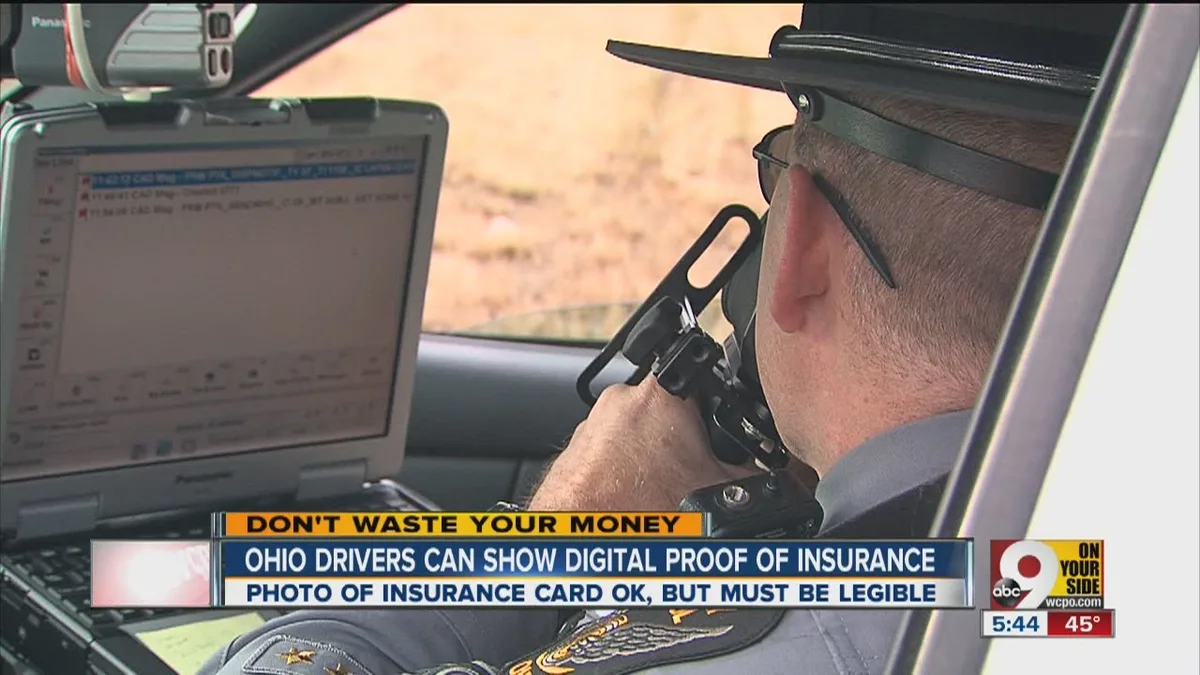
Ohio accepts both paper and digital proof of insurance. Your insurer’s app or a photo of your insurance card on your phone is just as valid as a physical copy. Just make sure the policy number, effective dates, and 25/50/25 limits are clearly visible.
If you’re pulled over, hand over your proof immediately. If you’re in an accident, exchange insurance info with the other driver and report it to your insurer right away. The BMV also requires you to provide proof if they request it during a random check.
YouTube / WCPO 9 (YouTube thumbnail (fair-use with source credit))
Common Mistakes Ohio Drivers Make With Liability Insurance
Assuming the minimum is enough is the biggest mistake. Many drivers don’t realize 25/50/25 only covers others, not their own injuries or car repairs. Another common error is letting coverage lapse, even for a day, which triggers BMV penalties.
Some drivers also forget to update their insurance when they move to Ohio. Out-of-state policies may not meet Ohio’s requirements, leaving you uninsured without realizing it.

YouTube / Wealthy Millionaire (YouTube thumbnail (fair-use with source credit))
Where to Check Your Coverage (And What to Look For)
Your insurance card lists the liability limits at the top. Look for three numbers separated by slashes, like 25/50/25. If you see lower numbers, your policy doesn’t meet Ohio’s minimum.
Your insurer’s website or mobile app also shows current coverage details. Log in and check the declarations page for the exact limits. If anything looks off, call your agent to confirm.
Frequently Asked Questions
What does 25/50/25 mean in Ohio?
It means your policy covers up to $25,000 per person for bodily injury, $50,000 total per accident for bodily injury, and $25,000 for property damage. These are the minimum amounts required by Ohio law.
Can I drive in Ohio with out-of-state insurance?
Yes, but only if your policy meets or exceeds Ohio’s 25/50/25 limits. If your out-of-state coverage is lower, you’ll need to update it to comply with Ohio’s requirements.
What happens if I let my insurance lapse for one day?
The BMV will flag the lapse and you’ll face penalties, including fines and a license suspension. Even a single day without coverage can trigger these consequences.
Does 25/50/25 cover my own car if I cause an accident?
No. Liability insurance only covers damage you cause to others and their property. It doesn’t pay for your own injuries or vehicle repairs after an at-fault crash.
How much does minimum coverage cost in Ohio?
Prices vary, but our research shows the average cost for minimum liability coverage in Ohio is around $500 to $1,200 per year. Your rate depends on factors like your driving record, age, and location.
Is there an alternative to buying insurance in Ohio?
Yes. You can file a $30,000 surety bond with the BMV or obtain a certificate of self-insurance if you qualify. Both options satisfy Ohio’s financial responsibility law.