ByMax Lee
Kansas Vehicle Sales Tax: Private vs. Dealer Purchases
Title: Kansas Vehicle Sales Tax: Private vs. Dealer Purchases
Kansas sales tax on vehicle purchases from private individuals and dealers works differently depending on who you buy from. The state adds 6.5% on top of county and city rates, which can push your total tax bill higher than you expect.
In our research, we found that dealer purchases include tax at checkout, while private sales require you to pay it yourself when registering the car. Here’s how to avoid surprises.
Comparison of tax handling between private and dealer vehicle sales in Kansas
Quick Answer: Dealer vs. Private Sale Tax Rules
You pay sales tax on all vehicle purchases in Kansas. Dealer sales include tax at purchase. Private sales require you to pay tax when registering the vehicle.
The state rate is 6.5%. County and city taxes add to this.
How Kansas Vehicle Sales Tax Works
The Kansas Department of Revenue treats dealer and private sales differently. Dealers collect and remit tax at the point of sale. Private buyers must pay tax directly to the county treasurer when titling the vehicle.
The taxable amount is usually the purchase price. For private sales without a bill of sale, the state may use the NADA clean retail value. Trade-ins reduce the taxable amount only for dealer purchases.
In practice, the dealer will provide a detailed breakdown of taxes and fees on your purchase agreement, which is helpful for budgeting. A common mistake is assuming the sticker price is your final cost—always ask for the out-the-door price including all taxes and a reliable machine for cleaning it afterward.
Kansas Sales Tax Rates by Location
Kansas has a base state sales tax of 6.5%. Counties add their own rates, typically 0.5% to 2%. Some cities tack on an extra 0.5% to 1%.
Here’s how it breaks down in key areas as of 2026:
| Location | State Tax | County Tax | City Tax | Total Tax Rate |
|---|---|---|---|---|
| Johnson County | 6.5% | 1.0% | 0.5% | 8.0% |
| Sedgwick County | 6.5% | 1.0% | 0.5% | 8.0% |
| Wyandotte County | 6.5% | 1.5% | 1.0% | 9.0% |
| Shawnee County | 6.5% | 0.5% | 0.5% | 7.5% |
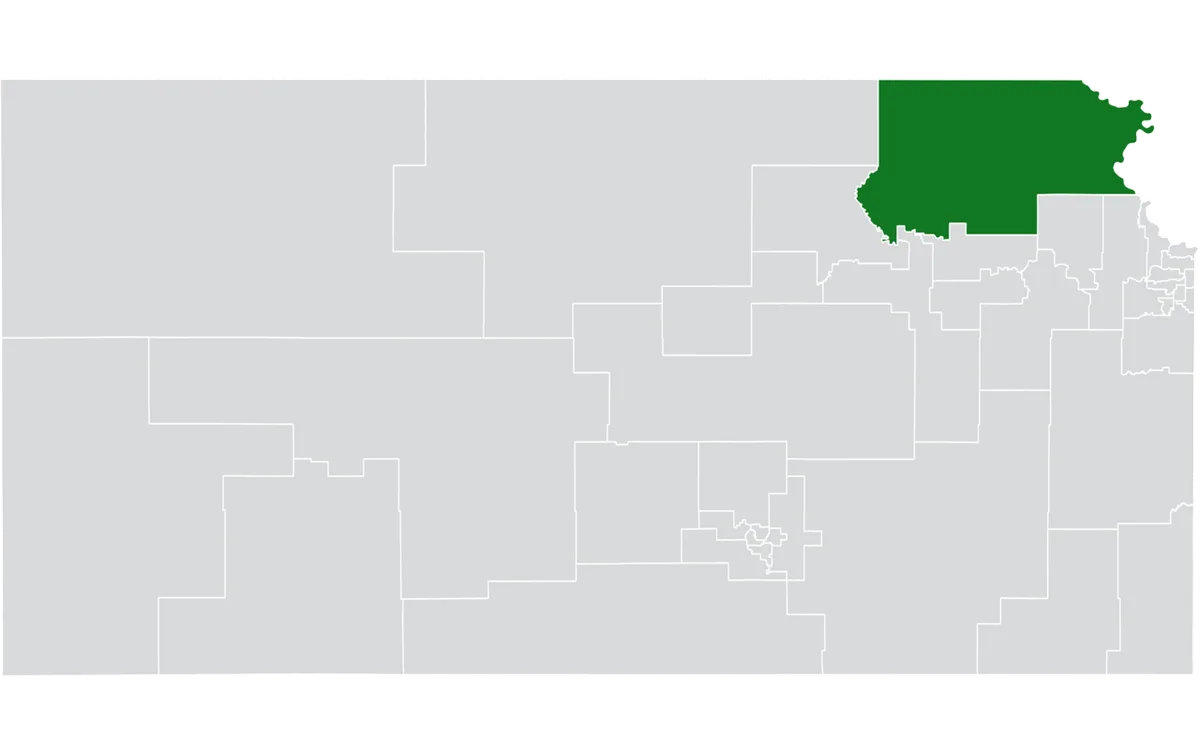
Visual breakdown of combined state, county, and city sales tax rates in Kansas
Check your county treasurer’s office for the exact rate. The Kansas Department of Revenue provides a full breakdown.
What’s Taxable? Purchase Price, Trade-Ins, and Exemptions
The taxable amount is the vehicle’s purchase price. For private sales, if no bill of sale exists, the state uses the NADA clean retail value.
Trade-ins reduce the taxable amount only for dealer purchases. If you trade in a $5,000 car toward a $20,000 purchase, you pay tax on $15,000. Private sales don’t qualify for this credit.
Exemptions exist for certain transfers. These include gifts between immediate family members and some farm vehicles. You’ll need to provide proof of exemption to the county treasurer.
For accurate vehicle valuation, the Kansas Department of Revenue recommends using the NADA guide or a professional appraisal. Keep in mind that exemptions for farm vehicles often require specific documentation, such as proof of agricultural use. If you're unsure, consulting the county treasurer or a tax professional can help clarify your situation.
Step-by-Step: Paying Tax on a Dealer Purchase
Dealers handle most of the paperwork. They calculate tax based on the purchase price minus any trade-in value. You’ll see the tax amount on your purchase agreement.
At closing, the dealer collects the tax and sends it to the state. You’ll receive a temporary registration permit to use until your permanent plates arrive.
Bring your driver’s license and proof of insurance to the dealer. They’ll need these to complete the title transfer.
Dealers are required to provide a detailed receipt that includes the tax amount, so review it carefully. If you notice discrepancies, address them before finalizing the purchase. After driving off the lot, maintaining your vehicle’s appearance can be easier with top-rated brewers for a spotless finish.
Step-by-Step: Paying Tax on a Private Sale
Private sales require you to handle tax payment yourself. First, get a signed bill of sale with the purchase price. This document proves the amount you paid.
Next, visit your county treasurer’s office within 30 to 60 days. Bring the bill of sale, the signed title, and your ID. You’ll pay tax based on the purchase price or NADA value if no bill exists.
Example of a properly completed bill of sale for a private vehicle transaction
If you don’t have a bill of sale, the county may use the NADA clean retail value. This can sometimes be higher than what you actually paid.
A common oversight is failing to verify the seller’s ownership of the vehicle. Always check that the name on the title matches the seller’s ID. Additionally, if you plan to detail your new purchase, using the correct fluid level ensures a thorough clean without waste.
Out-of-State Purchases: Use Tax and Registration Rules
Buying a car out of state doesn’t mean you skip Kansas tax. You’ll owe use tax when registering the vehicle in Kansas. The rate matches the sales tax in your county.
Use tax applies to the purchase price or NADA value. If you paid sales tax in another state, you may get credit for it. Bring your out-of-state receipt and title to the county treasurer.
Kansas doesn’t honor all out-of-state exemptions. Check with the Kansas Department of Revenue to confirm if your situation qualifies.
If you purchased the vehicle from a state with no sales tax, you’ll owe the full Kansas use tax. However, if you paid sales tax in another state, you may receive a credit for the amount paid, up to the Kansas rate. Keep all receipts and documentation to ensure a smooth registration process.
Common Mistakes That Cost You Extra
Forgetting to account for county and city taxes is a big one. Many buyers only budget for the 6.5% state rate. The total can be 8% or higher in some areas.
Another mistake is assuming trade-in credit applies to private sales. It doesn’t. Only dealer purchases get this tax break.
Waiting too long to register can also cost you. Late fees add up quickly. Most counties give you 30 to 60 days to complete the process.
In practice, buyers often underestimate the time required to gather all necessary documents. Missing even one piece of paperwork can delay registration and result in penalties. Additionally, failing to transfer the title properly can lead to liability issues if the seller doesn’t follow through.
How to Calculate Your Exact Tax
Start with the purchase price or NADA value. For dealer purchases, subtract any trade-in amount. Multiply the result by your total tax rate.
Here’s an example. You buy a $25,000 car in Wyandotte County with a $5,000 trade-in. The taxable amount is $20,000.
At 9% total tax, you’d owe $1,800.
Use the county treasurer’s online calculator if available. It accounts for all local rates automatically.
For a more precise calculation, consider additional fees such as title fees, registration fees, and any local assessments. These can vary by county, so it’s best to check with your local treasurer’s office. If you're unsure about the NADA value, you can also use other reputable valuation guides like Kelley Blue Book.
Special Cases: Leases, Gifts, and Business Purchases
Leased vehicles have different tax rules. You pay tax on the monthly payments, not the full vehicle value. The dealer typically includes this in your lease agreement.
Gifts between immediate family members are often tax-exempt. You’ll need to provide proof of the relationship. The county treasurer can confirm what documents are required.
Business purchases may qualify for exemptions. If the vehicle is used exclusively for business, you might avoid some taxes. Check with a tax professional to be sure.
For leased vehicles, the tax is calculated based on the total of all lease payments, not the vehicle’s purchase price. This can sometimes result in lower upfront tax costs. For gifts, the exemption typically applies to immediate family members, such as parents, children, or siblings, but documentation is required. Business exemptions often require proof that the vehicle is used primarily for business purposes, such as delivery or transportation of goods.
Where and How to Pay (Avoid Penalties)
You’ll pay tax at the county treasurer’s office when registering the vehicle. Bring the title, bill of sale, and your ID. Some counties let you start the process online.
If you bought from a dealer, they usually handle the paperwork. You’ll still need to visit the treasurer’s office for your plates. Temporary permits are available if you need to drive before registration is complete.
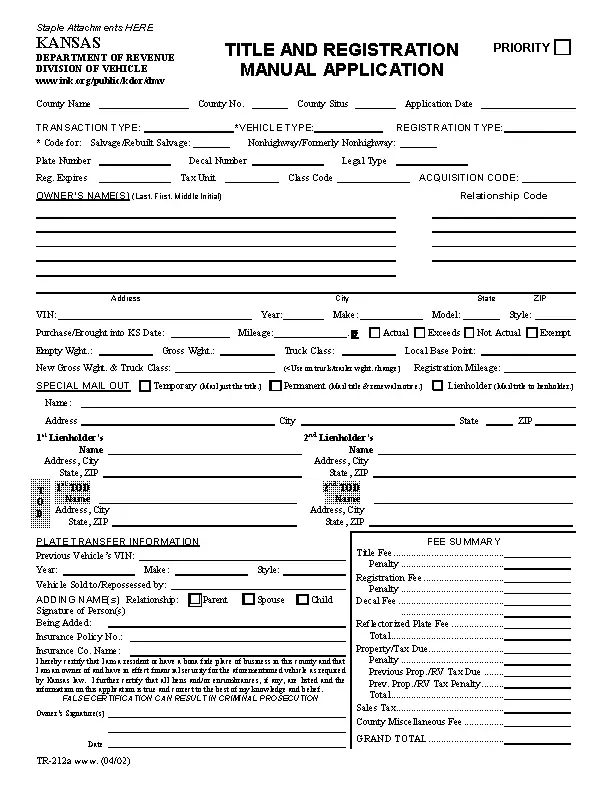
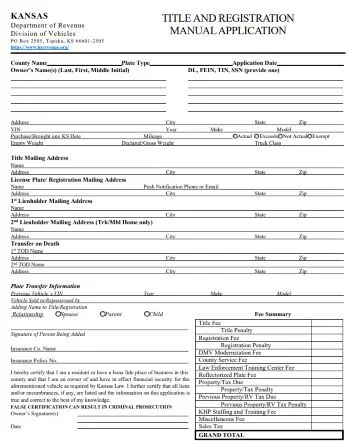
Sample Kansas title and registration form for vehicle purchases
Late fees start accruing after the deadline. Most counties give you 30 to 60 days to register. Missing this window can cost you extra.
To streamline the process, gather all required documents before visiting the treasurer’s office. This includes the title, bill of sale, proof of insurance, and your ID. If you’re registering a vehicle purchased out of state, bring the out-of-state title and receipt as well. Some counties offer online appointment scheduling, which can reduce wait times.
Tax Deductions and Credits You Might Overlook
Kansas offers a few tax deductions and credits related to vehicle purchases that buyers often miss. For example, if you purchase a hybrid or electric vehicle, you may qualify for state or federal tax credits. Additionally, if you use your vehicle for business purposes, you might be eligible for deductions on fuel, maintenance, and depreciation.
For hybrid and electric vehicles, check the Kansas Department of Revenue for current incentives. Business-related deductions typically require detailed records, so keep receipts and logs of mileage and expenses. Consulting a tax professional can help you maximize these benefits.
Comparing Dealer vs. Private Sale Tax Implications
| Factor | Dealer Purchase | Private Sale |
|---|---|---|
| Tax Collection | Dealer handles tax at purchase | Buyer pays tax at registration |
| Trade-In Credit | Reduces taxable amount | No trade-in credit |
| Paperwork | Dealer completes most forms | Buyer responsible for all documentation |
| Tax Rate | Same as local sales tax rate | Same as local sales tax rate |
| Registration Process | Dealer often assists with temporary plates | Buyer must visit county treasurer |
| Valuation | Based on purchase price | Based on purchase price or NADA value |
This comparison highlights the key differences in tax handling between dealer and private sales. While dealer purchases offer convenience and trade-in benefits, private sales require more effort from the buyer but may result in a lower purchase price.
FAQs About Kansas Vehicle Sales Tax
Do I pay sales tax on a car bought from a private seller in Kansas?
Yes, you pay tax when registering the vehicle. The rate includes state, county, and city taxes. Bring the bill of sale to prove the purchase price.
What’s the sales tax rate in my Kansas county?
The state rate is 6.5%. Add your county and city rates. Wyandotte County, for example, has a total rate of 9%.
Check your county treasurer’s website for the exact number.
Can I avoid sales tax with a trade-in?
Only at a dealer. Trade-ins reduce the taxable amount for dealer purchases. Private sales don’t qualify for this credit.
What if I bought a car out of state?
You’ll owe Kansas use tax when registering. The rate matches your local sales tax. Bring your out-of-state receipt to potentially get credit for taxes already paid.
How is tax calculated on a private sale without a bill of sale?
The county may use the NADA clean retail value. This ensures you pay tax on a fair market price. Always get a bill of sale to avoid disputes.
What happens if I don’t pay the tax on time?
You’ll face late fees. These add up quickly and can delay your registration. Most counties give you 30 to 60 days to complete the process.
Are there any exemptions for military personnel?
Active-duty military members stationed in Kansas may qualify for exemptions or reduced rates, depending on their home state and specific circumstances. Check with the county treasurer or the Kansas Department of Revenue for details.
Can I deduct vehicle sales tax on my federal income tax return?
In some cases, you may be able to deduct state and local sales taxes, including vehicle sales tax, on your federal return. This is subject to IRS rules, so consult a tax professional or the IRS guidelines for eligibility.
Conclusion
Understanding Kansas vehicle sales tax rules helps you budget accurately and avoid penalties. Whether you buy from a dealer or a private seller, the key is knowing your local tax rate, preparing the right documents, and meeting registration deadlines. For dealer purchases, take advantage of trade-in credits, while private buyers should secure a bill of sale to ensure fair taxation.
Next step: Visit your county treasurer’s office or use their online tools to confirm your exact tax rate and required paperwork before finalizing your purchase.