ByMax Lee
Missouri Implements of Husbandry: Definition & Road Safety
YouTube / Mike Less, Farmhand Mike (YouTube thumbnail (fair-use with source credit))
If you’ve ever wondered whether your tractor, combine, or grain wagon can legally travel on Missouri roads, the answer starts with the state’s Missouri implements of husbandry definition and road safety regulations. These rules determine what qualifies as an implement of husbandry (IOH) and where you can legally move it.
Per Missouri Revised Statutes, IOH includes farm equipment designed for agricultural use, but the specifics, like width, towing setup, and road type, dictate whether you’re compliant. Get this wrong, and you risk fines or being pulled over.
Quick Answer
Missouri implements of husbandry definition and road safety regulations classify farm equipment for legal road travel. IOH must meet specific width and use criteria. Travel is allowed on roads with advisory speeds of 25 mph or less.
Proper lighting and SMV emblems are required. Night travel has additional restrictions.
The Legal Definition of Implements of Husbandry in Missouri
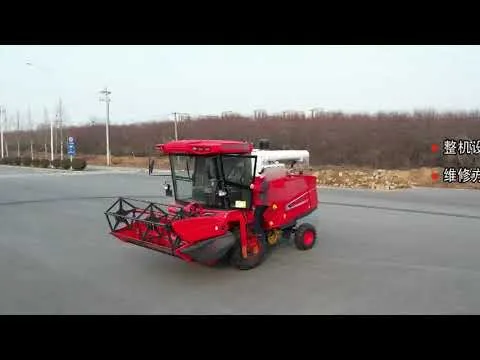
Missouri law defines an implement of husbandry under RSMo § 301.020(77). It covers vehicles or equipment designed primarily for agricultural purposes. This includes tractors, combines, and towed implements like grain wagons or manure spreaders.
The key is primary use. If the equipment is used mostly for farming, it likely qualifies. But if it’s repurposed for non-agricultural tasks, it may not.
YouTube / Emily Anon (YouTube thumbnail (fair-use with source credit))
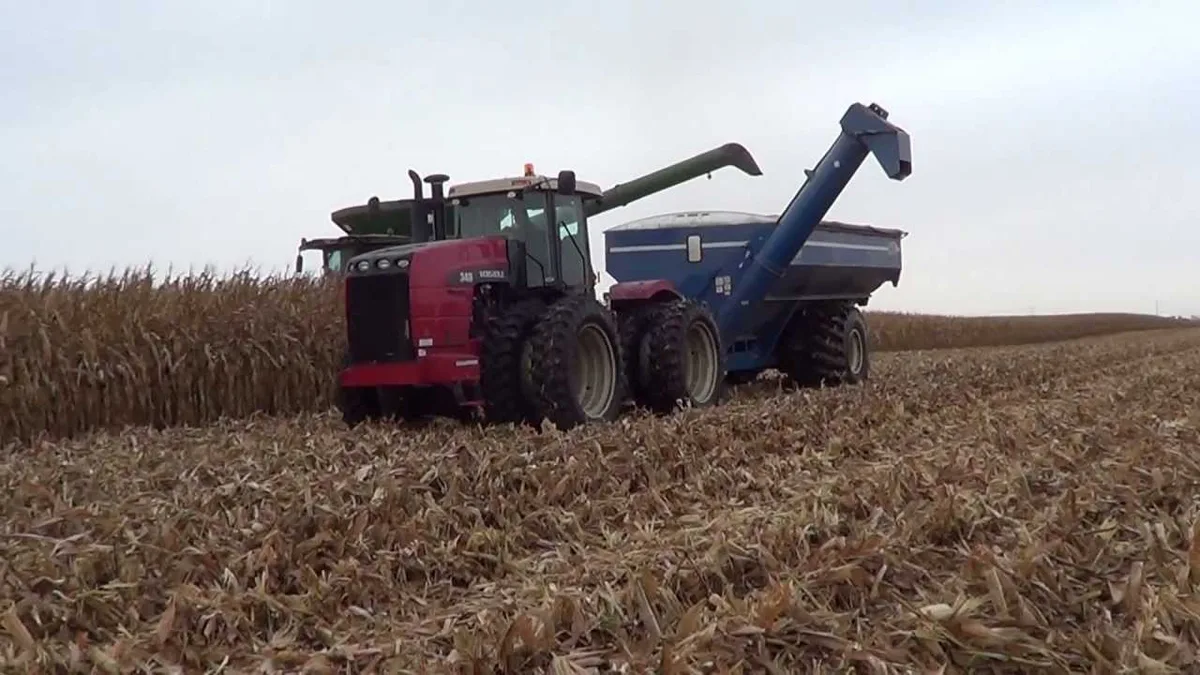
Self-propelled equipment like combines automatically qualify. Towed implements must be part of a valid IOH combination. The towing vehicle and the towed unit together determine eligibility.
What Roads Can You Travel On with an IOH?
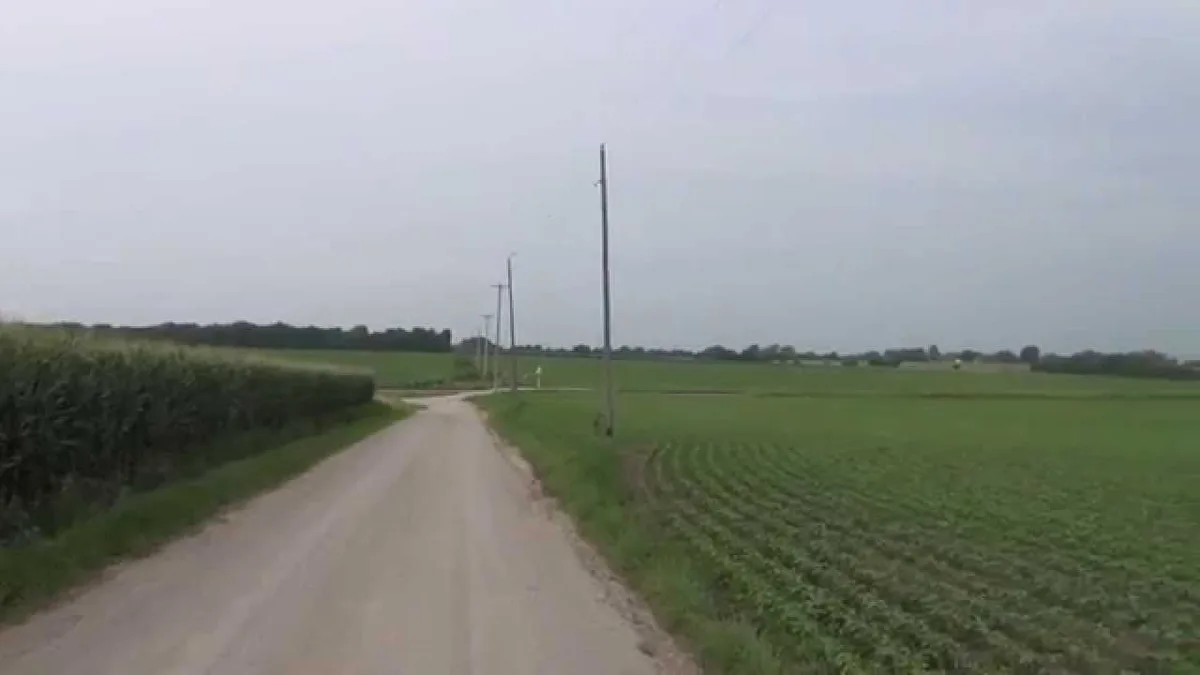
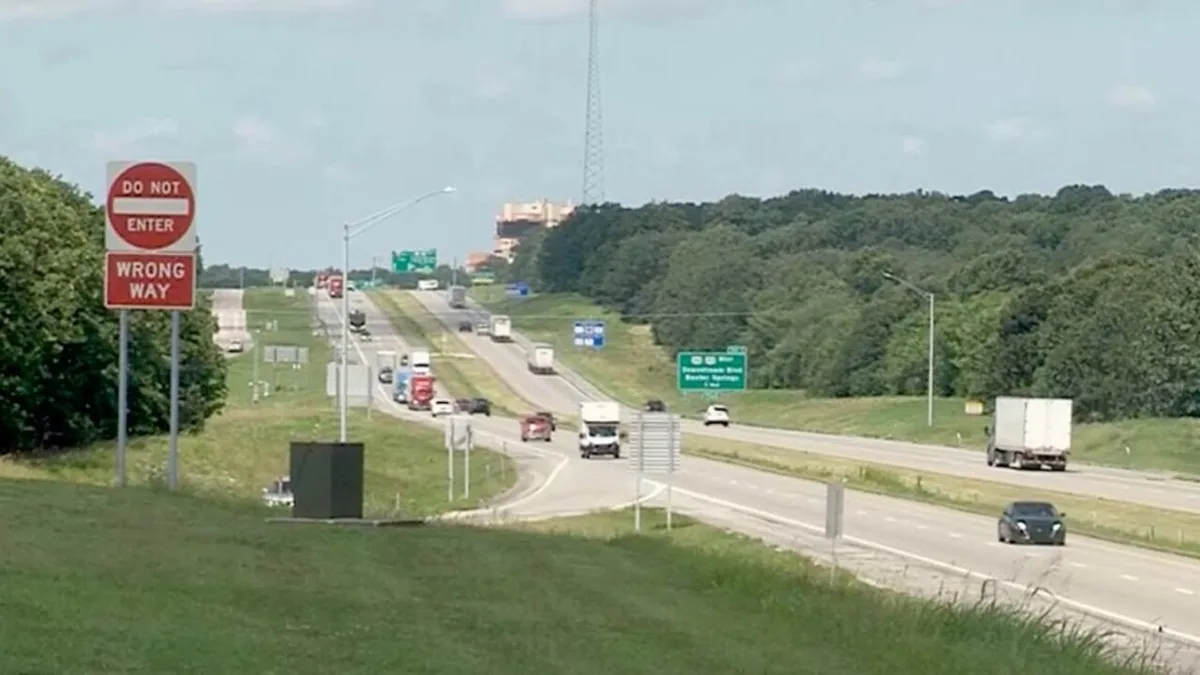
IOH travel is permitted on most public roads, but restrictions apply. You cannot operate IOH on interstates or controlled-access highways. County and state roads are generally allowed, provided they meet advisory speed limits.
The rule of thumb: if the road’s posted advisory speed is 25 mph or lower, IOH travel is typically permitted. Higher-speed roads may prohibit IOH unless specific exemptions apply.
YouTube / Lars Grove Mortensen (YouTube thumbnail (fair-use with source credit))
Field-to-field transport is the primary intent behind these rules. If you’re moving equipment between farms or across county lines, you’re likely covered. But if you’re hauling for commercial purposes unrelated to farming, the IOH classification may not apply.
Speed Limits and Advisory Speed Rules for Missouri IOH
Missouri ties IOH road travel to advisory speed limits. If a road’s advisory speed is 25 mph or below, IOH can legally travel on it. This is a hard threshold, exceeding it means you’re likely in violation.
Advisory speed signs are typically posted on curves, hills, or rural roads. These are the roads where IOH travel is most common.
YouTube / KY3 News, Springfield, Mo. (YouTube thumbnail (fair-use with source credit))
Travel speed itself isn’t strictly capped, but IOH must move at a safe speed for the road conditions. Slow-moving equipment should use the shoulder where possible.
Required Safety Equipment: Lights, Emblems, and Mirrors
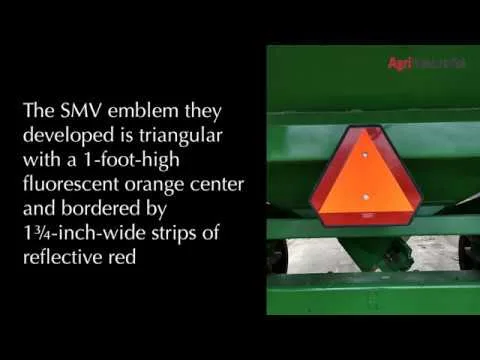
Every IOH traveling on public roads must display a Slow-Moving Vehicle (SMV) emblem. This is the orange triangle with a red border, mounted on the rear of the equipment. It must be visible from at least 500 feet away in daylight.
Lighting requirements include tail lamps, brake lamps, and turn signals. These must be functional on both the towing vehicle and any towed implements.
YouTube / AgriNaturalist (YouTube thumbnail (fair-use with source credit))
A convex mirror is required on the left side of the towing tractor. This ensures the operator can see traffic approaching from the rear.
Towed vs. Self-Propelled: How Combination Rules Work
The distinction between towed and self-propelled equipment matters for IOH classification. A combine harvester operates under its own power and qualifies independently.
When towing implements, the rules change. A single towed unit attached to a tractor generally maintains IOH status. Adding multiple towed units can disqualify the combination.
The total width of the setup determines eligibility too. If the combined width exceeds the legal limit for IOH, you may lose that classification entirely.
Most farmers stick to one towed implement per tractor on public roads. Double-trailer setups are risky unless you’ve confirmed they still qualify.
Step-by-Step: How to Check if Your Setup is Legal
Follow these steps to verify your equipment qualifies as an IOH in Missouri.
First, confirm the primary use is agricultural. Commercial hauling or construction work breaks the definition.
Second, measure the total width of your towing vehicle plus any towed implements. Standard lane width is 12 feet. Exceeding typical limits may require extra markings or permits.
Third, check the advisory speed limit on every road segment you plan to use. Roads over 25 mph are off-limits for IOH travel unless you qualify for an exception.
Fourth, inspect your safety equipment. The SMV emblem must be mounted correctly. All lights and mirrors must function properly.
Finally, review local ordinances. Some counties add restrictions beyond state law.
Common Mistakes That Get Farmers Pulled Over
Most IOH citations come from avoidable errors. Assuming all farm equipment qualifies as IOH is a common mistake. Just because it’s used on a farm doesn’t mean it’s road-legal.
Skipping the SMV emblem is another frequent issue. Even a short trip between fields requires it if you’re on a public road.
Forgetting the convex mirror on the tractor is an easy oversight. Law enforcement checks for this. Missing it means a citation.
Traveling at night without proper lighting is risky. IOH night travel demands brighter or additional lights depending on the equipment.
Ignoring advisory speed signs can lead to trouble. Just because you’re on a county road doesn’t mean you can drive faster than the posted limit allows for IOH.
Overloading or widening your setup without rechecking eligibility is dangerous. Adding attachments changes your equipment’s dimensions and legal status.
Night Travel, Wide Loads, and Other Special Cases
Night travel introduces stricter requirements. Most IOH combinations need supplemental lighting after dark.
If your equipment lacks factory-installed rear lights, you’ll need to add auxiliary lamps. Reflective tape along the sides and rear also helps visibility.
Wide loads deserve extra attention. Anything extending beyond standard widths may need warning flags or additional marking.
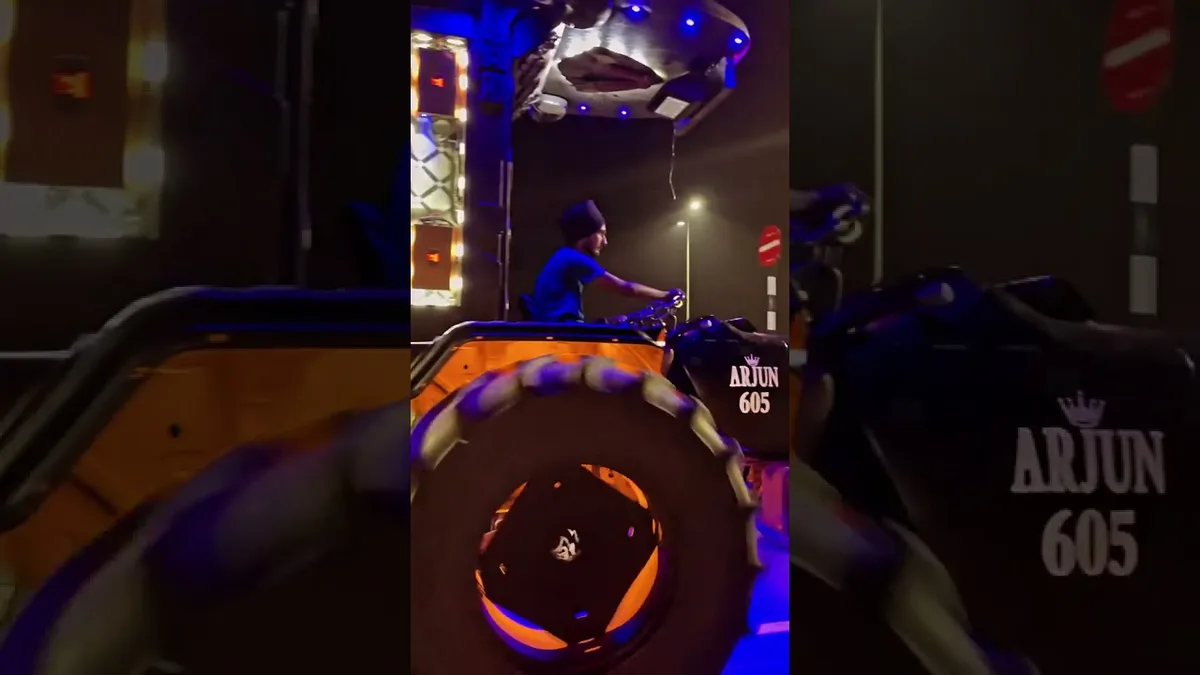
YouTube / kishan Nation (YouTube thumbnail (fair-use with source credit))
Crossing state lines with IOH is tricky. Missouri’s definition differs from neighboring states like Iowa, Illinois, Kansas, Nebraska, Oklahoma, and Arkansas.
Special events like agricultural shows or equipment auctions sometimes allow temporary variances. Check with MoDOT or your county sheriff’s office ahead of time.
Missouri IOH vs. Neighboring States: What Changes at the Border?
Cross-state travel exposes differences in IOH definitions. Each bordering state sets its own rules.
Iowa uses a broader definition that includes more towed equipment. Illinois restricts IOH travel on certain highways more tightly than Missouri. Kansas aligns closely with Missouri but adds width restrictions for specific routes.
Nebraska and South Dakota offer even more flexibility for agricultural equipment movement. Oklahoma and Arkansas have narrower definitions, making compliance harder near their borders.
If you farm near state lines, carry reference sheets for each state’s IOH requirements. Knowing where Missouri’s protections end prevents surprise citations.
What Happens If You’re Stopped or Cited?
Law enforcement can pull over IOH combinations for safety checks. Officers look for missing SMV emblems, non-functional lights, or improper towing setups.
If cited, fines vary by violation. Missing an SMV emblem typically carries a smaller penalty than operating on a prohibited road. Repeat offenses may result in higher fines or equipment impoundment.
You can contest a citation in court. Bring documentation showing your equipment meets IOH definitions and was properly marked. Photos of your setup and road conditions help your case.
Quick Reference: Missouri IOH Rules at a Glance
Here’s a condensed checklist for quick verification.
Definition
Primary use must be agricultural
Self-propelled or single towed unit generally qualifies
Road Rules
Advisory speed must be 25 mph or lower
No interstate or controlled-access highway travel
Local ordinances may add restrictions
Safety Equipment
SMV emblem on rear
Functional tail, brake, and turn signals
Convex mirror on left side of towing vehicle
Special Cases
Night travel requires additional lighting
Wide loads may need extra markings
Cross-state travel requires checking neighboring state laws
Frequently Asked Questions
Does a pickup truck towing a trailer count as an IOH?
No. A pickup truck is not classified as an implement of husbandry even if used for farming. The towed trailer would need to meet agricultural equipment definitions independently.
Can I drive my tractor on the interstate in Missouri?
No. Implements of husbandry are prohibited from traveling on interstates and controlled-access highways in Missouri.
What’s the maximum width for IOH on Missouri roads?
Standard lane width is 12 feet. Equipment exceeding this may lose IOH classification and require special permits.
Do I need a CDL to operate farm equipment on public roads?
No. Missouri does not require a commercial driver’s license for operating implements of husbandry on public roads within the IOH framework.
Are there seasonal restrictions for IOH travel?
No statewide seasonal restrictions exist. However, some counties may impose temporary limits during high-traffic periods or road construction.