ByMax Lee
New Hampshire Exhaust Noise Laws: What Passenger Car Owners
New Hampshire muffler and exhaust noise level regulations for passenger cars can save you from costly fines if you know the rules. The state sets clear limits on how loud your exhaust can be, and local police enforce them. Ignorance isn’t an excuse, and a single noise complaint can lead to a fix-it ticket.
As of 2026, New Hampshire follows the SAE J1169 standard, which caps exhaust noise at 92 decibels when measured 50 feet away. That’s roughly the volume of a lawnmower, and exceeding it means your car won’t pass inspection.
Quick Answer
New Hampshire muffler and exhaust noise level regulations for passenger cars limit sound to 92 dB(A) under SAE J1169 testing. The test measures noise at 50 feet with the engine at three-quarters redline. Stock mufflers typically comply.
Modified systems often don’t. Fines start around $50 for violations.
Why Exhaust Laws in New Hampshire Matter More Than You Think
YouTube / VG Vishal Gupta Vlogs (YouTube thumbnail (fair-use with source credit))
Noise isn’t just an annoyance in New Hampshire. It’s a legal issue. Excessive exhaust noise can lead to failed inspections, traffic stops, and fines.
The state’s regulations exist to balance performance with public peace.
These laws also protect your wallet. A non-compliant exhaust system can void warranties or insurance claims if it’s deemed unsafe. Plus, some aftermarket modifications can trigger federal EPA violations for tampering with emissions systems.
The Short Answer: What NH Drivers Need to Know About Muffler Laws
New Hampshire requires all passenger cars to have a working muffler. The law doesn’t just target loud pipes. It also prohibits any modification that amplifies or alters exhaust noise beyond the legal limit.
The key standard is RSA 266:59, which mandates that every vehicle must be equipped with a muffler in good working order. This isn’t just about volume. It’s about preventing excessive or unusual noise that could disturb the peace.
NH Exhaust Noise Limits Explained: The 92 dB(A) Rule
YouTube / Dewesoft (YouTube thumbnail (fair-use with source credit))
New Hampshire uses the SAE J1169 test standard to measure exhaust noise. The limit is 92 decibels (dB(A)) when measured 50 feet from the vehicle. The engine must be revved to three-quarters of its maximum RPM during the test.
How the Test Is Actually Performed
The test is conducted in an open area with no obstructions. A sound level meter is placed 50 feet from the vehicle’s exhaust outlet. The engine is revved to 75% of its redline, and the highest decibel reading is recorded.
What Decibel Levels Mean for Your Car
Here’s a quick reference for common sounds:
| Sound Source | Decibel Level (dB(A)) |
|---|---|
| Normal conversation | 60 |
| Lawnmower | 90 |
| NH exhaust limit | 92 |
| Motorcycle (unmuffled) | 100+ |
Most stock exhaust systems stay well below 92 dB(A). Aftermarket systems, especially those designed for performance, can exceed this limit if not properly tuned.
Federal vs. New Hampshire Rules: What’s Different
Federal law focuses on emissions, not noise. The EPA prohibits tampering with emissions control systems, including catalytic converters. This is separate from New Hampshire’s noise regulations but equally enforceable.
The EPA’s Anti-Tampering Law
Removing or modifying a catalytic converter is illegal under federal law. This applies even if the modification doesn’t affect noise levels. Violations can result in hefty fines and failed inspections.
Why Federal Standards Don’t Cover Everything
Federal regulations don’t address noise limits. That’s left to the states. New Hampshire’s 92 dB(A) rule is stricter than some states but more lenient than others, like California, which has its own noise standards.
Where New Hampshire Muffler Laws Come From
New Hampshire’s muffler and exhaust regulations are primarily governed by two statutes: RSA 266:59 and RSA 266:74-a. These laws outline the requirements for mufflers and noise restrictions.
RSA 266:59: The State Muffler Requirement
This statute requires every motor vehicle to be equipped with a muffler in good working order. The muffler must prevent excessive or unusual noise. It also prohibits the use of cutouts, bypasses, or similar devices that amplify exhaust noise.
RSA 266:74-a: Prohibiting Excessive Noise
This law specifically addresses excessive noise from motor vehicles. It empowers law enforcement to issue citations for vehicles that produce noise exceeding the legal limit. The standard used is the SAE J1169 test, which sets the 92 dB(A) cap.
Can Towns Set Stricter Rules?
Yes. While the state sets the baseline, individual towns in New Hampshire can enforce stricter noise ordinances. For example, some residential areas may have local rules that limit noise during certain hours.
Always check with your local municipality to ensure compliance.
What Happens If Your Car Fails a Noise Test
YouTube / WMUR-TV (YouTube thumbnail (fair-use with source credit))
A failed noise test means your car won’t pass the state inspection. You’ll get a rejection sticker and a list of required repairs. The most common fix is replacing or repairing the muffler.
Common Reasons for Failing NH Vehicle Inspection
The top causes are missing or damaged mufflers, straight-pipe setups, or aftermarket systems that exceed 92 dB(A). Even a small hole in the exhaust can push noise levels over the limit.
Typical Fines and Fix-It Ticket Scenarios
First offenses usually start at $50 to $100. Repeat violations can climb to $200 or more. Some towns add court fees if the case goes to a hearing.
Can You Appeal a Noise Violation?
Yes, but it’s rare to win. You’d need proof the test was conducted improperly or that your exhaust meets the 92 dB(A) standard. A certified mechanic’s report can help your case.
Aftermarket Mufflers and Exhaust Modifications in NH
YouTube / Motorcyclist Magazine (YouTube thumbnail (fair-use with source credit))
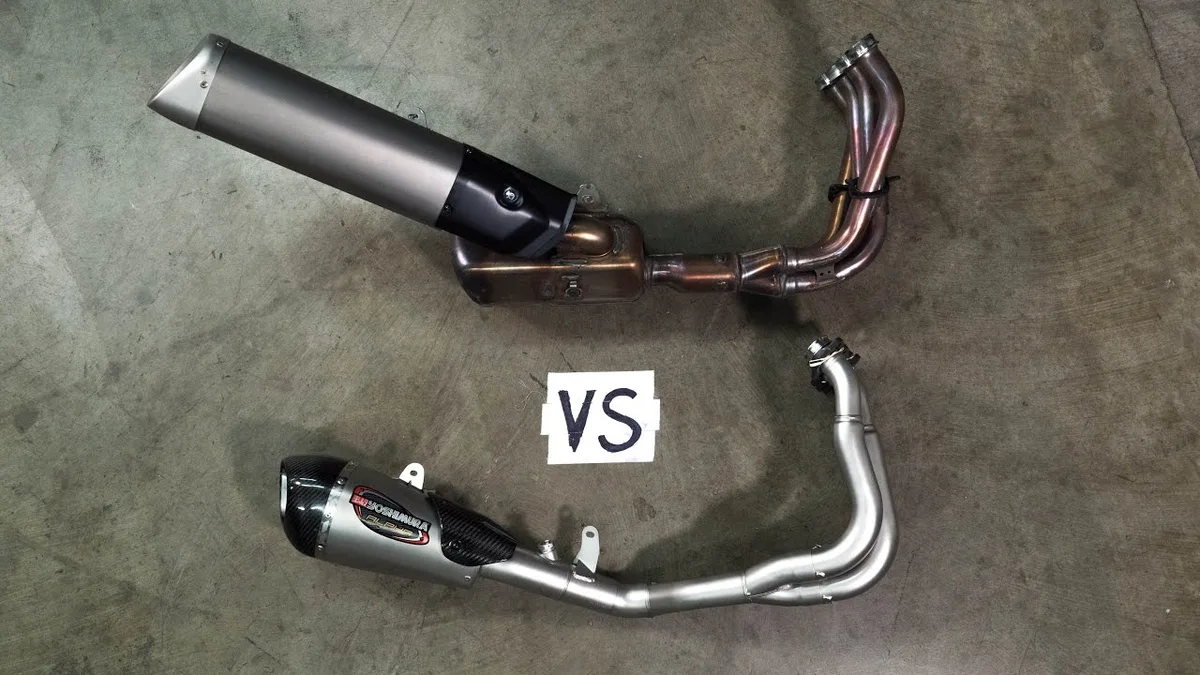
Aftermarket mufflers are legal if they keep noise under 92 dB(A). Many performance mufflers are designed to meet this standard while improving flow. Always check the manufacturer’s decibel ratings before buying.
Legal Aftermarket Options That Stay Street-Compliant
Brands like MagnaFlow, Borla, and Flowmaster offer mufflers that balance sound and legality. Look for models labeled as "street-legal" or "50-state compliant." These are tested to meet noise regulations.
Straight-Pipe Deletes and Muffler Removals
Straight piping is illegal in New Hampshire. Removing the muffler entirely violates RSA 266:59. Even if the noise stays under 92 dB(A), the lack of a muffler is enough for a citation.
Cat-Back vs. Full-System Exhausts: What’s Allowed?
Cat-back systems replace everything from the catalytic converter back. These are often legal if they include a muffler and stay under the noise limit. Full-system exhausts that replace headers or catalytic converters may violate federal emissions laws.
Real-World Scenarios: When Exhaust Laws Actually Matter
Scenario 1: Driving a Modified Car Across Town
You’ve added a performance exhaust for better sound and flow. If it’s over 92 dB(A), you risk a ticket every time you drive. Police can pull you over based on a noise complaint alone.
Scenario 2: Getting Stopped by Police for Loud Exhaust
An officer hears your car from a block away. They can test your exhaust on the spot with a decibel meter. If it’s over the limit, you’ll get a citation and may need to tow the car.
Scenario 3: Failing Inspection at a NH Station
Your car passes the emissions test but fails the noise check. You’ll need to fix the exhaust and return for a retest. Some stations charge a fee for retesting.
How to Check If Your Exhaust Passes NH Standards

YouTube / Dude, I Tried It (YouTube thumbnail (fair-use with source credit))
The only sure way to know is a professional test. Many NH inspection stations will check your exhaust noise for a small fee. Some performance shops also offer decibel testing.
DIY Decibel Testing Options
You can buy a handheld decibel meter for around $50 to $100. To get an accurate reading, follow the SAE J1169 procedure. Place the meter 50 feet away and rev the engine to 75% of redline.
What Inspection Stations Actually Check
They use a calibrated decibel meter and follow the SAE J1169 standard. The test takes just a few minutes. If your car passes, you’ll get a sticker proving compliance.
Getting a Professional Second Opinion
If you’re unsure about a modification, consult a shop that specializes in performance exhausts. They can test your system and recommend legal upgrades. This is especially useful for custom builds.
Mistakes New Hampshire Drivers Make With Exhaust Systems

YouTube / Motor Matchups (YouTube thumbnail (fair-use with source credit))
Assuming a muffler is legal just because it’s sold in stores is a common mistake. Many aftermarket parts exceed noise limits. Always verify the decibel rating before installing.
Assuming OEM-Style Mufflers Are Always Legal
Even some OEM-style replacements can be too loud. Some budget mufflers don’t meet the 92 dB(A) standard. Check the specs or ask the seller for compliance confirmation.
Ignoring Local Noise Complaints in Residential Areas
Some towns have stricter rules than the state. Driving a loud car through a quiet neighborhood can lead to complaints. Police can issue citations even if your exhaust passes the state test.
Buying Online Without Checking NH Compliance
Online listings often don’t mention noise ratings. A muffler that’s legal in one state might not be in New Hampshire. Look for products explicitly labeled as 50-state legal.
Expert Tips for Staying Legal While Keeping Your Car Loud
Want a loud exhaust that won't get you pulled over? Start with mufflers labeled as street-legal. Reputable brands like MagnaFlow and Borla test their products against the 92 dB(A) standard.
Always request the decibel rating before purchasing.
Check for certifications that indicate compliance. Products marked as 50-state legal have passed emissions and noise requirements. This is your first filter when shopping online or in-store.
Consider how your car's engine responds. Some exhaust systems change sound profiles at different RPMs. A system might read legal at idle but exceed limits under hard acceleration.
Test your setup across a range of conditions.
Don't overlook local ordinances. While the state sets 92 dB(A) as the limit, individual towns may enforce stricter rules. Driving through residential areas with a loud exhaust can attract complaints even if you're technically legal.
When to Seek Professional Help for Exhaust Compliance
Need expert guidance? A qualified mechanic or exhaust specialist can help you stay compliant. Look for shops that specialize in performance exhaust systems.
They understand both legal limits and your vehicle's needs.
Dealing With a Fix-It Ticket
If you receive a citation, don’t ignore it. Contact your town clerk’s office to understand your options. Most violations allow you to fix the issue and request a dismissal or reduced fine.
Bring proof of repair to court if required. This can include receipts for new parts and a decibel test result showing compliance. Some towns may require verification from an inspection station.
Rebuilding or Replacing a Non-Compliant System
If your exhaust fails inspection, work with a shop to identify the issue. Sometimes a simple baffle insert or replacement muffler resolves the problem. In other cases, you may need a completely different system.
Budget for the repair. An aftermarket muffler can range from $100 to $400. Professional installation adds another $100 to $300 depending on complexity.
Some systems require cutting and welding, which increases labor costs.
Consulting a Legal or Mechanical Professional
For complex modifications, consider hiring a professional. They can advise on what’s legal and help you avoid costly mistakes. Some exhaust shops offer compliance guarantees for their installations.
FAQs About New Hampshire Muffler and Exhaust Laws
Is straight piping legal in New Hampshire?
No. Straight piping your exhaust violates RSA 266:59 because it removes the muffler entirely. The law requires a functioning muffler that prevents excessive noise.
What decibel limit do NH police use for traffic stops?
Police use the 92 dB(A) standard measured 50 feet from the exhaust. They carry handheld decibel meters for on-the-spot testing. Any reading above 92 dB(A) is grounds for a citation.
Do I need a special permit for a louder exhaust?
No permits exist for exceeding the noise limit. If your exhaust is louder than 92 dB(A), it’s illegal regardless of intent. Some racing vehicles have exemptions but only on closed courses.
Can I pass inspection with an aftermarket exhaust?
Yes, if the aftermarket system meets the 92 dB(A) limit. Many performance mufflers are designed to comply with state standards. Look for products that specify their decibel rating.
What counts as a stock muffler in NH?
A stock muffler is the original equipment manufacturer (OEM) part that came with your vehicle. Replacement OEM parts also qualify. Anything modified or replaced with a non-compliant unit may fail inspection.
The Bottom Line: Staying Legal on New Hampshire Roads
Staying compliant with New Hampshire’s exhaust regulations is straightforward if you follow the rules. The state caps noise at 92 dB(A) using the SAE J1169 test standard. Most stock exhaust systems pass this limit without issue.
Aftermarket modifications require extra caution. Not all loud exhausts are illegal, but many exceed the decibel threshold. Always verify the noise rating before installation and check for local ordinances that may impose stricter limits.
When in doubt, get a professional test. A quick decibel check at a qualified shop can save you from fines and failed inspections. The cost of compliance is far less than the cost of a citation or legal fees.