
ByMax Lee
NH RV Fees: Motor Home Chassis Valuation Factors Explained
New Hampshire motor home chassis valuation factors for recreational vehicle fees can save you money if you know how the system works. The NH DMV bases your registration cost primarily on the chassis, not the living quarters. Many RV owners overpay because they don't understand how the state calculates value.
Per New Hampshire statute RSA 261:12, the Department uses Gross Vehicle Weight Rating to determine fee brackets. The chassis VIN, engine type, and model year all feed into the official valuation table. Understanding these factors gives you control over what you actually pay each registration period.
Quick Answer
New Hampshire motor home chassis valuation factors for recreational vehicle fees come down to weight, age, and VIN. The state uses your chassis GVWR to place you in a fee bracket. Heavier chassis pay more.
Older chassis depreciate but not always predictably. You can dispute the DMV's valuation if you have supporting documentation.
Why New Hampshire's Motor Home Chassis Valuation Matters for Your RV Fees
YouTube / NH Division of Motor Vehicles (YouTube thumbnail (fair-use with source credit))
Most RV owners assume their fee is based on the total RV value. That assumption costs people money in New Hampshire. The state treats the chassis and the coach as separate valuation entities.
Your fee comes from the chassis number, not the coach's retail price.
This matters because a $120,000 Class C on a Ford E-450 chassis often costs less to register than a $85,000 motorhome on a heavier Freightliner chassis. The lighter chassis lands in a lower fee bracket. The heavier one jumps up a tier.
The difference can be hundreds of dollars per registration cycle. Over five years, that gap compounds significantly. Getting this right at registration time prevents surprises later.
How NH DMV Calculates RV Fees Based on Chassis Value
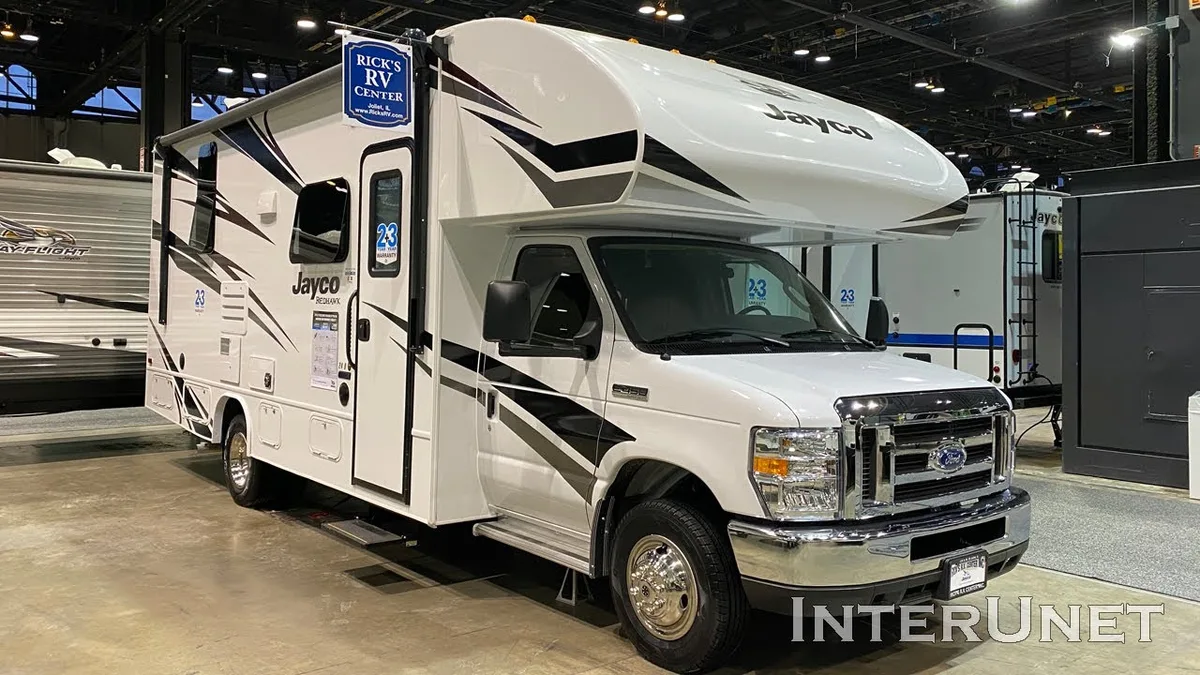
The NH DMV follows a straightforward formula. They take the chassis VIN and decode it for make, model, year, and Gross Vehicle Weight Rating. That GVWR number slots you into a fee schedule.
The schedule runs from light-duty chassis up through heavy-duty commercial weight classes.
YouTube / InterUnetAutomotive (YouTube thumbnail (fair-use with source credit))
The coach body does not factor into the base registration fee. It may matter for insurance and property tax purposes. But the DMV fee calculation stays chassis-only.
This is different from many other states that use the full vehicle value.
New Hampshire does not charge a sales tax on vehicle purchases. The registration fee is your main upfront cost. That is why getting the chassis valuation correct matters more here than in states with heavy sales taxes.
The Key Factors That Determine Your Motor Home Chassis Valuation
Several specific elements feed into the NH chassis valuation. The biggest ones are listed below.
- GVWR (Gross Vehicle Weight Rating): This is the most important factor. It determines your fee bracket.
- Chassis year: Older chassis generally depreciate. The DMV uses the model year from the VIN.
- Make and model: Ford E-450, Freightliner M2, and Chevrolet Express all carry different base values.
- Engine type: Diesel chassis often carry higher valuations than gas equivalents of similar weight.
- Modifications: Upgraded suspensions or transmission work do not typically increase the assessed value for fee purposes.
The DMV does not use depreciation charts from Kelley Blue Book or NADA. They use their own valuation tables. Those tables are not published publicly.
This opacity is what creates confusion for most RV owners.
NH's Fee Structure: How Chassis Weight and Value Affect Costs

YouTube / MCQS-EXAMPREP (YouTube thumbnail (fair-use with source credit))
New Hampshire structures its registration fees around weight bands. Here is how it generally works for motorhomes.
| GVWR Range | Fee Category | Typical Annual Cost Range |
|---|---|---|
| Under 6,000 lbs | Light duty | $30 to $80 |
| 6,001 to 10,000 lbs | Medium duty | $80 to $150 |
| 10,001 to 18,000 lbs | Heavy duty | $150 to $300 |
| Over 18,000 lbs | Commercial tier | $300 to $600+ |
These ranges reflect standard registration fees. Actual costs vary based on the town or city where you register. Local surcharges can add to the base state fee.
A Class C on a Ford E-450 (GVWR around 10,000 lbs) typically lands in the medium-duty bracket. A Class A on a Freightliner XDE (GVWR over 26,000 lbs) lands firmly in the commercial tier. The jump between those two examples can exceed $400 annually.
Step-by-Step: How to Find Your Chassis Valuation for Registration
Finding your chassis value in New Hampshire takes a few clear steps. Follow this sequence to get the most accurate picture before you head to the DMV.

YouTube / CareDrive Chartered Valuation and Consultancy (YouTube thumbnail (fair-use with source credit))
Step 1: Locate Your Chassis VIN
The VIN is stamped on the chassis frame. It is usually visible near the driver-side wheel well or on the firewall. The coach VIN is different.
Make sure you are reading the chassis number, not the coach manufacturer number.
Step 2: Decode the VIN
Use a free VIN decoder specific to your chassis manufacturer. Ford, Freightliner, and Chevrolet all have official decoders. This gives you the model year, engine type, and GVWR as originally built.
Step 3: Check Your Registration Renewal Notice
The NH DMV sends a renewal notice that includes your assessed valuation. This is the number the state used. Compare it to your decoded VIN data.
If they do not match, you have grounds for a review.
Step 4: Gather Supporting Documents
Collect your original purchase receipt, the window sticker showing chassis specs, and any manufacturer documentation. These help if you need to contest the valuation.
Step 5: Visit or Call the DMV
You can request a valuation review at any DMV office. Bring your documents. Ask specifically about the chassis weight class used for your fee calculation.
Common Mistakes That Lead to Overpaying (or Underpaying) Fees
Mistakes in chassis valuation happen more often than most owners realize. Here are the most common ones.
- Using the coach VIN instead of the chassis VIN: These are two different numbers. The coach VIN will give you the wrong year and weight class.
- Assuming depreciation follows a flat rate: NH does not use straight-line depreciation. Your chassis may hold value differently than expected.
- Not checking the renewal notice carefully: The assessed value is printed on your renewal. If it looks wrong, act before the due date.
- Registering in the wrong town: Some municipalities add local fees. Moving your registration can change your total cost.
- Ignoring weight upgrades: If you added a heavier suspension or auxiliary fuel tanks that raise your actual weight, the DMV may reclassify you.
Underpaying is risky too. If the DMV determines you were in the wrong weight class, they can assess back fees plus penalties. The state does not look kindly on intentional downclassification.
What to Do If You Disagree With NH DMV's Chassis Valuation
Disputing a valuation is possible but not simple. The DMV expects you to bring solid evidence. Here is the process.
First, request a written explanation of how they arrived at your valuation. You can do this at the DMV office or by written request. Second, compare that explanation to your VIN decode and manufacturer specs.
Third, gather your supporting documents from Step 4 above.
If the gap between your evidence and the DMV's number is significant, file a formal protest. The DMV will review your documentation and may adjust the valuation. There is no guarantee.
The burden of proof is on you.
If your protest is denied, you can appeal to the NH Office of Administrative Appeals. This adds time and complexity. Most disputes resolve at the DMV level if the paperwork is clean.
Real-World Examples: Fee Differences by Chassis Type and Age
Concrete examples make this topic click. Here are two realistic scenarios.
Example A: A 2019 Class C on a Ford E-450 chassis. GVWR is 10,000 lbs. The VIN decode confirms a gas engine.
The NH DMV places this in the medium-duty bracket. Annual fee comes to approximately $135.
Example B: A 2021 Class A on a Freightliner XDE chassis. GVWR is 26,000 lbs. The VIN decode confirms a diesel engine.
The DMV places this in the commercial tier. Annual fee comes to approximately $475.
That is a $340 annual difference driven entirely by chassis weight and engine type. The coach on Example B actually cost less to buy. The chassis drives the fee, not the living space.
Age matters less than weight in New Hampshire. A newer heavy chassis pays more than an older light one. This is the opposite of how car registration works in many states.
Required Documents to Prove Your Chassis Value

YouTube / AfterHour Business (YouTube thumbnail (fair-use with source credit))
Having the right paperwork makes the valuation process smoother and gives you leverage if you dispute a number. Here is what you should keep on hand.
- Original purchase receipt showing chassis MSRP and specs
- Window sticker with GVWR, engine type, and chassis model
- Title document with the chassis VIN clearly listed
- Previous year's registration showing the assessed value
- VIN decode report from the manufacturer or a certified decoder
- Appraisal or professional valuation if you have one from a certified RV appraiser
Keep these documents in a folder. Reference them every time you renew or transfer registration.
Expert Tips to Lower Your RV Registration Costs Legally
YouTube / RV Tips and Bits! Never Stop Learning (YouTube thumbnail (fair-use with source credit))
Legal fee reduction comes down to smart chassis selection and proper documentation. Here are practical tips.
- Choose a lighter chassis when possible: A Ford E-450 versus a Freightliner M2 can save you $200 to $400 per year. The tow vehicle capability difference is real but often overstated for weekend use.
- Verify your GVWR before buying: Some manufacturers rate chassis conservatively. If a chassis is rated at 10,000 lbs but can legally carry less payload, confirm which number the DMV will use.
- Register in a town with lower local surcharges: Fee differences between municipalities can add $20 to $80 annually.
- Keep your paperwork immaculate: Clean documentation speeds up disputes and prevents valuation errors.
NH-Specific Rules You Need to Know Before Registering
New Hampshire has a few rules that catch out-of-state RV owners off guard. Know these before you register.
- No state sales tax on vehicles: This applies to both new and used purchases. Your main cost is the registration fee.
- Chassis-only valuation: The coach value is ignored for DMV fee purposes. This is unique compared to many states.
- Residency requirement: You must establish New Hampshire residency to register here. A physical address is required.
- Inspection requirement: All vehicles must pass a safety inspection before registration is finalized. This is separate from the valuation process.
- Local surcharges vary: Town fees differ. Check with your specific municipality before calculating total cost.
New Hampshire does not require an emissions test for most vehicles. RVs over a certain weight may have different inspection criteria.
For the most current fee schedule and valuation guidelines, the official New Hampshire Division of Motor Vehicles website is the authoritative source.
Frequently Asked Questions
Does New Hampshire value the coach or the chassis for RV fees?
New Hampshire values only the chassis for registration fee purposes. The coach body and its contents do not factor into the DMV's calculation. Your fee is based on the chassis GVWR and model year.
Can I use Kelley Blue Book to dispute my NH RV valuation?
The NH DMV does not use KBB or NADA values for fee calculation. Their internal tables are the standard. Third-party guides are not accepted as official evidence.
Manufacturer window stickers and VIN documentation carry more weight in a dispute.
How much can a chassis weight change affect my annual fee?
A single weight bracket jump can add $100 to $300 or more to your annual fee. Moving from under 10,000 lbs to over 10,000 lbs is the most common trigger. Always confirm your actual GVWR before purchasing a motorhome.
Do diesel chassis cost more to register in New Hampshire?
Not directly. The fee is based on weight, not engine type. However, diesel chassis are often built on heavier platforms.
The weight difference drives the higher fee, not the fuel type itself.
Can I register my RV in New Hampshire if I live in another state?
No. You must establish New Hampshire residency to register a vehicle there. Some people use a relative's address or a mail drop, but the DMV verifies residency.
False residency claims can result in penalties and forced re-registration in your home state.