ByMax Lee
NY Commercial Vehicle Registration & Weight Restrictions A-Z
New York commercial vehicle registration and weight restrictions create one of the strictest, most fragmented compliance landscapes in the U.S. for commercial operators. A single misstep can trigger fines that top $1,000 per violation, or even impoundment of your equipment. Many owner-operators and fleet managers run afoul of these rules by applying state-wide standards to NYC local streets, or mixing up gross vehicle weight rating and actual loaded weight.
These mistakes are almost entirely avoidable with the right pre-trip checks.
As of 2026, the New York State Department of Motor Vehicles enforces 7 distinct commercial registration classes, plus separate weight limits for state roads, NYC borough streets, and New York State Thruway Authority corridors. The rules you need to follow depend on your vehicle’s specifications, where you drive, and what cargo you carry. We’ve broken down the exact decision workflow below to keep you on the right side of compliance.
YouTube / CBS New York (YouTube thumbnail (fair-use with source credit))
Quick Answer
New York commercial vehicle registration and weight restrictions are enforced by NYSDMV, NYCDOT, and the Thruway Authority. Registration classes are based on your vehicle’s gross vehicle weight rating, or GVWR, and intended use. Weight limits vary by operating location, with NYC local limits often stricter than state rules.
Overweight and misclassified vehicles face fines up to $1,000 per violation as of 2026. You must meet annual inspection requirements to keep your registration active.
What Happens When You Misapply NY Commercial Vehicle Registration or Weight Rules?
NYSDMV and NYCDOT enforcement officers conduct regular checks at fixed weight stations, portable scale sites, and roadside inspections across the state New York State DMV commercial vehicle enforcement guidelines. If you’re caught with an invalid registration, incorrect class, or overloaded vehicle, penalties add up fast.
Standard overweight violation fines start at $150 per non-compliant axle. Total overage fines can exceed $1,000 for severe single violations. Repeat offenses can lead to a 30-day operating suspension, or permanent revocation of your commercial registration.
Vehicles found to be dangerously overloaded may be impounded on the spot.
You’ll face costly towing and storage fees while you sort out compliance. Beyond financial penalties, repeated violations can tank your FMCSA safety rating if you operate as an interstate carrier. A poor safety rating leads to higher insurance premiums, or even loss of your operating authority entirely.
For small fleets and independent owner-operators, these penalties can put you out of business in months.
The Short Version: Your Exact Rules Depend on 4 Non-Negotiable Variables
Your exact New York commercial vehicle registration and weight restrictions depend entirely on four non-negotiable factors. If any of these variables change, your compliance requirements shift with them. We’ve structured this guide as a branching workflow to walk you through every possible scenario.
The four core variables are:
- Your vehicle’s Gross Vehicle Weight Rating (GVWR): the manufacturer’s fixed maximum loaded weight, listed on the driver’s side door jamb.
- Your vehicle’s intended use: delivery, construction hauling, passenger transport, farm use, or other commercial purpose.
- Your primary operating location: NYC five boroughs, upstate state roads, New York State Thruway, or cross-state routes.
- Your typical cargo weight and type: general freight, heavy equipment, hazardous materials, or oversized loads.
We’ll reference these four variables in every step below to make sure you only see rules that apply to your exact situation.
First, Confirm Your Core Vehicle & Operating Details
Before you start filling out any registration paperwork or checking weight limits, pull together four key pieces of information first. Skipping this pre-check leads to misclassified registrations and unexpected overweight fines down the line.
Here’s what you need to confirm:
- Your vehicle’s official GVWR: found on the driver’s side door jamb compliance label or in your owner’s manual.
- Your vehicle identification number (VIN) for all registration and permit paperwork.
- A list of all locations you plan to operate in: NYC boroughs, upstate state roads, Thruway corridors, or cross-state routes.
- Your vehicle’s intended use: passenger transport, general freight, heavy equipment hauling, or oversized cargo.
Once you have these four details, you’re ready to match your vehicle to the correct NY commercial registration class.
Step 1: Pick Your NY Commercial Registration Class Based on GVWR & Use
NYSDMV splits commercial vehicles into 7 distinct registration classes, each tied to a specific GVWR range and intended use. Picking the right class is the first step to avoiding registration delays, fines, or denied access to NYC roads. The diagram below breaks down the official NYSDMV class thresholds as of 2026.

YouTube / Gate Smashers (YouTube thumbnail (fair-use with source credit))
Most commercial operators will fall into one of the four most common classes, outlined in the table below:
| Registration Class | GVWR Threshold | Intended Use |
|---|---|---|
| A | Over 26,000 lbs | Combination vehicles (e.g. semi-trucks with trailers) |
| B | 26,000 lbs or less | Single-unit vehicles designed to carry 16+ passengers (including driver) |
| D | 26,000 lbs or less | Single-unit vehicles designed to carry 15 or fewer passengers (including driver) |
| E | 10,000 lbs or less | Single-unit vehicles used for general commercial purposes (e.g. box trucks, delivery vans) |
If you operate a school bus, farm vehicle, or special purpose commercial vehicle, you’ll qualify for Classes C, F, or G, which have separate eligibility requirements listed on the NYSDMV official commercial registration class guide. Misclassifying your vehicle is one of the most common causes of denied registration applications and roadside fines.
If You Operate in New York City: Local Weight Limits That Override State Rules
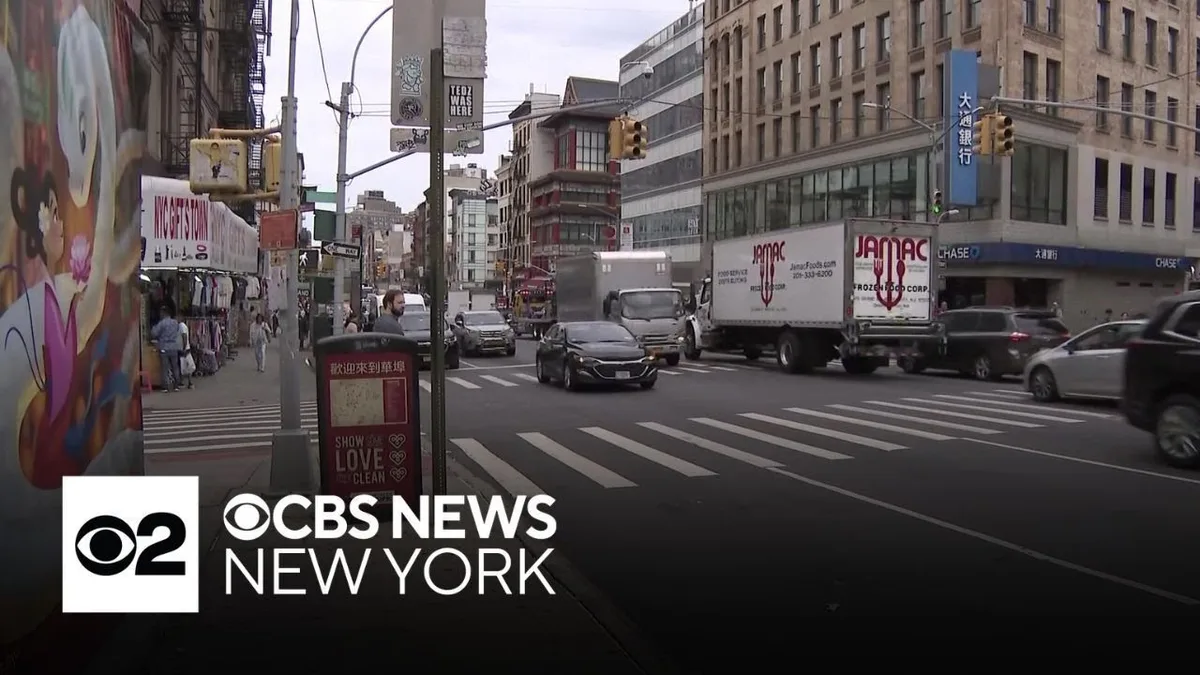
NYCDOT enforces local commercial weight limits that are far stricter than NYSDMV state-wide rules for the five boroughs. Even if your vehicle is fully compliant with state registration and weight limits, you can still face fines, towing, or access denial if you exceed NYC local limits. The photo below shows a standard NYC street sign displaying local commercial weight restrictions.
YouTube / CBS New York (YouTube thumbnail (fair-use with source credit))
Key NYC local weight limits to know as of 2026:
- Standard 5-axle combination vehicles (e.g. semi-trucks, box trucks with trailers) are limited to 18,000 lbs on most NYC streets, far below the 80,000 lb state-wide limit for combination vehicles.
- Single-unit commercial vehicles are limited to 10,000 lbs on most local streets, with lower 6,000 lb limits on narrow residential streets and historic districts.
- All commercial vehicles over 10,000 lbs GVWR require a special NYC commercial vehicle permit to access most local streets.
You can check real-time local weight limits for your planned route via the NYCDOT official commercial vehicle access portal. Fines for NYC local weight limit violations start at $250 and increase sharply for repeat offenses.
If You Haul Over Standard Weight Limits: Overweight Permit Eligibility & Application Workflow
YouTube / SCDOT (YouTube thumbnail (fair-use with source credit))
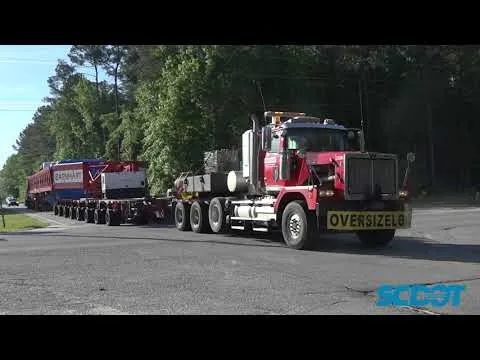
Standard NY state weight limits top out at 80,000 lbs for combination vehicles on public roads. The New York State Thruway has the same 80,000 lb standard limit for most routes. If your loaded weight exceeds these limits, you need an official overweight permit from either NYSDMV or the Thruway Authority, depending on your planned route.
NYSDMV overweight permits allow loads up to 120,000 lbs, but only on pre-approved routes you submit with your application. You’ll need to provide a detailed route plan showing every road you plan to travel, proof of valid commercial insurance, and a copy of your current commercial registration. As of 2026, the standard NYSDMV permit processing time is 10 to 15 business days for complete applications, so plan ahead for heavy haul jobs.
Thruway Authority overweight permits follow a separate application process, with slightly different eligibility requirements for loads over 80,000 lbs on Thruway corridors. If your route includes NYC borough streets, you’ll need a separate overweight permit from NYCDOT, as NYC does not accept NYSDMV state permits for local overweight hauls. NYC overweight permits have stricter weight limits and far more restricted route options than state-issued permits.
Universal Annual Compliance Requirements For All NY Commercial Vehicles
YouTube / ABC 10 News (YouTube thumbnail (fair-use with source credit))
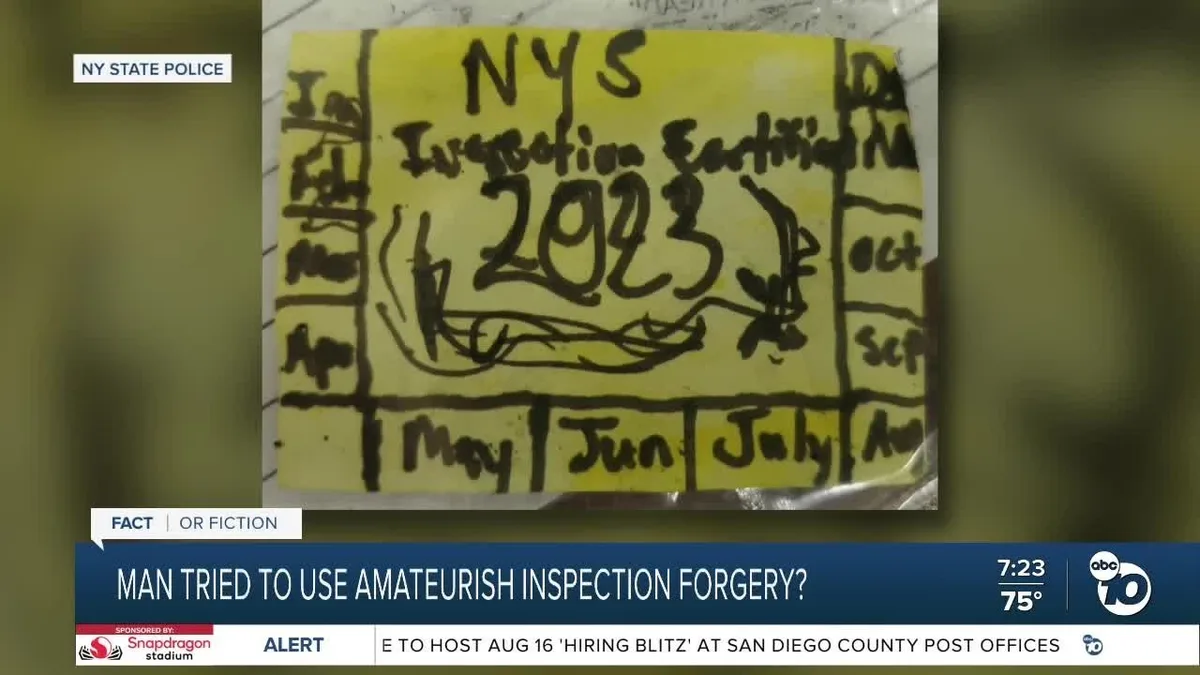
Every registered NY commercial vehicle must pass an annual safety inspection performed by a NYSDMV-licensed inspector, no exceptions. The inspection checks brakes, tires, lights, coupling devices, and cargo securement components to confirm your vehicle meets state safety standards.
You’ll receive a 12-month commercial inspection sticker to display on the driver’s side door of your vehicle. If your vehicle fails inspection, you have 10 business days to repair all cited defects and pass a re-inspection. If you don’t complete re-inspection within that window, your commercial registration is suspended until you pass and pay reinstatement fees.
If you use IRP apportioned registration for cross-state operations, you’ll also need to file an annual mileage report with NYSDMV to keep your registration active. All commercial vehicles over 10,000 lbs GVWR must carry minimum $1 million liability insurance to meet NY registration requirements, per New York State Vehicle and Traffic Law.
Costly, Common Mistakes That Lead to Fines or Lost Operating Authority
YouTube / Armor Freight Services (YouTube thumbnail (fair-use with source credit))
Most NY commercial vehicle registration and weight restriction violations stem from a handful of easily avoidable mistakes. NYSDMV 2025 enforcement data shows mixing up GVWR and actual loaded weight is the leading cause of commercial weight violations in the state. We’ve outlined the most common errors and their exact penalties below to help you steer clear of costly enforcement action.
The first big mistake is mixing up GVWR and actual loaded weight. GVWR is the manufacturer’s fixed maximum rated weight, while actual loaded weight (also called actual loaded vehicle weight, or ALVW) is the total weight of your vehicle plus cargo, fuel, and passengers. If you use GVWR to calculate if you’re under a weight limit, but your actual loaded weight exceeds that limit, you’ll get an overweight fine starting at $150 per non-compliant axle.
Another frequent error is applying state-wide weight limits to NYC local streets. A 5-axle semi that is fully compliant with the 80,000 lb state limit will be 62,000 lbs over the 18,000 lb NYC local street limit, leading to a $250 minimum fine and possible towing.
Skipping annual inspection deadlines is another common trigger for penalties. An expired inspection sticker leads to a $150 fine, and your vehicle can be taken out of service on the spot until you pass re-inspection. Using temporary registration past its 30 to 90 day validity period leads to a $500 fine and immediate impoundment.
Finally, violating the terms of an overweight permit is a very costly mistake. If you drive off your pre-approved route, exceed your permitted weight, or operate outside your permit’s valid dates, you’ll face a $1,000+ fine and your permit will be revoked immediately.
Decision Guide: Exact Rules For Your Specific Situation
This guide uses if/then logic to match your exact operating scenario to the correct rules, no guesswork required.
If you operate a 12,000 lb GVWR box truck for local deliveries in the NYC five boroughs only, follow these rules: You need NY Class E commercial registration, since your GVWR is over 10,000 lbs. Your loaded weight must stay under 10,000 lbs to comply with NYC local street limits, even though your GVWR is 2,000 lbs higher. You’ll need a NYC commercial vehicle access permit for most local streets, and a valid 12-month commercial inspection sticker to keep your registration active.
If you operate a 28,000 lb GVWR single-unit truck with a 10,000 lb trailer for construction hauling across upstate NY and the Thruway, follow these rules: Your combined GVWR is over 26,000 lbs, so you need NY Class A commercial registration. If you cross state lines, you’ll also need IRP apportioned registration. Your standard state weight limit is 80,000 lbs, which matches the Thruway limit for standard loads.
If you need to haul over 80,000 lbs, apply for a Thruway Authority overweight permit with a pre-approved route. You must also comply with the NY State Bridge Formula for combination vehicles to avoid bridge weight violations.
If you operate an 18,000 lb GVWR farm truck for local produce deliveries in upstate NY, follow these rules: You may qualify for a NY farm vehicle registration exemption, which offers reduced fees and lower weight limits for vehicles used primarily for agricultural purposes. You’ll need to confirm eligibility with NYSDMV, as farm exemptions do not apply to vehicles used for general commercial hauling. You still need a valid annual commercial inspection if you operate commercially.
If you operate a 10,000 lb GVWR delivery van for cross-state Amazon freight runs, follow these rules: You need NY Class E commercial registration, plus IRP apportioned registration for cross-state travel. Your standard state weight limit is 80,000 lbs for combination vehicles, but your single-unit van will almost never exceed that limit. You still need to comply with NYC local weight limits if your route includes borough stops, and you need a valid annual commercial inspection and minimum $1 million liability insurance.
Frequently Asked Questions
What is the GVWR threshold for NY commercial vehicle registration?
NY requires commercial registration for any vehicle with a GVWR over 10,000 lbs used for commercial purposes. Vehicles between 10,001 and 26,000 lbs typically qualify for Class E registration, while combination vehicles over 26,000 lbs need Class A registration. GVWR is the manufacturer’s maximum rated loaded weight, listed on the driver’s side door jamb label.
Do NYC commercial weight limits apply to all commercial vehicles?
Yes, NYC local weight limits override state-wide rules for all commercial vehicles operating in the five boroughs. Most local streets limit single-unit commercial vehicles to 10,000 lbs, and 5-axle combination vehicles to 18,000 lbs, far lower than the 80,000 lb state limit for combination vehicles on state roads.
How do I apply for an NY overweight commercial vehicle permit?
Submit a pre-approved route plan, vehicle registration, and proof of insurance to the NYSDMV or New York State Thruway Authority, depending on your route. Permits allow loads up to 120,000 lbs, but you must follow the exact approved route. NYC overweight permits are issued separately by the NYCDOT.
What happens if my NY commercial vehicle fails its annual inspection?
You have 10 business days to repair all cited defects and pass a re-inspection by a NYSDMV-licensed inspector. If you don’t re-inspect within 10 days, your commercial registration is suspended, and you cannot legally operate the vehicle until you pass inspection and pay reinstatement fees.
Do I need IRP registration for a NY-based commercial vehicle that only operates in state?
No, IRP apportioned registration is only required for commercial vehicles that operate across state or international borders. If your vehicle only operates within New York State, standard NYSDMV commercial registration is sufficient, as long as you meet all class and weight limit requirements.
Can I use temporary NY commercial registration for long-term operations?
No, temporary NY commercial registration is only valid for 30 to 90 days, depending on the permit type. It’s intended for short-term use while you complete permanent registration paperwork. Using temporary registration past its expiration date leads to fines up to $500 and immediate vehicle impoundment.