ByMax Lee
Ohio biennial vehicle registration renewal options available
Your Ohio tags expire on your birthday, not at the end of the year. That simple fact confuses more drivers than anything else. The Ohio biennial vehicle registration renewal options available today all depend on a few conditions.
We've mapped them out so you can pick the right route and skip the headaches.
As of 2026, you can renew up to 90 days before the expiration date. Your registration still expires on your birthday, even with a two-year term. Some counties also require an E-Check emissions test first.
And if your address doesn't match the BMV's records, the online route shuts down completely. Let's walk through your choices.
Quick Answer: Which Renewal Option Is Yours?
Use the online OPLATES portal if you qualify. No online access? Renew by mail or in person.
E-Check holds stop online renewal until you pass testing. Address must match BMV records. That's the whole decision tree.
Why Ohio Biennial Renewal Is Confusing Right Now
The state moved most vehicles to a two-year registration cycle, but the rules didn't get simpler. Your renewal date lands on the registered owner's birth month. So if you were born in March, your tags expire every other March, not at the calendar year's end.
That catches people off guard.
Another layer of confusion comes from the renewal notice. The BMV mails it about 90 days before expiration. But if you've moved and haven't updated your address, that notice goes to the old place.
You don't realize your tags are expiring until they're already late.
E-Check makes it worse. Drivers in seven Northeast Ohio counties need a passing emissions test before the system allows renewal. Some people renew online and get blocked instantly.
They don't understand why until they check for an E-Check hold.
Finally, there's the fee question. A biennial renewal costs double the annual rate, but some vehicles don't qualify for the two-year option at all. Heavy trucks, trailers, and certain commercial vehicles stay on annual cycles.
That's where most of the confusion begins.
How Biennial Renewal Works in Ohio
Ohio's two-year registration cycle runs on a simple idea. Pay for 24 months of registration instead of 12. You get a validation sticker that lasts two years, and you don't think about it again until your birthday month rolls around.
The expiration date is tied to you, not your vehicle. Specifically, it's tied to the registered owner's birth month. The BMV uses that to stagger renewals evenly across the year.
If your spouse owns the car instead, the expiration follows their birth month.
Your renewal notice arrives with a document number or access code. You'll need that for online renewal. The notice also lists the fees, any E-Check requirement, and the amount due.
Stick with it, because it's your personal key to the portal.
Here's what the two-year term covers:
- Registration for a passenger vehicle or light truck
- The new validation sticker mailed to your address
- The registration card that belongs in your vehicle
- Exemption from renewal paperwork for another full year
The fee for two years is typically double the annual rate. You pay once and enjoy the convenience. But don't lose the notice, because replacing it means an extra trip to a deputy registrar.
The Main Renewal Options: Online, Mail, or In-Person
You have three official routes for renewing your Ohio registration. Each one has its own rules, costs, and timing. We'll break them down so you know which fits before you start.
| Option | Best For | How It Works | Typical Wait |
|---|---|---|---|
| Online (OPLATES) | Most passenger vehicles | Use the BMV portal, pay with card or e-check | Sticker arrives in 7 to 10 business days |
| Mail-In | People without online access | Send the notice copy with a check or money order | Expect 2 to 3 weeks total |
| In-Person | Urgent renewals or specialty plates | Visit a deputy registrar, pay in person | Immediate sticker and registration card |
The online route is the most popular, and for good reason. It takes minutes, and you get a confirmation number right away. The physical sticker still comes through the mail, so don't try to figure out how to print it at home.
You can't.
Mail-in renewal works but involves a longer wait. You'll send your renewal notice, a check, and any required forms to the address printed on the notice. The BMV recommends starting at least three weeks before your expiration date.
If you're under a tight deadline, skip mail and go to an office instead.
In-person renewal is the only option that gives you a sticker on the spot. You'll find deputy registrar offices in most counties, but lines can get long. If you need to fix an address problem, renew with specialty plates, or handle an E-Check hold, in-person is often the easiest route.
Online Renewal Fit: Do You Qualify?
Online renewal through the official portal saves you a trip, but only if you meet certain conditions. The system checks several things behind the scenes. Fail any one of them, and it kicks you out to mail or in-person.
Here's a quick checklist for online eligibility:
- Your address on file matches where you live now
- You don't have an outstanding E-Check compliance hold
- Your vehicle falls into the standard passenger or light truck class
- You're renewing within the allowed window (up to 90 days before expiration)
- Your insurance is active, even though the system doesn't always ask
The most common reason people get rejected is an address mismatch. Let's say you moved, didn't update your address with the BMV, and now try to renew online. The system sees your old address on file.
It won't let you proceed because it would send the sticker to the wrong mailbox.
Another blockage is an E-Check hold. The system checks your vehicle's emissions status before processing. If your county requires E-Check and you haven't completed it, the portal will literally refuse your payment.
There's no way around that lock. You have to pass the test first.
There are also cases where online renewal works but with limits. If you have a personalized plate, you can often renew online. The same goes for military personnel stationed out of state, though the system may send a paper form instead.
In our research, the smoothest online renewals happen when the owner is the same person on the title and registration.
What If You Still Get Blocked?
Don't assume the system is broken. Read the error message carefully. It usually says whether you have an E-Check hold or an address issue.
If it mentions an address, you'll need to update it before renewing. That often requires an in-person visit or a submitted form, and it can take a few days to process. Once the change goes through, online renewal usually works without a problem.
The E-Check Catch: Why Some Renewals Get Blocked
Here's a scenario we see all the time. Someone tries to renew online, gets a rejection screen, and assumes the portal is broken. It's not.
The system found an E-Check hold on the vehicle.
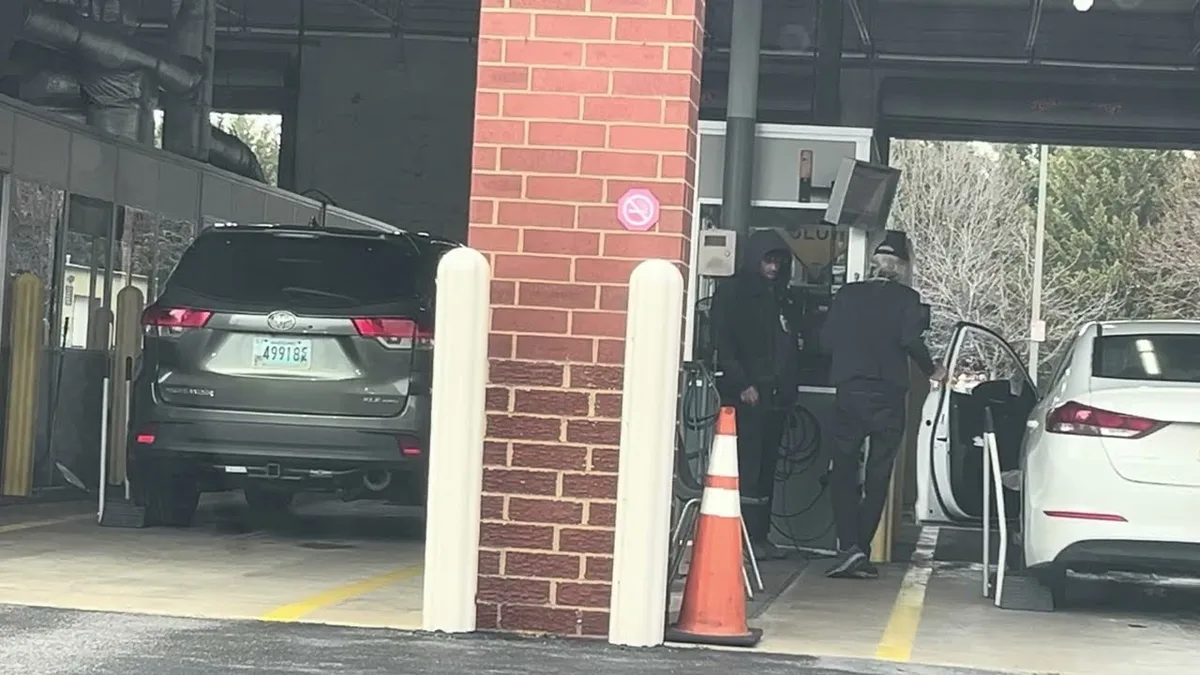
E-Check is the state's emissions testing program. It applies to vehicles registered in seven Northeast Ohio counties: Cuyahoga, Geauga, Lorain, Lake, Medina, Portage, and Summit. If your vehicle is registered in one of those counties, you must pass a tailpipe emissions test before you can renew.
The test results go straight to the BMV's database. The renewal system checks that database before letting you pay.
YouTube / Alif The Explorer (YouTube thumbnail (fair-use with source credit))
The catch is timing. The E-Check station transmits your results electronically, but it can take 24 to 48 hours for the hold to clear. So don't take the test at lunch and try to renew at 2 p.m.
You'll still get blocked. Give it a full business day.
Also, keep in mind that E-Check is not optional. There's no fee you can pay to skip it. The hold stays on your registration until the BMV receives passing test data.
Once it clears, the online portal lets you through. Until then, no renewal online, by mail, or in person. Test first, then renew.
Address Mismatch: The #1 Reason Online Renewals Fail
Your renewal sticker gets mailed to the address on file with the BMV. That sounds obvious, but you'd be surprised how many people forget to update their address after a move. If you've moved and didn't file a change of address with the BMV, your online renewal will fail.
The system doesn't want to mail a sticker to the wrong place.
The fix is simple, but it takes time. You need to update your address with the BMV before you start the renewal. That means filling out an address change form.
You can often do it in person at a deputy registrar, or by mailing a signed form to the BMV. Some address changes can be processed online, but in our research, the system often pushes people to an office for verification.
YouTube / County Portal (YouTube thumbnail (fair-use with source credit))
Here's the important part. The address change needs to be processed before you attempt the renewal. If you try to renew first, you'll hit the same error.
Then you'll need to wait for the address to update, and by then you may be eating into the 90-day renewal window. Update first, renew second. Give yourself a few extra days.
If you're already late and the address is wrong, go in person. A deputy registrar can update the address and hand you a sticker immediately. That's the fastest way to fix a mess.
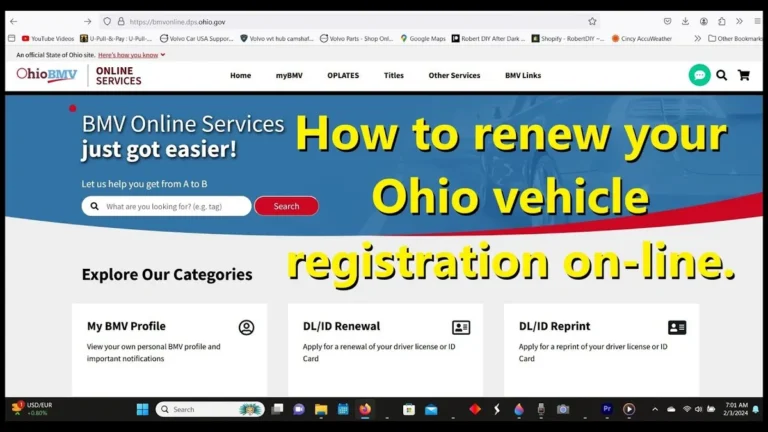
Step-by-Step: How to Renew Online Through OPLATES
The online route is the smoothest when you qualify. Here's exactly what to do, from start to finish.
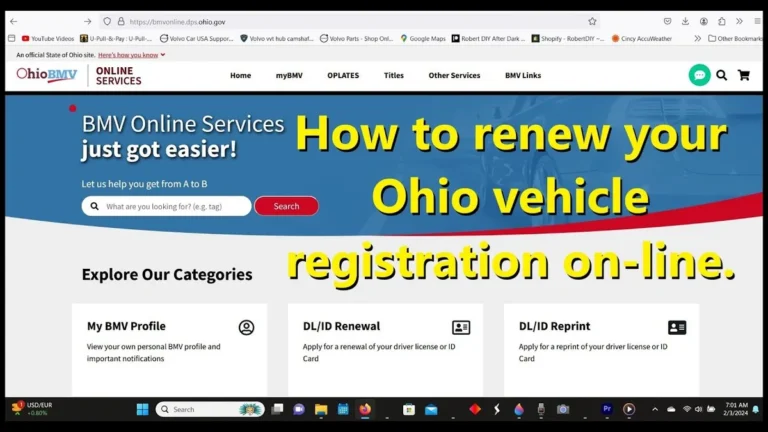
- Go to the official OPLATES portal. The web address is oplates.com.
- Have your renewal notice ready. You'll need the document number printed on it.
- Enter your plate number or VIN if you don't have the notice.
- Review the vehicle details shown on the screen. Check that everything matches.
- Confirm your mailing address. If it's wrong, you'll be redirected to fix it.
- The system will check for holds, including E-Check. If clear, you'll see your renewal amount.
- Pay with a credit card, debit card, or e-check. A service fee applies.
- Save your confirmation number. You'll get it right after payment.
- Wait 7 to 10 business days for your new validation sticker to arrive.

YouTube / Just Ask Jake (YouTube thumbnail (fair-use with source credit))
Don't expect a printable sticker. Ohio doesn't allow that. You'll get a physical sticker in the mail, plus a new registration card.
Until it arrives, keep your confirmation number and proof of payment in the car. If you're pulled over, that's usually enough to show your registration is current.
One more tip. Use a desktop computer or laptop if you can. The portal works on mobile, but it's clunky, and a dropped connection can interrupt payment.
Stick with a stable connection and a screen you can read clearly.
Step-by-Step: Mail-In and In-Person Renewal Routes
Not everyone wants to renew online. Some people don't trust it, some don't have internet, and some have a hold that blocks the portal. For those situations, you have two other options: mail or in person.
Mail-In Renewal
Mail-in renewal is straightforward but slow. You'll find instructions on the back of your renewal notice. Send the notice, a check or money order payable to the Ohio BMV, and any required paperwork to the address printed on the form.
Do not send cash. The BMV recommends mailing at least three weeks before your expiration date.
If you're sending in an E-Check hold, that won't work. The hold must be cleared first. The mail route also has no confirmation number, so you'll be guessing until the sticker arrives.
In our research, the turnaround usually takes two to three weeks.
In-Person Renewal
In-person renewal is the most reliable option when you're in a hurry or have a problem. Find your local deputy registrar office. Bring the renewal notice, proof of insurance, and a form of identification.
Some offices require appointments, so call ahead or check the BMV's website.
In-person renewals give you immediate results. You walk out with your sticker and registration card in hand. There's no waiting on the mail, and any address questions can be resolved on the spot.
The trade-off is the line. Lunchtime and Monday mornings are the worst. Go in the middle of the week if you can.
Cost Breakdown: Fees, Penalties, and Sticker Delivery
Costs vary by vehicle type and county. That's why the renewal notice is your best document for accurate numbers. But here's what the baseline looks like as of 2026.
| Cost Item | Estimated Amount |
|---|---|
| State registration fee (passenger vehicle) | Around $34.50 per year |
| Biennial state fee | Double the annual rate |
| Local permissive taxes | Varies by county, typically $5 to $20 per year |
| Online credit card service fee | Around $2.50 per transaction |
| Late penalty | $10 if renewed after expiration |
So a typical passenger car renewing for two years runs somewhere between $80 and $110 depending on your county. Check the renewal notice for the exact total. It's printed right there.
Sticker delivery takes 7 to 10 business days online. Mail takes longer, and in-person is instant. Plan accordingly.
If your renewal date is less than two weeks away, skip the portal and go in person. You don't want to drive on expired tags while waiting for the mail.
Who Biennial Renewal Is Actually For
Biennial renewal makes sense for most private vehicle owners. If you drive a standard passenger car or light truck in Ohio, the two-year cycle saves you a trip to the BMV and one year of expiration anxiety. Set it and forget it.
It's not for everyone, though. Fleet vehicles, commercial trucks, and trailers stay on annual cycles. Some owners actually prefer yearly renewals because they want the smaller one-time cost.
The two-year fee hits harder in a single payment, even though it averages out.
The best candidates for biennial renewal are people who keep a stable address, own a standard vehicle, and want fewer trips to the registrar. If you move often or drive a vehicle that needs frequent title changes, annual might fit your life better.
Mistakes People Make That Delay Their Tags
Late paperwork is almost always a self-inflicted wound. The biggest mistake is trying to renew online after moving without updating your address first. The system rejects you, you panic, and you lose a week fixing it.
Another classic error is ignoring the E-Check hold. Checking the box before renewing saves a failed payment attempt. Also, don't assume the sticker arrives in two days.
Seven to ten business days is the standard mailing window. If you wait until the week of expiration, you're driving on expired tags while your sticker is still in transit.
Military, Out-of-State, and Specialty Plate Renewals
Ohio has special rules for military members stationed away from home. The BMV allows an active-duty military exemption that extends your registration without penalties. You may also renew by mail with a special form.
Contact the BMV directly for the paperwork, since the online portal often blocks military addresses.
YouTube / Pete Miller (YouTube thumbnail (fair-use with source credit))
Out-of-state civilians face a simpler issue. You renew online exactly like everyone else, but your sticker still mails to the Ohio address on file. Make sure it's one you can actually access.
Specialty plates, including personalized and collegiate plates, usually follow the same renewal path. The fee is higher for some designs. Check your renewal notice for the exact total.
FAQ: Ohio Biennial Registration Renewal Questions
Can I renew my Ohio registration two years at a time online?
Yes. The online OPLATES portal supports biennial renewal for eligible passenger vehicles and light trucks. The system will show your two-year total before payment.
If you have an E-Check hold or address mismatch, the portal blocks the transaction.
What happens if I miss my renewal date?
You'll owe a $10 late penalty plus your regular fees. Ohio gives you a 30-day grace period in most cases, but driving on expired tags after that can lead to a traffic citation. Go in person to resolve it quickly.
How long does it take to get my new sticker?
Online renewals take 7 to 10 business days for sticker arrival. Mail-in renewals take two to three weeks total. In-person renewals give you the sticker immediately.
Plan around the longest wait if you're close to expiration.
Do I need E-Check before renewing?
Only if your vehicle is registered in one of the seven E-Check counties. Test results transmit to the BMV within 24 to 48 hours. You cannot renew online, by mail, or in person until the hold clears.
Can I renew with an expired registration?
Yes, but you'll pay the late fee. The BMV allows renewal even after expiration. If your tags are more than a year expired, you may need a new registration instead of a simple renewal.
Your Move: A Simple Decision Guide
Here's the whole process in four lines. Check your address on file. Fix it if needed.
Check your E-Check status if you live in a covered county. Then renew online if you can, in person if you can't.
The online route is fastest. Mail works if you have time. In person solves every problem at once.
Pick the path that matches your deadline and your situation. Ohio's system is rigid, but it's predictable. Know the rules, and you'll never drive on expired tags again.