ByMax Lee
Ohio Uninsured Motorist Coverage Rules & Penalties
Ohio uninsured motorist coverage requirements and penalties catch most drivers off guard until they need to use that coverage. If you’ve ever been hit by a driver with no insurance, you know how fast repair bills and medical costs pile up with no one to pay them. Many Ohio drivers don’t realize their standard policy won’t cover those gaps unless they opt into the right add-ons.
Ohio law requires all drivers to carry minimum liability coverage of $25,000 per person for bodily injury, $50,000 per accident for bodily injury, and $25,000 for property damage as of 2026. Uninsured motorist coverage is not required by state law, but failing to carry it leaves you on the hook for costs the at-fault driver can’t cover. Let’s break down exactly what’s required, what’s optional, and what penalties apply if you don’t follow the rules.
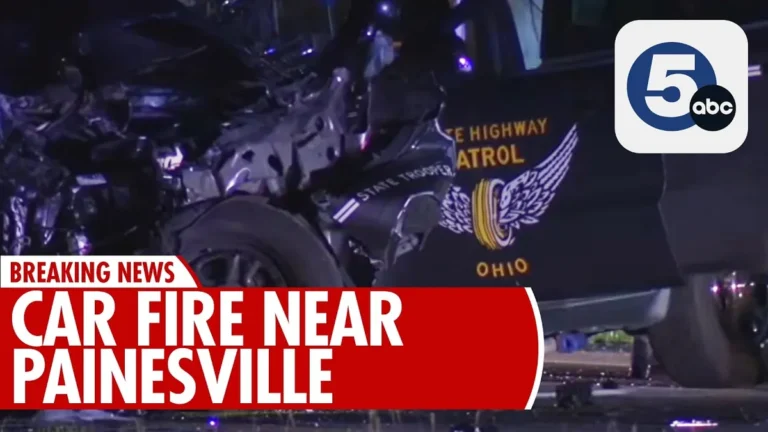
YouTube / WKYC Channel 3 (YouTube thumbnail (fair-use with source credit))
Quick Answer
Ohio uninsured motorist coverage requirements and penalties center on two core rules. Ohio law does not require UM or UIM coverage for drivers. All drivers must carry minimum liability insurance.
Penalties for driving without insurance include license suspension and fines. UM coverage pays your bills if an uninsured driver hits you. UIM coverage covers gaps when the at-fault driver’s limits are too low.
What Ohio’s Uninsured Motorist Coverage Actually Covers
Uninsured motorist coverage comes in two distinct forms for Ohio drivers, each covering different types of losses. Uninsured motorist bodily injury (UMBI) covers your medical bills, lost wages, and pain and suffering if an uninsured driver causes a crash. This coverage also applies if you are a passenger in a car hit by an uninsured driver, or if you are struck by an uninsured driver as a pedestrian or cyclist.
Uninsured motorist property damage (UMPD) pays for repairs to your vehicle if the at-fault driver has no insurance. UMPD policies almost always come with a deductible, typically ranging from $250 to $1,000, so factor that out-of-pocket cost into your coverage choice. UM coverage does not pay for damage to your own car if you are at fault for the crash.
For that protection, you need to add collision coverage to your policy, which covers repairs regardless of who caused the accident. UM coverage also does not cover damage to other people’s property or vehicles, which is covered by your property damage liability coverage.
Who Needs UM/UIM Coverage Most?
Some Ohio drivers carry a higher risk of being hit by an uninsured driver than others. Drivers in urban areas with high uninsured rates, rideshare drivers who spend more time on the road, and drivers with leased or financed vehicles benefit most from carrying this add-on. Even if you have health insurance, UM coverage pays for pain and suffering and lost wages, which health insurance does not cover.
Ohio’s Legal Requirements: What’s Mandatory vs. Optional

YouTube / CanadianMotorVibe (YouTube thumbnail (fair-use with source credit))
Ohio’s Financial Responsibility Law, outlined in Ohio Revised Code § 4509.101, sets clear rules for what drivers must carry to legally operate a vehicle in the state. The table below breaks down what’s required versus what’s optional for most Ohio drivers, so you can see exactly where UM/UIM fits in.
| Coverage Type | Required by Ohio Law? | Minimum Limit | What It Covers |
|---|---|---|---|
| Bodily Injury Liability | Yes | $25,000 per person / $50,000 per accident | Other people’s medical bills if you cause a crash |
| Property Damage Liability | Yes | $25,000 per accident | Other people’s property damage if you cause a crash |
| Uninsured Motorist Bodily Injury | No | Policyholder chooses | Your medical bills if an uninsured driver hits you |
| Underinsured Motorist Bodily Injury | No | Policyholder chooses | Gaps when the at-fault driver’s BI limits are lower than your costs |
| Uninsured Motorist Property Damage | No | Policyholder chooses | Your vehicle repair costs if an uninsured driver hits you |
Insurers are required to offer UM and UIM coverage to every policyholder, per Ohio Department of Insurance guidelines. If you choose to reject this coverage, Ohio law requires you to sign a written waiver form acknowledging you understand the risks of going without it. Drivers who operate without the mandatory liability coverage face penalties including license suspension, fines, and the requirement to file an SR-22 certificate of financial responsibility with the Ohio BMV to get their license reinstated.
The Ohio BMV also randomly verifies insurance status for all registered drivers in the state, so you cannot avoid detection by skipping coverage.
Ohio drivers are required to carry proof of insurance in their vehicle at all times, and must show it to law enforcement if requested during a traffic stop. Failing to show proof of insurance results in a fine even if you are actively covered, so keep your insurance card in your glovebox or digital wallet app at all times. An SR-22 is a certificate of financial responsibility that proves you carry the state minimum required insurance.
It is typically required for 3 to 5 years after a coverage violation, and it will result in higher insurance premiums for that period.
Penalties for driving without insurance increase significantly for repeat offenses. A second offense within 5 years results in a 1-year license suspension and a $500 fine, plus court costs. Third and subsequent offenses can lead to criminal misdemeanor charges, longer suspensions, and impoundment of your vehicle.
How Uninsured (UM) and Underinsured (UIM) Coverage Work in Ohio

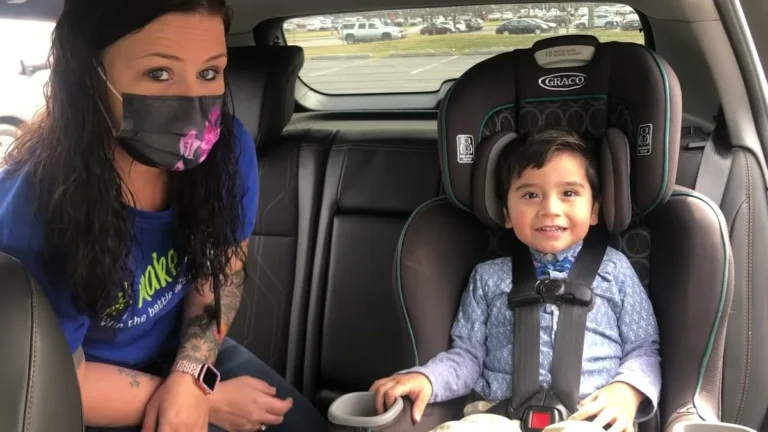
YouTube / John Brooks Cameron & Associates (YouTube thumbnail (fair-use with source credit))
The difference between UM and UIM coverage comes down to the at-fault driver’s insurance status, and each applies in specific scenarios. UM coverage applies only when the driver who caused the crash has no insurance at all. It also applies to hit-and-run crashes, as long as you can provide proof the other driver fled the scene, such as a police report.
If the at-fault driver has insurance but their limits are too low to cover your costs, UIM coverage fills the gap. For example, if you have $100,000 in medical bills after a crash, the at-fault driver only has the state minimum $25,000 bodily injury limit. Your UIM coverage pays the remaining $75,000, up to your policy’s limit.
You cannot collect more than your total policy limit, even if your costs exceed that amount. Most Ohio drivers carry UM and UIM coverage at the same limits as their bodily injury liability coverage for consistent protection.
Some Ohio drivers can stack UM/UIM limits across multiple policies, such as if you have coverage on two vehicles, to increase your total payout limit. We cover stacking in detail later in this guide.
What Happens If an Uninsured Driver Hits You in Ohio?
If an uninsured driver hits you in Ohio, you are responsible for all your own costs unless you have UM or UIM coverage on your policy. Ohio is an at-fault state, so the at-fault driver’s insurance is supposed to pay for all damages from a crash. When that driver has no insurance, you have two paths to recover costs: file a claim with your own insurer under your UM/UIM coverage, or sue the at-fault driver personally.
Suing an uninsured driver is almost never worth the time or cost. Most uninsured drivers lack the assets to pay a court judgment, so you may spend thousands on legal fees with no payout. If you don’t carry UM coverage, you will cover all medical bills, repair costs, and lost wages out of pocket.
Per the Insurance Information Institute, average bodily injury claims from car crashes exceed $20,000, a cost most uninsured drivers cannot cover. Ohio has an estimated 12% to 15% of uninsured drivers on the road, so the risk of hitting an uninsured driver is far higher than many people realize.
If the driver who hit you flees the scene, you can still file a UM claim as long as you have a police report confirming the crash was a hit-and-run. Ohio requires hit-and-run crashes to be reported to police within 24 hours to qualify for UM coverage. Uninsured driver rates are higher in Ohio’s major urban areas, including Cleveland and Columbus, where up to 18% of drivers lack coverage, compared to 10% in rural parts of the state.
Common Reasons UM Claims Are Denied
Ohio insurers deny UM claims for a few common reasons. If you signed a waiver rejecting UM coverage, your claim will be denied automatically. If you waited more than 24 hours to report the crash to your insurer, your policy may void your claim.
Failing to provide enough proof the other driver was uninsured, such as a police report or insurance verification, also leads to denials.
Penalties for the Uninsured Driver
The uninsured driver who hits you faces their own penalties under Ohio law. First-time offenders face a 90-day license suspension, a $100 reinstatement fee, and the requirement to file an SR-22 for 3 years. Repeat offenders face longer suspensions, higher fines up to $500, and possible criminal charges for repeat violations.
These penalties do not erase your right to sue the driver or file a UM claim with your own insurer.
Step-by-Step: Filing an Uninsured Motorist Claim in Ohio
YouTube / Scott Kuboff (YouTube thumbnail (fair-use with source credit))
Filing an Ohio UM claim follows a strict timeline and documentation requirement to avoid denial. You must notify your insurer within 24 hours of the crash, or as soon as physically possible if you are hospitalized. Your insurer will require a copy of the police report to confirm the other driver was uninsured or fled the scene.
Gather all crash-related documents before you submit your claim. This includes medical bills, repair estimates, and proof of lost wages if you are claiming those damages. If the at-fault driver was uninsured, your insurer may ask for their insurance verification report from the Ohio BMV.
Your insurer will investigate the claim to confirm the other driver had no coverage. If you signed a waiver rejecting UM coverage, your claim will be denied immediately. Approved claims pay up to your policy limit, minus any applicable deductible for UMPD claims.
Hit-and-Run Accidents: How Ohio’s UM Coverage Applies
Ohio law treats hit-and-run crashes as uninsured motorist incidents for coverage purposes. You can file a UM claim as long as you reported the crash to police within 24 hours of it occurring. Your insurer will require a copy of the police report to process the claim, no exceptions.
UM coverage applies to hit-and-run crashes even if you never identify the other driver. The policy only requires proof the crash happened and the other driver fled. This coverage pays for your medical bills, lost wages, and vehicle repairs if you carry UMPD.
Hit-and-run claims are denied if you wait more than 24 hours to file a police report. They are also denied if you were committing a crime at the time of the crash, such as driving without a valid license.
Stacking vs. Non-Stacking: How to Maximize Your Coverage
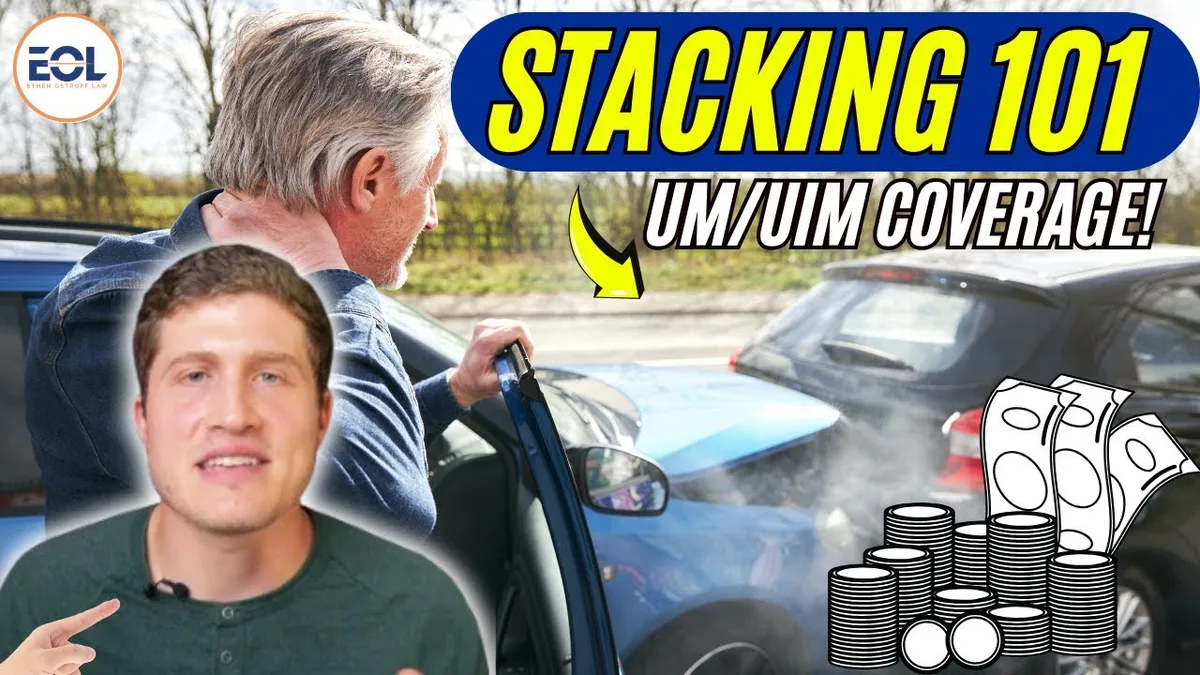
YouTube / Ethen Ostroff (YouTube thumbnail (fair-use with source credit))
Stacking lets you combine UM/UIM limits from multiple policies or vehicles on your account. If you have two cars each with $50,000 in UMBI limits, stacking gives you $100,000 total per accident. Non-stacking policies limit you to the highest single limit on your account, no matter how many vehicles you insure.
Ohio allows stacking only if you pay an extra premium for it, or if your policy explicitly includes it as a feature. Some insurers offer automatic stacking for married couples who combine policies on the same account. Stacking costs an extra $20 to $50 per year on average, per 2026 Ohio insurance rate data.
| Coverage Type | Total Limit With 2 Vehicles ($50k Each) | Extra Cost Per Year |
|---|---|---|
| Non-stacking | $50,000 per accident | $0 |
| Stacking | $100,000 per accident | $20–$50 |
Stacking makes the most sense for drivers with multiple vehicles, high medical risk, or significant assets to protect. If you only have one vehicle, stacking offers no benefit and is not worth the extra cost.
Ohio’s Penalties for Driving Without Insurance
YouTube / Flying With Luxury (YouTube thumbnail (fair-use with source credit))
Ohio penalties for driving without insurance apply to any driver operating a vehicle on public roads, even if you have a lapse of just a few days. The Ohio BMV uses an electronic verification system to cross-check insurance policies against all registered vehicles in the state. Random checks catch most lapses before they lead to a traffic stop.
First-time offenders face a 90-day license suspension and a $100 reinstatement fee. You will also be required to file an SR-22 certificate of financial responsibility for 3 to 5 years. The SR-22 will raise your insurance premiums by an average of 30% to 50% during that period.
Repeat offenses carry far steeper penalties. A second offense within 5 years leads to a 1-year license suspension and a $500 fine, plus court costs. Third and subsequent offenses can result in misdemeanor criminal charges, vehicle impoundment, and community service requirements.
How Much Uninsured Motorist Coverage Do You Need in Ohio?
Most Ohio drivers should carry UM/UIM limits that match their bodily injury liability limits. If you carry the state minimum $25,000 per person / $50,000 per accident liability limits, matching UM limits give you consistent protection across all crash scenarios. Drivers with higher liability limits, such as $100,000 per person, should carry matching UM/UIM limits to avoid gaps.
Consider your personal financial situation when choosing your limits. If you have significant assets, such as a home or savings, higher UM limits protect those assets from lawsuits if you are seriously injured by an uninsured driver. Lower limits leave you on the hook for costs that exceed your policy payout.
The Ohio Department of Insurance recommends carrying at least $50,000 per person in UMBI coverage for most drivers. This covers the average cost of a moderate injury crash without leaving you with large out-of-pocket bills. Drivers with high medical costs or frequent passengers, such as parents with young children, should consider higher limits.
Cost of UM/UIM Coverage in Ohio: Is It Worth It?
UM/UIM coverage is one of the most affordable add-ons to an Ohio auto policy. The average cost for $50,000 per person / $100,000 per accident in UM/UIM coverage is $50 to $150 per year. That’s less than $15 per month for protection that could save you tens of thousands in medical bills.
Higher limits cost more but still offer strong value. Increasing to $100,000 per person / $300,000 per accident typically adds $50 to $100 per year. The cost difference is minimal compared to the financial risk of being hit by an uninsured driver.
Common Mistakes Ohio Drivers Make With UM/UIM Coverage
Many drivers reject UM/UIM to save a few dollars, not realizing the risk they’re taking. Without it, you’re personally responsible for all costs if an uninsured driver hits you. Another common mistake is carrying low limits that don’t match your liability coverage, leaving gaps in protection.
Some drivers assume their health insurance covers everything after a crash. Health insurance won’t pay for pain and suffering or lost wages, which UM coverage does. Others forget to report crashes to police within 24 hours, which voids their ability to file a UM claim.
When to Reject Uninsured Motorist Coverage (And When You Shouldn’t)
You might consider rejecting UM/UIM if you have very limited assets and no dependents. In this case, the financial risk may be lower than the cost of the coverage. However, this is rare and generally not recommended.
Most Ohio drivers should keep UM/UIM coverage. If you have a family, a home, or any savings, the protection far outweighs the cost. Even if you’re a safe driver, you can’t control whether others on the road are insured.
Ohio UM/UIM FAQs: Real Questions, Clear Answers
Does Ohio require uninsured motorist coverage?
No, Ohio does not require UM or UIM coverage. It is optional, but insurers must offer it to you. You must sign a waiver to reject it.
What’s the difference between UM and UIM?
UM covers you if the at-fault driver has no insurance. UIM covers gaps when the at-fault driver’s insurance is too low to pay your full costs.
How do I file a UM claim in Ohio?
Report the crash to police within 24 hours. Notify your insurer immediately and provide the police report. Submit medical bills and repair estimates.
Can I stack UM coverage in Ohio?
Yes, but only if your policy allows it. Stacking combines limits from multiple vehicles or policies for higher payouts.
What happens if I’m hit by an uninsured driver and don’t have UM coverage?
You’ll be responsible for all your own medical bills, lost wages, and repair costs. You can sue the driver, but most uninsured drivers lack assets to pay.
How much UM coverage do I need in Ohio?
Most experts recommend matching your bodily injury liability limits. For most drivers, $50,000 per person / $100,000 per accident is a good baseline. Higher limits make sense if you have significant assets or high medical risks.
Final Takeaway: The Smart Ohio Driver’s Checklist
Carry at least the state minimum liability coverage to stay legal. Add UM/UIM coverage to protect yourself from uninsured drivers. Match your UM/UIM limits to your liability limits for consistent protection.
Report any crash to police within 24 hours to preserve your right to file a UM claim. Keep proof of insurance in your vehicle at all times to avoid fines. Consider stacking if you have multiple vehicles or high assets to protect.
Review your policy annually to ensure your limits still meet your needs. If you reject UM/UIM, sign the waiver knowing you’re taking on significant financial risk. Drive safe, but plan for the worst-case scenario on Ohio roads.
Carry at least the state minimum liability coverage to stay legal. Add UM/UIM coverage to protect yourself from uninsured drivers. Match your UM/UIM limits to your liability limits for consistent protection.
Report any crash to police within 24 hours to preserve your right to file a UM claim. Keep proof of insurance in your vehicle at all times to avoid fines. Consider stacking if you have multiple vehicles or high assets to protect.
Review your policy annually to ensure your limits still meet your needs. If you reject UM/UIM, sign the waiver knowing you’re taking on significant financial risk. Drive safe, but plan for the worst-case scenario on Ohio roads.