Dealing with US Virgin Islands license plate frame law and territory name visibility requirements can feel confusing, especially if you are used to mainland rules. One wrong frame choice and you could face a fine or a failed inspection. The good news is that the rules are straightforward once you know what to look for.
USVI law requires that your license plate territory name and registration details stay fully visible at all times. Frames that cover even a sliver of that text can trigger a citation. Let us walk through exactly what the law says and how to stay compliant.
Quick Answer: Are License Plate Frames Legal in US Virgin Islands?
Yes, you can use a license plate frame in USVI, but it must not obscure any required text. The territory name "U.S. Virgin Islands" and all registration numbers must remain completely visible.
Frames that block even a small portion of this information violate local law and can result in fines.
Why This Law Matters More Than You Think

Many drivers treat license plate frames as a purely cosmetic choice. They buy one at a gas station or online and snap it on without thinking twice. That approach works fine in most states, but the US Virgin Islands takes plate visibility seriously.
The territory operates under its own vehicle codes, which do not always align with mainland standards. The territory name is not decoration, it is a legal identifier, and the law treats it that way.
This matters because law enforcement on the islands actively enforces these rules during routine traffic stops. A frame that looks fine to you might be the reason an officer pulls you over or writes you a ticket. Understanding the specifics upfront saves you time, money, and hassle.
The USVI Bureau of Motor Vehicles outlines these requirements under Title 20 of the Virgin Islands Code, which covers motor vehicle regulations.
USVI License Plate Frame Law Explained
At its core, the USVI license plate frame law exists to ensure that every vehicle on the road displays its registration information clearly. The territory name and plate numbers serve as identification for law enforcement, toll systems, and other official purposes. When a frame blocks any part of that information, it undermines the whole system.
The law does not ban frames outright. You are free to use one if it meets the visibility standard. The key requirement is simple: every character on the plate, including the territory name at the top, must be readable without removing the frame.
What the Law Actually Says About Visibility
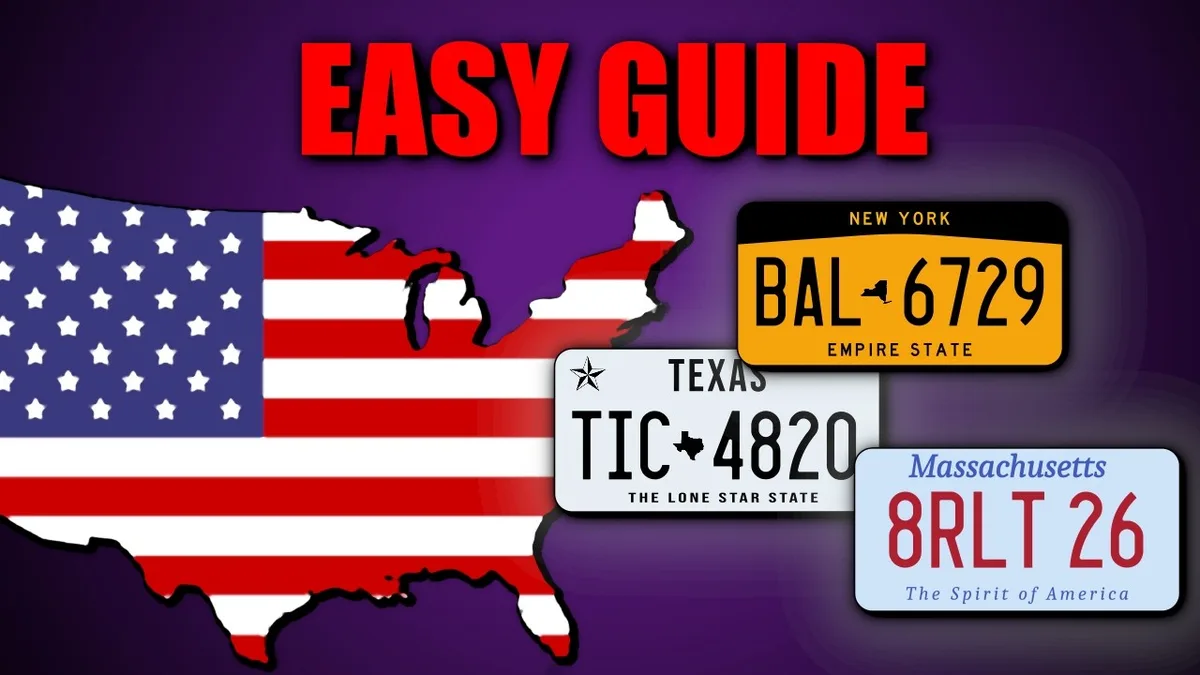
The visibility rule in USVI is not a suggestion. It is a hard requirement. Your license plate must display the full territory name and the complete registration number at all times.
A frame that covers even the edge of the text fails this standard.
This is different from how some states handle the issue. A few mainland states allow frames that cover the state name as long as the registration numbers remain clear. USVI does not.
The territory name carries equal weight to the plate number in the eyes of the law.
Territory Name Requirements in US Virgin Islands
The territory name on a USVI license plate reads "U.S. Virgin Islands." It appears at the top of the plate in bold lettering. This text is not optional, it is part of the official plate design and carries legal significance.
When you install a frame, that top line must remain completely unobstructed. Some frames are designed with a narrow profile that avoids the edges entirely. Others are bulkier and intentionally cover the territory name as a branding feature.
Those bulkier frames are the ones that cause trouble in USVI.
The requirement applies to both the front and rear plates if your vehicle carries both. A frame on the rear plate that hides the territory name is just as non-compliant as one on the front.
Registration Sticker and Number Plate Rules
Beyond the territory name, your registration sticker and plate numbers also fall under the visibility rule. The sticker goes on the upper or lower corner of the plate depending on the design year. A frame that covers it creates the same compliance problem as one that covers the territory name.
Plate numbers must be fully readable as well. This means no frames with raised lettering that blocks part of a digit. It also means no reflective or tinted materials on the frame that distort the numbers when light hits them.
Common License Plate Frame Mistakes in USVI
Most people do not break USVI license plate frame law on purpose. They buy a frame that looks good, install it, and move on. The problem is that frames sold online or in retail stores are often designed for general use, not territory-specific compliance.
Frames That Obscure the Territory Name

This is the most common violation and the easiest to avoid. Frames marketed as "decorative" or "custom" frequently cover the top portion of the plate where the territory name sits. Some frames even feature their own branding over that area.
If a frame covers any part of "U.S. Virgin Islands," it is non-compliant. There is no exception for style or intent.
Overly Thick or Decorative Frames
Thick frames with raised edges create another category of problems. Even if the frame does not directly cover the territory name, the extra bulk can shadow or obscure the upper portion of the plate numbers. This is especially true under certain lighting conditions.
Decorative frames with cutouts, logos, or text overlays also fall into this trap. The design might look sharp, but if it interferes with readability, it does not meet USVI standards.
Tinted or Reflective Frame Problems
Frames made with tinted or reflective materials introduce a third type of violation risk. When sunlight hits a reflective frame, it can create glare that makes the plate numbers harder to read. A tinted frame can darken the plate surface enough to interfere with camera recognition or visual identification.
The safest approach is to avoid tinted or reflective frames entirely. Stick to matte finishes in neutral colors like black, silver, or clear.
Risks of Non-Compliant License Plate Frames
Using a non-compliant frame in USVI is not a harmless oversight. The consequences can be real and annoying, ranging from fines to registration headaches.
Fines and Penalties You Could Face
The most immediate risk is a citation. Officers on the islands have the authority to issue fines for plates that do not meet visibility requirements. The amount varies depending on the severity and whether it is a first offense.
A fine is just the starting point. If you receive a citation, you will also need to remove the non-compliant frame and replace it with a legal one. That means double the cost, plus the time and effort involved.
Registration and Inspection Issues
Non-compliant frames can also cause problems during vehicle registration or inspection. If an inspector sees a frame that obscures the territory name or registration sticker, they can flag the vehicle as not meeting standards.
This means you might have to fix the issue before you can complete your registration. That is a delay you do not want, especially if you are working with tight deadlines or rental return timelines.
For rental car drivers, this is worth paying attention to. If you return a car with a non-compliant frame installed by the previous renter, you could be held responsible for the violation.
Law Enforcement Encounters
A non-compliant plate can become the reason for a traffic stop. Officers are trained to look for registration issues, and an obstructed plate is an easy trigger. Once stopped, you might face a citation, a warning, or both, depending on the officer and the circumstances.
Even a friendly warning is still a hassle. It means pulled over, paperwork checked, and your day interrupted, all because of a frame.
How to Choose a Compliant License Plate Frame in USVI

Start with the basics. A compliant frame must be thin enough to avoid covering any part of the plate. Look for frames labeled as "low-profile" or "slim-fit." These are designed to sit flush with the plate edges without overlapping the text.
Material matters too. Clear acrylic or matte metal frames are your safest bets. They do not create glare or shadows that could obscure the numbers.
What to Look for When Buying a Frame
Check the frame dimensions before purchasing. The inner opening should match or exceed the standard USVI plate size of 12 inches by 6 inches. Anything smaller risks covering the edges.
Also, inspect the frame for any built-in text or logos. If the design includes wording along the top or bottom, it might interfere with the territory name or registration numbers. Simple, unadorned frames are the easiest to verify.
Frame Specifications That Meet USVI Law
Here is a quick reference for compliant frames:
| Feature | Compliant Choice | Non-Compliant Choice |
|---|---|---|
| Profile | Low-profile, slim-fit | Thick, raised edges |
| Material | Clear acrylic, matte metal | Tinted, reflective |
| Design | Plain, no text | Branded, decorative text |
| Inner Opening | 12" x 6" or larger | Smaller than plate size |
Where to Buy Legal Frames in US Virgin Islands
Local auto parts stores in St. Thomas, St. John, and St.
Croix typically carry compliant frames. You can also find them at USVI Bureau of Motor Vehicles offices during registration. If ordering online, stick to reputable sellers and verify the dimensions before purchasing.
Installation and Inspection Checklist
Proper Frame Installation Steps
First, remove any existing frame and clean the plate surface. Dirt or residue can make the new frame sit unevenly. Then, align the frame so it sits flush with the plate edges without overlapping any text.
Secure the frame using the provided screws or clips. Do not overtighten, as this can warp the frame and cause it to cover part of the plate. A snug fit is all you need.
What Inspectors Check During Vehicle Registration

Inspectors look for three things. The territory name must be fully visible. The registration numbers must be unobstructed.
The registration sticker must be clearly readable.
They will also check that the frame does not create glare or shadows that could interfere with identification. If any of these checks fail, you will need to remove or replace the frame before passing inspection.
Quick Self-Inspection Tips
Step back ten feet from your vehicle. Can you read every character on the plate without squinting? If not, the frame is likely non-compliant.
Check the plate at different angles and under various lighting conditions. If the territory name or numbers disappear or become hard to read at any point, the frame needs to go.
When to Seek Legal or BMV Guidance
Contacting the USVI Bureau of Motor Vehicles
If you are unsure whether your frame meets the requirements, the USVI BMV can provide clarification. Visit their office in person or call ahead with your frame details. They can confirm compliance before you install it.
When to Consult a Legal Professional
Legal advice becomes necessary if you receive a citation and believe it was issued in error. A traffic attorney familiar with USVI vehicle codes can review your case and help you understand your options.
For most drivers, though, the BMV is the first and best resource. They handle these questions daily and can provide clear, actionable answers.
Final Checklist: Staying Compliant in US Virgin Islands
Here is your quick compliance checklist:
- Territory name "U.S. Virgin Islands" is fully visible
- All plate numbers are unobstructed
- Registration sticker is clearly readable
- Frame is low-profile and does not overlap text
- Frame material is non-reflective and non-tinted
Run through this list before hitting the road. If every item checks out, you are good to go. If not, swap the frame before you risk a citation.
Frequently Asked Questions
Can I use a decorative license plate frame in USVI?
Yes, you can use a decorative frame as long as it does not cover the territory name, plate numbers, or registration sticker. The frame must leave every required element fully visible.
What happens if my frame covers part of the territory name?
If your frame covers any part of the "U.S. Virgin Islands" text, it is considered non-compliant. You could receive a citation, be required to remove the frame, and face additional fees.
Are there different rules for rental cars in USVI?
No, the same visibility requirements apply to rental cars. If you install a frame on a rental vehicle, it must meet the same standards as a privately owned car.
Do frame laws apply to all vehicle types in USVI?
Yes, the visibility requirements apply to all registered vehicles in USVI, including cars, trucks, motorcycles, and commercial vehicles. There is no exemption based on vehicle type.