ByMax Lee
Louisiana Trailer Registration Rules Explained
Louisiana trailer registration requirements vary by trailer type, weight, ownership, and intended use. If you’ve ever been unsure whether your trailer needs a title, plate, or just a quick form, you’re not alone, the rules aren’t one-size-fits-all.
As of 2026, the Louisiana Office of Motor Vehicles (OMV) requires registration for most trailers over 3,000 lbs GVWR, but even lighter ones may need it depending on how you use them.
YouTube / How To Louisiana (YouTube thumbnail (fair-use with source credit))
Quick Answer
Louisiana trailer registration requirements vary by trailer type, weight, ownership, and intended use. Trailers under 3,000 lbs GVWR often skip titling but may still need registration. Trailers 3,000 lbs and over require both title and registration.
Farm trailers may qualify for exemptions if used solely for agriculture.
How Louisiana Classifies Trailers for Registration
The Louisiana OMV groups trailers by how they’re built and used. The first split is weight: anything at or above 3,000 lbs GVWR must be titled and registered. Below that, the rules depend on whether it’s homemade, commercial, or for personal use.
GVWR (Gross Vehicle Weight Rating) is the max loaded weight the trailer is designed to carry, as set by the manufacturer. If you’re unsure, check the trailer’s data plate or owner’s manual.
Weight Thresholds That Change the Rules
| Weight Class | Title Required? | Registration Required? | Notes |
|---|---|---|---|
| Under 3,000 lbs GVWR | No | Sometimes | Depends on use and ownership |
| 3,000 lbs and over | Yes | Yes | Mandatory for all types |
For trailers under 3,000 lbs, registration is often required if you’re using it on public roads. The OMV treats these as light trailers, but you still need to confirm based on your parish’s interpretation.
Trailer Types and Their Specific Requirements
Not all trailers follow the same path. Here’s how the most common types are handled in Louisiana:
- Utility Trailers: Most under 3,000 lbs need registration but not a title. Over 3,000 lbs require both.
- Boat Trailers: Same as utility trailers, but check for additional waterway access permits.
- Travel Trailers & Campers: Always require title and registration, regardless of weight.
- Commercial Trailers: Must be titled and registered, with possible additional fees based on use.
- Farm Trailers: Often exempt if used exclusively for agricultural purposes on private property. Public road use may still require registration.
- Homemade Trailers: Need a VIN inspection before registration, even if under 3,000 lbs.
Wikimedia Commons / PDXPhotoGuy84 (CC BY-SA)
Step-by-Step: How to Register Your Trailer in Louisiana
Start by confirming your trailer’s weight and type. If it’s 3,000 lbs or over, you’ll need a title and registration. For lighter trailers, check if your intended use triggers registration.
Gather your documents:
- Proof of ownership (title, bill of sale, or manufacturer’s certificate)
- Valid Louisiana driver’s license or ID
- Proof of insurance (if required for your trailer type)
- Completed Application for Certificate of Title (Form DPSMV 1799)
Visit your local Louisiana OMV office or authorized parish tax collector. Submit your paperwork and pay the fees, which vary by weight and type.
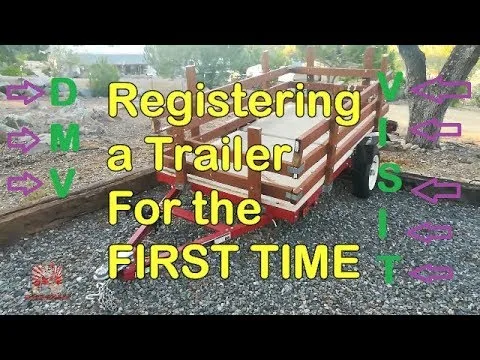
YouTube / RANDOMFIX (YouTube thumbnail (fair-use with source credit))
Documents You’ll Need (and Where to Get Them)
You’ll always need proof of ownership. For titled trailers, bring the current title. For new trailers, the manufacturer’s certificate of origin works.
Homemade trailers require a VIN inspection report from a law enforcement officer or licensed dealer.
A valid Louisiana driver’s license or state ID is mandatory. If the trailer is commercial, you may need a federal USDOT number or state motor carrier permit. Check with the Louisiana OMV for the latest requirements.
Fees: What You’ll Pay Based on Trailer Type and Weight
Registration fees scale with weight. Trailers under 2,000 lbs cost $8 for one year or $16 for two years. From 2,001 to 4,000 lbs, it’s $12 for one year or $24 for two.
Above 4,000 lbs, fees jump to $20 for one year or $40 for two.
Title fees are flat: $68.50 for all trailers requiring a title. Late fees apply if you miss the renewal deadline, typically adding $10 to $25. Farm trailers may qualify for reduced fees if they meet exemption criteria.
Special Cases That Trip People Up
No Title? Here’s What to Do
If your trailer lacks a title, you’ll need to prove ownership. A notarized bill of sale from the previous owner often suffices for lighter trailers. For heavier ones, the OMV may require a surety bond or court order.
Out-of-State Trailers Moving to Louisiana
You have 30 days to register an out-of-state trailer after establishing residency. Bring the out-of-state title and registration, plus a VIN inspection if the trailer is homemade or lacks a Louisiana-compliant VIN.
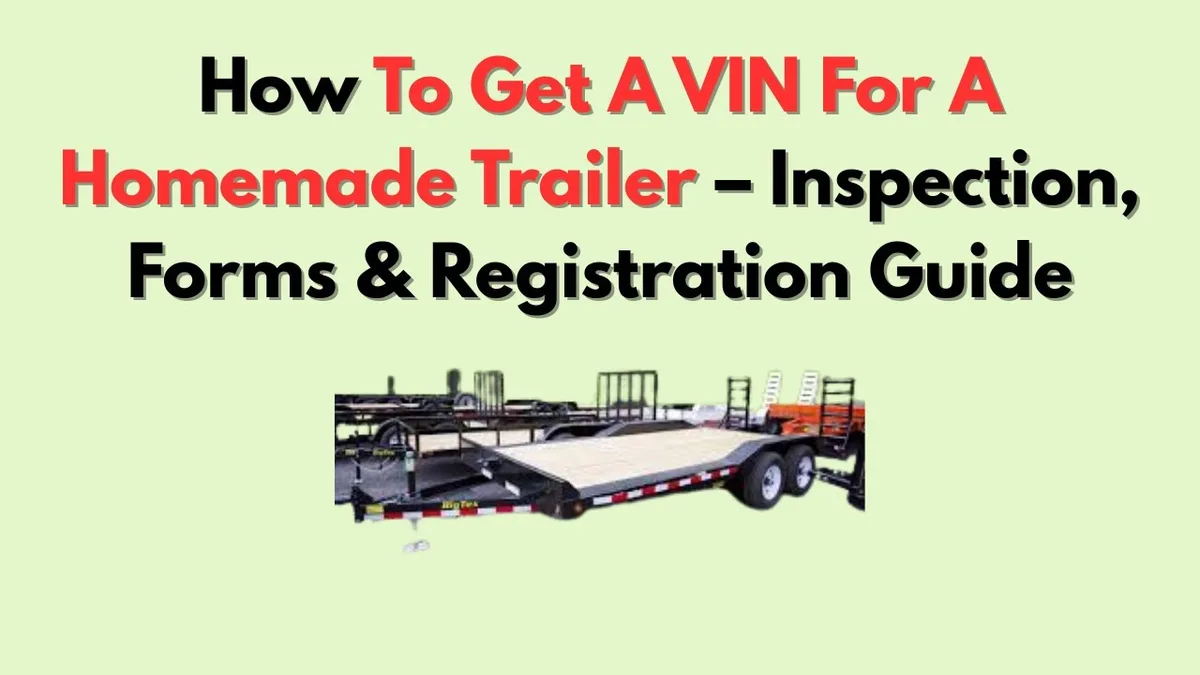
YouTube / Network Ecology (YouTube thumbnail (fair-use with source credit))
Transferring Ownership
Both buyer and seller must sign the title’s assignment section. Submit it to the OMV with a completed application and fee. If the title is lost, the seller must request a duplicate before the transfer.
Temporary Permits for Short-Term Use
Need to move an unregistered trailer? A 30-day temporary permit costs $10. It’s valid only for moving the trailer to a registration location or out of state.
You can’t use it for regular operation.
Farm Trailer Exemptions: Do You Qualify?
Farm trailers are exempt from registration if used exclusively for agricultural purposes. This includes transporting farm products, equipment, or supplies between farms or to market. The exemption doesn’t apply if you’re hauling for hire or using public roads for non-farm trips.
The trailer must display the farm name and address on both sides in letters at least 3 inches high. If you’re unsure, the OMV can clarify based on your specific use case.
Common Mistakes That Lead to Fines or Rejections
Submitting incomplete paperwork is the top reason for rejection. Double-check that all forms are signed and notarized where required. Missing the weight threshold is another common error, always verify your trailer’s GVWR.
Using a farm exemption for non-agricultural purposes can result in fines. If you’re pulled over, you’ll need to prove the trailer’s use matches the exemption. Also, homemade trailers without a VIN inspection will be turned away at the OMV.
What Happens If You Don’t Register?
You risk a fine if caught operating an unregistered trailer on public roads. Law enforcement can pull you over and issue a citation, typically starting at $50 but increasing for repeat offenses.
Worse, an unregistered trailer may be towed and impounded. You’ll pay towing fees plus storage costs before you can reclaim it. Insurance claims can also be denied if the trailer wasn’t properly registered at the time of an accident.
Where to Go: Louisiana OMV vs. Parish Offices
Most registrations happen at your local Louisiana OMV office. These handle titles, plates, and complex cases like out-of-state transfers. Some parishes also allow registration at the tax collector’s office for convenience.
Check the OMV office locator for hours and services. Rural areas may have limited appointments, so call ahead. Bring all documents and payment, most locations accept cash, check, or card.
FAQs About Louisiana Trailer Registration
Do I need a title for a trailer under 3,000 lbs?
No, Louisiana doesn’t require a title for trailers under 3,000 lbs GVWR. You may still need registration for road use.
How do I get a VIN for a homemade trailer?
Schedule a VIN inspection with a law enforcement officer or licensed dealer. They’ll verify the trailer’s construction and assign a VIN. Bring proof of ownership materials like receipts for parts.
Can I register a trailer without a title?
Yes, if it’s under 3,000 lbs and you have proof of ownership. For heavier trailers, you’ll need to apply for a bonded title or court order.
How much does it cost to register a boat trailer?
Boat trailers follow the same weight-based fee structure as utility trailers. Under 2,000 lbs costs $8 for one year or $16 for two. Fees increase with weight, topping out at $40 for two years on heavier trailers.
How long is Louisiana trailer registration valid?
Most registrations last one or two years, depending on the fee you pay. Commercial trailers may have different renewal cycles.
What’s the penalty for late registration?
Late fees start at $10 and increase the longer you wait. After 30 days, you may face additional penalties or require a reinstatement process.