Maryland vehicle registration plate colors and special designations can be confusing if you're new to the state or just renewing your tags. The Maryland Motor Vehicle Administration (MVA) offers a variety of plate types, each with distinct colors, designs, and eligibility rules. Standard plates feature a white background with dark blue and black text, but specialty plates range from commemorative designs to EV-specific markings.
As of 2026, the MVA requires all plates to meet strict display rules, and choosing the wrong type can lead to fines or delays. Here’s what you need to know to stay compliant and pick the right plate for your situation.
Quick Answer
Maryland vehicle registration plate colors and special designations vary by type. Standard plates are white with blue and black text. Specialty plates have unique designs and colors.
Disabled plates are blue with the international symbol. EV plates are green and white.
Why Maryland License Plate Colors and Designations Matter
Maryland’s plate system isn’t just about looks. The colors and designations serve specific purposes, from identifying vehicle types to supporting state programs.
Standard plates are the default for most drivers, but specialty plates let you show support for causes, organizations, or military service. Some plates, like disabled or EV plates, come with legal perks or restrictions. Misusing or misdisplaying plates can result in penalties, so understanding the rules is key.
Maryland’s Standard License Plate: Colors, Design, and Rules
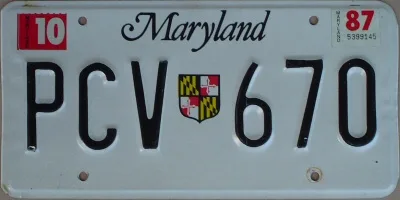
The standard Maryland license plate features a white background with dark blue and black alphanumeric characters. The design includes the Maryland state flag colors and the slogan “The Old Line State” at the bottom.
These plates are issued to most passenger vehicles and must be displayed on both the front and rear of the vehicle. The MVA requires plates to be fully visible, unobstructed, and properly mounted. Validation stickers, which indicate the registration expiration, are color-coded by year and placed in the upper right corner.
Specialty Plates: Types, Colors, and Who Qualifies
Maryland offers over 100 specialty plate options, each with unique colors and designs. These plates support various causes, organizations, and commemorative themes.
Some popular specialty plates include:
- Chesapeake Bay Plate: Features a blue and white design with the Chesapeake Bay Bridge.
- War of 1812 Plate: Commemorates Maryland’s role in the war with a historic design.
- Collegiate Plates: Represent Maryland universities like the University of Maryland or Johns Hopkins.
Eligibility varies. Most specialty plates require an additional fee, which often goes toward funding the associated cause or program. You can order these plates through the MVA’s specialty plate portal.
Vanity Plates: Customization Options and Costs
Vanity plates let you personalize your license plate with a custom combination of letters, numbers, or spaces. Maryland allows up to 7 characters for passenger vehicles.
The cost for a vanity plate is $50 initially, with a $25 renewal fee every two years. The MVA reviews all requests to ensure they comply with state guidelines. Processing can take 4-6 weeks, so plan ahead if you want a custom plate for a new vehicle.
Military, Veteran, and Honorary Plates: Eligibility and Design
Maryland offers several military and veteran plates to honor service members. These include plates for active duty, veterans, Purple Heart recipients, and POW/MIA status.
Each plate has a distinct design. The veteran plate features a gold star on a blue background. The Purple Heart plate includes the medal’s image.
Eligibility requires proof of service, such as a DD Form 214 or active duty orders.
Disabled Parking Plates vs. Placards: Key Differences
Disabled parking plates are permanent and attached to a specific vehicle. Placards are removable and can be used in any vehicle the disabled person is traveling in.
Plates are blue with the international symbol of access. Placards are also blue but hang from the rearview mirror. Both require a physician’s certification and MVA approval.

Electric Vehicle (EV) Plates: Benefits and Requirements
Maryland’s EV plates are green and white, making them easy to identify. They’re available for battery electric and plug-in hybrid vehicles.
To qualify, you’ll need to provide proof of vehicle type, such as the manufacturer’s certification. EV plates may offer perks like access to HOV lanes or discounted tolls. The MVA issues these plates at no additional cost beyond standard registration fees.
Historic, Agricultural, and Government Plates: Special Cases
Historic plates are for vehicles 20 years or older that are used for exhibitions or parades. They feature a classic design with a black background and white text.
Agricultural plates are for farm vehicles and have a green background. Government plates are for state or local government vehicles and are typically white with blue text. Each type has specific usage restrictions and application processes.
How to Get or Replace Your Maryland Plates: Step-by-Step
You can apply for plates online, by mail, or in person at an MVA branch. For new vehicles, the dealer often handles the initial registration and plate issuance.
To replace lost or damaged plates, submit a request to the MVA with your vehicle information and payment for the replacement fee. Temporary plates are available for newly purchased vehicles while you wait for permanent ones.
Maryland Plate Fees: Costs for Standard, Specialty, and Vanity Plates
Standard passenger plates cost $20 for a two-year registration. Specialty plates add a $25 fee on top of standard registration, with some plates requiring an extra annual $20 contribution to the associated cause.
Vanity plates run $50 initially, then $25 every two years. Temporary plates are typically free but vary by dealer. Always check the MVA fee schedule for the most current rates.
Common Mistakes with Maryland Plates (and How to Avoid Them)
Using expired plates is a frequent issue. Maryland requires renewal every two years, and driving with expired tags can result in a $80 fine.
Another mistake is improper display. Plates must be mounted horizontally on the front and rear, fully visible, and unobstructed by frames or covers. Covering any part of the plate number or validation sticker is illegal.
Maryland Plate Laws: Display Rules and Penalties
Maryland law requires plates to be securely fastened at least 12 inches from the ground. They must be clean and legible at all times.
Driving without proper plates or with altered plates can lead to fines up to $500. Using a disabled placard or plate fraudulently carries the same penalty. The MVA conducts regular enforcement to ensure compliance.
Frequently Asked Questions
How do I transfer my plates to a new vehicle?
Submit a plate transfer request to the MVA with your new vehicle’s title and registration. There’s no fee for transferring standard plates between vehicles you own.
Can I keep my old plates if I move out of state?
No. Maryland requires you to surrender your plates when you register your vehicle in another state. You can do this by mail or in person at an MVA branch.
What’s the difference between a plate and a registration?
The plate is the physical metal tag. The registration is the legal document proving your vehicle is registered. Both are required to drive legally in Maryland.
How long does it take to get specialty plates?
Specialty plates typically arrive within 4-6 weeks of approval. You’ll receive temporary plates to use in the meantime.
Can I get a refund if I return my specialty plates?
Yes. The MVA offers prorated refunds for unused portions of specialty plate fees if you return them within 30 days of issuance.