ByMax Lee
Maine License Plate Colors & Special Designs
Maine vehicle registration plate colors and special designations can be confusing if you’re not familiar with the state’s system. The Maine Bureau of Motor Vehicles (BMV) uses distinct colors, symbols, and formats to signal plate type, eligibility, and purpose.
Whether you’re registering a new vehicle, replacing old plates, or just curious about the options, knowing the differences helps you pick the right one.
Quick Answer
Maine vehicle registration plate colors and special designations vary by type. Standard plates are white with blue text. Specialty plates feature unique designs like the Lobster or Black Bear.
Vanity plates allow custom text. Disability plates include the access symbol.
Wikimedia Commons / Jaycarlcooper (CC BY-SA)
Standard Maine Plates: Colors, Styles, and Who Gets Them
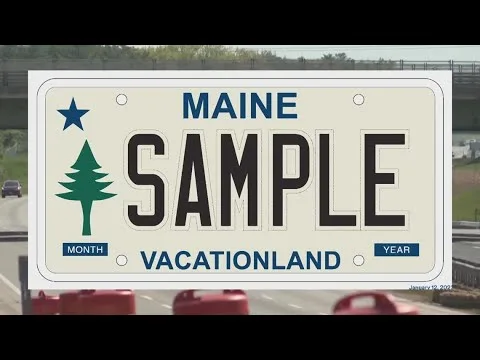
Maine’s standard passenger plates are the default for most vehicles. They feature a white background with dark blue alphanumeric characters and a small pine tree graphic on the left. The state name appears at the top.
These plates are issued to private passenger vehicles, including cars, SUVs, and light trucks. If you don’t request a specialty or vanity plate, this is what you’ll receive. The BMV assigns the letter and number combination automatically.
Standard plates are free with initial registration. Replacements cost $10 as of 2026. They’re made of aluminum and meet federal reflectivity standards for visibility.
Specialty Plates in Maine: The Full List and How to Choose
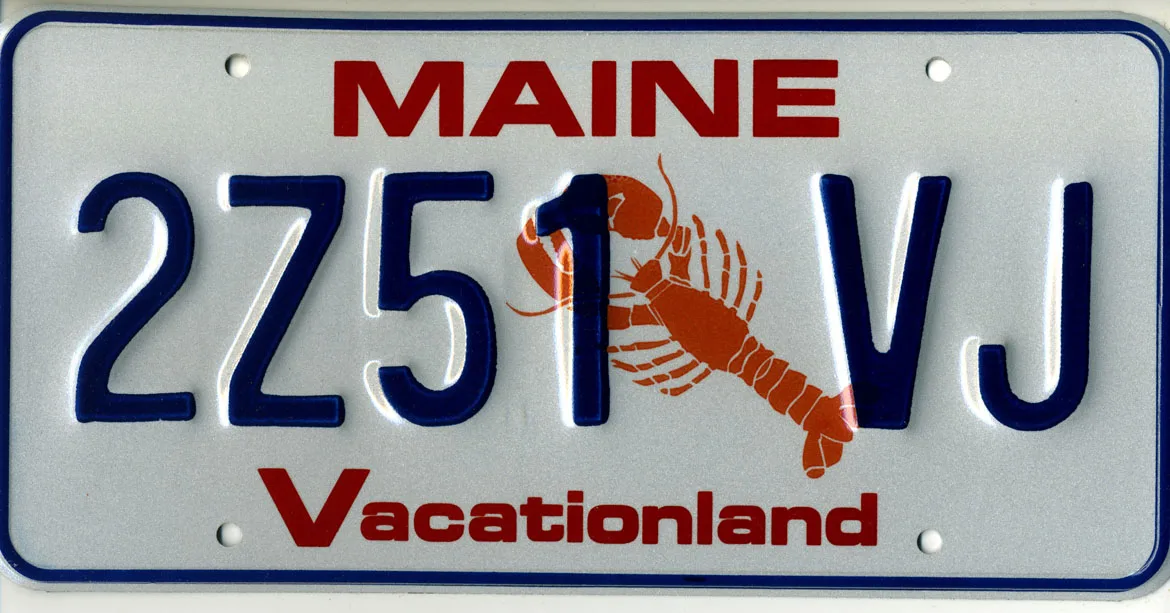
Maine offers over 50 specialty plates supporting various causes, organizations, and interests. Popular designs include the Lobster, Black Bear, and Chickadee plates. Each has a unique color scheme and graphic.
To get one, submit an application and pay the required fee, typically $15 to $40. A portion of the fee supports the associated program. You can order online, by mail, or in person at a BMV branch.
YouTube / NEWS CENTER Maine (YouTube thumbnail (fair-use with source credit))
Some specialty plates have eligibility requirements. For example, the Agricultural plate is for farmers, while the Firefighter plate is for active or retired firefighters. Check the Maine BMV’s official list for full details.
Vanity Plates: Rules, Costs, and How to Order Yours
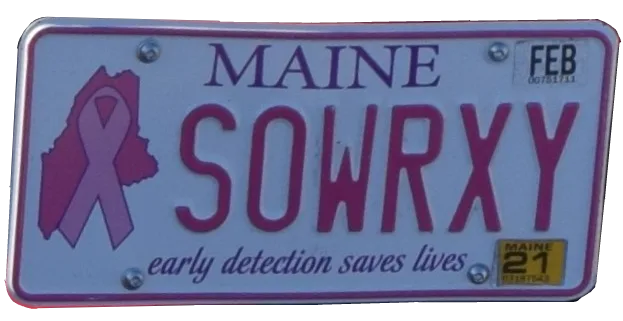
Vanity plates let you personalize your plate with up to 7 characters. Maine prohibits offensive, misleading, or already-taken combinations.
The initial cost is $25, with a $15 annual renewal fee. Check availability and order through the BMV’s vanity plate portal. Processing takes 4 to 6 weeks.
Wikimedia Commons / Weatherkidnh (CC BY-SA)
If your combination is unavailable, the BMV will notify you and offer alternatives. Once approved, the plate is yours as long as you renew it on time.
Disability Plates vs. Placards: Which One Do You Need?
Maine offers both disability plates and placards. Plates are permanent and attached to a specific vehicle. Placards are removable and can be used in any vehicle the qualifying person is traveling in.
To qualify, you need medical certification from a licensed healthcare provider. There’s no additional fee beyond standard registration costs.

YouTube / WMTW-TV (YouTube thumbnail (fair-use with source credit))
Disability plates feature the International Symbol of Access. Placards must be displayed on the dashboard or rearview mirror when parked in accessible spots. Misuse can result in fines up to $250, per Maine state law.
Veteran and Military Plates: Eligibility and Designs
Maine offers plates for veterans, Purple Heart recipients, POWs, and active-duty personnel. Each design includes distinct symbols or text to signify service.
To qualify, provide proof of service, such as a DD Form 214. The BMV verifies eligibility before issuing these plates. There’s no additional fee beyond standard registration for most veteran plates.
Some plates, like the Gold Star Family plate, are available to immediate family members of fallen service members.
Antique and Classic Car Plates: Age Rules and Restrictions
Maine’s antique plates are for vehicles 25 years or older. They feature a black background with gold lettering.
To apply, provide proof of the vehicle’s age, such as the title or bill of sale. The BMV may require an inspection. Once approved, you’ll receive a special registration with reduced fees, typically $10 annually.
Antique plates cannot be used for daily commuting or commercial purposes. Violations can result in fines or revocation of antique status.
Commercial, Motorcycle, and Trailer Plates: Key Differences
Commercial plates are for business vehicles like trucks, vans, or buses. They often include weight class designations. Motorcycle plates are smaller and shaped to fit bikes.
Trailers have their own category.
Each type has specific registration requirements and fees. Commercial vehicles may need additional inspections or documentation, such as a USDOT number for interstate travel.
Temporary and Dealer Plates: When and How to Use Them
Temporary plates are paper plates valid for 30 to 90 days. They’re issued when you need to drive a vehicle before permanent plates arrive. Dealers use them for test drives or to move vehicles.
Dealer plates are metal and allow dealerships to operate multiple vehicles under a single registration. These are only for licensed dealers. Misuse can lead to penalties, including fines or suspension of dealer privileges.
To get temporary plates, provide proof of insurance and ownership. The BMV or an authorized dealer can issue these on the spot.
How to Apply, Replace, or Transfer Your Maine Plates
Applying for plates can be done online, by mail, or in person at a BMV office. For standard plates, you’ll need your vehicle title, proof of insurance, and payment for fees.
To replace lost or damaged plates, submit a request to the BMV with your registration details. The fee is $10. If your plates are stolen, report it to the police first.
Transferring plates to a new vehicle is possible if the plates are still valid. Update your registration with the BMV and pay any applicable fees. Some specialty plates may not be transferable.
Fees, Timelines, and Processing: What to Expect
Standard plates are included in your regular registration fee, typically $35 to $55 per year. Specialty plates add $15 to $40. Vanity plates cost $25 to set up and $15 annually.
Replacement plates cost $10.
Antique plates have a reduced annual fee of $10. Processing times vary. In-person applications get plates the same day.
Online orders for standard plates ship within two weeks. Specialty and vanity plates take 4 to 6 weeks.
Common Mistakes (and How to Avoid Them)
Choosing the wrong plate type causes delays. If you apply for a specialty plate requiring eligibility proof and lack it, the BMV will reject your application.
Not checking vanity plate availability is another common issue. Use the BMV’s online lookup tool to confirm your combination is available before paying.
Misusing disability plates can lead to fines up to $250. You cannot park in an accessible spot without the qualifying person present.
Antique plate restrictions are often ignored. You cannot use an antique-plated vehicle for daily driving. Violations can result in losing antique status and owing back fees.
Not reporting lost or stolen plates is a safety risk. Report it to the police immediately, then notify the BMV for a replacement.
Forgetting to transfer plates when selling a vehicle is a frequent oversight. Remove your plates before the sale, then either transfer them to a new vehicle or surrender them to the BMV.
Maine BMV Rules You Can’t Ignore
Plates must be displayed on the front and rear of the vehicle. Motorcycles only need a rear plate. Plates must be securely fastened and clearly visible.
No covers, tints, or frames can obscure any part of the letters, numbers, or state name.
Plates must remain clean and readable. Law enforcement can pull you over if your plate is unreadable.
Notify the BMV within 30 days of moving to a new address. Failure to do so may result in late fees or suspension.
Antique plates have mileage restrictions, typically no more than 5,000 miles per year. The vehicle must be used primarily for exhibitions, parades, and occasional pleasure driving.
Disability plates and placards are non-transferable. If the qualifying person no longer needs them, return them to the BMV.
What Maine’s License Plate Colors and Designs Actually Mean
Maine uses color and design to indicate plate type. Standard plates are white with blue lettering and a pine tree. Specialty plates like the Lobster or Black Bear have unique designs and color schemes.
Veteran plates include service branch emblems or medal icons. Antique plates use a black background with gold lettering. Disability plates are standard white and blue but include the access symbol.
Commercial plates often include the word "COMMERCIAL" or a weight class designation. Their color scheme matches standard plates but with distinct labeling.
You can identify the plate type at a glance by the color, icons, and any special text.
Frequently Asked Questions
Can I put a specialty plate on any vehicle?
Specialty plates are available for passenger vehicles, light trucks, and SUVs. Some designs are restricted to specific vehicle classes. Check the BMV’s list to confirm eligibility before ordering.
How long does it take to get a vanity plate in Maine?
Vanity plates take 4 to 6 weeks from submission. Processing is longer if the BMV rejects your combination and you need to resubmit.
What happens if my vanity plate application is rejected?
The BMV will notify you of the reason. The most common issue is that the combination is already taken. You can submit up to three alternatives with your application to speed up the process.
Is there a fee to replace a lost Maine license plate?
Yes. The replacement fee for a standard plate is $10. Order online or visit a BMV branch.
If the plate was stolen, file a police report first.
Can I use an antique plate for daily driving?
No. Maine law restricts antique plates to limited use, such as exhibitions and parades. Daily commuting is not allowed.
Violations can result in penalties.
Do I need both a front and rear plate in Maine?
Yes. Maine requires both front and rear plates for all passenger vehicles, trucks, and SUVs. Only motorcycles are exempt from the front plate requirement.