ByMax Lee
Michigan Utility Trailer Registration: Options You Should
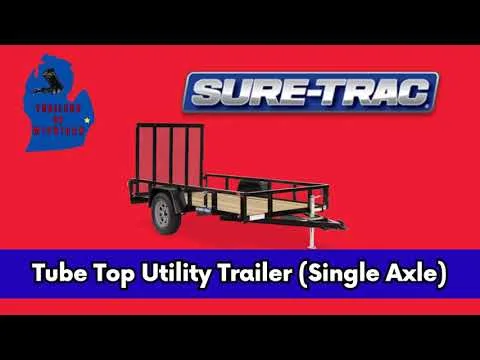
YouTube / Trailers of Michigan (YouTube thumbnail (fair-use with source credit))
Michigan utility trailer registration options depend on weight, use, and ownership. Many owners assume all trailers need plates, but Michigan exempts lightweight models from registration entirely.
As of 2026, trailers under 2,500 lbs don’t require registration or a title, while heavier ones follow a tiered system. The rules change at 2,500 lbs and again at 10,000 lbs, which is where most confusion starts.
Quick Answer
Michigan utility trailer registration options split into three weight classes. Under 2,500 lbs needs nothing. 2,500 to 10,000 lbs needs title and registration. Over 10,000 lbs requires commercial registration.
Fees scale with weight.
How Michigan’s Trailer Registration Works
The Michigan Secretary of State (SOS) handles all trailer registrations. They classify trailers by Gross Vehicle Weight Rating (GVWR), which is the max loaded weight the trailer can safely carry.
Registration proves legal ownership and allows road use. Unregistered trailers over the limit can’t be towed on public roads. The SOS also issues temporary permits for short-term needs.
The 3 Trailer Weight Classes and What They Mean for You
Michigan uses three weight thresholds to determine requirements.
- Under 2,500 lbs: No title or registration required. You can tow it legally without plates.
- 2,500, 10,000 lbs: Title and registration required. You’ll get a license plate.
- Over 10,000 lbs: Commercial registration required. Additional safety and tax rules apply.
YouTube / Joe Thurman (YouTube thumbnail (fair-use with source credit))
The 2,500 lb cutoff is the most common point of confusion. Many small utility trailers fall just below this limit, so owners skip registration entirely. Always check your trailer’s GVWR, usually on a sticker near the axle or in the manufacturer’s paperwork.
Step-by-Step: Registering a Utility Trailer in Michigan
Start by confirming your trailer’s weight class. If it’s 2,500 lbs or more, gather your documents before visiting the SOS.
What you’ll need:
- Proof of ownership (title, manufacturer’s certificate, or bill of sale)
- VIN verification (for homemade or out-of-state trailers)
- Completed Application for Title (Form TR-11) or Trailer Registration Application (Form TR-54)
- Payment for fees (cash, check, or card)
Where to go:
- Any Michigan SOS branch office
- Some county clerk offices (call ahead)
Fees:
- $10, $100+ depending on weight and type
- Temporary permits cost $15, $50

YouTube / Michigan Constitutional Crusader (YouTube thumbnail (fair-use with source credit))
Processing is usually same-day for in-person visits. Mail-in applications take 2, 4 weeks. Homemade trailers need a VIN inspection first, which adds a step.
Special Cases: Homemade, Out-of-State, and Commercial Trailers
Homemade trailers lack a manufacturer’s VIN, so Michigan assigns one. You’ll need to visit a SOS office or authorized agent for an inspection. Bring photos, receipts for materials, and a completed Affidavit of Ownership (Form TR-5).
Out-of-state trailers must meet Michigan’s standards. If your trailer is already titled elsewhere, you’ll transfer the title to Michigan. Some states have reciprocal agreements, but most require a new registration.
Commercial trailers over 10,000 lbs follow different rules. These often need USDOT numbers, safety inspections, and may fall under the International Fuel Tax Agreement (IFTA). Check with the Michigan Department of Transportation (MDOT) for specifics.
Temporary Permits: When and How to Use Them
A temporary permit lets you move an unregistered trailer for up to 30 days. It’s ideal for one-time hauls or when you’re transferring ownership.
You’ll need the trailer’s VIN, proof of insurance, and payment. Fees range from $15 to $50 depending on duration. These permits are non-renewable, so plan accordingly.

YouTube / Warner Bros. (YouTube thumbnail (fair-use with source credit))
Common Mistakes That Get Trailers Rejected
Missing paperwork is the top reason for delays. Without a title or bill of sale, the SOS can’t process your application.
Another frequent issue is incorrect weight classification. If you guess wrong on GVWR, you’ll either overpay or face penalties later. Always verify the manufacturer’s rating.
Homemade trailers often fail inspection due to missing safety features. Lights, reflectors, and brakes must meet Michigan standards. A quick pre-check can save you a return trip.
Costs: Registration Fees by Weight and Type
| Weight Class | Fee Range | Notes |
|---|---|---|
| Under 2,500 lbs | $0 | No registration required |
| 2,500–5,000 lbs | $10–$30 | Standard utility trailers |
| 5,001–10,000 lbs | $30–$60 | Larger enclosed or dump types |
| Over 10,000 lbs | $60–$100+ | Commercial registration |
| Temporary Permit | $15–$50 | 15–30 day validity |
Permanent plates are valid for 1, 3 years. Renewal fees match the initial registration cost.
Safety and Legal Must-Knows
Michigan requires all registered trailers to have functioning lights and reflectors. This includes brake lights, turn signals, and side markers.
Trailers over 3,000 lbs need brakes on all wheels. Homemade trailers must pass a safety inspection before registration. The Michigan Vehicle Code outlines all requirements.
Unregistered trailers on public roads can result in fines up to $200. Law enforcement may also impound the trailer until compliance is met.
Frequently Asked Questions
Do I need a title for a trailer under 2,500 lbs in Michigan?
No. Trailers under 2,500 lbs don’t require a title or registration. You can tow them legally without plates.
How do I register a homemade trailer in Michigan?
You’ll need a VIN inspection at a SOS office. Bring photos, material receipts, and a completed Affidavit of Ownership. Fees are the same as for manufactured trailers.
Can I transfer an out-of-state trailer registration to Michigan?
Yes, but you must meet Michigan’s standards. Bring the out-of-state title, proof of insurance, and payment. Some states have reciprocal agreements that simplify the process.
What’s the penalty for towing an unregistered trailer in Michigan?
Fines start at $100 and can reach $200. Police may also impound the trailer until you provide proof of registration.
How long does a temporary permit last?
Temporary permits are valid for 15 or 30 days. They’re non-renewable, so plan your timeline carefully.
Final Decision Guide: What to Do Based on Your Trailer
Under 2,500 lbs:
No action needed. Tow legally without registration or plates.
2,500, 10,000 lbs:
Get a title and permanent registration. Bring proof of ownership to any SOS office.
Over 10,000 lbs:
Register commercially. Expect additional safety inspections and possible USDOT requirements.
Homemade trailers:
Schedule a VIN inspection first. Then follow the standard registration process.
Temporary needs:
Use a 15, 30 day permit. Non-renewable, so plan your timeline carefully.