ByMax Lee
Michigan License Plate Colors & Special Designs
Michigan vehicle registration plate colors and special designations can look like a confusing rainbow if you don't know what each one means. The short version is that plate color tells you the vehicle type, the registration year, and any special status the owner has paid for or qualified for.
Standard passenger plates use a white background with blue characters as of 2026, and the state switches the year sticker color each cycle per the Michigan Vehicle Code. If you're trying to figure out which plate you need, the sections below walk you through it branch by branch.
Quick Answer
Michigan vehicle registration plate colors and special designations show vehicle type and owner status. Standard plates are white with blue text and a color-coded year sticker. Special plates add logos, green EV stripes, or black and gold historic styles.
Vanity and specialty plates cost extra and follow SOS rules.
What Michigan's License Plate Colors Actually Mean
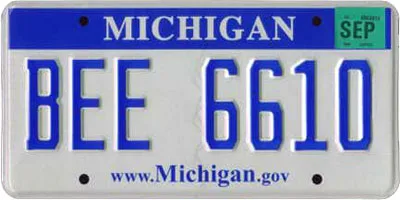
We've all squinted at a plate on the road and wondered what the colors mean. In Michigan, the base color scheme is the first signal. Standard passenger vehicle plates carry a white field with blue numerals and the Michigan outline at the top.
The year sticker on the plate changes color on a rotating schedule. That small square tells law enforcement and you exactly when the registration expires. Miss the color, and you've missed the renewal window.
If the plate has a green stripe down one side, that's an electric vehicle. A black and gold plate points to a historic or authentically aged vehicle. Special organization plates add a logo but keep the standard white and blue base.
Our research shows many drivers assume any colored plate is a vanity plate. That's not true. Color shifts usually mean vehicle class or a state program, not personal choice.
Here's a simple way to read a Michigan plate at a glance:
- White plate, blue text: standard passenger or light truck
- White plate, blue text, green stripe: electric vehicle
- Black plate, gold text: historic vehicle (25+ years old)
- White plate with logo: special designation (college, park, veteran)
- Custom text, standard colors: vanity plate
The Michigan Secretary of State runs the whole system. You can see the current designs on the official Michigan.gov/SOS page.
Standard Plate Colors and What They Indicate
Standard Michigan plates are issued to most passenger cars, SUVs, and light trucks. The base is aluminum with a reflective coating, sized at the standard 12 by 6 inches. The field is white, the characters are blue, and the state name sits in blue across the top.
The plate itself stays the same color for years. What changes is the sticker. Michigan uses a six-year color rotation for the registration tab, so a 2026 sticker won't match a 2023 one.
That's deliberate, and it helps officers spot expired tags fast.
If you drive a trailer or motorcycle, the size shrinks but the color logic holds. Trailers get a white plate with red characters instead of blue. Motorcycles use a smaller plate with the same white and blue scheme.
Per the Michigan Vehicle Code, every plate must be lit at night and unobstructed. A dirty or faded standard plate can still pull a fix-it ticket even if the registration is current.
A few quick facts on standard plates:
- Material: aluminum, reflective
- Dimensions: 12 x 6 inches (motorcycle smaller)
- Base colors: white field, blue characters
- Trailer variant: white field, red characters
- Sticker: color rotates every six years
If your standard plate is lost or damaged, the SOS issues a duplicate for a small fee. The replacement keeps your same number and colors. You don't get a new design just because the calendar flipped.
Special Designation Plates: Who Qualifies and How They Look
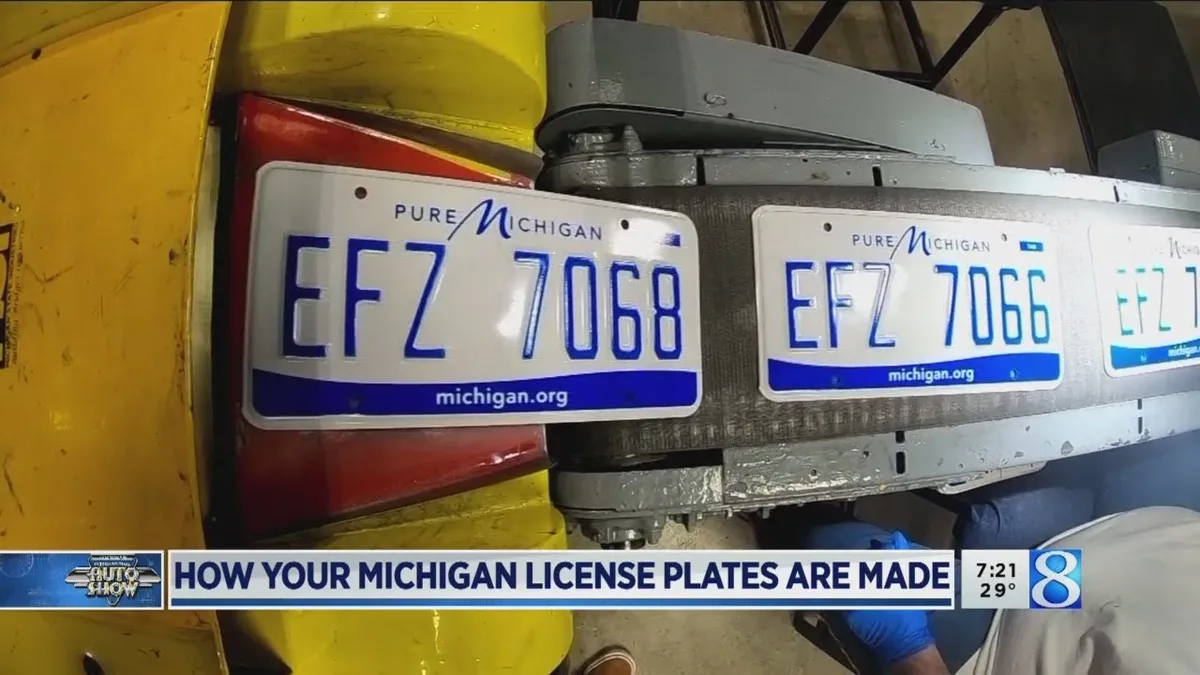
Special designation plates let you support a cause or show affiliation. They use the standard white and blue base but add a logo or colored emblem. You'll see university plates, state park plates, and professional occupation plates on the road.
Qualification depends on the plate. A university plate is open to anyone who pays the extra fee. A disabled veteran plate requires DD-214 proof and a qualifying rating from the VA.
The SOS checks documents before issuing the special plate.
These plates cost more than standard ones. The base registration still applies, then a specialty fee on top. Part of that fee often funds the named program, like state park conservation.
Here are the main special plate groups and who gets them:
- College and university: any owner, pay specialty fee
- State park: any owner, funds park programs
- Military and veteran: service proof required for some
- Professional: license proof (e.g., firefighter, nurse)
- Organization: nonprofit sponsorship approved by state
The look stays consistent. You get the white plate, blue characters, and a color logo in the corner.
One thing our research flagged: some special plates take four to six weeks to arrive by mail. The SOS gives you a temporary paper plate at the counter. Don't expect the fancy metal one the same day.
If you let the registration lapse, the special plate goes back to the state. You can't keep the logo plate as a souvenir without paying the renewal. That catches a lot of folks off guard.
Electric and Hybrid Vehicle Plates: The Green Accent Rule
Michigan added a clear visual marker for electric vehicles. As of 2026, EVs get the standard white plate with a green stripe on the left edge. That stripe tells parking attendants and first responders the car runs silent and has no engine noise.
Hybrids do not get the green stripe by default. You only get the EV plate if the vehicle is fully electric with no gasoline engine. Plug-in hybrids stay on standard blue plates unless the owner requests a special designation.
The green stripe is not a vanity option. You can't buy it for a gas car. The SOS verifies the VIN against the federal EV classification before issuing the plate.

Why the stripe matters:
- Quiet operation flagged for safety
- EV charging spot enforcement easier
- First responder awareness at crashes
The plate fee for an EV is the same as standard plus any specialty fee. There's no separate green-stripe surcharge.
A common mistake is assuming the green stripe means free parking. It doesn't. Michigan offers no statewide EV parking perk from the plate alone.
Local ordinances may differ, so check your city.
If you sell the EV, the green-stripe plate transfers only to another EV you own. Otherwise, surrender it. Putting it on a gas car is a compliance violation under the Vehicle Code.
Historic and Antique Vehicle Plates: The Classic Look
Historic plates are the black and gold you see on older cars. Michigan issues them for vehicles 25 years or older that are not daily drivers. The plate reads "HISTORIC" at the bottom instead of a county name.
The color scheme is inverted from standard. You get a black field with gold characters and the Michigan shape in gold. It's a sharp look that antique owners love, and it costs less to renew than a standard plate.
Qualification is strict. The vehicle must be preserved as a collector item and used only for shows, parades, and occasional drives. Daily commuting on a historic plate is not allowed per SOS policy.
If your car qualifies, you'll need photos and a statement of use. The SOS reviews before approving. Once issued, the black and gold plate stays with that vehicle only.
A few limits to know:
- 25+ years old required
- No commercial use
- No regular commuting
- Annual mileage suggested under 2,500
The historic plate does not carry a year sticker in the same way. You get a permanent registration tag for the plate itself. That's a nice break from the six-year sticker shuffle.
Owners sometimes confuse historic plates with replica or kit-car plates. Those are different classifications with their own colors and rules. If you've built a kit car, ask the SOS for the right form before showing up.
Vanity Plates: Custom Colors, Rules, and Costs
Vanity plates let you personalize your message. Michigan allows up to 8 characters, including letters, numbers, and spaces. The base plate stays white with blue characters, so your custom text stands out.
The SOS has strict rules. No offensive, misleading, or confusing combinations are allowed. They'll reject anything that looks like an official plate or could cause confusion.
Fees start around $30 for the initial order, then a renewal fee each year. That's on top of your standard registration cost. The price jumps for specialty vanity plates with logos.
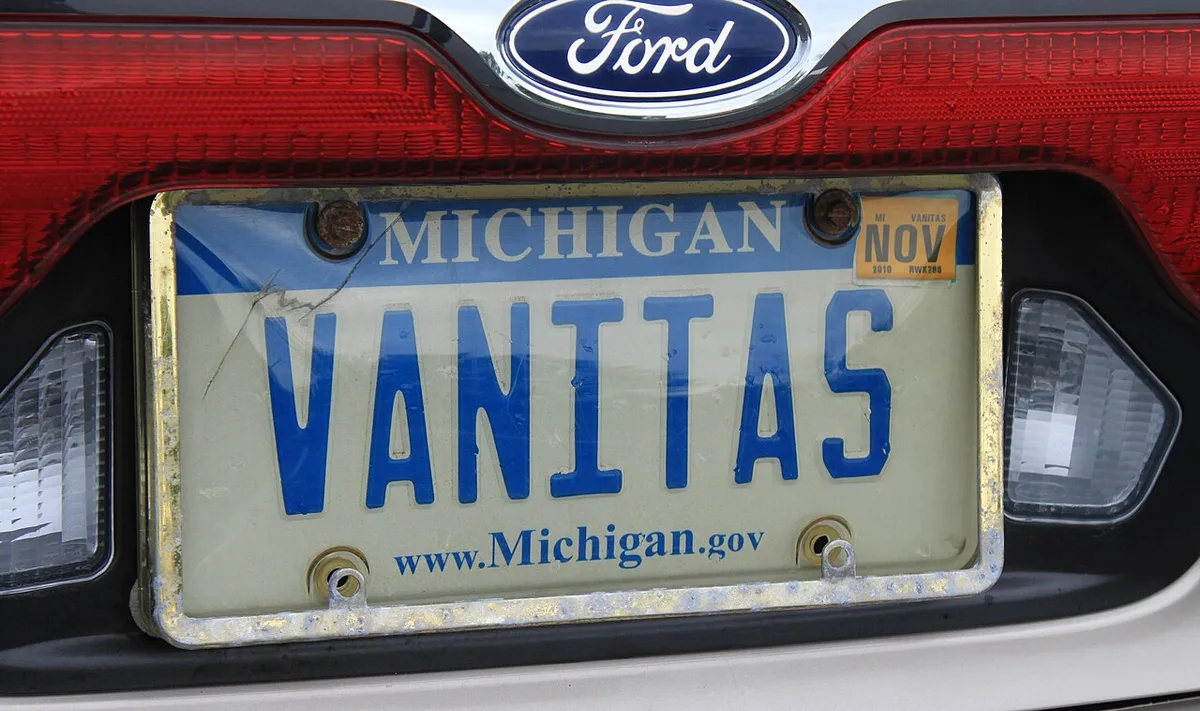
A few key limits to remember:
- 3 to 8 characters maximum
- No symbols or punctuation
- Must be readable and unique
- No profanity or offensive terms
If your first choice is taken, the SOS website has a checker. You can test combinations before paying. Once approved, the plate is yours as long as you renew it.
Some owners assume vanity plates transfer with the vehicle. They don't. If you sell the car, the plate stays with you, not the new owner.
Disabled and Veteran Plates: Recognition and Perks
Disabled plates and placards give parking access. Michigan issues blue and white plates with the international symbol of access. Veterans get special plates with service emblems.
For disabled plates, you need a doctor's certification. The SOS reviews the form before issuing the plate or placard. Placards hang from the mirror, while plates are permanent.
Veteran plates require proof of service. A DD-214 or VA letter works. Some plates are free for qualifying veterans, while others have a small fee.
Here's what each offers:
- Disabled plates: permanent parking access
- Disabled placards: temporary or permanent, for any vehicle you're in
- Veteran plates: service recognition, some offer toll discounts
The disabled placard is good for up to 5 years. Plates stay with the vehicle as long as you own it.
A common mistake is lending your placard to someone else. That's illegal and can lead to fines. The placard is for your use only when you're in the vehicle.
How to Get the Right Plate for Your Vehicle
Start with the SOS website or a local branch. You'll need your vehicle title, proof of insurance, and ID. The system walks you through the options based on your vehicle type.
For standard plates, it's straightforward. Pay the fee, get your plates and stickers. For special plates, you'll pick the design and provide any required documents.
If you're registering a new car, the dealer often handles the plates. You'll still need to confirm the type. For used cars, you have 15 days to transfer the title and get new plates.
Here's the quick workflow:
- Gather your documents
- Choose your plate type
- Pay the fees
- Receive your plates or temporary tag
For special plates, add time for processing. Some take weeks to arrive by mail. The SOS gives you a paper plate to use in the meantime.
If you're unsure which plate you qualify for, ask. The SOS staff can walk you through the options. They'd rather you ask than apply for the wrong one.
Step-by-Step: Applying for Special or Vanity Plates
Special and vanity plates need extra steps. Start online at the SOS portal. You'll see the available designs and fees upfront.
For special plates, select the organization or cause. The site shows which ones require proof. Upload any documents right there.
For vanity plates, use the checker first. Enter your desired text to see if it's available. If it is, add it to your order.
Here's the process broken down:
- Visit the SOS special plate page
- Pick your design or enter custom text
- Upload any required documents
- Pay the fees
- Wait for approval and delivery
Approval usually takes a few days. If there's an issue, they'll contact you. Once approved, production takes about 4 to 6 weeks.
If you're applying in person, bring printed copies of your documents. The branch can process it on the spot if everything checks out.
A pro tip: check your text carefully. Once the plate is made, changes mean starting over and paying again. The SOS doesn't offer refunds for typos.
Michigan Plate Fees: Standard vs. Specialty Costs
Standard plates are the cheapest option. As of 2026, the base registration fee is around $30 for passenger vehicles. That covers your plates and stickers.
Special plates add a surcharge. Most run $10 to $35 extra. Vanity plates start around $30 for the initial order, then $10 to $20 each renewal.
Here's a quick fee breakdown:
| Plate Type | Initial Fee | Renewal Fee |
|---|---|---|
| Standard | ~$30 | ~$30 |
| Special Designation | $10-$35 extra | Same as initial |
| Vanity | ~$30 extra | $10-$20 extra |
| Disabled | Free | Free |
| Veteran | Free-$10 | Free-$10 |
Fees vary by weight and vehicle type. Heavier vehicles pay more. Motorcycles and trailers have their own fee schedules.
The SOS website has a fee calculator. Plug in your vehicle details to see the exact cost. That way there are no surprises at the counter.
Some special plates direct part of the fee to programs. State park plates fund conservation. College plates support scholarships.
You're not just paying for a plate, you're supporting a cause.
Common Mistakes (and How to Avoid Them)
Assuming all colored plates are vanity plates is the top error. Green stripes mean EV, black and gold mean historic. Standard white and blue is the base for most vehicles.
Another frequent slip is letting the registration lapse. The sticker color changes every year. Miss it and you're driving with an expired tag.
Some owners try to transfer special plates to a new car without checking eligibility. EV plates only go on electric vehicles. Historic plates only go on qualifying antiques.
Plate Display Rules: What's Legal and What's Not
Michigan law requires plates to be visible and unobstructed. That means no frames that cover the state name or year sticker. The plate must be mounted on the rear for most vehicles.
Front plates are optional in Michigan. If you choose to mount one, it must match the rear plate. No mixing and matching designs.
The plate must be lit at night. If your rear light is out, you're not just risking a ticket. You're making it harder for others to see your plate.
FAQs About Michigan License Plates
How do I check if a vanity plate is available?
Use the SOS website checker. Enter your desired text to see if it's taken. The tool updates in real time.
Can I keep my old plate number when I buy a new car?
Yes, you can transfer your plate to a new vehicle. You have 15 days to do it after buying the car.
What happens if my plate is stolen?
Report it to the police and the SOS. They'll issue a replacement and flag the old number.
Do I need a front plate in Michigan?
No, front plates are optional. If you use one, it must match the rear plate.
How often do I need to renew my plates?
Most passenger vehicles renew annually. Some special plates have different cycles. Check your registration notice.