ByMax Lee
Michigan Muffler & Exhaust Noise Laws Explained
Wikimedia Commons / Shixart1985 (CC BY)
Michigan muffler and exhaust noise regulations for passenger cars are stricter than many drivers realize. A loud exhaust might sound great to you, but it can land you a ticket if it crosses the legal limit. The rules are clear, and enforcement isn’t just theoretical, police do pull over vehicles that violate noise standards.
As of 2026, Michigan law caps passenger car exhaust noise at 92 decibels when measured 50 feet away. That’s roughly the volume of a motorcycle at full throttle, so most stock systems stay well under the limit. The real trouble starts with aftermarket setups that push past it.
Quick Answer
Michigan muffler and exhaust noise regulations for passenger cars limit sound to 92 dB(A) at 50 feet. This applies to all light-duty vehicles on public roads. Police can issue citations based on audible judgment or decibel testing.
Modifications like straight pipes or muffler deletes often exceed this limit. Stock exhausts typically comply without issue.
What Michigan’s Exhaust Noise Law Actually Says for Passenger Cars
The legal framework comes from the Michigan Vehicle Code, specifically Section 257.706. It prohibits exhaust systems that amplify or produce excessive noise, including modified setups that remove or bypass mufflers. The law also bans any system that emits "unusual or excessive" noise, which gives officers some discretion.
The 92 dB(A) limit is the hard number, but enforcement isn’t always about precise measurements. Officers can ticket based on what they hear, especially if the exhaust is clearly louder than stock. This means even if you’re under 92 dB, an unusually loud or raspy tone could still get you pulled over.
The Quick Legal Limit: How Loud Can Your Exhaust Be?
The maximum allowed noise level is 92 decibels (dB(A)) measured at 50 feet from the vehicle. This standard aligns with many other states, though some, like California, are stricter. For context, a normal conversation is about 60 dB, while a lawnmower hits around 90 dB.
Most factory exhausts on passenger cars register between 70, 80 dB, well under the limit. Aftermarket systems, especially those with muffler deletes or straight pipes, can easily exceed 95 dB or more. If you’re unsure, a quick decibel test with a smartphone app can give you a rough estimate, though official enforcement uses calibrated equipment.
How Michigan Tests and Enforces Exhaust Noise
Police have two main ways to enforce the law: audible judgment and decibel testing. An officer can pull you over if your exhaust is clearly louder than what’s reasonable for a stock vehicle. If they suspect a violation, they may use a decibel meter to confirm.

YouTube / Shmee150 (YouTube thumbnail (fair-use with source credit))
Testing typically happens at 3,500 RPM or wide-open throttle, with the microphone placed 50 feet away. Some departments use drive-by testing, where they measure noise as the vehicle passes a fixed point. If your car exceeds 92 dB, you’re in violation.
Repeat offenses or extreme modifications can lead to higher fines or even mandatory inspections.
Michigan doesn’t have a statewide emissions test, but noise violations are taken seriously. Officers can issue citations on the spot, and courts may require you to modify your exhaust to comply. For more on vehicle-related regulations, check out Delaware’s approach to unattended vehicles, which highlights how states handle different enforcement priorities.
The 3 Most Common Ways Drivers Get Ticketed (And How to Avoid Them)
Loud Aftermarket Exhausts
Many drivers assume any aftermarket exhaust is fine as long as it’s not "too loud." But systems with muffler deletes, straight pipes, or aggressive tuning often exceed 92 dB. Even some performance exhausts marketed as "street-legal" can push the limit.
How to avoid it: Stick with OEM-style mufflers or aftermarket systems labeled as 50-state legal. If you’re modifying, get a decibel test before hitting the road.
Muffler Deletes or Straight Pipes
Removing the muffler entirely or running straight pipes is a guaranteed violation. These setups can reach 100 dB or more, far above the legal limit. They’re also illegal under federal emissions laws, as they often involve tampering with the catalytic converter.

YouTube / Habibian (YouTube thumbnail (fair-use with source credit))
How to avoid it: Don’t remove or bypass the muffler. If you want a deeper tone, opt for a chambered or turbo muffler that maintains compliance.
Excessive Idle or Acceleration Noise
Even if your exhaust is legal at cruising speeds, excessive noise at idle or under hard acceleration can still get you ticketed. Some systems are quiet at low RPMs but scream when revved.
How to avoid it: Test your exhaust at different RPMs. If it’s noticeably louder than stock under acceleration, it’s likely over the limit. For context on how other states handle vehicle noise, see Delaware’s slow mover law, which shows how traffic regulations can vary.
Stock vs. Aftermarket Exhausts: What’s Legal and What’s Not
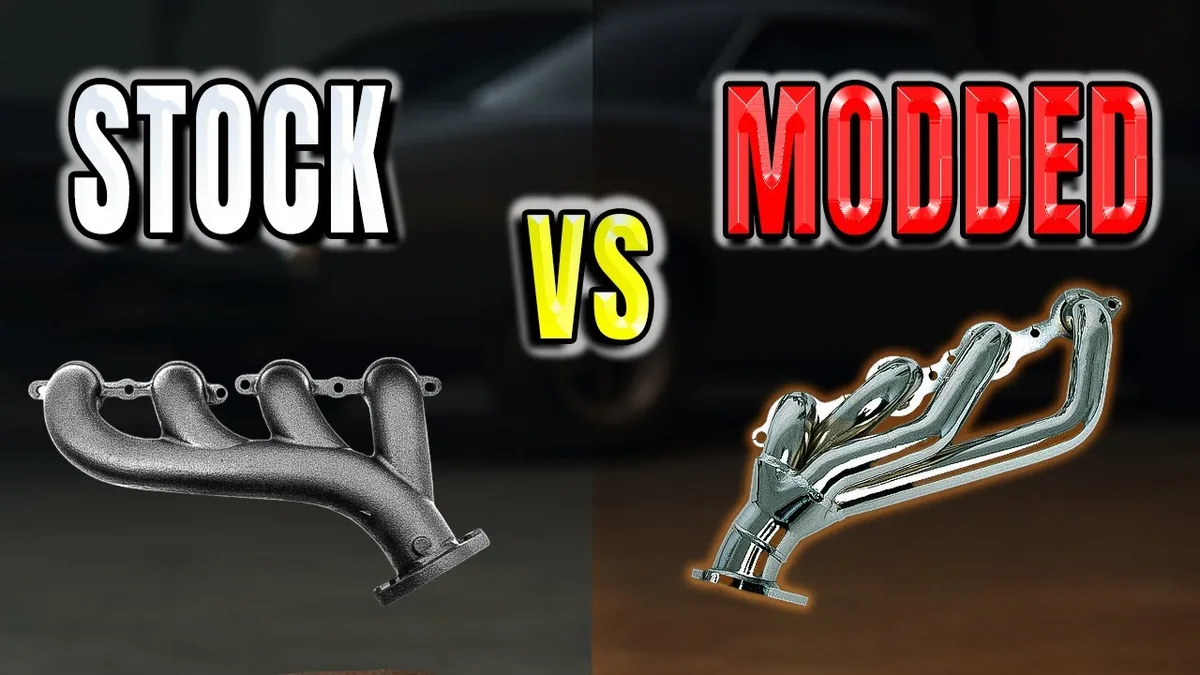
Stock exhausts are almost always compliant because they’re designed to meet federal and state noise standards. Aftermarket systems, however, vary widely. Some are engineered to stay within legal limits, while others prioritize sound and performance over compliance.
YouTube / Speed & Style (YouTube thumbnail (fair-use with source credit))
| Exhaust Type | Typical Decibel Range | Legal in Michigan? | Notes |
|---|---|---|---|
| Stock OEM | 70–80 dB | Yes | Designed for compliance |
| Performance Muffler | 80–90 dB | Usually | Check manufacturer specs |
| Straight Pipe | 95–110 dB | No | Illegal under state and federal law |
| Muffler Delete | 95–105 dB | No | Violates noise and emissions laws |
| Turbo Muffler | 80–88 dB | Usually | Quieter than straight-through |
Key takeaway: If you’re modifying your exhaust, verify the decibel rating and ensure it includes all required components, like the catalytic converter. The EPA’s emissions tampering guidelines explicitly prohibit removing or bypassing emissions control devices, which includes mufflers in some cases.
Straight Pipes, Muffler Deletes, and Other Mods That Get You in Trouble
Straight pipes and muffler deletes are the most common reasons for noise violations. These mods remove the muffler entirely, letting exhaust gases flow unrestricted. The result is a much louder, deeper sound that almost always exceeds 92 dB.
Police can spot these setups easily. A straight-pipe exhaust often has no visible muffler, and the noise is unmistakable. Even if you pass a decibel test at idle, hard acceleration will likely push you over the limit.
What Happens If You Fail a Noise Check or Get Pulled Over
If an officer determines your exhaust is too loud, you’ll typically receive a citation. Fines vary by jurisdiction but often start around $100 and can go up to $500 or more for repeat offenses. In some cases, you may be required to fix the issue and provide proof of compliance.
Courts may order you to reinstall a legal exhaust system. If you ignore the citation, you could face additional penalties, including points on your license or even vehicle impoundment in extreme cases.
Michigan vs. Other States: How the Rules Compare
Michigan’s 92 dB limit is fairly standard, but some states are stricter. California, for example, enforces a 92 dB limit at 50 feet but also has additional emissions requirements. Other states like New York and Texas follow similar noise thresholds.
A few states, such as Florida, have more lenient enforcement, relying heavily on officer discretion. If you frequently drive across state lines, it’s worth checking local laws to avoid surprises. For a look at how another state handles vehicle-related regulations, see Delaware’s move-over law.
Real-World Examples: Legal vs. Illegal Setups
A stock Honda Civic with its factory exhaust will almost always pass a noise test. Its muffler and catalytic converter keep sound levels well below 92 dB. Even at high RPMs, it stays compliant.
On the other hand, a modified Ford Mustang with a muffler delete will likely exceed the limit. These setups often produce 100 dB or more, especially under acceleration. Police can ticket these vehicles on the spot.
Final Checklist: Is Your Exhaust Street-Legal in Michigan?
Start with the basics. Your exhaust must include a working muffler and catalytic converter. Removing either is an automatic violation.
Next, check the noise level. If you’ve modified your exhaust, use a decibel meter app to test at 50 feet. Anything over 92 dB is illegal.
Stock systems rarely exceed this, but aftermarket setups often do.
Finally, listen for unusual noise. If your exhaust is significantly louder than a factory system, it’s likely non-compliant. Police can ticket based on sound alone, even without a decibel test.
Start with the basics. Your exhaust must include a working muffler and catalytic converter. Removing either is an automatic violation.
Next, check the noise level. If you’ve modified your exhaust, use a decibel meter app to test at 50 feet. Anything over 92 dB is illegal.
Stock systems rarely exceed this, but aftermarket setups often do.
Finally, listen for unusual noise. If your exhaust is significantly louder than a factory system, it’s likely non-compliant. Police can ticket based on sound alone, even without a decibel test.
Frequently Asked Questions
Is a muffler delete legal in Michigan?
No. Removing the muffler violates Michigan’s noise regulations and often federal emissions laws. You’ll almost certainly exceed the 92 dB limit.
Can I get a ticket for a loud exhaust without a decibel test?
Yes. Officers can issue citations based on audible judgment if your exhaust is clearly louder than stock. A decibel test may follow if you contest the ticket.
What’s the fine for a noise violation in Michigan?
Fines typically range from $100 to $500, depending on the jurisdiction and whether it’s a repeat offense. Some courts may also require you to modify your exhaust.
Are aftermarket exhausts legal if they’re labeled “50-state legal”?
Usually, yes. These systems are designed to meet noise and emissions standards in all states, including Michigan. But always verify the decibel rating.
Does Michigan have emissions testing for exhaust noise?
No. Michigan doesn’t require annual emissions tests, but noise violations are still enforced. Police can test your exhaust on the spot if they suspect a violation.
Can I modify my exhaust if I keep the muffler?
Possibly. Swapping in a performance muffler or cat-back system can be legal if it stays under 92 dB. Always check the manufacturer’s specs and test the noise level.