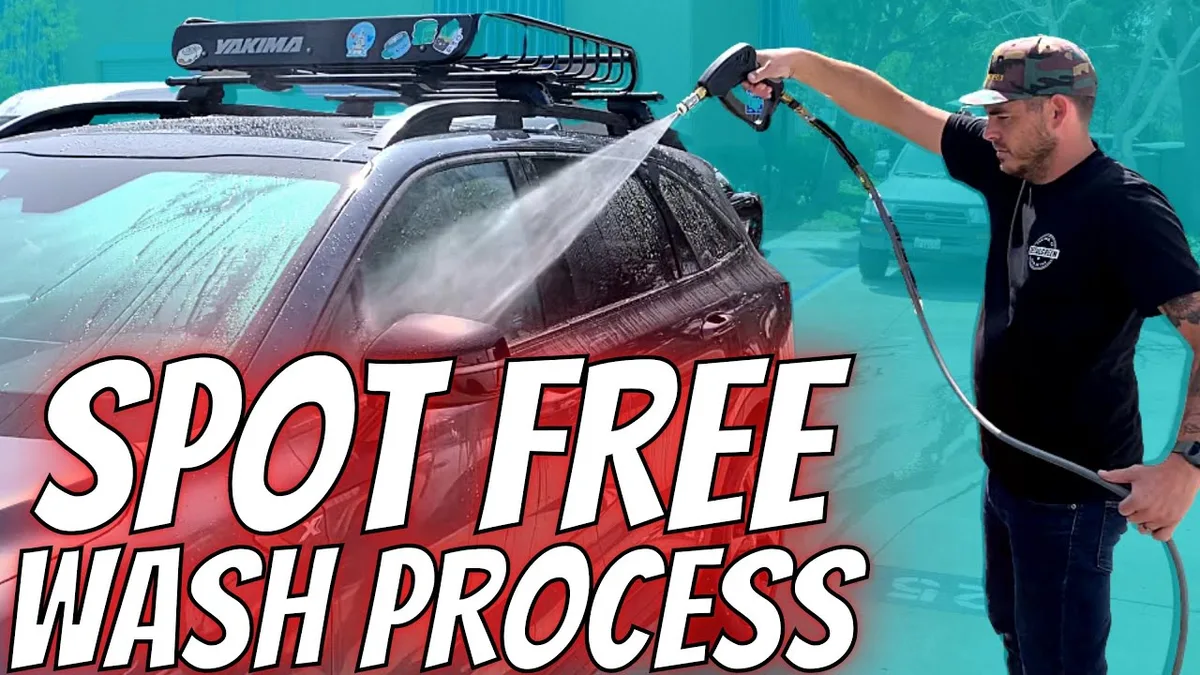
You just finished washing your car, only to find it covered in ugly water spots. A proper home car wash with no spots is possible, but it starts with understanding why those spots appear in the first place.
Hard water is the usual culprit. As of 2026, over 85% of U.S. households have hard water, which leaves mineral deposits when it evaporates. Fixing this means controlling the water, the soap, and the drying process.
Quick Answer
A home car wash with no spots requires filtered or deionized water. Use a pH-balanced car soap. Wash with the two-bucket method.
Rinse thoroughly. Dry immediately with a clean microfiber towel.
Why Your Car Gets Water Spots After Washing
Water spots form when minerals in hard water are left behind as the water evaporates. These are typically calcium and magnesium deposits. The higher your water hardness, the worse the problem.
If your tap water is hard, you’ll see spots even if you rinse well. Soft water reduces this, but doesn’t eliminate it entirely. The only guaranteed spot-free rinse comes from deionized or reverse osmosis water, which has had nearly all minerals removed.
The Quick Fix: 3 Ways to Wash Without Spots
You don’t need a full detail shop setup to avoid spots. Start with the simplest fix: use a water softener or a portable deionizing filter for your hose. These can drop mineral content from 200+ PPM to under 10 PPM, which is the threshold for spot-free drying.
If that’s not an option, wash in the shade and dry immediately. Direct sunlight speeds up evaporation, giving minerals less time to dissolve away. Finally, use a quick detailer spray after drying.
This adds a light protective layer that helps prevent new spots from bonding to the paint.
What Actually Causes Water Spots (And How to Stop Them)
Water spots are mineral deposits. When hard water dries on your car’s surface, the calcium and magnesium don’t evaporate with it. They stay behind, forming those white or grayish marks.
The severity depends on three things: your water hardness, how thoroughly you rinse, and how quickly you dry. Hardness over 7 grains per gallon (about 120 PPM) will almost always leave spots if you don’t intervene. Manufacturer specifications for spot-free systems confirm that water under 10 PPM total dissolved solids (TDS) is the gold standard.
Stopping them means breaking this cycle. Either remove the minerals before they touch your car, or remove them before the water dries.
The Tools You Need for a Spot-Free Wash
You don’t need expensive gear, but the right tools make all the difference. Here’s what works:
- Two 5-gallon buckets with grit guards, Keeps dirt from being reintroduced to your wash mitt.
- High-quality microfiber wash mitt, Holds more soap and traps dirt better than sponges.
- pH-balanced car wash soap, Won’t strip wax or leave residue.
- Microfiber drying towels (300, 500 GSM), Absorbs water without scratching.
- Water filter or deionizer, Reduces mineral content for a spot-free rinse.
- Pressure washer (optional, 1200, 1900 PSI), Helps rinse thoroughly without damaging paint.
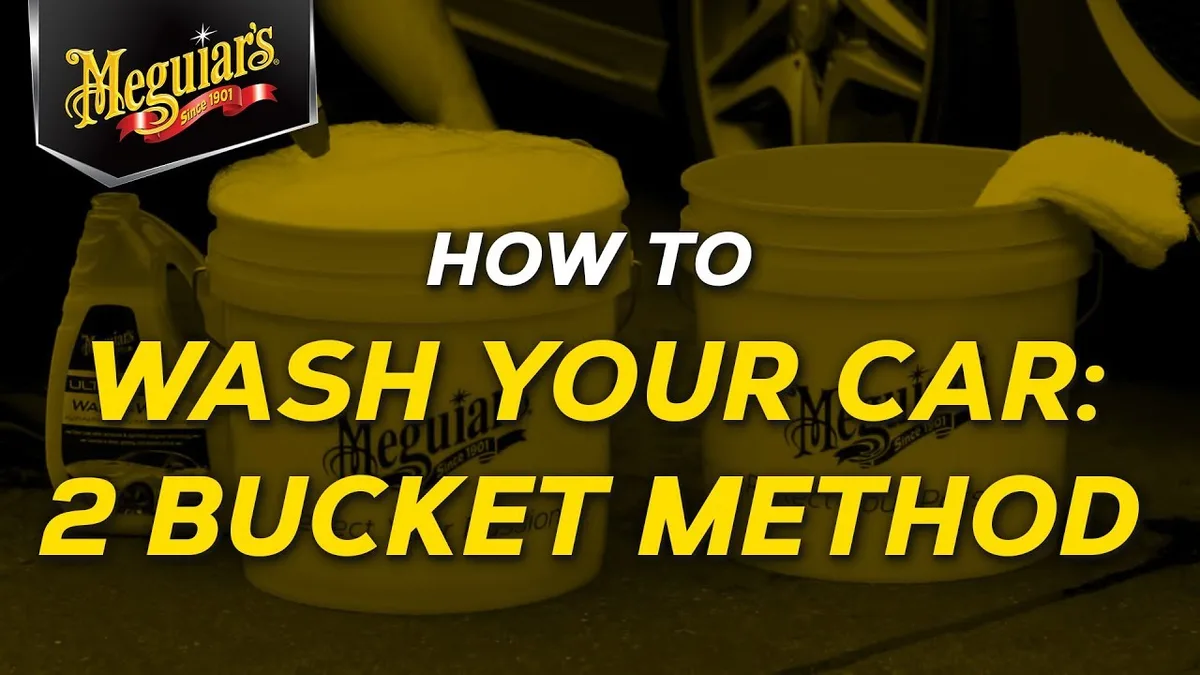
The two-bucket method is non-negotiable for avoiding swirl marks. One bucket holds soapy water, the other holds clean water for rinsing your mitt. Grit guards at the bottom of each bucket trap dirt, so you’re not grinding it into your paint.
Step-by-Step: The No-Spots Home Car Wash Method
Pre-Wash Prep (Avoid the Biggest Mistakes Here)
Start by rinsing the car thoroughly to remove loose dirt. Use a pressure washer at 1200, 1900 PSI or a hose with a 40-degree nozzle. Work from the top down to prevent re-soiling cleaned areas.
Park in the shade. Direct sunlight causes water to evaporate too quickly, increasing spot formation. If you must wash in sun, work in small sections and dry immediately.
Washing Without Reintroducing Dirt
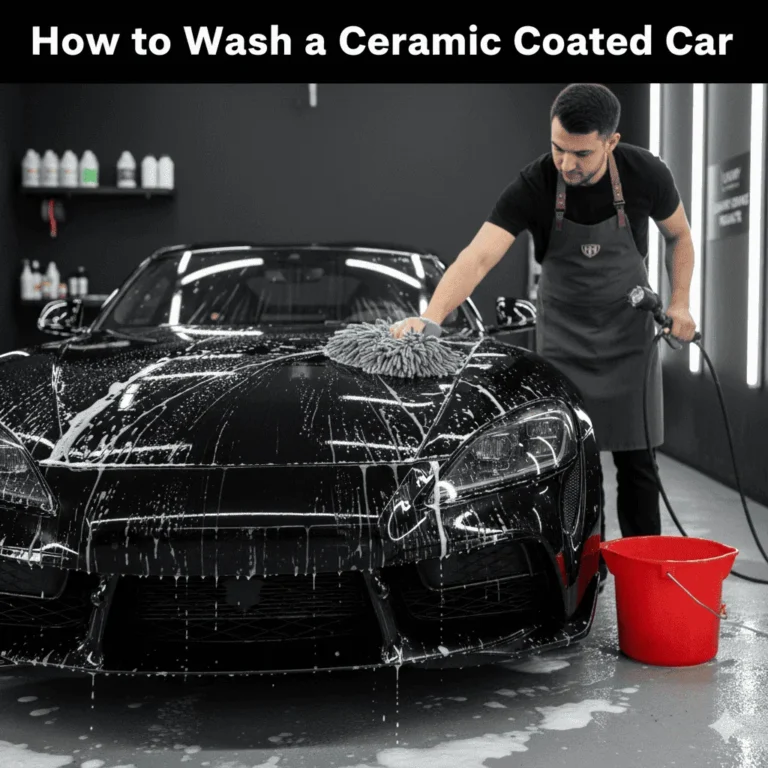
Use the two-bucket method. One bucket holds soapy water, the other holds clean water for rinsing your mitt. Dip the mitt in the soap bucket, wash a panel, then rinse the mitt in the clean water bucket before reloading with soap.
Wash wheels and tires first. They’re the dirtiest parts and can contaminate your mitt and buckets. Use a separate mitt for wheels to avoid cross-contamination.
The Rinse That Prevents Spots
Rinse each panel immediately after washing. Use the sheeting method: let water flow down the panels in sheets rather than droplets. This helps carry away dirt and reduces spot formation.
If you have hard water, consider a final rinse with deionized or filtered water. Even a small portable filter can make a noticeable difference in spot prevention.
Drying Like a Pro (No Streaks, No Swirls)
Use a high-quality microfiber drying towel with a waffle weave pattern. These absorb more water and reduce the risk of swirl marks. Pat the surface dry rather than dragging the towel.
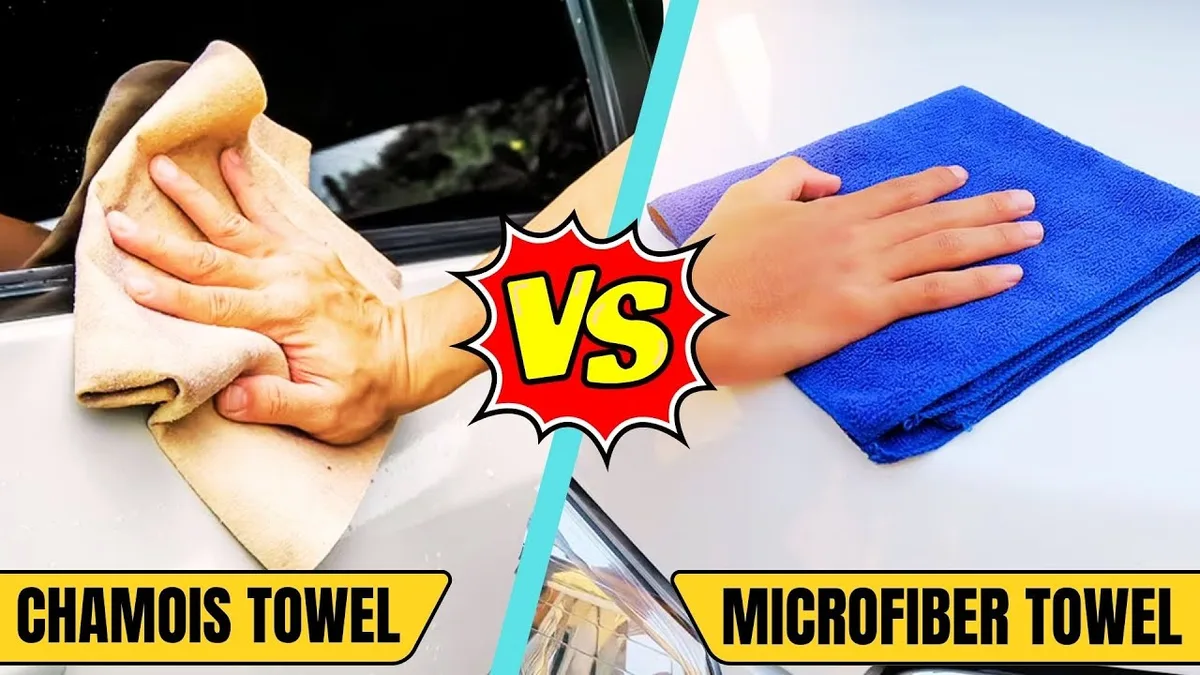
Work from the top down. Start with the roof and move to the lower panels. Dry one section at a time to prevent water from drying on the paint.
Hard Water vs. Soft Water: How to Adjust Your Approach
Hard water contains high levels of calcium and magnesium. These minerals are the primary cause of water spots. If your water hardness is above 7 grains per gallon, you’ll need to take extra steps to prevent spots.
Soft water has fewer minerals, but it’s not a complete solution. Even soft water can leave spots if not properly managed. The most effective approach is to use a water filter or deionizer to remove minerals before they touch your car.
If filtering isn’t an option, wash in the early morning or late afternoon when temperatures are cooler. This slows evaporation and gives you more time to dry the car before spots form.
DIY Spot-Free Water Solutions (No Fancy Equipment)
You don’t need a professional setup to get spot-free results. A portable reverse osmosis filter can reduce TDS to under 10 PPM. These attach to your hose and cost less than $200.
Another option is a deionizing resin filter. These are often used in car detail shops and can be refilled. They’re more expensive upfront but last longer than RO filters.
If you’re on a tight budget, use distilled water from the store for your final rinse. It’s not practical for the whole wash, but a few gallons for the last rinse can make a big difference.
Common Mistakes That Ruin Your Finish
Using dish soap instead of car wash soap strips wax and leaves residue. Always use a pH-balanced car soap. It’s formulated to clean without damaging paint or clear coat.
Washing in direct sunlight causes water to dry too fast. This traps minerals on the surface. Always wash in the shade or on cloudy days.
Skipping the two-bucket method reintroduces dirt to your paint. Even a little grit can cause swirl marks. Use separate buckets for soap and rinsing your mitt.
When to Use a Blower, Towel, or Quick Detailer
A blower is fastest for drying but can be loud and expensive. It’s best for large vehicles or frequent washes. Look for one with at least 100 CFM airflow.
Microfiber towels are the most common choice. They’re affordable, effective, and gentle on paint. Use a waffle weave towel for maximum absorption.
Quick detailer sprays add a light protective layer after drying. They help prevent new spots from bonding to the paint. Apply after drying for extra protection.
How to Fix Spots If They Already Happened
Fresh water spots can often be removed with a quick detailer spray. Spray on the affected area and wipe with a microfiber towel. This dissolves the minerals before they etch the paint.
For stubborn spots, use a water spot remover. These are mild acids that dissolve mineral deposits. Follow the product instructions carefully to avoid damaging your paint.
If spots have etched the paint, you may need a light polish. Use a dual-action polisher with a fine polishing compound. This removes a thin layer of clear coat to eliminate the etching.
Cost Breakdown: Home Wash vs. Professional
| Item | Home Wash | Professional Wash |
|---|---|---|
| Cost per wash | $10–$30 | $15–$50 |
| Upfront tool cost | $50–$100 | None |
| Time per wash | 45–90 minutes | 10–30 minutes |
| Quality control | Full control | Varies by provider |
A home wash gives you full control over the products and techniques used. With proper tools, you can match or exceed professional results. The upfront investment in tools pays off over time.
Frequently Asked Questions
Why does my car get water spots even after rinsing?
Hard water minerals remain on the surface when water evaporates. Even thorough rinsing won’t remove them if the water itself contains high mineral content.
Can I use a leaf blower to dry my car?
Yes, but choose one with a no-heat setting and at least 100 CFM airflow. Avoid high heat, which can damage paint or trim.
How often should I wash my car to prevent spots?
Wash every 1, 2 weeks to prevent buildup. More frequent washes are needed in areas with high pollution or hard water.
What’s the best way to remove old water spots?
Start with a quick detailer spray. For stubborn spots, use a dedicated water spot remover. For etched spots, a light polish may be necessary.
Do I need a pressure washer for a spot-free wash?
No, but it helps. A hose with a 40-degree nozzle works fine if you rinse thoroughly. A pressure washer just makes the job faster and more effective.