ByMax Lee
NJ Right on Red Law: Complete Stop Rules Explained
New Jersey right on red law and complete stop requirements at intersections can trip up even experienced drivers. The rules are stricter than in neighboring states, and a rolling stop can mean a ticket or worse. As of 2026, New Jersey requires a full stop before any right turn on red, with no exceptions unless a sign explicitly says otherwise.
In our research, we found that most violations happen because drivers don’t realize how strictly “complete stop” is enforced. The state’s traffic code leaves little room for interpretation, and local ordinances can add even more restrictions.
Quick Answer
New Jersey right on red law and complete stop requirements at intersections demand a full stop behind the line or crosswalk. You must come to a complete cessation of movement before turning right on red. Local signs can override this rule.
Rolling stops are illegal and ticketable. Always check for pedestrians and oncoming traffic.
Why Getting This Right in New Jersey Is Non-Negotiable
New Jersey’s traffic laws don’t mess around with right-on-red turns. A failure to stop completely can lead to fines, points on your license, and even higher insurance premiums. More importantly, incomplete stops are a leading cause of intersection collisions, especially in high-traffic urban areas like Newark or Jersey City.
YouTube / Videogamerdaryll (YouTube thumbnail (fair-use with source credit))
The state’s strict enforcement isn’t just about revenue. It’s about safety. According to the New Jersey Department of Transportation, intersection-related crashes account for a significant portion of annual traffic incidents.
A full stop gives you time to assess pedestrians, cyclists, and cross traffic, something a rolling stop simply doesn’t allow.
What "Complete Stop" Actually Means Under New Jersey Law
A complete stop isn’t open to interpretation. Under New Jersey Statute 39:4-30, it means your vehicle must come to a full and absolute halt. No creeping, no slowing to a near-stop, and no momentum.
The wheels must stop turning, and the car must be stationary.
This standard is enforced rigorously. Police officers and red light cameras are trained to spot even slight forward motion. If your car moves at all before the turn, it’s not a legal stop.
Where You Must Stop: Stop Lines, Crosswalks, and the Intersection
Your stopping position matters just as much as the stop itself. New Jersey law requires you to stop before the stop line if one is present. If there’s no stop line, you must stop before entering the crosswalk.
If there’s neither, stop before entering the intersection itself.
YouTube / Pacosgoodtime (YouTube thumbnail (fair-use with source credit))
Here’s the breakdown:
- Stop line present: Stop completely behind the white line.
- No stop line but crosswalk present: Stop before the crosswalk begins.
- No stop line or crosswalk: Stop before the intersection’s edge.
Failing to stop in the correct position can result in a ticket, even if you technically came to a full stop. This is especially true in areas with heavy pedestrian traffic, where stopping too far forward can block crosswalks.
When You Cannot Turn Right on Red: Signs and Local Ordinances
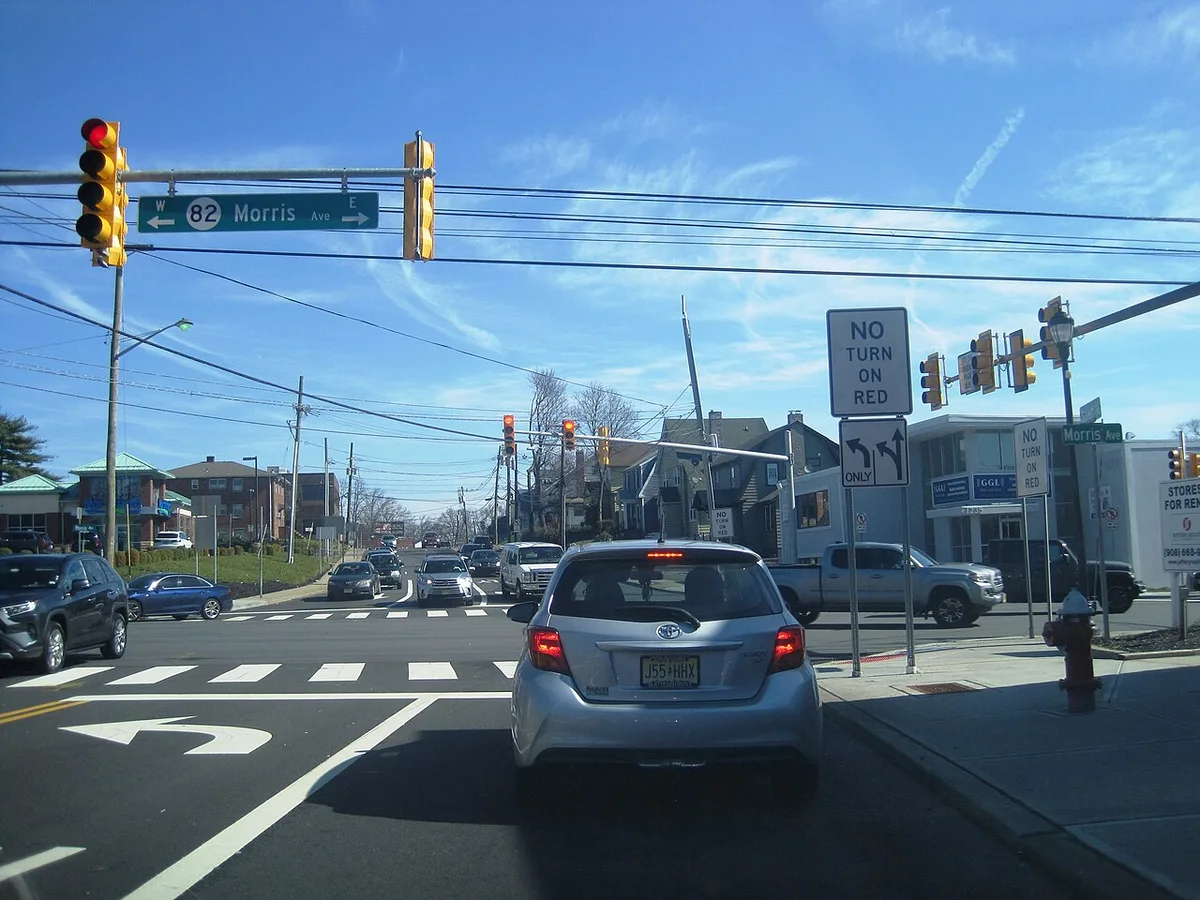
Not all intersections allow right turns on red, even after a complete stop. Some have explicit “No Right on Red” signs, which override the state’s general rule. These signs are common in areas with high pedestrian activity, complex traffic patterns, or poor visibility.
Wikimedia Commons / Mr. Matté (CC BY-SA)
Municipalities like Hoboken and Jersey City often post these signs at busy intersections. Ignoring them is a surefire way to get pulled over. Always scan for signage before attempting a right turn on red, even if you’re familiar with the area.
Local ordinances can also impose additional restrictions. For example, some towns prohibit right turns on red during specific hours or in certain zones. When in doubt, treat the intersection as a no-turn-on-red unless you’re certain it’s allowed.
The Step-by-Step Process for a Legal Right Turn on Red
Following the correct procedure ensures you stay legal and safe. Here’s how to do it right every time:
- Approach the intersection: Slow down as you near the light.
- Stop completely: Bring your vehicle to a full stop behind the stop line, crosswalk, or intersection edge.
- Check for signage: Look for a “No Right on Red” sign. If present, do not turn.
- Assess traffic and pedestrians: Check for oncoming vehicles, pedestrians in the crosswalk, and cyclists.
- Yield the right of way: Wait until the intersection is clear and it’s safe to proceed.
- Turn with caution: Make the turn at a controlled speed, staying alert for any last-minute changes.

YouTube / Online Course (YouTube thumbnail (fair-use with source credit))
This process isn’t just about avoiding tickets. It’s about preventing accidents. A rushed turn can put you in the path of an oncoming car or a pedestrian you didn’t see.
Taking those extra seconds to stop and check can save lives.
Common Mistakes That Lead to Tickets or Crashes
The most frequent error is the rolling stop. Drivers slow down but never fully stop, assuming that’s enough. It’s not.
New Jersey courts have consistently ruled that any forward motion during a supposed stop violates the law.
Another common mistake is stopping in the wrong place. Some drivers stop in the crosswalk or past the stop line, which can block pedestrians or trigger red light cameras. Others stop too far back, making it hard to see around obstacles.
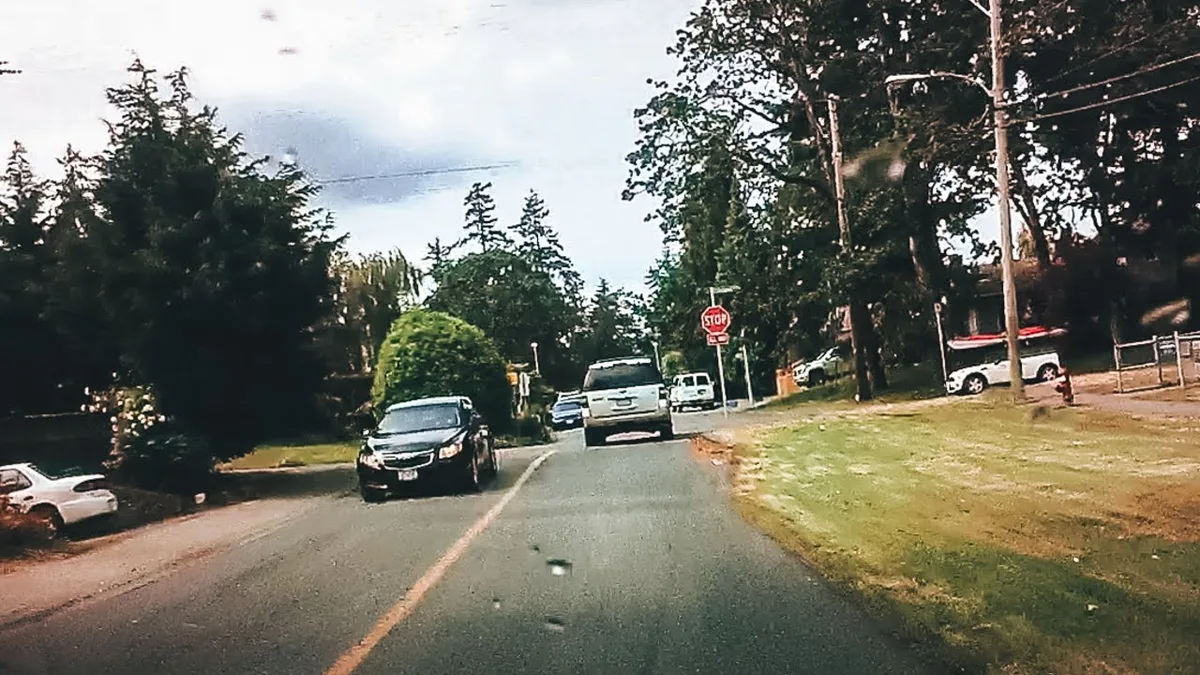
YouTube / Zula Driving School (YouTube thumbnail (fair-use with source credit))
Failing to yield to pedestrians is a third major issue. Even if you’ve stopped completely, you must wait for pedestrians to clear the crosswalk before turning. This is especially critical in urban areas where foot traffic is heavy.
Right on Red in New Jersey vs. New York, Pennsylvania, and Delaware
New Jersey’s rules are stricter than its neighbors. New York, Pennsylvania, and Delaware all allow right turns on red after a complete stop unless a sign prohibits it. New Jersey follows the same general rule but enforces the complete stop requirement more rigorously.
This difference catches many out-of-state drivers off guard. If you’re used to more lenient enforcement in Pennsylvania or Delaware, you might not realize how strictly New Jersey interprets the stop requirement.

YouTube / Daniel Steiner (YouTube thumbnail (fair-use with source credit))
Here’s a quick comparison:
| State | Right on Red Allowed | Complete Stop Enforcement |
|---|---|---|
| New Jersey | Yes, unless signed | Very strict |
| New York | Yes, unless signed | Moderate |
| Pennsylvania | Yes, unless signed | Moderate |
| Delaware | Yes, unless signed | Moderate |
Who's Most at Risk: Urban Drivers, Learners, and Out-of-State Navigators
Urban drivers face the highest risk of violations. Cities like Newark, Jersey City, and Trenton have heavy traffic, frequent pedestrian crossings, and strict enforcement. The density of intersections means more opportunities for mistakes and more eyes watching for them.
New drivers and learners are also vulnerable. They may not yet have the instinct to make a full, deliberate stop, especially under pressure from impatient drivers behind them.
Out-of-state drivers, particularly those from Pennsylvania or Delaware, often assume New Jersey’s rules are the same. They’re not. The stricter enforcement and local ordinances can lead to unexpected tickets.
Fines, Points, and Insurance Consequences in New Jersey
A violation for failing to stop completely at a red light before turning right carries a fine. As of 2026, the typical fine ranges from $50 to $200, depending on the municipality. Some areas with red light cameras may impose additional penalties.
Points on your license are another consequence. In New Jersey, a failure to stop at a traffic signal can add 2 points to your driving record. Accumulating too many points can lead to higher insurance premiums or even license suspension.
Insurance companies take these violations seriously. A single ticket for an incomplete stop can increase your premium by 10 to 20 percent, depending on your provider and driving history.
What to Do If You Get a Ticket for an Incomplete Stop
If you receive a ticket, your first step is to review the details. Check the date, time, and location to ensure accuracy. Mistakes on the ticket can sometimes lead to dismissal, though this is rare.
You have the option to pay the fine or contest the ticket in court. If you choose to contest it, gather any evidence you have, such as photos or witness statements. In some cases, taking a defensive driving course may help reduce or dismiss the charges.
If you’re found guilty, paying the fine promptly can prevent additional penalties. Some municipalities also offer payment plans or community service options for those who can’t afford the fine upfront.
FAQs About New Jersey Right-on-Red and Stop Requirements
Is a rolling stop ever legal in New Jersey?
No. New Jersey law requires a full and complete stop before turning right on red. Any forward motion during the stop is illegal and can result in a ticket.
What happens if I turn right on red where a sign prohibits it?
You’ll likely receive a ticket for disobeying a traffic control device. Fines vary by municipality but typically range from $50 to $200. Points may also be added to your license.
Do red light cameras catch right-on-red violations?
Yes. Many New Jersey intersections with red light cameras will ticket you for failing to stop completely before turning right on red. The cameras are designed to detect rolling stops.
Can I contest a right-on-red ticket in court?
Yes. You can plead not guilty and present your case. Evidence like photos or witness statements may help, though success isn’t guaranteed.
Some drivers opt for defensive driving courses to reduce penalties.
Are the rules different for commercial vehicles?
No. The same right-on-red and complete stop rules apply to all vehicles, including commercial trucks and buses. However, some commercial vehicles may have additional restrictions based on size or cargo.
How long do I have to stop before turning?
There’s no set time, but the stop must be complete and deliberate. Officers look for a full cessation of movement. A quick pause won’t cut it.
There’s no minimum duration, but the vehicle must be fully stationary.
Final Decision Guide: When to Stop, When to Turn, and How to Stay Safe
Stop completely at every red light before turning right. This is non-negotiable in New Jersey. No exceptions unless a sign explicitly allows it.
Turn only after confirming the intersection is clear. Check for pedestrians, cyclists, and oncoming traffic. Yield the right of way to all other road users.
Stay safe by making the stop deliberate and visible. Avoid rushing, even if other drivers honk. Your safety and legal compliance depend on it.