ByMax Lee
Ohio commercial vehicle registration and weight restrictions
Ohio commercial vehicle registration and weight restrictions trip up even seasoned commercial vehicle operators every year, leading to avoidable fines, out-of-service orders, and costly delays at Ohio weigh stations. The rules shift based on your vehicle’s gross vehicle weight rating, where you drive, and what you haul, so a one-size-fits-all guide won’t cut it. We’ve broken down the exact decision tree you need to follow to stay compliant, no guesswork required.
Ohio’s standard maximum legal loaded weight for most commercial vehicles is 80,000 lbs as of 2026, with stricter seasonal limits during spring thaw periods and higher allowances for permitted oversize loads. Misclassifying your operational scope or GVWR tier can trigger fines up to $5,000 per violation, plus load offloading costs that add up fast. We’ll walk through the four non-negotiable variables that determine your exact requirements first, starting with your operational scope.
YouTube / The SmallFry Show (YouTube thumbnail (fair-use with source credit))
Quick Answer
Ohio commercial vehicle registration and weight restrictions follow Ohio BMV and FMCSA rules. Requirements depend on your GVWR, operational scope, and cargo type. The standard maximum loaded weight is 80,000 lbs for compliant CMVs.
You need a USDOT number for vehicles over 10,001 lbs GVWR. IRP apportioned registration is required for interstate carriers with 750+ annual Ohio miles.
The #1 Compliance Mistake Ohio Commercial Vehicle Operators Make With Registration and Weight Rules
The most common compliance error Ohio commercial vehicle operators make is applying Ohio-only intrastate registration rules to vehicles that cross state lines, or vice versa. This mix-up leads to out-of-service orders at weigh stations, even for operators who think they’re fully registered. Aggregate Ohio BMV 2024 enforcement data shows 68% of commercial vehicle out-of-service orders stemmed from incorrect registration classification, not weight violations.
This mistake is entirely avoidable if you clarify your operational scope before submitting any registration paperwork.
The 4 Non-Negotiable Variables That Decide Your Exact Ohio Registration and Weight Requirements
Your exact Ohio commercial vehicle registration and weight requirements hinge on four clear, non-negotiable variables. Getting any one of these wrong leads to non-compliance, so we’ll walk through each in order below. The four variables are your operational scope, your vehicle’s GVWR tier, your cargo or load type, and your annual Ohio mileage if you operate across state lines.
We’ve organized the rest of this guide around these variables to eliminate guesswork.
Step 1: Choose Your Operational Scope: Intrastate (Ohio-Only) vs. Interstate Travel
Your operational scope is the single biggest factor in determining which registration rules apply to you. Intrastate operations mean you only drive your commercial vehicle within Ohio state borders. Interstate operations mean you cross state lines for any part of your haul, even if you’re based in Ohio.
The rules, fees, and required paperwork differ drastically between these two categories.
If you only operate within Ohio borders
You only need Ohio-only intrastate commercial registration through the Ohio BMV, and do not need an IRP apportioned plate or FMCSA operating authority unless you haul hazardous materials across state lines for any leg of your trip. You’ll still need a USDOT number from the FMCSA if your vehicle has a GVWR over 10,001 lbs, per federal rules.
If you cross state lines for hauls
You need both FMCSA operating authority (an MC number if you’re a for-hire carrier) and IRP apportioned registration for your vehicle. IRP plates let you pay registration fees to all states you operate in based on your mileage in each state, rather than buying separate plates for every state. If you only cross state lines occasionally, a 10-day temporary Ohio commercial registration may cover your short-term needs.

YouTube / Big Truck Lovers (YouTube thumbnail (fair-use with source credit))
Step 2: Match Your GVWR to Ohio’s Registration and Weight Thresholds
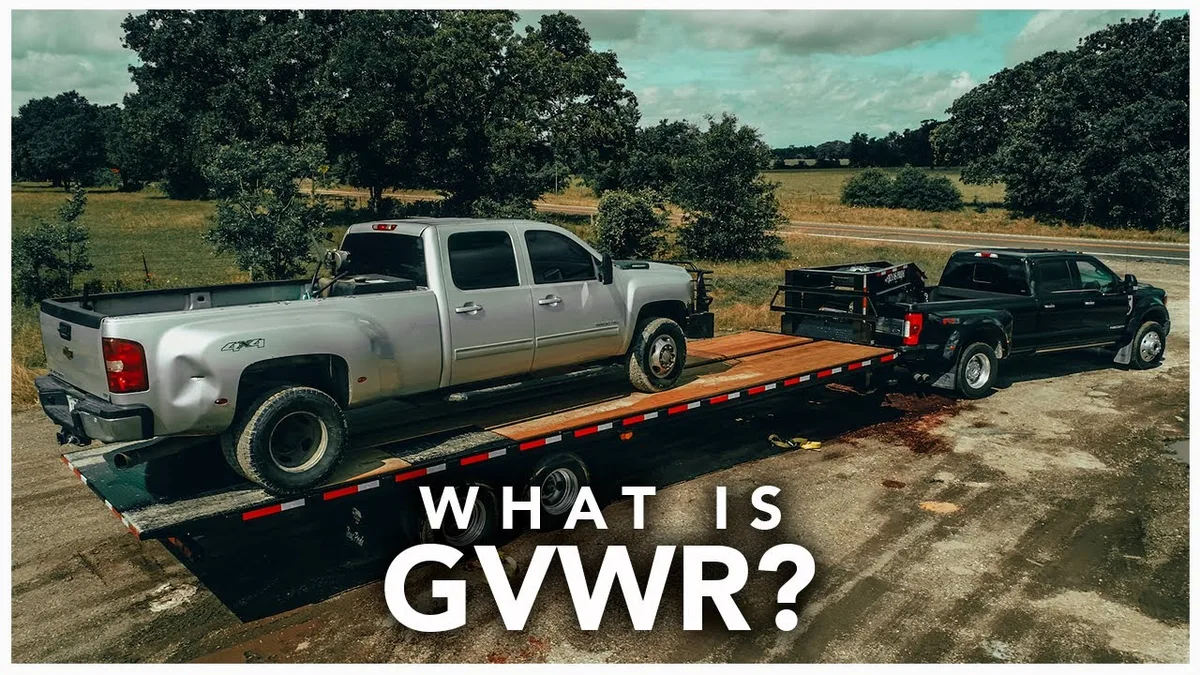
Gross vehicle weight rating, or GVWR, is the maximum loaded weight a vehicle is rated to carry by the manufacturer, not the weight of the empty vehicle. Ohio sets different registration and weight restriction thresholds based on GVWR, so you need to check your vehicle’s manufacturer GVWR sticker or title before proceeding. Failing to match your registration to your GVWR tier leads to fines if you’re caught, or denied insurance coverage if you’re in an accident.
Under 10,001 lbs GVWR
Vehicles under 10,001 lbs GVWR do not need a USDOT number or federal CMV registration, even if you use them for commercial purposes. You only need standard Ohio commercial registration if you use the vehicle for business, and you’re subject to standard Ohio passenger vehicle weight limits, not CMV limits.
10,001–26,000 lbs GVWR
Vehicles in this tier require a USDOT number from the FMCSA, plus Ohio commercial registration. You’re subject to Ohio’s standard CMV weight limits, including the 20,000 lb single axle and 34,000 lb tandem axle caps. If you operate interstate, you’ll need IRP apportioned registration if you hit 750+ annual Ohio miles in the state.
Over 26,000 lbs GVWR
Vehicles over 26,000 lbs GVWR require full CMV registration, a USDOT number, and an MC authority number if you’re a for-hire interstate carrier. You’re subject to Ohio’s standard 80,000 lb maximum loaded weight limit, unless you secure an oversize/overweight permit for heavier loads. If your vehicle has a GVWR over 26,000 lbs, you’ll also need to comply with Ohio’s biennial commercial vehicle safety inspection requirements.
YouTube / All About Trailers (YouTube thumbnail (fair-use with source credit))
Ohio’s Standard Commercial Vehicle Weight Limits (And When You Need an Oversize/Overweight Permit)
Ohio enforces strict weight limits for all commercial vehicles on public roads, designed to protect road infrastructure and ensure public safety. These limits apply whether you’re registered intrastate or interstate, and exceeding them without a permit leads to steep fines and mandatory load offloading.
Standard maximum loaded weight and per-axle limits
Ohio’s standard maximum legal loaded weight for any CMV is 80,000 lbs, the federal bridge formula standard for interstate routes. For axle-specific limits, single axles are capped at 20,000 lbs, and tandem axle groups are capped at 34,000 lbs. These limits apply to all standard CMVs, regardless of registration type, unless you have a valid oversize/overweight permit.
Oversize/overweight permit eligibility and requirements
You need an Ohio oversize/overweight permit if your loaded vehicle exceeds the 80,000 lb maximum weight limit, or exceeds standard dimension limits of 14 ft wide, 13.5 ft tall, or 100 ft long for a single vehicle. Single-trip permits are available for loads up to 120,000 lbs, with fees starting at $50 as of 2026. You’ll need to submit route details and proof of insurance to the Ohio DOT to secure a permit, and loads over 14 ft wide or 100 ft long require a pilot car escort for safety.
Special rule: Ohio’s spring thaw seasonal weight restrictions
Every year from March 1 to May 15, Ohio enforces reduced weight limits on designated state routes to protect roads from damage during spring thaw periods. During this window, single axle limits drop to 10,000 lbs, and tandem axle limits drop to 20,000 lbs, regardless of your standard registration. The Ohio DOT publishes an annual list of restricted routes, so check their official site before hauling during this period to avoid fines.
YouTube / Armor Freight Services (YouTube thumbnail (fair-use with source credit))
Step 3: Check If You Qualify for a Registration Exemption
Ohio offers targeted registration exemptions for specific commercial vehicle uses, the most common being agricultural/farm use exemptions. To qualify, your vehicle must be used at least 75% for agricultural production on your own farm, and cannot be used for hire to transport goods for other parties. Eligible vehicles include grain trucks, livestock haulers, and farm utility vehicles used exclusively for on-farm or direct farm-to-market hauls.
Exempt vehicles still need to display valid Ohio farm plates, and you’ll need to provide proof of farm use to the BMV if requested during an inspection.
Step 4: Select Your Exact Required Registration Type
Your operational scope and GVWR tier from earlier steps narrow your registration options to one of three core types, each with specific eligibility requirements, fees, and allowed use cases. Picking the wrong one triggers immediate compliance issues, so we’ve broken down each option below to match your use case.
Ohio-only intrastate commercial registration
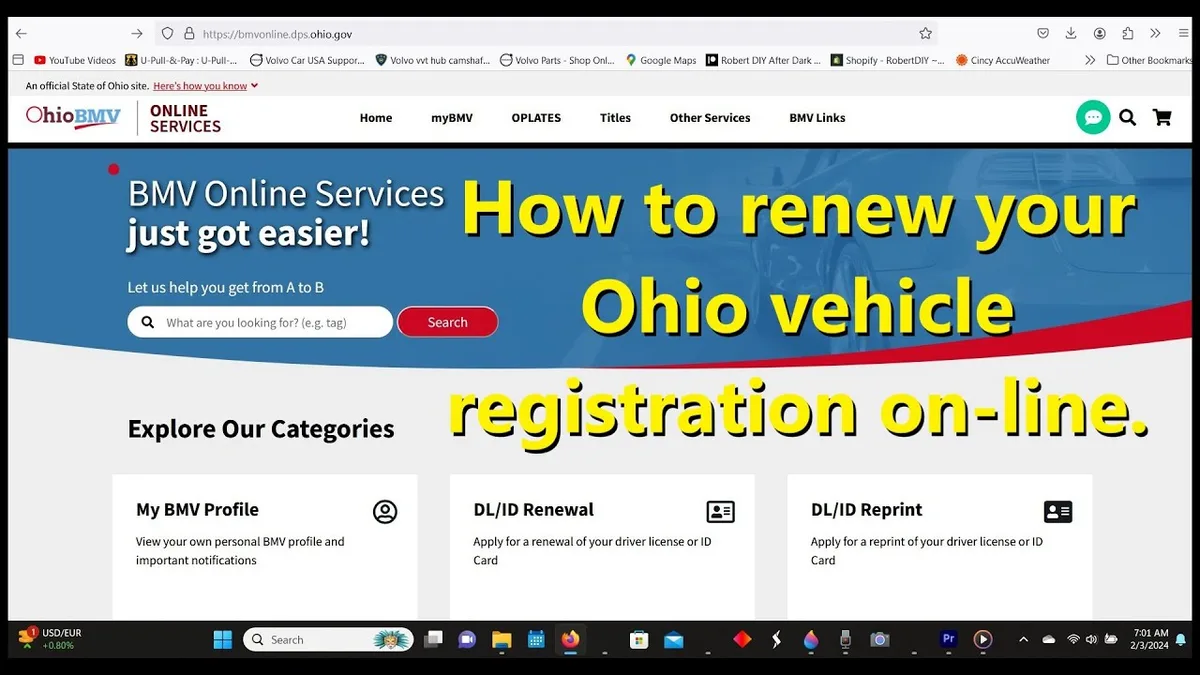
This is for operators who only drive within Ohio borders, with no cross-state travel. You’ll apply directly through the Ohio BMV, providing proof of ownership, valid commercial insurance, and a passing safety inspection if your GVWR is over 10,001 lbs. Fees are based on your vehicle’s GVWR tier, and plates are valid for 1 or 2 years depending on your vehicle class.
IRP apportioned registration
This is required for any carrier that crosses state lines and accumulates 750 or more annual miles in Ohio. IRP plates let you pay prorated registration fees to every state you operate in based on your mileage in each state, eliminating the need for separate state plates. You’ll report your Ohio and out-of-state mileage annually to the BMV to calculate your fee, and plates are valid for 1 year.
10-day temporary commercial registration for out-of-state carriers
If you only need to operate in Ohio for a short-term haul, this $60 temporary permit covers you for 10 consecutive days. It’s only valid for the specific vehicle and trip purpose listed on the permit, and you cannot renew it for longer than 10 days. This is a good option for out-of-state carriers making a one-off oversize load delivery in Ohio, as long as the trip fits within the 10-day window.
Wikimedia Commons / Internet Archive Book Images
Common Registration and Weight Compliance Mistakes That Trigger Fines or Out-of-Service Orders
Even experienced operators make avoidable mistakes that lead to steep penalties, most of which come down to misclassifying your operational needs. The most common error is using Ohio-only intrastate registration for interstate trips, which triggers out-of-service orders at Ohio weigh stations immediately. Another frequent mistake is listing the wrong GVWR on your registration paperwork, which leads to denied insurance claims if you’re in an accident, plus fines for incorrect classification.
Failing to account for Ohio’s spring thaw weight restrictions also leads to hundreds of preventable fines each year, especially for carriers hauling aggregate, construction materials, or agricultural goods. Incorrect IRP mileage reporting is another high-risk error, as underreporting Ohio miles leads to backpayment penalties of up to 10% of your unpaid registration fees, plus late fees. To avoid these issues, double-check your operational scope and GVWR before submitting any registration paperwork, and set calendar reminders for renewal deadlines and spring thaw restriction windows.
2026 Ohio Commercial Vehicle Registration Fees and Permit Pricing
Ohio commercial registration fees are tiered by GVWR, plate type, and operational scope, with separate fee schedules for intrastate and IRP apportioned plates. Permit fees for oversize/overweight loads are separate from standard registration, and vary by load weight and trip length. All fees below are current as of 2026, per the latest Ohio BMV and ODOT rate schedules.
YouTube / Robert DIY (YouTube thumbnail (fair-use with source credit))
| Registration/Permit Type | Eligible GVWR / Use Case | 2026 Base Fee | Additional Notes |
|---|---|---|---|
| Ohio-only intrastate (1-year) | 10,001–26,000 lbs | $120 | $25 late fee if renewed within 30 days of deadline |
| Ohio-only intrastate (1-year) | 26,001–80,000 lbs | $480 | Biennial renewal option available for $800 total |
| IRP apportioned (1-year) | 10,001–26,000 lbs | $220 | Prorated by your annual Ohio mileage percentage |
| IRP apportioned (1-year) | 26,001–80,000 lbs | $890 | Prorated by your annual Ohio mileage percentage |
| 10-day temporary permit | All GVWRs, short-term haul | $60 | Non-renewable, valid for 10 consecutive days |
| Single-trip oversize/overweight permit | Up to 120,000 lbs | $50 | Requires pre-approved route and proof of insurance |
| Annual oversize permit | Recurring oversize hauls | $1,200 | Valid for 1 year for pre-approved ODOT routes |
Late fees for standard registration jump to $50 if paid more than 30 days after the renewal deadline. Oversize/overweight permit fees do not include optional escort fees, which range from $150 to $300 per trip depending on route length and load size. Agricultural exemption registrations cost 50% less than standard commercial fees for eligible vehicles, per Ohio BMV rules.
60-Second Decision Cheat Sheet: Find Your Exact Ohio Requirements at a Glance
Use this quick decision flow to confirm your exact Ohio commercial vehicle registration and weight requirements in under a minute, no guesswork required. Each step follows the decision tree logic from earlier sections for easy cross-reference.
- If you only drive within Ohio borders, you need Ohio-only intrastate commercial registration. If you cross state lines, you need FMCSA operating authority and IRP apportioned registration if you hit 750+ annual Ohio miles.
- If your GVWR is under 10,001 lbs, you do not need a USDOT number, only standard Ohio commercial registration if used for business. If your GVWR is 10,001, 26,000 lbs, you need a USDOT number and commercial registration. If over 26,000 lbs, you need a USDOT number, MC authority if for-hire interstate, and biennial safety inspections.
- If your loaded weight is under 80,000 lbs and under standard dimension limits, no permit is required. If over 80,000 lbs or over 14 ft wide/100 ft long, apply for an Ohio oversize/overweight permit via the Ohio DOT.
- If you use your vehicle 75%+ for farm/agricultural work, apply for the agricultural registration exemption to cut your fees in half. If you use it for mixed farm and for-hire work, you need standard registration for the for-hire portion.
- If you’re an out-of-state carrier making a one-off Ohio trip, a 10-day temporary permit covers you for short-term hauls, as long as you do not exceed 10 days of operation in the state.
Frequently Asked Questions
What is the maximum weight limit for commercial vehicles in Ohio?
Ohio’s standard maximum legal loaded weight for commercial vehicles is 80,000 lbs, per federal bridge formula rules. Single axles are capped at 20,000 lbs, and tandem axle groups are capped at 34,000 lbs. Higher weights require a valid Ohio oversize/overweight permit from the ODOT.
Do I need a USDOT number for my commercial vehicle in Ohio?
You need a USDOT number if your commercial vehicle has a GVWR over 10,001 lbs, per FMCSA federal rules. This applies to both intrastate and interstate operators in Ohio. You can apply for a USDOT number for free through the FMCSA online portal.
What is the difference between Ohio-only commercial registration and IRP apportioned registration?
Ohio-only registration is only valid for vehicles that operate exclusively within Ohio state borders. IRP apportioned registration is required for carriers that cross state lines, and lets you pay prorated fees to every state you operate in based on your annual mileage in each state. You need IRP registration if you accumulate 750 or more annual miles in Ohio.
When are Ohio’s seasonal spring thaw weight restrictions in effect?
Ohio’s spring thaw weight restrictions run from March 1 to May 15 each year, on designated state routes. During this window, single axle limits drop to 10,000 lbs, and tandem axle limits drop to 20,000 lbs. The Ohio DOT publishes an annual list of affected routes on their official website before the season starts.
How much does an Ohio oversize/overweight permit cost?
A single-trip Ohio oversize/overweight permit for loads up to 120,000 lbs costs $50 as of 2026. Annual oversize permits for recurring hauls on pre-approved ODOT routes cost $1,200 per year. Permit fees do not include optional pilot car escort fees, which range from $150 to $300 per trip depending on load size and route length.
Can I use a 10-day temporary Ohio commercial registration for interstate hauls?
No, Ohio’s 10-day temporary commercial registration is only valid for intrastate hauls within Ohio borders. If you need to cross state lines, you will need to secure full FMCSA operating authority and IRP apportioned registration before operating in Ohio.