Black Friday deals are live on Amazon · limited-time discounts, grab them before they’re gone
Grab the deals

ByMax Lee
Tesla Model Y: The Best Touchless Settings for Matte Paint Finishes Unveiled!
A matte Tesla Model Y can look distinctive, but matte paint protection film (PPF), vinyl wrap, and factory paint do not behave like conventional glossy paint. Their low-gloss appearance comes from a textured or light-scattering surface that can develop permanent shiny patches when polished, scrubbed, or exposed to unsuitable chemicals.
The safest approach is not a special Tesla paint setting. It is a touchless wash process: loosen contamination with water and a compatible cleaner, rinse without brushes, and dry with air whenever possible. Tesla’s Car Wash Mode can prepare the vehicle for washing, but it does not make an abrasive or brush-based car wash safe for a matte finish. For more on this, see our guide on nmi slow mover pull out law rural road.
This guide explains the best settings, pressure practices, cleaning products, drying methods, and common mistakes for a matte-finish Model Y in 2026.
First, Identify the Matte Finish
Before choosing a wash method, determine what is actually covering the vehicle. The care instructions can differ significantly.
Matte vinyl wrap
A matte wrap is a thin film applied over the original paint. It can be vulnerable to:
- High heat
- Solvent-based cleaners
- Adhesive damage
- Aggressive pressure at edges and seams
- Wax or polish that leaves glossy residue
Matte paint protection film
Matte or “satin” PPF offers impact protection while changing the appearance of the underlying paint. It generally tolerates routine washing well, but the film still needs manufacturer-approved chemicals and careful treatment around edges.
Factory matte paint
A true factory matte paint system has a clear coat designed to remain non-reflective. Unlike conventional clear coat, it cannot normally be corrected by machine polishing without creating a noticeably glossier area.
Many Model Ys described as “matte” are actually wrapped or covered with matte PPF. If you are unsure, ask the installer or inspect the vehicle paperwork before applying any product.
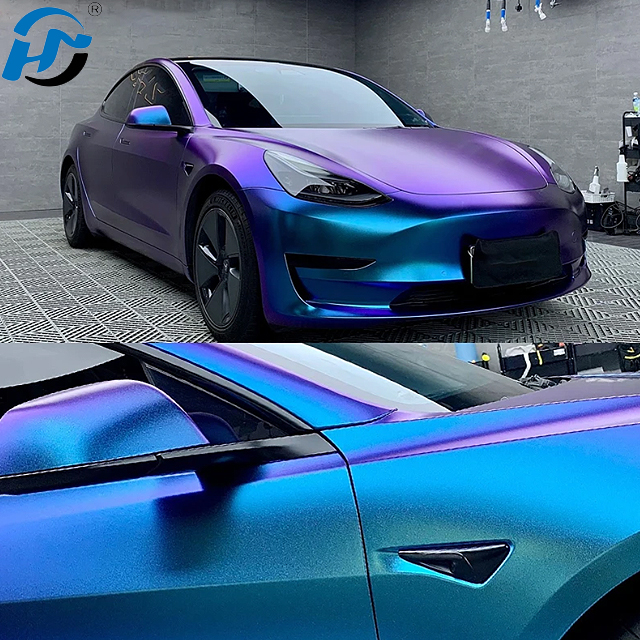
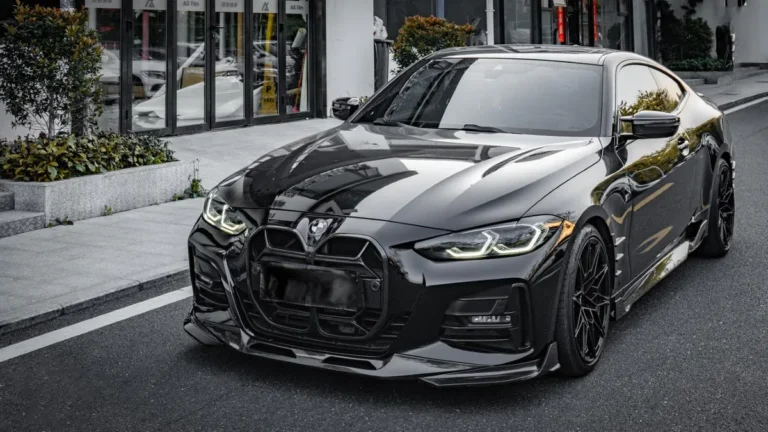
An illustrative matte wrap material; the surface-care principles also apply to matte PPF.
Credit: www.alibaba.com
What “Touchless” Really Means
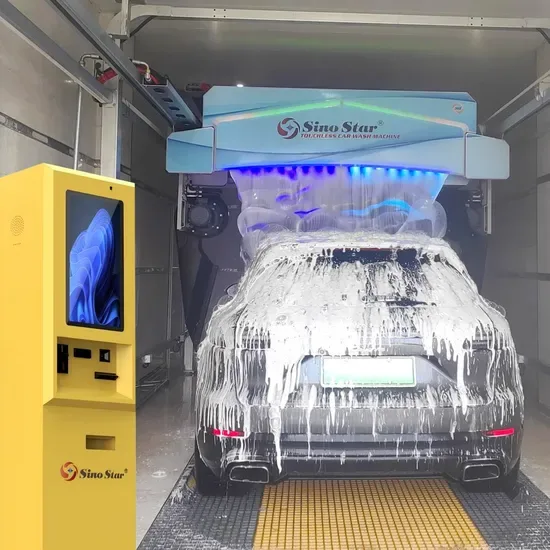
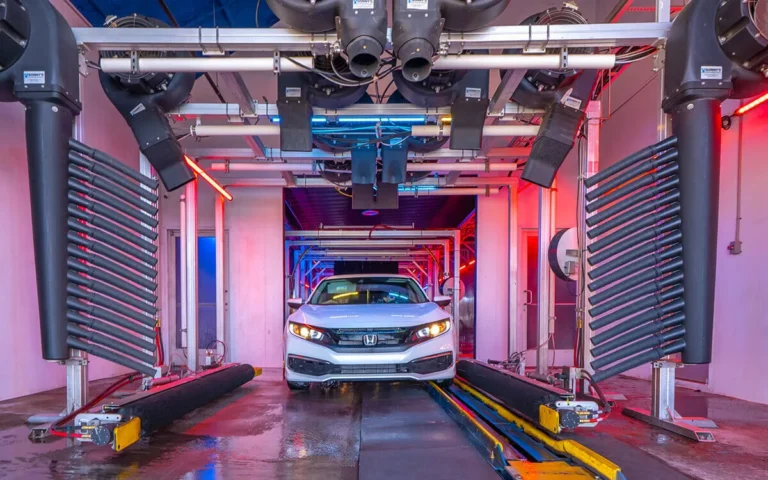
A touchless wash minimizes or eliminates direct contact between the cleaning equipment and the finish. It normally uses:
- A plain-water pre-rinse
- A foam or detergent pre-soak
- High-pressure water at a controlled distance
- A final rinse
- Air drying or filtered “spot-free” water
Touchless does not mean risk-free. Road film, brake dust, tree sap, and dried insects may remain after a weak touchless cycle. Increasing pressure or using a highly alkaline chemical to compensate can create a different type of damage.
The goal is to reduce friction while using enough dwell time and water flow to lift contamination safely.
Best Touchless Settings for a Matte Model Y
Car-wash menus vary, so the labels may not match exactly. Choose the closest available options.
| Wash setting | Recommended choice | Why it matters |
|---|---|---|
| Wash type | Touchless or brush-free | Prevents rotating brushes and felt strips from contacting the finish |
| Pre-rinse | Full vehicle rinse | Removes loose grit before detergent is applied |
| Pre-soak | Mild or standard foam | Softens traffic film, insects, and dust without scrubbing |
| Chemical strength | Standard, finish-safe setting | Strong “heavy duty” chemicals may stain or change the appearance of film |
| Brush option | Off or declined | Brushes can create shiny contact marks and edge lifting |
| High-pressure rinse | Moderate pressure, held away from the surface | Avoids forcing water beneath film edges or seals |
| Final rinse | Spot-free or deionized water | Reduces mineral spotting |
| Drying | Air dryer | Eliminates most rubbing |
| Wax or polish | Off | Many products add gloss or leave uneven residue on matte surfaces |
The most important setting: no brushes
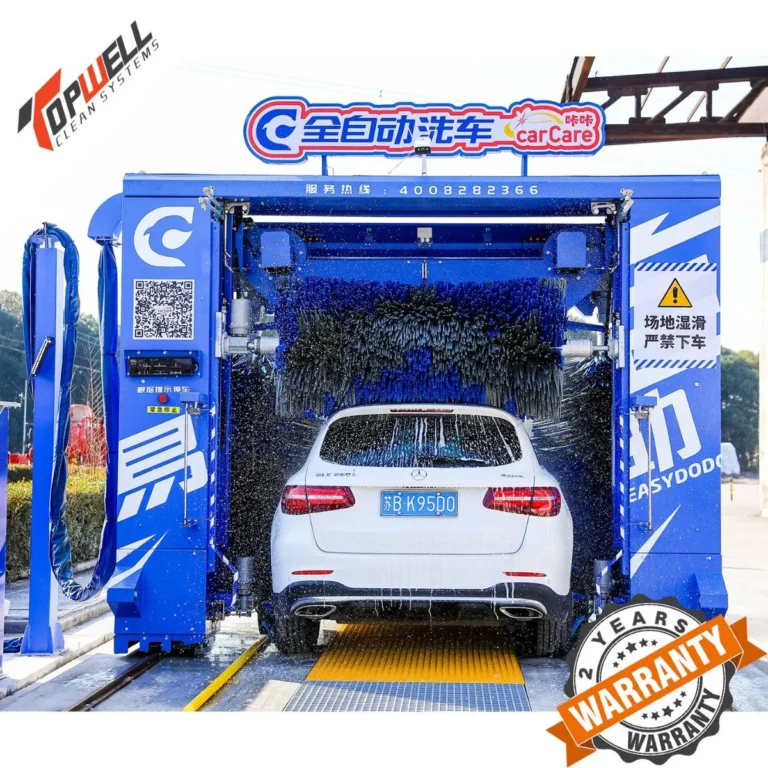
If the wash offers only a brush cycle, do not use it. Soft-looking brushes can retain grit from vehicles washed before yours. That contamination is then dragged across the surface.
Also avoid “soft-touch,” “foam brush,” and cloth-strip systems. They are still contact washes.
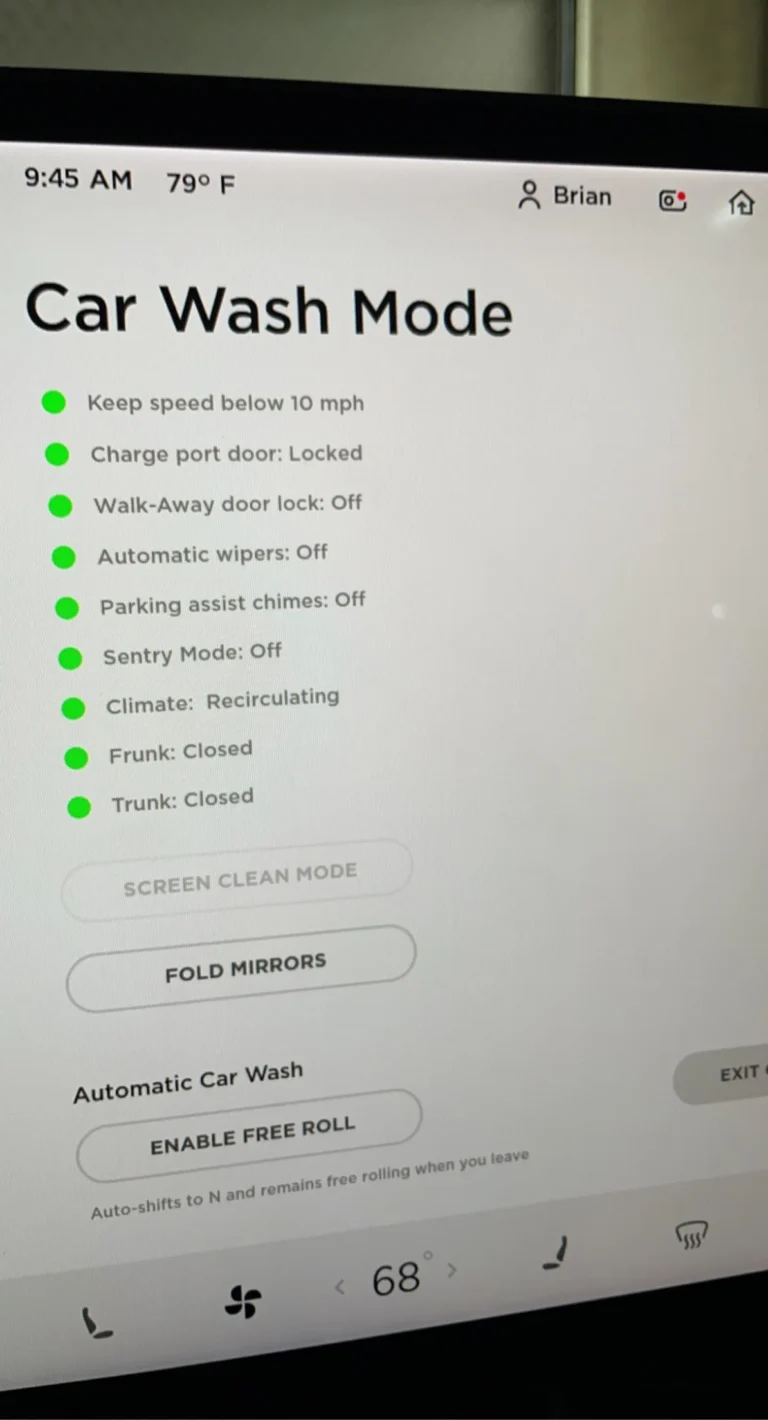
Use Tesla Car Wash Mode correctly
Tesla’s Car Wash Mode is a vehicle-preparation function, not a matte-paint protection program. It can help close or disable systems that should not operate during washing, such as the windows, windshield wipers, and charge-port access.
Open the touchscreen and search the Controls menu for Car Wash Mode. Follow the current on-screen instructions for your software version. Tesla’s official owner resources should take priority if the menu layout or available functions differs.
Car Wash Mode is especially useful before a conveyor wash, but it does not remove the need to select a brush-free cycle. For a stationary pressure wash, confirm that the vehicle is safely parked, doors and windows are closed, and charging equipment is disconnected unless the wash facility specifically supports washing while connected.
A Safe Touchless Wash Procedure
1. Wash in shade and allow the panels to cool
A hot matte surface dries detergent too quickly and increases the chance of water spotting. Work out of direct sun when possible. Do not begin if the panel is hot enough that water evaporates immediately.
2. Rinse from top to bottom
Start with the roof and upper glass, then move toward the lower doors, rocker panels, and rear bumper. This lets dirty water flow downward rather than across areas you have already rinsed.
Use a broad spray pattern. Avoid concentrating a narrow jet on:
- Film edges
- Door and hood seams
- Badges
- Camera housings
- Window seals
- Charging-port doors
- Damaged or lifted wrap
3. Apply a matte-safe pre-soak
Choose a cleaner specifically approved for matte paint, matte PPF, or matte vinyl. Let it dwell according to the product instructions; a short dwell period is often enough to soften traffic film.
Do not allow the detergent to dry. If the surface begins drying before the rinse, add water rather than increasing chemical concentration.
4. Rinse without contact
Use a touchless rinse cycle or pressure washer with moderate pressure. Keep the nozzle moving and maintain a sensible distance from the panel. The exact pressure depends on the equipment and nozzle, so a conservative distance is safer than chasing maximum force.
A common mistake is placing a pressure-washer nozzle close to the paint to remove one stubborn spot. That can drive water under an edge or damage a wrap seam. Repeat the pre-soak instead.
5. Select the spot-free final rinse
Filtered or deionized water leaves fewer minerals behind. It is particularly helpful on dark matte colors, where dried mineral marks can look like pale stains.
6. Use air drying first
Choose the air-dry option if available. Air is preferable to a shared car-wash towel, which may contain grit or detergent residue.
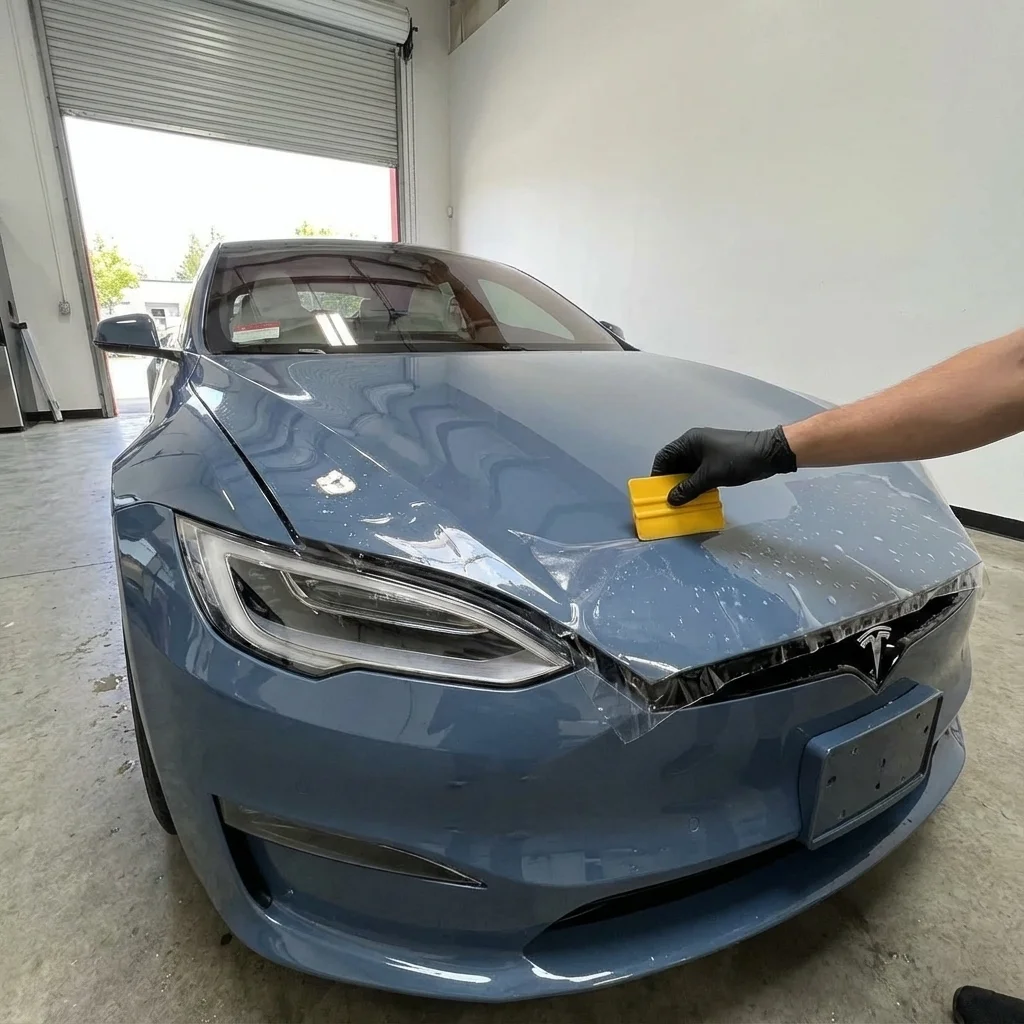
Controlled workshop conditions help installers inspect film edges and surface contamination.
Credit: gilroyblackout.com
If Touchless Washing Does Not Remove Everything
Touchless washing is excellent for routine maintenance, but it may not remove bonded contamination. Bird droppings, tree sap, tar, and bug residue can require targeted treatment.
Do not scrape or polish those areas. Instead:
- Saturate the contamination with a finish-compatible cleaner.
- Allow it to soften without drying.
- Rinse thoroughly.
- Repeat once if necessary.
- If contact is unavoidable, use a clean, damp microfiber approved by the wrap or PPF manufacturer and use one light pass—never aggressive rubbing.
For a fully contact-minimized routine, arrange professional decontamination with a shop experienced in matte finishes. A technician can identify whether the problem is contamination, film damage, or a change in the underlying paint.
Drying a Matte Model Y Without Creating Marks
Air drying is the first choice, but it may not remove every drop from mirrors, trim, handles, and panel gaps.
If manual drying is necessary:
- Use a clean, plush microfiber towel reserved for the vehicle.
- Blot or lightly glide; do not scrub.
- Replace the towel as soon as it becomes visibly dirty.
- Dry in straight, overlapping passes rather than circular motions.
- Pay special attention to water trapped around badges and mirrors.
- Never use a towel that has touched wheels, tires, or the ground.
Compressed air can clear seams, but only use clean, dry, oil-free air. Keep the nozzle several inches away and avoid forcing debris out of a dirty wheel well onto a clean panel. If you are setting up a garage, review guidance on choosing practical air equipment before using a compressor near the vehicle.
Products to Use—and Products to Avoid
Safer product categories
Look for products that explicitly state compatibility with:
- Matte paint
- Matte vinyl
- Satin PPF
- Factory matte finishes
A neutral or mildly formulated vehicle shampoo is generally preferable to a strong degreaser. Always test a new product on a small, inconspicuous area first, particularly if the vehicle is wrapped.
Avoid these products and techniques
Do not use:
- Standard carnauba wax designed to increase gloss
- Conventional paint polish or compound
- Ceramic products that are not approved for matte surfaces
- Abrasive clay without professional guidance
- Magic erasers or household scrub pads
- Solvents, acetone, or undiluted alcohol
- Strong wheel cleaner on painted panels
- Household dish detergent
- Automatic brush tunnels
- Dirty towels or shared wash mitts
Some matte-specific sealants and coatings are available, but compatibility depends on whether the surface is paint, vinyl, or PPF. A product that works on matte PPF may not be appropriate for a factory matte clear coat.
Maintenance Schedule for Different Driving Conditions
The right frequency depends on exposure rather than a fixed calendar.
Light city use
Wash when the surface has visible dust, bird droppings, or road film. Regular gentle cleaning is safer than allowing contamination to bake onto the finish.
Highway or winter driving
Road salt, oily film, and fine grit accumulate quickly. Rinse the lower doors, wheel arches, and rear bumper more often. Avoid letting salt remain on the vehicle for extended periods.
Coastal or dusty environments
Salt mist and mineral dust can leave deposits even when the vehicle looks relatively clean. A plain-water rinse may be worthwhile between full washes.
After bird droppings or tree sap
Treat the contamination promptly. Heat and sunlight can make organic deposits more difficult to remove and may stain the finish or film.
If you are buying a used Model Y with a wrap, inspect the finish in indirect daylight and ask for installation records. A careful used-vehicle inspection checklist can help you distinguish cosmetic film wear from damage to the original paint.
How to Handle Snow, Mud, and Mountain Grime
A matte Model Y driven in mountainous or snowy areas may collect abrasive grit and de-icing residue. Never begin by wiping visibly muddy panels. First flush away as much loose material as possible.
For winter use:
- Rinse wheel arches and rocker panels thoroughly.
- Do not direct high pressure into loose film edges.
- Avoid scraping frozen contamination across the paint.
- Let ice soften naturally or use a vehicle-safe de-icer.
- Dry door seams and charging-port areas after washing.
If the vehicle is used in high-elevation travel, local road conditions and equipment requirements are a separate consideration; this mountain-driving vehicle guide provides useful ownership context without changing the paint-care rules.
What to Do When Matte Paint Is Already Shiny or Stained
A shiny patch is not always a cleaning problem. It may indicate:
- Friction damage
- Burnishing from a towel or brush
- Incorrect wax or coating
- Film wear
- Clear-coat damage
- Chemical staining
Do not try to correct it with a polishing machine. Polishing can make the contrast worse by creating an even glossier area.
Photograph the affected panel in consistent lighting, note what products were used, and contact the wrap or PPF installer. If the vehicle has factory matte paint, consult Tesla service or a qualified refinishing specialist before any repair.
Quick Pre-Wash Checklist
Before starting, confirm:
- The vehicle surface is cool.
- The wash is genuinely brush-free.
- Car Wash Mode is enabled when appropriate.
- The pre-soak is compatible with the finish.
- Wax and polish options are disabled.
- The final rinse is spot-free if available.
- Air drying is selected.
- Any manual towel is clean and dedicated to the vehicle.
- Film edges and seams are not already lifting.
For a broader contact-wash method when touchless cleaning cannot remove bonded dirt, use a carefully controlled low-friction wash setup. On a matte finish, that should be an occasional, deliberate process—not the default automatic-wash routine.
Frequently Asked Questions
Does Tesla Model Y have a special matte-paint wash setting?
No. Tesla Car Wash Mode prepares the vehicle’s systems for washing, but it does not adjust the paint or guarantee that a wash is safe. Select a separate touchless, brush-free wash cycle.
Is a touchless car wash completely safe for matte paint?
It is generally lower risk than a brush wash, but it is not completely risk-free. Strong chemicals, dried detergent, excessive pressure, and mineral-rich water can still stain or damage matte paint, vinyl, or PPF.
Can I use a pressure washer on a matte Model Y?
Yes, with caution. Use a broad spray pattern, keep the nozzle moving, maintain distance, and avoid directing concentrated pressure at film edges, damaged areas, seals, cameras, and charging-port components.
Can I use wax on a matte finish?
Avoid conventional wax unless the product manufacturer specifically approves it for your exact surface. Many waxes add gloss and can leave uneven shiny patches. Use a matte-compatible protectant instead.
Should I hand-dry the vehicle after a touchless wash?
Air drying is preferable. If water remains, blot or lightly glide a clean, dedicated microfiber towel over the surface. Never scrub or use a towel that has collected grit.
How often should I wash a matte Model Y?
Wash according to contamination and driving conditions. Clean bird droppings, sap, salt, and bug residue promptly, and use gentle routine washes before grime bonds to the surface.
What is the safest way to remove a stubborn bug or bird dropping?
Soak it with a compatible matte-safe cleaner, allow it to soften, and rinse. Repeat rather than scraping. If it remains, ask a matte-finish specialist to remove it.
Final Takeaway
The best touchless settings for a matte Tesla Model Y are brush-free wash, complete pre-rinse, compatible pre-soak, moderate-pressure rinse, spot-free final rinse, and air drying. Tesla Car Wash Mode is useful for vehicle preparation, but it is not a substitute for choosing the correct wash equipment.
Keep friction low, avoid gloss-producing products, protect film edges from concentrated pressure, and treat contamination before it dries. When a matte surface develops a shiny patch or stain, stop experimenting and have the finish assessed by Tesla, the film installer, or a qualified matte-paint specialist.
Choose a brush-free wash and save the vehicle-specific finish-care instructions before your next cleaning.