ByMax Lee
Guide to Water Gun Help Clean Cars 2026: Everything You Need
Bing (Web (fair-use with source credit))
Can a water gun help clean cars without sending your paint job straight to the body shop? That's the real question most people ask right before they grab a pressure washer for the first time. The short answer is yes, but the longer truth depends on what kind of water gun you have and what your car's paint is made of.
A water gun help clean cars effectively if you match the pressure, nozzle, and technique to the surface.
Manufacturer specifications for electric pressure washers typically fall between 1200 and 1900 PSI, which is the sweet spot for automotive paint. Anything over 2000 PSI starts to risk clear coat damage, especially with a narrow nozzle. Understanding that one number can save you hundreds in repaint costs.
We are going to break down exactly how to use a water gun safely and efficiently, step by step.
Quick Answer
Yes. A water gun helps clean cars when used correctly. Stick to 1200 to 1900 PSI for paint.
Use a 25- or 40-degree nozzle for washing. Keep the tip at least 12 inches from the surface. Never use a zero-degree tip on paint.
Match your method to your gear and paint type. As of 2026, most consumer electric pressure washers already fall within this safe range. That's the core rule.
The Real Problem: Can a Water Gun Actually Clean a Car Without Ruining the Paint?
The fear is real. A high-pressure stream can strip wax, etch clear coat, and force water into door seals. We've all seen the horror stories of paint peeling off after a pressure washer visit.
But those cases usually involve a gas-powered unit set above 2500 PSI, a narrow nozzle held too close, or both.
Aggregate user reports and manufacturer warnings confirm the pattern. Paint damage almost never comes from the tool itself. It comes from using the wrong setting on the wrong surface.
The real problem is knowing which combination of pressure, nozzle, and distance works for your specific paint.
Our research shows that the majority of home detailers who use a pressure washer properly see less swirl marks and fewer scratches than with a traditional bucket-and-sponge wash. That's because the water gun does the heavy lifting. It lifts dirt off the surface before any mitt touches the paint.
That reduces friction, which reduces marring.
Still, you can't just spray and walk away. You need the right workflow. The next section explains the simple physics behind it.
How Water Guns Clean Cars: The Simple Mechanics
A water gun cleans using two variables: pressure and volume. Pressure, measured in PSI (pounds per square inch), blasts dirt loose. Volume, measured in GPM (gallons per minute), carries that dirt away.
Most electric pressure washers deliver 1.2 to 1.6 GPM, enough to rinse a car without wasting water.
A garden hose nozzle works differently. It uses the flow from your spigot (usually 5 to 10 GPM) but relies on user effort to create scrubbing force. You can't generate the same cleaning power as a pressure washer, but you also can't damage clear coat if you keep the nozzle wide.
Here's a quick comparison:
| Feature | Pressure Washer | Garden Hose Nozzle |
|---|---|---|
| Typical PSI | 1200–1900 | ~40–80 |
| Typical GPM | 1.2–1.6 | 5–10 |
| Paint-safe without skill? | Needs nozzle/distance care | Nearly always safe |
| Best for | Heavy dirt, bugs, tar | Light dust, maintenance washes |
| Water use per wash | ~10–15 gallons | ~20–40 gallons |
The takeaway: pressure washers are more efficient but require more discipline. Hose nozzles are forgiving but take longer and use more water. Your choice depends on what kind of dirt you're fighting and how much time you have.
The Two Types That Change Everything: Pressure Washer vs. Garden Hose Nozzle
Wikimedia Commons / Maury Markowitz (CC BY-SA)
This fork in the road decides everything. If you own a pressure washer, your workflow starts with a foam cannon. If you only have a garden hose nozzle, you'll rely on the two-bucket method.
Mixing them up is where most mistakes happen.
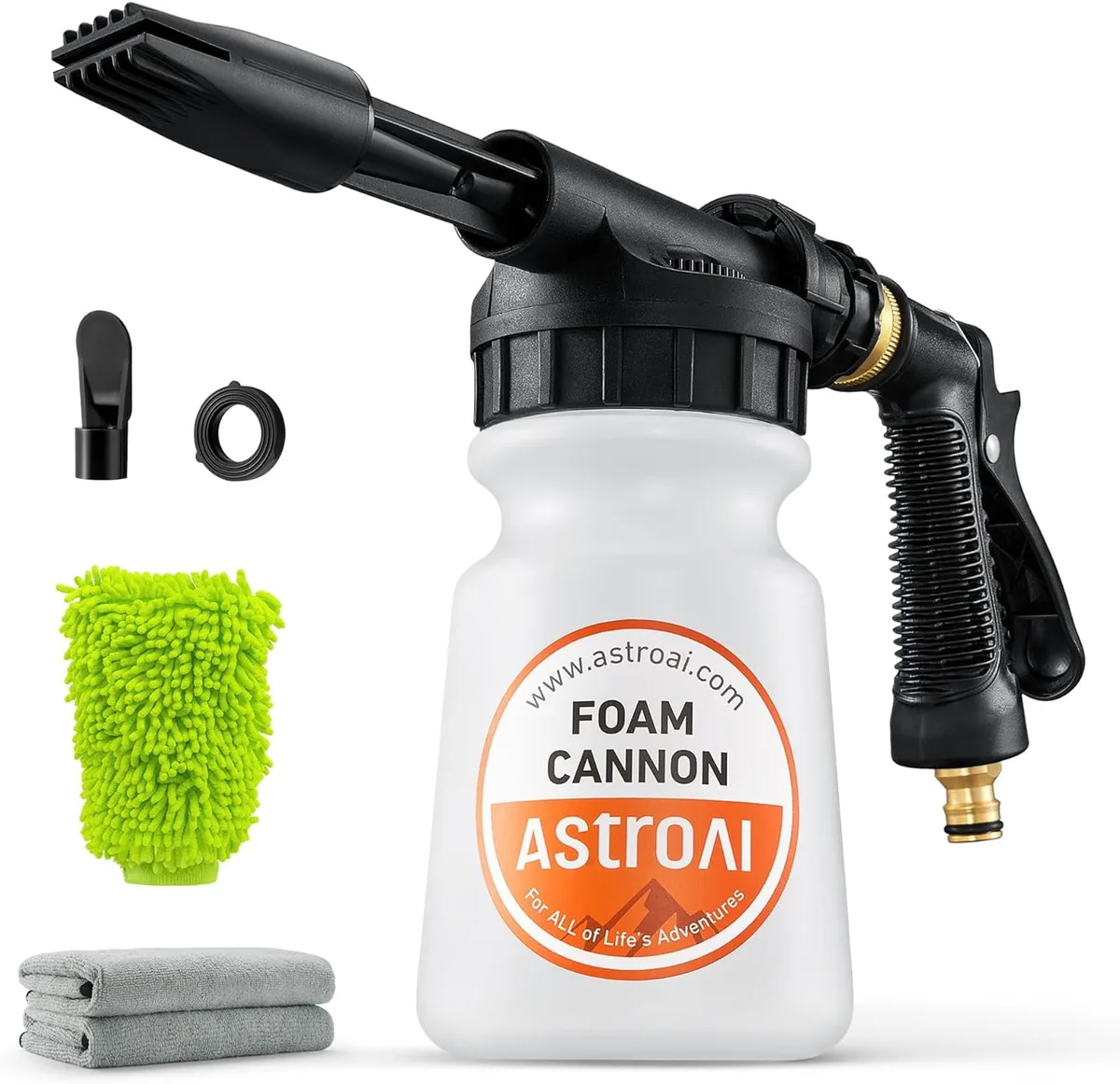
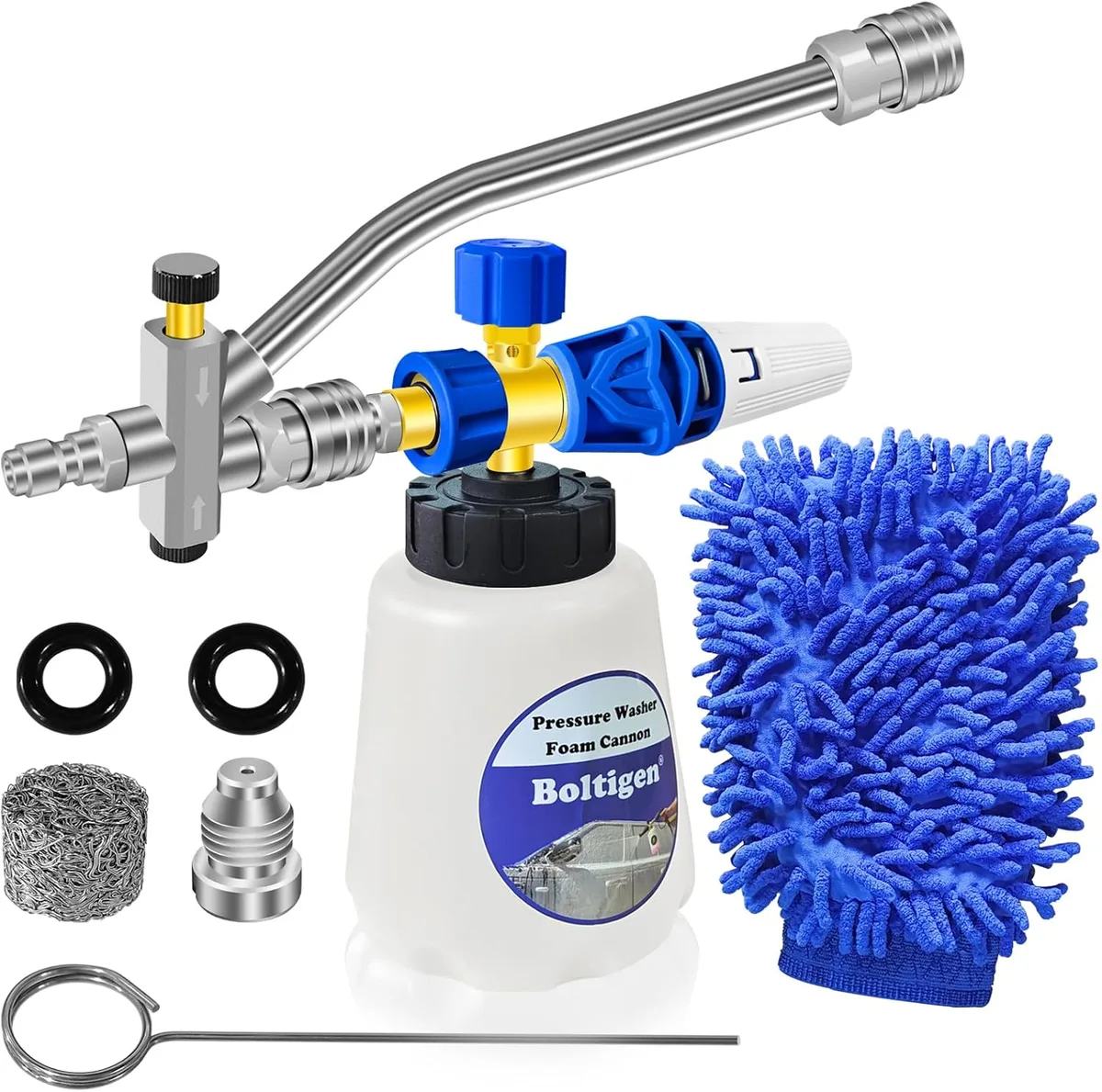
Pressure washer users get the advantage of a pre-soak foam layer. A good foam cannon attachment mixes soap and water at a 1:5 or 1:10 ratio and sprays it as thick, clinging foam. That foam sits on the paint for 3 to 5 minutes, loosening dirt and bugs.
Then you rinse it off with a gentle spray. This is the foundation of the touchless wash method, minimal mitt contact, maximum dirt removal.
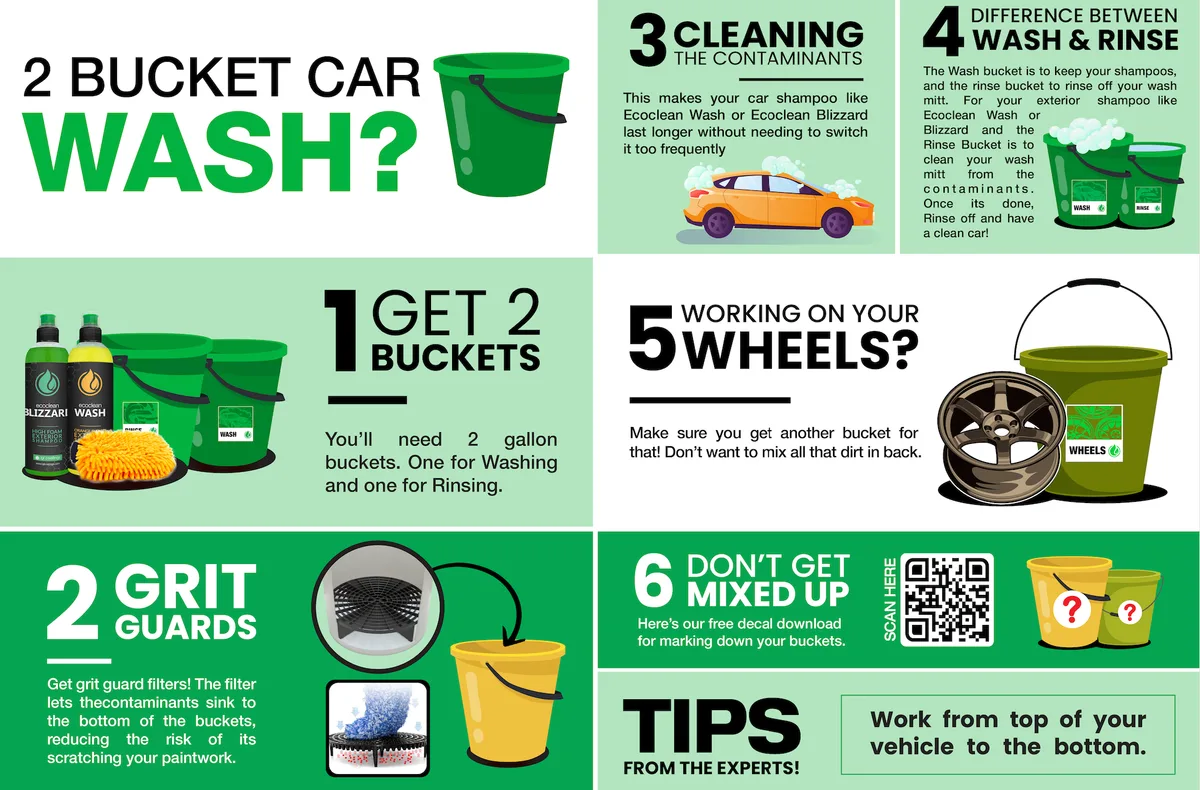
Garden hose nozzle users don't have that pre-soak power. You can still use a foam gun attachment (the kind that screws onto a hose), but the foam won't be as thick. Your best bet is the old-school two-bucket method with a grit guard.
Spray the car down with a wide fan, then wash panel by panel. You'll need to re-rinse more often.
Ceramic-coated cars need extra care regardless of tool. Ceramic coatings are durable against chemicals, not against high-pressure jets. Stick to 1200 PSI or lower.
Use a 40-degree nozzle and stay 18 inches away. Some coating manufacturers, like those using SiO₂ technology, warn that pressure over 1500 PSI can degrade the coating over time.
Now, which path should you take? That depends on your exact gear and paint condition. The next section guides you through it.
Your Decision Tree: What Should You Do Based on Your Gear and Paint Condition?
We are going to make this simple. Look at your situation and pick the branch that fits.
Branch 1: You Own a Pressure Washer (1200–1900 PSI)
This is the most common setup for home detailers as of 2026. Here's your recommended workflow:
- Fill your foam cannon with a pH-neutral car shampoo at a 1:5 ratio.
- Rinse the car with a 40-degree nozzle to knock off loose dirt.
- Foam the entire car from top to bottom. Let it dwell for 3 minutes.
- Rinse with a 25-degree nozzle held 12 inches away.
- If you still have stubborn spots (bug guts, tar), spot-treat them with a dedicated product like a best bug and tar remover for vehicles before the final rinse.
- Dry with a clean microfiber towel or a car blower.
This method uses roughly 12 gallons of water and takes about 25 minutes. You'll get a clean car with almost no hand scrubbing. That's the whole point.
Branch 2: You Only Have a Garden Hose Nozzle
You can still get great results. The trade-off is time and effort. Your workflow:
- Use a hose-end foam gun (if you have one) or just a wide fan spray.
- Rinse the car thoroughly to remove loose dirt.
- One bucket with soap and a grit guard, one bucket with clean water.
- Wash one panel at a time using a microfiber mitt. Dip in soap, wash, rinse mitt in clean water, repeat.
- Re-rinse each panel with the hose before it dries.
- Dry immediately to avoid water spots.
You'll use 25 to 35 gallons of water and spend 45 to 60 minutes. But your paint stays safe as long as you keep the mitt clean. Learn more about protecting your paint with a dedicated best grime remover for car paint if you deal with heavy road film.
Branch 3: Your Paint Is Fresh, Ceramic-Coated, or Single-Stage
Fresh paint is soft. Single-stage paint (common on older cars) has no clear coat to protect it. Ceramic coatings are tough but sensitive to pressure.
In all these cases, your water gun technique changes.
- Fresh paint (less than 30 days old): Avoid pressure washers entirely. Use a garden hose on a wide fan setting. The paint is still curing and pressure can damage it.
- Ceramic-coated paint: Use a pressure washer only on the lowest pressure setting. Keep the nozzle 18 inches away. Use a 40-degree tip. Never foam with a high-alkaline soap, which can strip the coating. Stick to pH-neutral products.
- Single-stage paint: Same as fresh paint. Pressure washer use is risky. If you must use one, set it below 1200 PSI (some electric models have a pressure adjustment dial). Focus on gentle rinsing, not scrubbing.
If you have tree sap or stubborn contamination, treat it before washing. Check out our guide on best sap remover for cars for safe removal methods.
This decision tree covers 90 percent of home car washing scenarios. The next section walks through the step-by-step workflow for each branch so you don't miss any critical step.
Bing (Web (fair-use with source credit))
Bing (Web (fair-use with source credit))