If you drive a car in Arizona with a modified exhaust, you've probably wondered where the line is. Arizona vehicle noise and muffler ordinances are not just about decibel limits. They're about police discretion and city-specific rules that can land you with a ticket on a quiet street.
Fines for a first offense can run from $150 to $500. A fix-it ticket means you have to prove your car is compliant. The law is not as simple as "loud equals illegal." It's a combination of state statute and local codes that change depending on where you drive.
Here is what you need to know to stay on the right side of the law.
Quick Answer
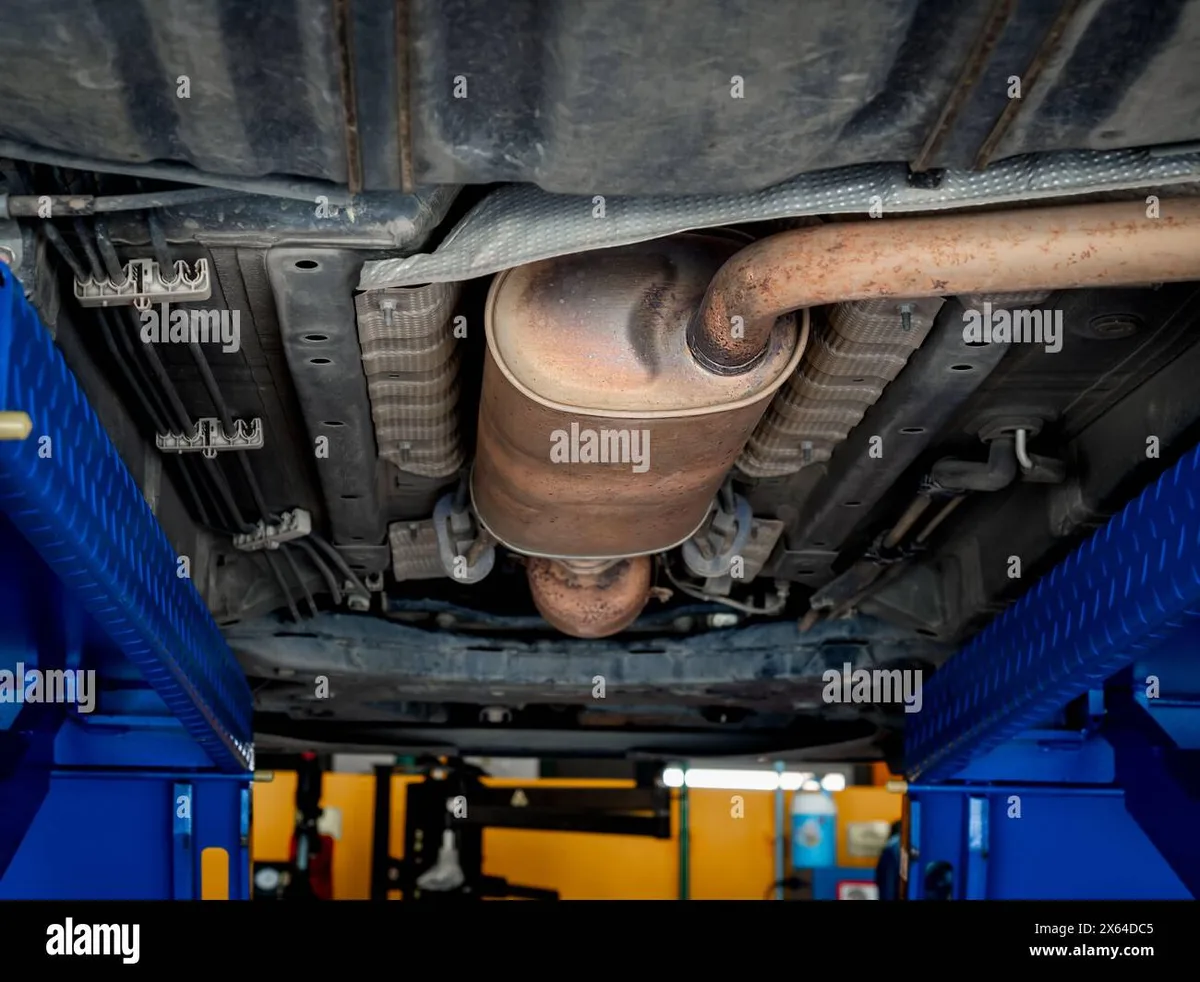
Arizona law requires a working muffler on every vehicle. Aftermarket exhausts are legal if they don't create excessive or unusual noise. The real risk is officer discretion.
Your best defense is a street-legal muffler that sounds reasonable.
Why Arizona's Muffler Laws Actually Matter
Excessive vehicle noise is linked to stress, sleep loss, and lower property values. Arizona lawmakers wrote ARS § 28-955 to address that directly.
From a driver's perspective, the stakes are personal. A citation means paying a fine, possibly getting points on your license, and dealing with the hassle of proving your car is legal. If you rely on your vehicle for work, a fix-it ticket can disrupt your whole week.
There is also the cost of repairs. If a cop decides your exhaust is too loud, you might need a different muffler or shop work. That can easily run a few hundred dollars.
Keeping your car in good shape helps you avoid that. Read more on our Blog.
What the State Law Says: ARS § 28-955
Arizona Revised Statute § 28-955 is the backbone of state noise law. It is short and direct.
The law says every motor vehicle must have a muffler in good working order. That muffler must prevent excessive or unusual noise. That is the key phrase.
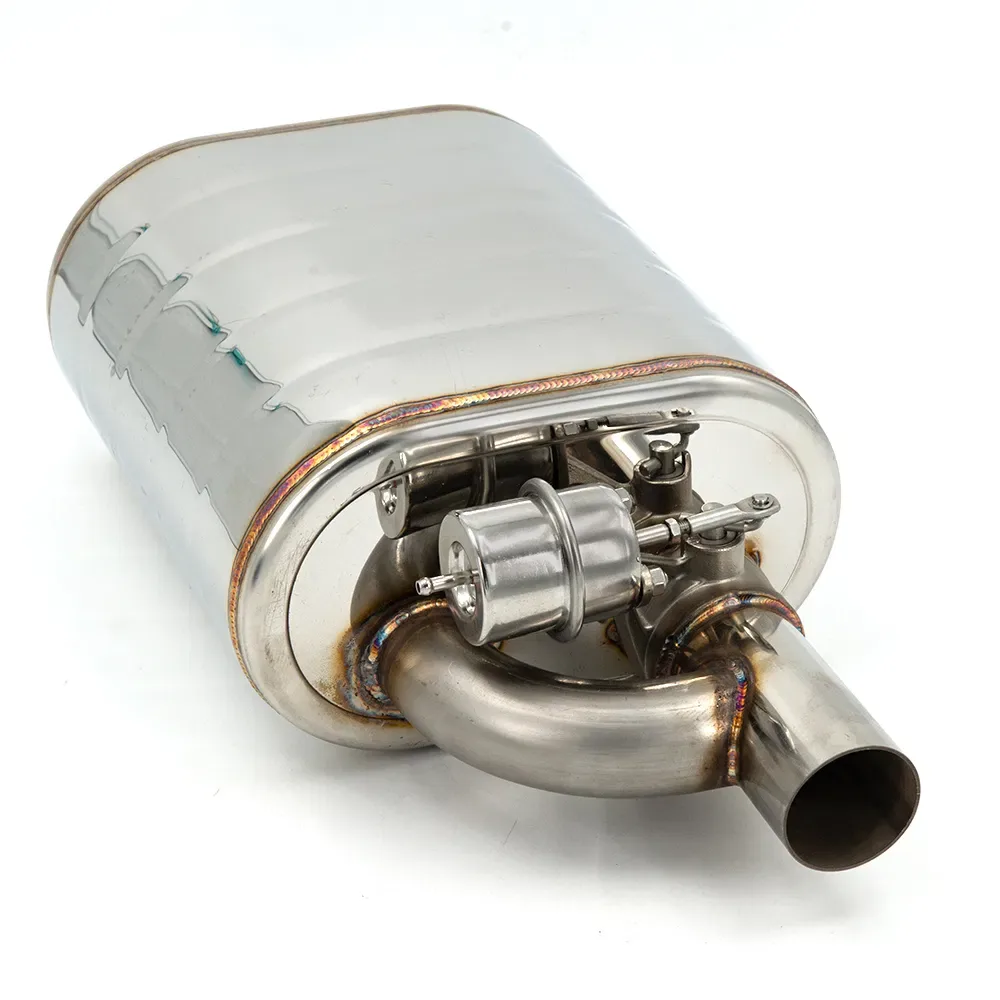
It also bans muffler cutouts, bypasses, or any similar device. You cannot route exhaust around the muffler with a switch or valve. If your car has a working cutout you can activate on the road, that is illegal.
What the law does not do is specify a decibel number. There is no state dB limit in Arizona. Enforcement relies on an officer's judgment of what counts as excessive or unusual.
That vagueness gets most people in trouble.
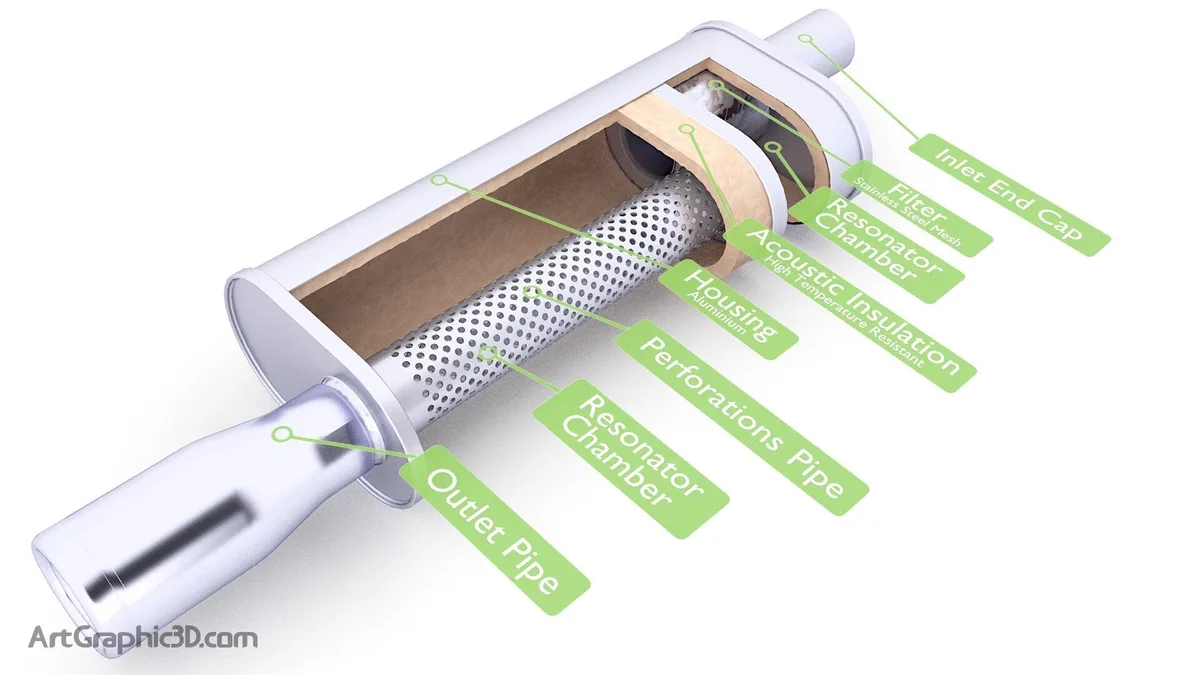
The statute also covers the condition of the exhaust system. Holes, rust, or leaks count as violations even if the muffler is present. A damaged system that makes extra noise is still illegal.
City Ordinances: Where Enforcement Gets Specific
State law gives the baseline. Arizona cities add their own layers.
Here is how major Arizona cities handle noise enforcement:
| City | Standard | Notes |
|---|---|---|
| Phoenix | "Loud and raucous" | Officer judgment based on disturbance |
| Scottsdale | "Plainly audible" from 50 feet | Easier for officers to cite |
| Tucson | "Disturbing the peace" | Subjective, complaint-driven |
| Mesa | 75 dB at 50 feet | Measurable standard, rarely tested on scene |
| Chandler | General disturbance standard | Similar to Phoenix |
What this means for you. If you drive through Phoenix, your exhaust doesn't need to be loud by any scientific measure. If an officer thinks it is loud and raucous for the area, you can get a ticket.
In Scottsdale, the "plainly audible from 50 feet" standard is even easier to enforce.
These ordinances rarely require a decibel meter during a traffic stop. The officer testifies that the noise was audible at a certain distance. That testimony alone can be enough for a conviction in traffic court.
What "Excessive or Unusual Noise" Means in Practice
In Arizona, "excessive" does not have a fixed number. It is a judgment call by the officer who pulls you over.
What triggers that judgment? The noise has to be outside what a reasonable person would expect from a normal vehicle. That includes:
- Loud popping or crackling on deceleration
- A constant drone audible from blocks away
- Exhaust that screams at highway speeds
- Any sound not typical for your vehicle type
Time of day matters too. A loud exhaust at 2 AM in a residential area is much more likely to get you cited than the same exhaust at 2 PM on a highway.
Another factor is the vehicle itself. A muscle car with a performance exhaust might be more acceptable than a compact car with a poorly chosen muffler. But neither is protected.
An officer can cite any vehicle if the noise seems excessive in that moment.
If you have modified your exhaust, test it in a controlled environment. Some drivers use smartphone apps to measure sound levels. Those are not official evidence, but they help you gauge whether you might draw attention.
When working on your car, gentle methods prevent damage. See our article on Swirling Car Wash Brush Damage for why that matters.
Aftermarket Exhausts: Legal vs. Not Legal in Arizona
Aftermarket exhausts are not automatically illegal in Arizona. The law does not ban performance mufflers. It bans excessive noise.
The line depends on the muffler design and how it performs on your specific vehicle.
Chambered mufflers from brands like Flowmaster, MagnaFlow, or Borla are generally the safest bet. They reduce noise while giving you a more aggressive tone. They are designed to be street-legal with a functioning catalytic converter.
Straight-through mufflers like some glasspacks are more risky. They pass sound with less restriction. They can easily cross the line into excessive territory.
If you replace your muffler with a straight pipe, you are almost certainly violating state law.
Cat-back exhausts replace everything from the catalytic converter back. Many are sold as "street legal" when they meet certain sound limits. But "street legal" in Arizona means nothing unless the muffler prevents excessive noise.
A cat-back with a chambered muffler is usually fine. A cat-back with a straight-through muffler might not be.
Axle-back exhausts replace the muffler section behind the rear axle. They are easier to swap and less expensive. But the same rule applies.
The muffler must do its job.
Do not remove your catalytic converter. That is illegal under federal law and Arizona emissions law. A cat delete makes your exhaust louder and gives an officer an easy reason to pull you over.
Leave the cat in place.
How Emissions Inspections Tie Into Muffler Compliance
Arizona has emissions testing in Maricopa and Pima counties. If you live there, your vehicle gets checked before registration renewal.
The emissions test does not measure noise. It checks tailpipe pollutants and verifies the check engine light is off. But there is a connection.
A modified exhaust can cause an emissions failure. If you delete the catalytic converter, your car fails the visual inspection alone. No cat means no pass.
Even with a cat, an aftermarket exhaust can cause issues. Some oxygen sensor spacers or test pipes trigger a check engine light. A lit check engine light means instant failure at the emissions station.
The takeaway is simple. Keep your catalytic converter. Leave the emissions system intact.
If you want a performance exhaust, buy a cat-back system that bolts on after the factory cat. That keeps your car legal for both noise and emissions.
What To Do If You Get Pulled Over for Exhaust Noise
Getting pulled over for a loud exhaust is stressful. How you handle the stop makes a difference.
Stay calm and cooperative. The officer made a judgment call that your car was too loud. Arguing on the roadside rarely helps.
Be honest about your exhaust setup. If you have an aftermarket system, don't lie. If your muffler is stock, say so.
That might lead to a warning instead of a ticket.
Do not rev the engine to demonstrate the noise. That confirms the exhaust is loud and gives the officer more evidence. Keep the engine off or at idle.
Ask for clarification if you get a citation. Some officers will explain what they heard. That can help you understand what to fix.
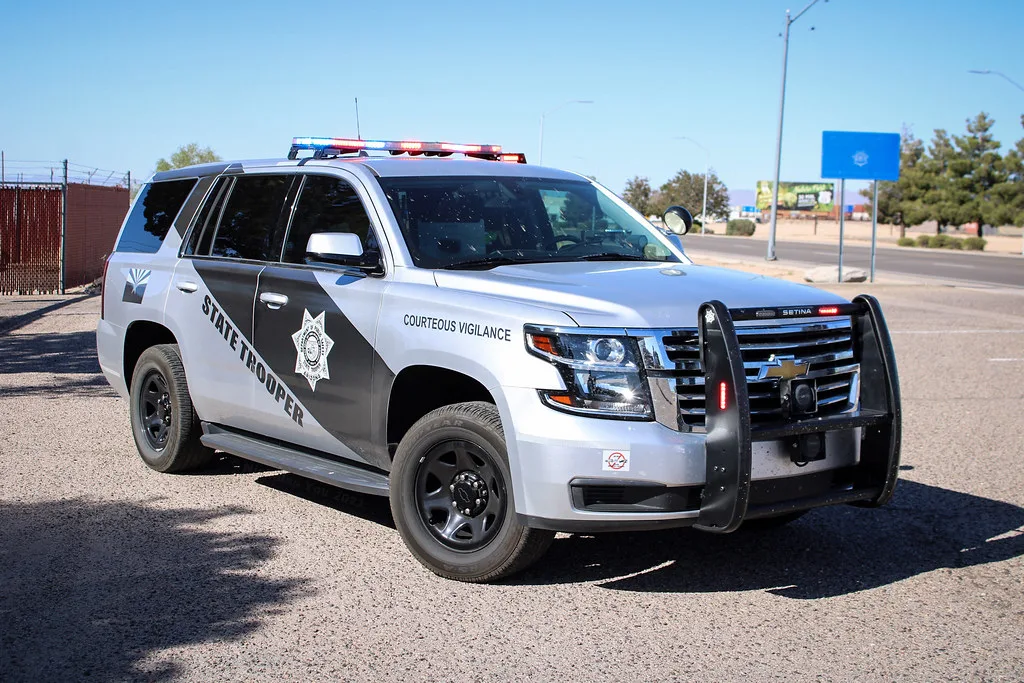
A cooperative driver with a borderline setup might get a warning. A hostile driver with a straight pipe will likely get a ticket and a mandatory inspection.
Common Mistakes That Land Arizona Drivers in Trouble
Some mistakes are repeated over and over. Avoiding them keeps you off the officer's radar.
Running a straight pipe. No muffler at all is always illegal under ARS § 28-955. There is no gray area.
Using an electronic cutout. A cutout valve that bypasses the muffler is illegal. Even if you keep it closed, having it functional on a public road is a violation.
Ignoring a damaged exhaust. A rusted muffler with a hole makes extra noise. That counts as excessive even if the muffler is present. Fix exhaust leaks immediately.
Revving in residential areas at night. Loud exhaust at 2 AM in a quiet neighborhood guarantees a noise complaint and a police visit.
Assuming legal because you passed emissions. Emissions testing and noise enforcement are separate. You can pass a tailpipe test and still get a noise ticket.
Driving with a deleted catalytic converter. That is a federal violation and a noise magnet. It also makes your car smell like fuel. Officers notice that.
Arguing with the officer about the law. Save that for court if you plan to fight the ticket. On the roadside, you will not win a legal debate.
What To Do If You Get a Fix-It Ticket
A fix-it ticket is a citation that can be dismissed if you correct the problem. It is the best outcome for an exhaust violation.
The ticket lists what needs to be fixed. Usually it says "repair exhaust system" or "install proper muffler." Follow those instructions exactly.
You need the repair done. Then you need proof. The proof is usually a signed inspection form from a police officer or a certified mechanic.
Some cities let you visit a police station for a free inspection. You drive your car there, an officer looks at the exhaust, and signs off if it is fixed. Other cities require a receipt from a licensed repair shop.
Keep the repair receipt. Keep the signed form. Submit both to the court by the deadline on your ticket.
If you do, the ticket is dismissed and you pay no fine.
If you ignore the ticket, the fine stays on your record. It can also affect your insurance rates. Deal with it quickly.
Most courts give you 30 days. Mark the deadline on your calendar.
Can You Fight a Noise Ticket in Arizona Court?
Yes, you can fight a noise citation. But it is not easy.
The officer's testimony is evidence. If the officer says your exhaust was plainly audible from a distance, that counts in court. You need something stronger.
Your best defense is proving your exhaust is legal. Show that you have a proper muffler and no cutout. Photographs of your exhaust system help.
A receipt from a muffler shop showing you bought a street-legal muffler is even better.
A decibel reading can help if you have one. But most drivers do not. You cannot submit a smartphone app reading as evidence.
Courts want calibrated equipment and trained operators.
Another defense is location. If you were cited in an area with no specific noise ordinance, you can argue that the state law standard was not clearly violated. This is a narrow argument.
Most drivers fix the problem and pay the fine. That is often cheaper than a court appearance. But if the fine is high or you have multiple violations, legal help might be worth it.
If you choose to fight, show up on your court date. Failure to appear results in a bench warrant and additional fees.
The official statute text is available through the Arizona State Legislature. Reading the exact wording can help you understand your rights.
Quick Reference: Fines, Court Costs, and Inspection Steps
Here is what a noise violation actually costs in Arizona.
| Item | Estimated Cost |
|---|---|
| First offense fine | $150 to $250 |
| Second offense in same city | $300 to $500 |
| Court administration fee | $30 to $80 |
| Fix-it ticket (no fine if corrected) | $0 |
| Muffler replacement (parts and labor) | $150 to $600 |
| Police inspection sign-off | Free at most stations |
| Mechanic inspection for fix-it proof | $50 to $150 |
The inspection steps are straightforward after a fix-it ticket. Visit a police station or a licensed mechanic. Get the exhaust repaired first.
Then have the inspection done. Submit the signed form to the court before the deadline.
If you skip the repair, the fine stays on your record. That can affect your insurance rates for years.
Your Bottom Line: Staying Legal Without Losing Performance
You can have a better sounding exhaust in Arizona without constant legal worry. The key is choosing the right muffler and keeping the rest of the system stock.
Stick with a chambered muffler from a reputable brand. Flowmaster, MagnaFlow, and Borla all make units that stay below the excessive noise threshold. Avoid straight-through designs and glasspacks if you daily drive the car.
Keep your catalytic converter in place. That keeps you legal for emissions and reduces overall noise. A cat delete makes your car louder and instantly illegal.
If you want a change, go with a cat-back system. It replaces everything behind the catalytic converter. That gives you a new tone without removing emissions equipment.
Never install a cutout or bypass valve. Even if you keep it closed, having it functional on public roads is a violation under ARS § 28-955. That is a guaranteed ticket if an officer spots it.
Be smart about when and where you drive. Avoid heavy acceleration in residential areas late at night. That is when most noise complaints happen and most citations are written.
A well maintained exhaust system is less likely to leak or drone. For gentle cleaning methods that protect your car, check our tips on Car Shampoo For Ppf.
Frequently Asked Questions
Is a straight pipe exhaust illegal in Arizona?
Yes. ARS § 28-955 requires a muffler on every vehicle. A straight pipe removes the muffler entirely.
That is an automatic violation.
Can I get a ticket for a loud exhaust even if my car is stock?
Yes. If the muffler is damaged or rusted through, it can make excessive noise. A stock system in poor condition is still illegal.
Fix any exhaust leaks immediately.
Do Arizona police use decibel meters to measure exhaust noise?
Not during routine traffic stops. Most citations rely on the officer's judgment. Some city codes reference decibel standards, but officers rarely carry calibrated meters.
How long do I have to fix a fix-it ticket in Arizona?
Most courts give you 30 days from the citation date. Check your ticket for the exact deadline. Submit the signed inspection form before the deadline to avoid paying the fine.
Will a loud exhaust ticket affect my insurance?
It can. A moving violation adds points to your driving record. Insurance companies check your record at renewal.
A noise citation may increase your rates.
Can I install a performance exhaust and still pass Arizona emissions?
Yes, if you keep the catalytic converter and oxygen sensors in place. A cat-back exhaust with a chambered muffler usually passes emissions. Straight pipes and cat deletes will fail.