ByMax Lee
Guide to Arizona Off Highway Vehicle Decal Requirements
If you ride an off-highway vehicle in Arizona without the right decal, you face a fine that starts at $500. The Arizona off highway vehicle decal requirements are straightforward, but they catch many riders off guard. Arizona Revised Statutes Title 28 covers the rules, and the Arizona Game and Fish Department (AZGFD) handles the process.
As of 2026, a one-year resident decal costs $25. That is cheap compared to the ticket you get without one. The decal gives you legal access to state trust land, national forest trails, and BLM riding areas across Arizona.
Quick Answer
Arizona requires an OHV decal for all off-highway vehicles on public land. The decal costs $25 for one year or $50 for two. Non-residents need a separate permit.
Apply online or by mail to AZGFD. Place the decal on the lower left rear of your vehicle.
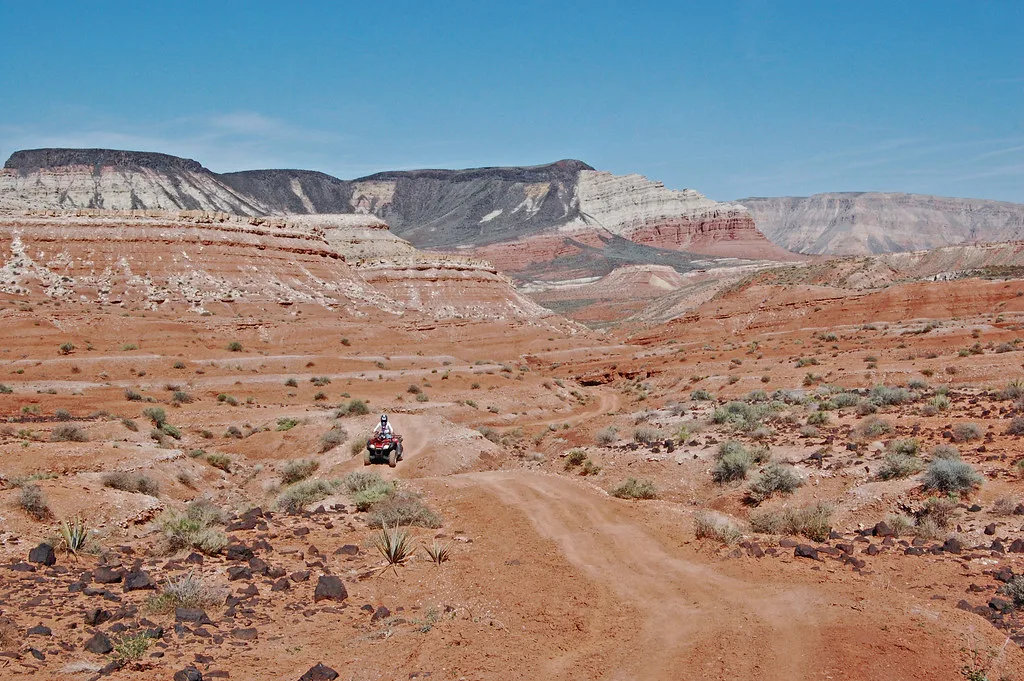
Openverse / BLMArizona (PDM 1.0)
Why Getting This Wrong Costs Real Money
A first-time violation carries a minimum $500 fine. That is per incident. Get caught twice and the penalty climbs.
Enforcement is active. AZGFD officers, sheriff deputies, and forest rangers check decals on trails and at trailheads. Random compliance checks are routine on popular trails like those in Tonto National Forest.
If you lack a decal, your vehicle can be impounded until you prove ownership and get one. That means towing fees and lost riding days.
What Counts as an OHV in Arizona
Arizona defines an off-highway vehicle broadly. It covers any motorized vehicle designed primarily for off-road use. That includes ATVs, UTVs or side-by-sides, dirt bikes, sand rails, and dune buggies.
Street-legal vehicles with a valid license plate do not need a separate OHV decal for road use. But here is the catch. A dual-sport motorcycle that is street-legal still needs a decal if you take it off road on public land.
The plate covers the road. The decal covers the trail. You need both if you ride both.
Agricultural vehicles used exclusively on fenced private property are exempt. But that fence must be complete. Riding on open range or unfenced land still requires a decal.
Resident Decal vs. Non-Resident Permit
| Requirement | Resident Decal | Non-Resident Permit |
|---|---|---|
| Who needs it | Arizona residents with an OHV | Out-of-state visitors bringing an OHV into Arizona |
| Cost | $25 for 1 year, $50 for 2 years | $30 for 1 year, $60 for 2 years |
| Validity | Calendar year (January to December) | Calendar year (January to December) |
| Placement | Lower left rear of vehicle | Inside windshield or on vehicle body |
| Renewal | Online or by mail | Online or by mail |
The resident decal is an adhesive sticker. The non-resident permit is a window sticker or removable decal. You cannot swap one for the other.
If you are a resident, buy a decal. If you are visiting, buy a permit.
Snowbirds who live in Arizona part-time but keep home state registration need to check their residency status. If you legally reside in Arizona, you need the resident decal. If you are just visiting, you need the non-resident permit.
Resident Decal: Cost and Duration
Every Arizona resident who owns an OHV and rides on public land needs a decal. There is no exception for infrequent use.
A one-year decal costs $25. A two-year decal costs $50. The two-year option saves you a renewal trip and costs the same per year.
Most riders choose the two-year option.
The decal is valid for the calendar year. If you buy a decal in October, it expires December 31. You do not get a full 12 months from purchase.
Plan accordingly.
You need a valid Arizona driver license or ID, proof of ownership (title, manufacturer's certificate of origin, or bill of sale), and a completed VIN inspection form 87090 if the vehicle has never been registered in Arizona.
Apply online through the AZGFD portal. The process takes about 10 minutes. If you prefer mail, print the application and send it with a check or money order.
Processing takes 7 to 14 business days online and 2 to 3 weeks by mail.
The decal is weather-resistant with a color design that changes each year. That is how officers tell if a decal is current from a distance.
For more tips on keeping your vehicle paperwork organized, check out our blog.
Non-Resident OHV Permit Rules
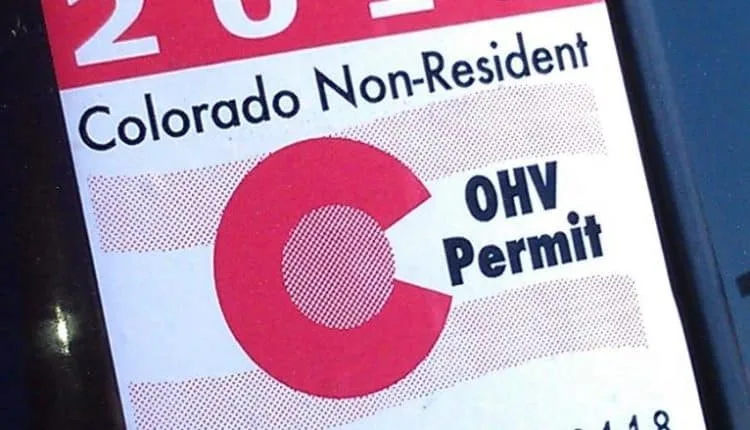
Visitors bringing OHVs into Arizona need a non-resident permit. This applies to anyone whose vehicle is registered in another state. Even if your home state does not require OHV registration, Arizona does.
The permit costs $30 for one year and $60 for two years. It follows the calendar year. A permit bought in September expires December 31.
You do not need a VIN inspection for a non-resident permit. You provide your current out-of-state registration and proof of ownership.
Bing (Web (fair-use with source credit))
The permit is a window sticker or removable decal. For UTVs and side-by-sides, place it on the windshield. For ATVs and dirt bikes, place it on the front fender or a visible flat surface.
If you rent an OHV from an Arizona dealer, confirm whether the decal is included. Some dealers include it. Others leave it to you.
Step-by-Step: How to Apply
What you need before applying:
- Valid Arizona driver license or state ID
- Proof of ownership (title, MCO, or bill of sale)
- Completed VIN inspection form 87090 for first-time Arizona registration
- Payment method (credit card for online, check or money order for mail)
Online application: Go to the AZGFD portal. Create an account or log in. Select the OHV decal option.
Enter vehicle information, upload documents, and pay.
Mail application: Download the form from the AZGFD website. Fill it out completely. Attach copies of documents and a check or money order.
Mail to the address on the form.
Dealer application: New OHV purchases from Arizona dealers can include decal application. Confirm before you leave the lot.
Where to Put the Decal
Bing (Web (fair-use with source credit))
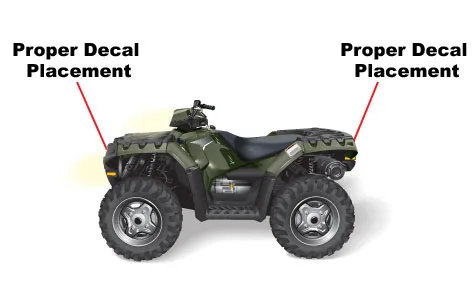
Arizona law specifies the lower left rear of the vehicle. That means the rear left side of the frame, body panel, or fender.
The decal must be visible and unobstructed. You cannot place it under a cargo rack, behind a spare tire, or inside a storage compartment.
By vehicle type:
- ATV: Lower left rear fender or frame rail
- UTV or side-by-side: Lower left rear body panel below the tail light
- Dirt bike: Left side of the rear fender or subframe
- Sand rail: Lower left rear roll cage tube or body panel
Clean the area with rubbing alcohol before applying. Avoid placing the decal over dirt or old adhesive residue. The surface needs to stay clean to keep the decal readable.
Using harsh brushes during washing can scratch the area around your decal, similar to the damage from swirling car wash brush damage.
Common Mistakes That Get You a Ticket
Expired decal. This is the most common violation. The decal expires December 31 every year. Riding in January without renewing is a guaranteed fine.
Wrong placement. The decal must be on the lower left rear. Anywhere else is a violation.
No decal on dual-sport bikes. A license plate does not replace a decal for off-road riding.
Assuming private land exemption. Without a complete fence, the exemption does not apply.
Non-residents skipping the permit. Arizona requires the non-resident permit regardless of your home state rules.
Each violation carries a minimum $500 fine. No warnings. No grace period.
Dual-Sport Motorcycles: Plate vs. Decal
| Scenario | Plate Needed | Decal Needed |
|---|---|---|
| Riding on paved roads only | Yes | No |
| Riding on designated OHV trails | No | Yes |
| Riding from home to trailhead on pavement | Yes | Yes |
| Riding on state trust land | No | Yes |
| Riding on national forest trails | No | Yes |
The decal does not replace the plate. The plate does not replace the decal. They serve different purposes under Arizona law.
The decal goes on the left rear fender or subframe. Keep it visible and clean.
Exemptions That Exist
Real exemptions:
- Vehicles operated exclusively on fenced private property. The fence must be complete and prevent public access.
- Agricultural vehicles used solely for farming or ranching on fenced land.
- Street-legal vehicles that never leave pavement.
- Government agency vehicles during official use.
The exemption that does not exist: Riding on your own unfenced land. If your property borders a national forest and you ride across the boundary, you need a decal. Frequency of use does not matter.
Riding once a year still requires a decal.
If you rely on an exemption, keep documentation. A property deed or fence inspection report can help if an officer questions you.
Renewal and Transfers
Renew online through the AZGFD portal. Your decal number stays the same. A new sticker arrives in the mail.
If you sell your OHV, the decal stays with you. Remove it and apply it to your next vehicle. You can also transfer a decal to a vehicle you already own with a completed transfer form from AZGFD.
Update your address online through the AZGFD portal. Lost decals can be replaced for a small fee with proof of current registration.
Fines and Penalties
Bing (Web (fair-use with source credit))
The minimum fine is $500 per vehicle, per incident. Multiple violations stack quickly.
Enforcement happens at trailheads, during patrols, and at organized events. Officers check decals visually from a distance. If cited, you must pay the fine or appear in court.
Ignorance is not a defense.
Real Scenarios
Trail riding in Tonto National Forest. You need a valid decal before you unload. Forest rangers check decals at popular trailheads like Four Peaks.
Sand dunes near Yuma. The Imperial Sand Dunes draw riders from California and Nevada. Non-residents need the Arizona non-resident permit.
State trust land near Phoenix. A decal is required. A state trust land permit may also be needed for some parcels. The decal alone does not grant access to all trust land areas.
Frequently Asked Questions
Do I need an Arizona OHV decal if I only ride on my private property?
Only if the property is completely fenced and not accessible to the public. Without a full fence, you need a decal.
How long does it take to get an OHV decal in the mail?
Online applications process in 7 to 14 business days. Mail applications take 2 to 3 weeks.
Can I ride an OHV on Arizona roads without a decal?
If the vehicle is street-legal with a license plate, you can ride on paved roads without a decal. Off-road anywhere on public land requires a decal.
What happens if my decal gets damaged or falls off?
Apply for a replacement through the AZGFD portal. There is a small fee for a new sticker.
Do rental OHVs already have a decal?
Most Arizona dealers include the decal in the rental fee. Confirm before you ride.
Is the non-resident permit the same as the resident decal?
No. The resident decal is an adhesive sticker. The non-resident permit is a window sticker or removable decal.
Access rights are the same.
Final Checklist Before You Ride
- Decal or non-resident permit is current and visible on the lower left rear
- Expiration date is checked (renew by January 1)
- Dual-sport bikes have both plate and decal for off-road use
- Fence exemption confirmed (complete fence, no gaps)
- Proof of ownership and registration are in the vehicle
Keep your vehicle in good shape. That includes proper cleaning around your decal area. For tips on the right tools, check out our guide on manual cleaning equipment using in car wash.
Ride smart, stay legal, and enjoy Arizona trails the right way.