ByMax Lee
Guide to Arizona Auxiliary Lighting Off Road Legalities
Almost every Arizona off-roader I've talked to has the same story. They bolt a lightbar onto their truck, head out to the trail, and drive home happy. Then a few weeks later they get pulled over on the highway and handed a citation they didn't see coming.
Arizona auxiliary lighting off road legalities are straightforward once you know them, but most people never look up the actual law until after the ticket.
Per Arizona Revised Statutes Title 28, auxiliary lights on public roads must stay below the center height of your factory headlamps. That single rule catches more off-roaders than anything else. The law also caps how many lamps can be lit at once and restricts color.
Let's walk through what you can actually run without risking a fine.
Bing (Web (fair-use with source credit))
Quick Answer
Keep auxiliary lights white and mounted at or below headlight center height on Arizona roads. Cover them or use a kill switch when driving on pavement. Off-road, most setups are allowed.
Follow those rules and you will stay legal.
Why Getting This Wrong Costs More Than a Ticket
The fine for improper auxiliary lights in Arizona typically runs between $100 and $500 depending on the county. But the real cost goes beyond the ticket.
A citation can trigger a mandatory safety inspection. That means lost time, an appointment at a certified station, and proof of correction before your registration clears.
Then there is the secondary risk. Running red or blue lights on your rig even off-road can bring a criminal citation for impersonating emergency vehicles. That is a Class 1 misdemeanor with potential jail time.
Our research shows that most lighting citations happen within 15 miles of popular trailheads. Drivers leave the trail, forget to cover their lights, and get stopped on the main road heading home. A snap-on cover costs $20 to $50.
Ignoring the rule costs far more.
The Core Rule That Trips Up Most Off-Roaders
Arizona Revised Statutes § 28-924 states that auxiliary driving lamps must not be mounted higher than the center of the vehicle's factory headlamps.
That means your factory headlight centerline is the ceiling. Measure from the ground to the center of your OEM headlight. That number is your maximum mounting height for every auxiliary light on the front of your vehicle.
Bing (Web (fair-use with source credit))
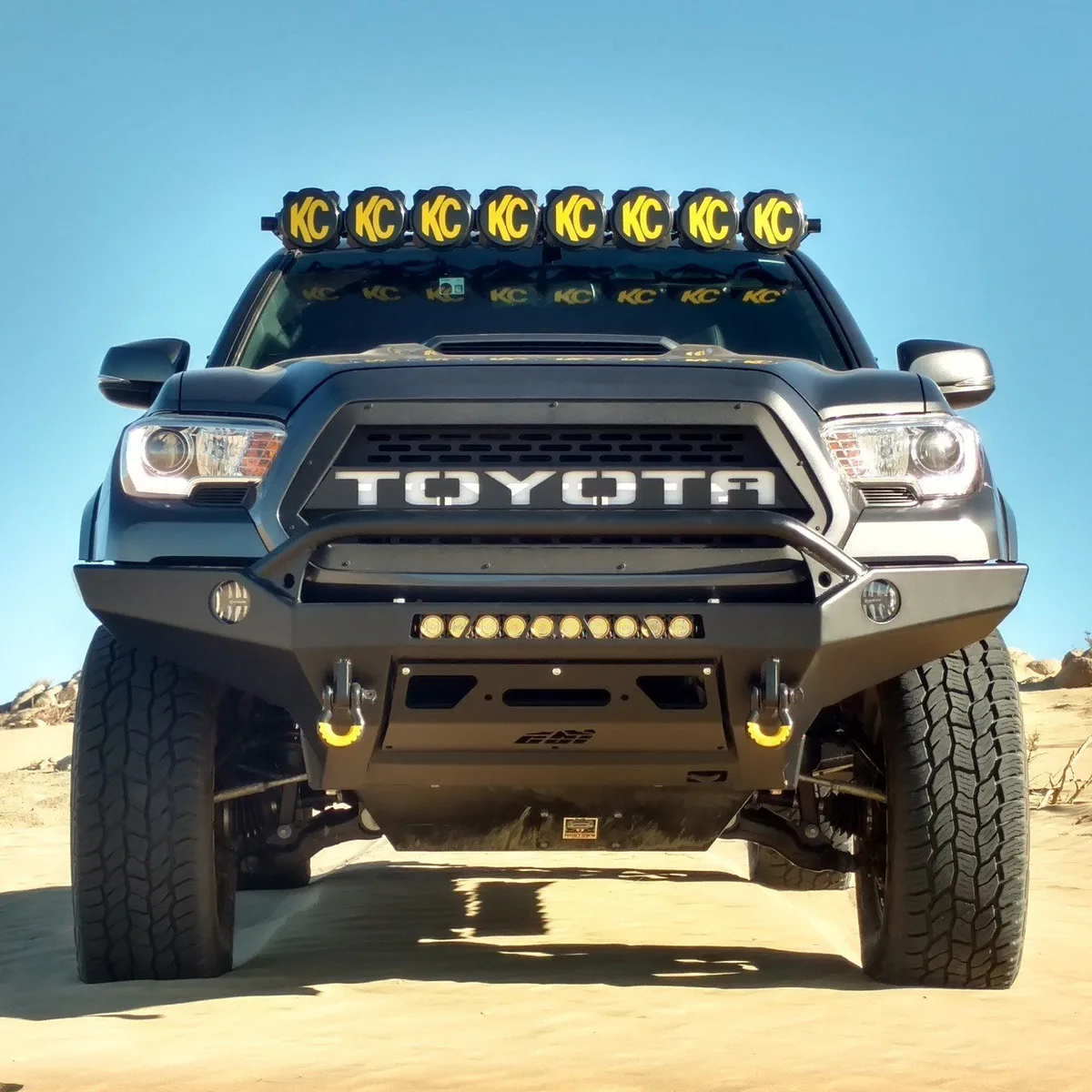
A typical pickup truck or SUV has a headlight center height around 24 to 32 inches. Most aftermarket lightbars sit at 40 inches or higher when mounted on a roof rack.
If your auxiliary lights sit higher than your factory headlights, they are illegal for on-road use in Arizona. The only fix is to physically cover them or wire in a kill switch that disconnects power entirely. A cover counts.
A switch that simply turns them off does not count unless it physically interrupts the circuit.
This rule applies to every auxiliary light on the front of the vehicle. Fog lights, driving lights, lightbars, ditch lights, and bumper-mounted pods all fall under the same height restriction.
On-Road Rules: What's Actually Legal on Arizona Pavement
Arizona law splits auxiliary lighting rules into three categories for public roads. Color, count, and position all have hard limits.
White Light Only on the Front
Any auxiliary light facing forward on a public road must emit white light. No amber, no blue, no red. The only exception is factory fog lights with selective yellow lenses.
Aftermarket amber lightbars or amber ditch lights are not legal for on-road use in Arizona. If you run amber pods for dust or fog, they need to be covered or disconnected on pavement.
Flashing or strobe patterns are also illegal for non-emergency vehicles. Keep your lights steady and white on the road.
The Four-Lamp Limit
Arizona Revised Statutes § 28-925 limits the number of lit lamps to four total on any vehicle. That includes your factory headlights.
If your truck has two headlights, you can run two auxiliary lights at the same time. If you have four factory headlights on a heavy-duty truck, you can run zero auxiliaries without exceeding the limit.
Many off-roaders make the mistake of running headlights plus a 40-inch lightbar plus two ditch pods. That is five light sources on a standard two-headlight vehicle. Wire your auxiliary lights to a separate switch or use a relay that kills your factory high beams when the lightbar turns on.
The Headlight Height Rule
ARS § 28-924 sets a height limit at the center of your factory headlamps. Every auxiliary light on the front must sit at or below that line.
Roof-mounted lightbars are the most common violation. A lightbar on a roof rack sits 6 to 12 inches above the headlight center on most vehicles. That is an automatic ticket in Arizona if the light is uncovered or active on a public road.
The same rule applies to lights on a headache rack, camper shell, or bed rack. Any light that projects forward from above the headlight centerline is non-compliant.
Cover or Disconnect? What the Law Requires
Arizona law requires auxiliary lights to be covered or disabled when not in use on public roads. A fabric snap-on cover counts. A hard plastic shell counts.
A simple on-off switch does not count unless it physically disconnects the power circuit. Some Arizona courts have interpreted this as requiring a dedicated kill switch that breaks the circuit entirely.
The safest approach is a hardwired cut-off switch on the positive line from the battery. A fabric cover over the lightbar also works. Just make sure it fits tightly.
A loose cover that flaps in the wind can be cited as a safety violation on its own.
Off-Road Rules: What Changes Once You Leave the Pavement
Once you are off public roads, Arizona law gives you more room to run auxiliary lighting. But there are still limits.
State OHV Code
Arizona's off-highway vehicle code under Title 28 Chapter 13 covers vehicles on designated OHV trails. The rules are looser than on-road restrictions.
Auxiliary lights on OHV trails can be mounted at any height. Color restrictions are more relaxed as long as you avoid emergency vehicle patterns. Red and blue are still prohibited because they can confuse other trail users or first responders.
The state OHV code requires a working headlight and taillight for night operation on trails. Auxiliary lights are supplemental and not regulated by height or count in the same way.
Federal Land Restrictions
The Bureau of Land Management and US Forest Service manage large portions of Arizona's off-road areas.
BLM land typically allows auxiliary lighting without specific restrictions. But some field offices have seasonal or area-specific rules. Fire restrictions and camping area quiet hours can affect when and where you use bright lights.
National Forest land has similar flexibility. Some forest districts prohibit high-intensity lighting near campgrounds or developed recreation areas.
The safest bet on federal land is to use your lights responsibly and dim them when approaching other people or wildlife.
Private Land
Private land has the fewest restrictions. If you own the land or have permission, you can run any lighting setup you want.
The only exception is if your lights create a nuisance for neighboring properties or public roadways. A lightbar that shines onto a county road from your private property can still draw a complaint.
Where Most People Get Pulled Over (and Why)
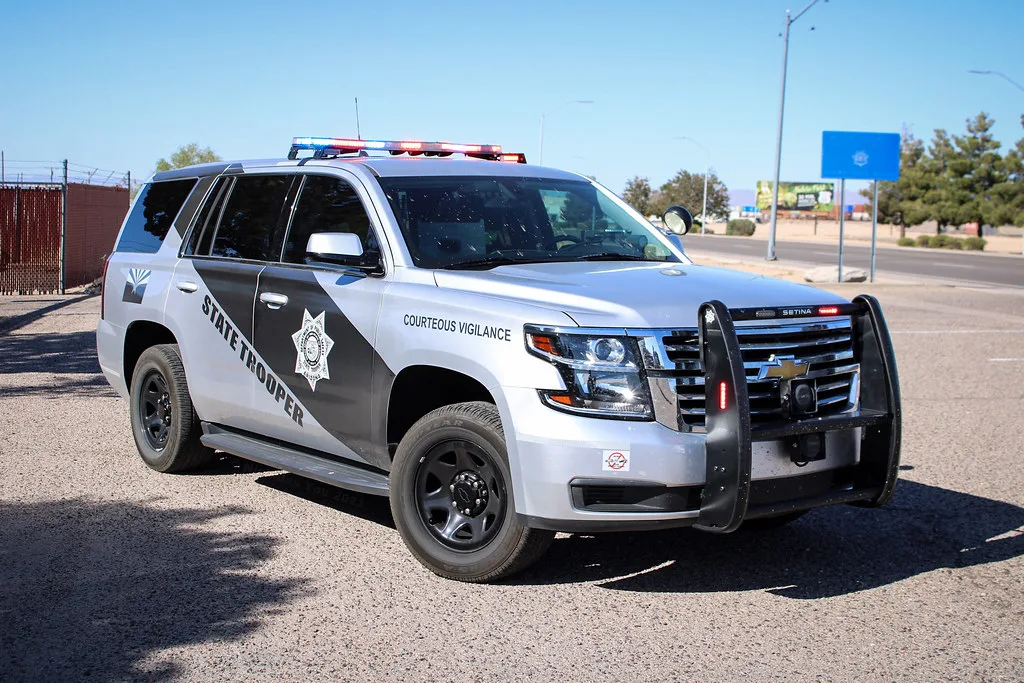
Arizona Highway Patrol and local police know auxiliary lighting laws well. They see the same violations every weekend from off-roaders heading home.
Bing (Web (fair-use with source credit))
Based on aggregate reports from Arizona off-road communities, the most common pull-over locations are:
- Highway 87 near the Four Peaks trailhead, Officers watch for rigs leaving the recreation area with lights still uncovered.
- I-17 between Phoenix and Flagstaff, Popular corridor for off-roaders returning from the Coconino National Forest.
- State Route 88 near the Superstition Mountains, Frequent enforcement during peak off-road season from October to April.
- US 60 near the Florence Junction OHV area, Heavy patrol presence on weekend evenings.
The violations that trigger these stops are almost always the same. Uncovered roof lightbars are the number one reason. The second most common is running amber forward lights on pavement.
The third is having too many lights lit at once.
Cover your lights before you pull onto pavement. Kill your auxiliary switch as soon as you leave the trailhead. These habits cost nothing and take ten seconds.
Common Setup Mistakes That Lead to Citations
Most Arizona off-roaders get cited for the same handful of mistakes. Five patterns keep repeating.
Uncovered roof lights on pavement. A roof-mounted lightbar that stays uncovered after you leave the trail is visible from a long distance. Officers see the bright glare and pull you over.
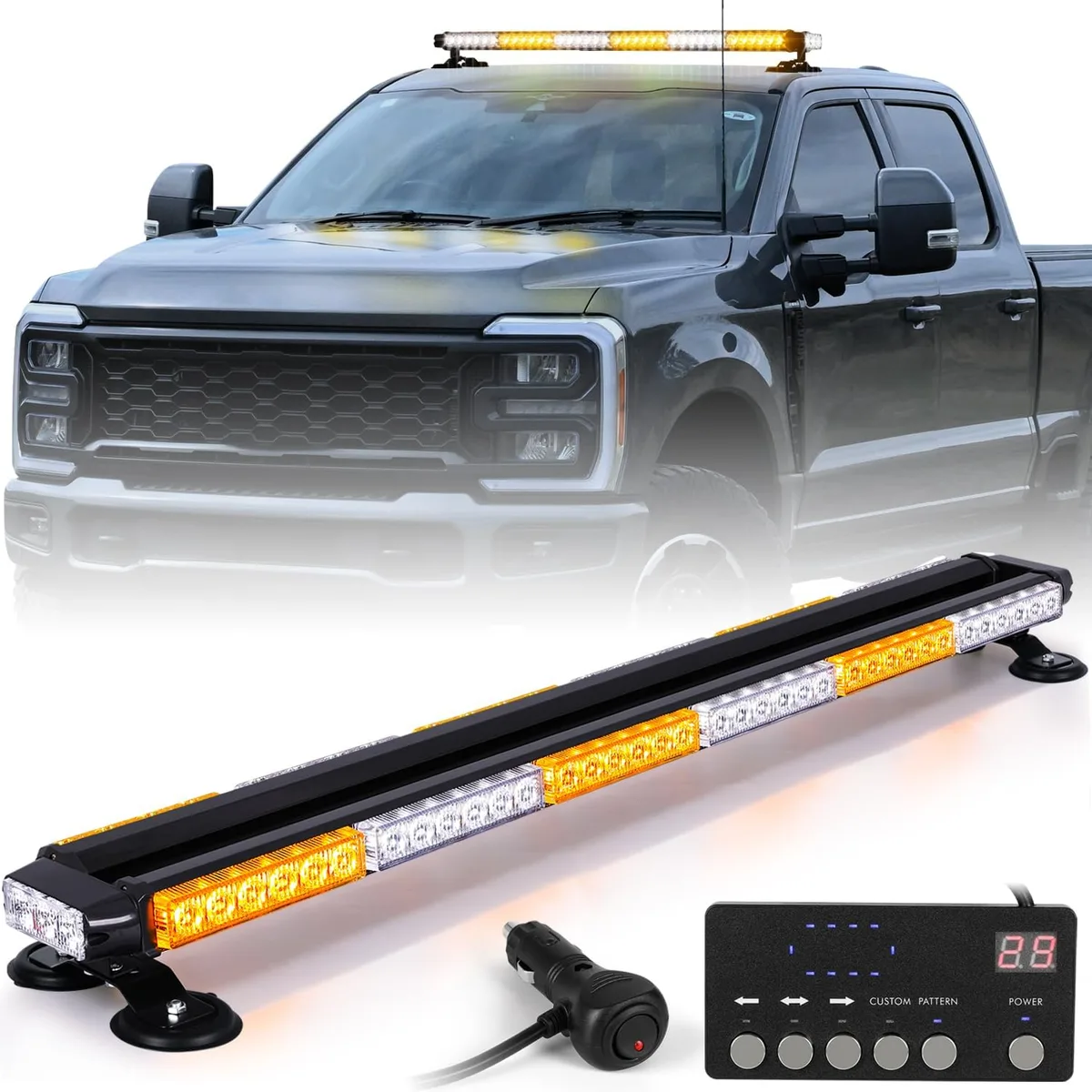
Running amber forward lights on the road. Many drivers install amber ditch lights for dust and fog. They forget to switch to white or cover them before hitting pavement. Amber is not legal for forward-facing auxiliary lights on Arizona roads.
Exceeding the four-lamp limit. Headlights plus lightbar plus ditch pods adds up fast. Drivers running their low beams, a 40-inch bar, and two pod lights are at five sources.
No physical disconnect. A simple on-off switch is not enough in some jurisdictions. If an officer tests your switch and the light comes on, you can still be cited.
Red or blue accent lighting. Rock lights, underglow, or dash lighting in red or blue can draw a citation even if they are off-road accessories.
Bing (Web (fair-use with source credit))
The fix for all of these is simple. Build a pre-road checklist. Cover your lights.
Kill the auxiliary switch. Check your color. Make it a habit before you leave any trailhead.
How to Set Up Your Rig for Both Road and Trail
You can build a setup that works on the trail and stays legal on pavement. The key is separating your lighting circuits and making covers part of your routine.
Roof-Mounted Lightbars
A roof bar is great for off-road visibility. On pavement, it is the most common citation magnet in Arizona.
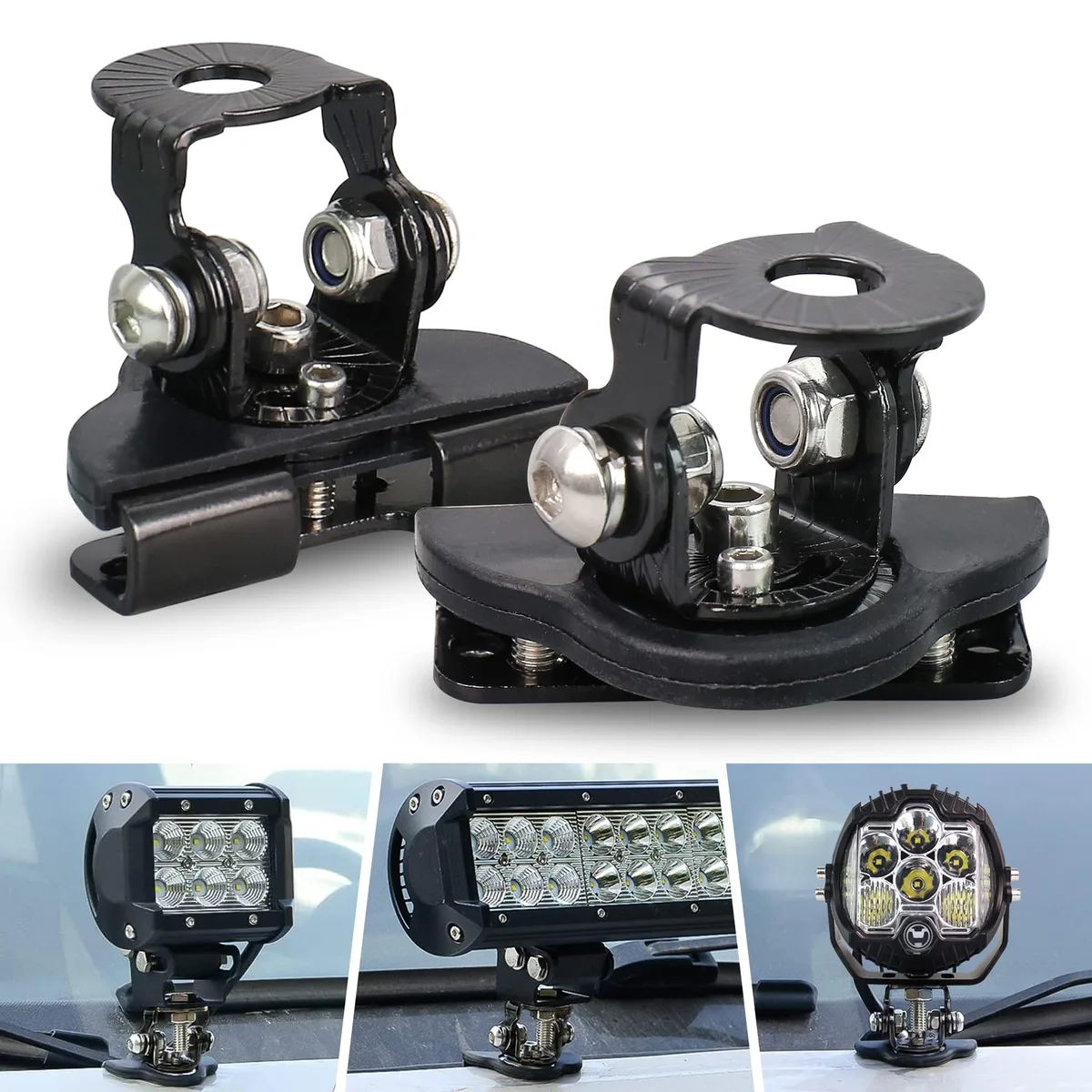
The legal solution is a hardwired kill switch plus a cover. Wire a switch that physically breaks the positive line from the battery. Run it somewhere easy to reach from the driver seat.
Add a snap-on fabric cover for the lightbar itself.
If you prefer a cleaner look, install a hard plastic shell over the bar. Some aftermarket bars come with integrated covers that flip down.
Bumper and Grille Pods
Pods mounted at bumper height or in the grille area are usually below the headlight centerline. That makes them legal for on-road use as long as they emit white light.
Wire them to a separate switch so you can turn them off independently. If you want to run them with your high beams, use a relay that kills your low beams when the pods activate. That keeps you under the four-lamp limit.
Wiring a Kill Switch vs Using Covers
Both methods work. Each has tradeoffs.
| Method | Pros | Cons |
|---|---|---|
| Hardwired kill switch | No physical cover needed. Clean look. | Requires wiring knowledge. Must be clearly labeled. |
| Snap-on fabric cover | Cheap and easy. No wiring. | Can blow off at speed. Adds a step before driving. |
| Hard plastic shell cover | Durable. Looks integrated. | More expensive. Requires custom fit. |
If you are comfortable with basic 12V wiring, the kill switch is the cleaner solution. If you want simplicity, fabric covers work fine.
What to Do If You're Pulled Over for Auxiliary Lights
Getting pulled over for lighting is stressful. How you handle it makes a big difference.
Stay calm and be polite. The officer has seen every excuse before. Arguing rarely helps. A cooperative attitude increases your chance of a warning over a ticket.
Know your setup. If the officer asks about your lights, explain clearly. "The roof bar is on a kill switch and covered. The pods are below headlight height and running white light." That shows you understand the law.
Do not admit to anything. You can be respectful without saying "I know I was wrong." If you are unsure whether your setup is legal, say "I believed it was compliant."
Ask for a fix-it ticket. Arizona allows fix-it citations for some equipment violations. You correct the issue and show proof to avoid the fine. Not all officers offer this, but it never hurts to ask politely.
Follow up immediately. If you get a citation that requires inspection, schedule it right away. Letting it sit can lead to registration holds or additional fees.
Trailering vs Driving Your Rig: The Safer Choice
If you run serious auxiliary lighting, consider trailering your rig to the trail. This is the simplest way to avoid all on-road lighting issues.
When you trailer your off-road vehicle, the lighting laws apply to the tow rig and trailer, not the rig itself. Your off-road vehicle's lights can be in any configuration because they are not operated on public roads.
The downside is the cost of a trailer and the need for a tow vehicle. But for serious off-roaders, a trailer pays for itself in avoided tickets and reduced wear.
If trailering is not an option, the dual-use setup we covered earlier works fine. Just commit to the routine of covering and disconnecting your lights before every pavement drive.
A Quick Reference Table for Arizona Lighting Laws
| Situation | Allowed Colors | Max Lamps Lit | Height Limit | Cover Required |
|---|---|---|---|---|
| On-road, daytime | White only (front) | Not enforced | At or below headlight center | Yes |
| On-road, nighttime | White only (front) | 4 total | At or below headlight center | Yes |
| OHV trail | White or amber | No limit | No height limit | No |
| BLM land | White, amber, green | No limit | No height limit | No |
| National Forest | White, amber, green | No limit | No height limit | Check local rules |
| Private land | Any color | No limit | No height limit | No |
Red and blue are prohibited everywhere for non-emergency vehicles. Flashing or strobe patterns are also prohibited on all public roads. Always check local ordinances for city or county roads near your trailhead.
If you keep your vehicle in good shape overall, regular maintenance helps avoid unwanted attention from officers who might pull you over for other reasons. And if you have questions about vehicle care, our blog covers the basics every Arizona driver should know.
Frequently Asked Questions
Do I need a cover on my lightbar if I never turn it on?
Yes. Arizona law requires auxiliary lights to be covered or disconnected even when turned off. A cover or a physical kill switch both satisfy the requirement.
Can I run amber fog lights on Arizona roads?
Amber is generally not legal for forward-facing auxiliary lights on public roads. Factory fog lights with selective yellow lenses are an exception. Aftermarket amber pods need to be covered on pavement.
What happens if I get a lighting citation in Arizona?
The fine typically ranges from $100 to $500. Some citations require a safety inspection before your registration clears. Red or blue light violations can result in a misdemeanor charge.
Are roof-mounted lightbars ever legal on Arizona roads?
They are legal if covered or disconnected. The mounting height exceeds the headlight center limit. A cover or kill switch brings them into compliance for on-road driving.
Do the same rules apply to motorcycles and ATVs?
Street-legal motorcycles follow the same rules under Title 28. OHV-only vehicles on designated trails follow the looser off-road code. Dual-sport bikes need covers on auxiliary lights for pavement riding.
Can I use a switch that turns the power off instead of a cover?
A switch that physically breaks the circuit counts as a disconnect. A simple on-off relay that leaves power at the light does not always satisfy the law. A hardwired kill switch is the safest option.
The Bottom Line for Arizona Off-Roaders
Arizona auxiliary lighting laws are clear once you know them. Keep white lights on the front. Stay below headlight height.
Cover or disconnect everything before pavement. That simple checklist keeps you legal.
If you run serious off-road lighting, consider trailering your rig. If that is not practical, spend the time to wire a proper kill switch and buy quality covers. The upfront effort saves you tickets, inspections, and hassle.
Know your setup. Know the law. Enjoy the trails without worrying about the drive home.