Arkansas farm equipment highway travel safety regulations can feel overwhelming if you're not sure where to start. You've got a tractor or combine ready to move between fields, and suddenly you're wondering about permits, lights, and slow-moving vehicle emblems. The truth is, most citations happen because someone skipped a simple step.
In our research across Arkansas Code Title 27 and guidance from the Arkansas Department of Transportation, we found that the core rules are straightforward once you break them down. As of 2026, the basics haven't changed much, but enforcement has gotten sharper. Let's walk through exactly what you need to know before you pull onto that highway.
Quick Answer
Arkansas law requires all farm equipment on public roads to display a slow-moving vehicle (SMV) emblem. You need working headlights, tail lights, and turn signals for nighttime travel. Width must stay under 12 feet without an oversize permit.
Speed is capped at 25 mph on state highways unless posted higher. Follow these rules to avoid fines and stay safe.
Why Getting This Right Matters for Arkansas Farmers
You might be tempted to skip the permit for a quick trip down the road. That short hop can cost you hundreds in fines. Worse, a crash with a passing motorist could put you in a legal mess that far outweighs any time saved.
Citations for missing or faded SMV emblems and improper lighting are common. Those are easy fixes. Beyond the fines, there's the human cost.
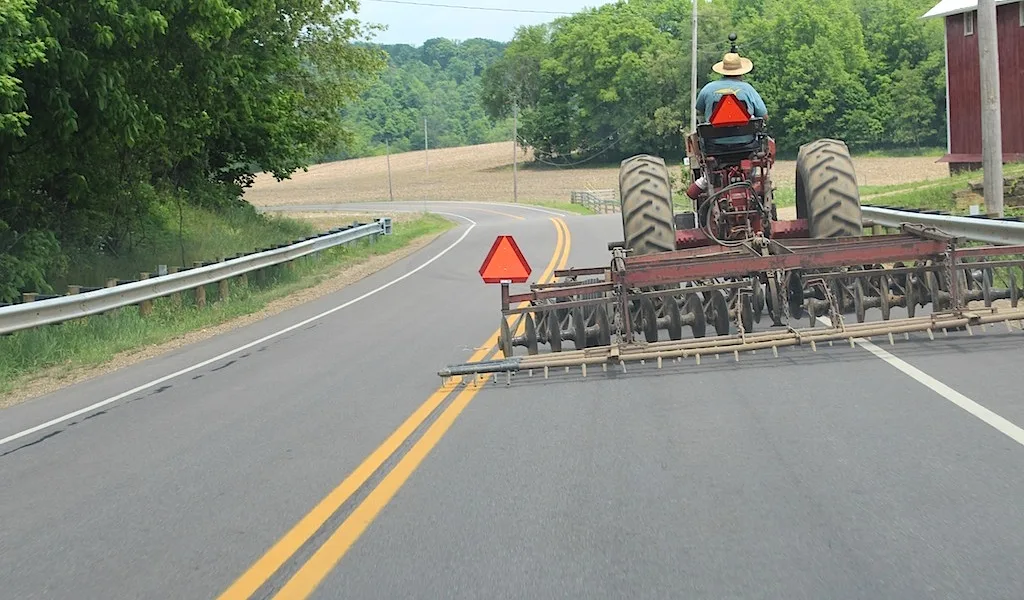
A car hitting the back of a slow-moving combine at 55 mph rarely ends well. Following these regulations isn't just about obeying the law. It's about making sure you and everyone else on the road gets home.
Check out our main blog for more vehicle safety guides. The same principles apply to keeping your farm equipment road-ready.
The Core Rules at a Glance: SMV Emblems, Lighting, and Speed
Let's cut through the noise. Here's what every piece of farm equipment needs before it touches a public road in Arkansas.
The SMV Emblem
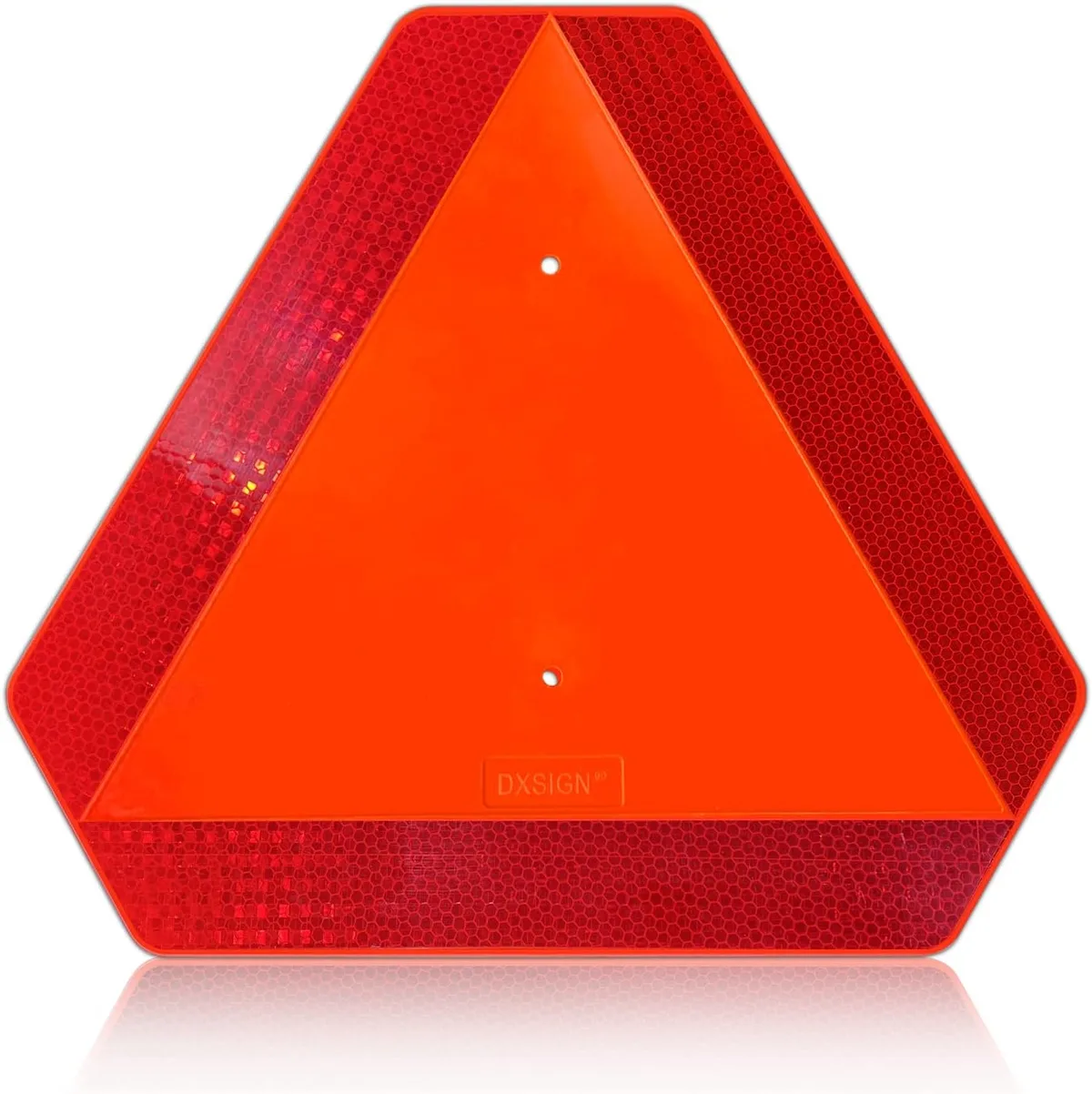
That fluorescent orange triangle with the red border is your best friend. It tells drivers "I'm going slower than you expect." Arkansas Code § 27-35-201 requires one on the rear of every implement of husbandry traveling below 25 mph. It must be clean, not faded, and mounted 2 to 6 feet above the ground.
Replace it every two to three years because UV light fades the reflective coating.
Lighting Requirements
Daytime travel only needs the SMV emblem and maybe a flashing amber light if you're on a busy highway. Nighttime travel is a different story. You need:
- Two headlights (white, visible from 500 feet)
- Two red tail lights (visible from 500 feet)
- Red reflectors on the rear
- Amber flashing warning lights (two, mounted high)
- Turn signals (if the equipment is wider than 80 inches)
Speed Limits
Most farm equipment is governed to 25 mph. Arkansas law says you can't drive faster than 25 on a state highway unless a sign says otherwise. On county roads, you're still limited by conditions and common sense.
Quick Reference Table
| Requirement | Daytime | Nighttime |
|---|---|---|
| SMV emblem | Yes | Yes |
| Headlights | No | Yes |
| Tail lights | No | Yes |
| Amber flashing lights | Recommended | Yes |
| Turn signals | Not required | If over 80 inches wide |
Width, Length, and Weight Limits – When You Need a Permit
This is where most farmers get tripped up. The rules aren't the same for every piece of machinery.
Width Limits
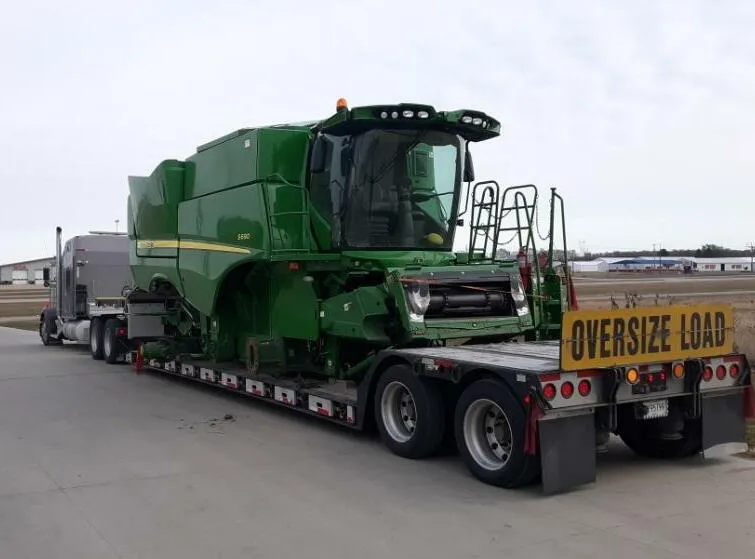
Without a permit, your equipment can't be wider than 12 feet on Arkansas highways. Some implements like planters or grain headers push past that. Anything over 12 feet requires an oversize permit from ARDOT.
Here's the catch: many county roads have their own restrictions. A header that's 14 feet wide might be legal on a state highway with a permit, but illegal on a narrow county road with no shoulders.
Length Limits
A single vehicle can be up to 45 feet long. A combination (tractor plus trailer) can reach 55 feet. Beyond that, you need an oversize permit.
Most combines fall under 45 feet, but when you add a grain header on a trailer, you can hit the limit fast.
Weight Limits
Arkansas follows federal bridge formula standards. Gross vehicle weight is capped at 80,000 pounds unless you have a special permit. Farm equipment rarely hits that, but tractors with ballast and loaded sprayers can come close.
Weigh your rig before you head out if you're unsure.
When You Absolutely Need a Permit
- Width over 12 feet
- Length over 55 feet (combination)
- Weight over 80,000 pounds
- Traveling on an interstate highway
You can apply online through ARDOT's permit portal. The fee runs $15 to $50 per trip depending on the route. It takes 24 to 48 hours to process, so plan ahead.
Daytime vs. Nighttime Travel: What Changes
The rules shift significantly after sunset. Don't assume daytime compliance carries over.
Daytime Travel
During daylight hours, your main job is visibility. The SMV emblem handles the rear. A flashing amber light on top gives drivers approaching from any angle a heads-up.
You don't need headlights or tail lights, but they're not a bad idea on cloudy days.
Nighttime Travel
Nighttime is where the real regulations kick in. Arkansas Code § 27-35-202 lays out every light you need. Miss one, and you're looking at a citation.
Here's the full list for after dark:
- Two headlights (low beam recommended to avoid blinding oncoming traffic)
- Two red tail lights
- Two red reflectors on the rear
- Amber flashing warning lights (mounted as high as practical)
- Turn signals if the equipment is over 80 inches wide
- Clearance lights if the equipment is over 80 inches wide
When Is It Considered Nighttime?
The law says "from sunset to sunrise." But if visibility is reduced (fog, rain, dusk), you're expected to have lighting on. Common sense applies. If you can't see a quarter mile, turn on your lights.
A Word on Fog
Arkansas gets its share of valley fog, especially in the Delta region. If you're running equipment in fog, slow down even more than your 25 mph limit. Use your amber flashers.
And consider pulling over until it clears. A combine is hard to see in dense fog, even with lights.
Step-by-Step: Pre-Trip Safety Check for Your Equipment
Before you start the engine and head for the road, run through this checklist. It takes five minutes and could save you a ticket or worse.
1. Inspect the SMV Emblem
Walk behind the equipment. Is the triangle still bright orange? Or is it faded to a pale pink?
If it's more than three years old, replace it. Check that it's mounted securely and not blocked by a tool box or a mud flap.
2. Test All Lights
Turn on the headlights. Walk around the front. Then turn on the tail lights and amber flashers.
Walk around the back. Have a helper stand behind while you flash the turn signals. Replace any burned-out bulbs.
Carry spares if you have storage.
3. Check Tires and Brakes
Low tire pressure on farm equipment can cause handling issues at highway speeds. Check all tires, including duals. Test the brakes before you leave the yard.
If the pedal feels spongy, bleed the system.
4. Secure Loose Parts
A loose chain, a dangling hydraulic hose, or an unlatched door can fly off at highway speed. Walk around the machine. Tighten what's loose.
Stow tools and loose items in a locked box.
5. Measure Width and Length
If you're towing an implement, measure from the widest point. Include mirrors and fenders. Write down the measurement.
If it's over 12 feet, you need a permit. If it's over 14 feet, you probably need a pilot car escort as well.
6. Check the Route
Use a map or GPS to plan your route. Avoid roads with weight restrictions or low bridges. Arkansas has plenty of narrow country bridges that won't fit a wide combine.
Know your height too. Most farm equipment is under 13 feet 6 inches, but check.
7. Bring Documentation
Carry a copy of your oversize permit if you have one. Keep your driver's license and registration handy. If you're pulled over, having these ready makes the interaction faster and less stressful.
8. Tell Someone Your Route
This is old-school safety, but it works. Let a family member or neighbor know where you're going and when you expect to return. If you break down in a remote area, they'll know where to send help.
Following these steps each time you hit the road keeps you legal and alive.