If you drive in Colorado, your car takes a beating. Snow, road salt, mud, and pine sap are relentless. That's why knowing how to do a proper spray and wash isn't just a nice-to-have.
It's essential for keeping your paint and undercarriage intact. But with so many washing options out there, which one actually works best for our state's unique conditions?
According to the Colorado Department of Transportation, the state spreads over 200,000 tons of road salt annually. That salt eats away at metal if you don't rinse it off regularly. So whether you're commuting on I-25 or hitting mountain trails, choosing the right washing method matters more than you might think.
Let's break down the real differences.
Why This Comparison Matters for Colorado Drivers
Colorado's climate is rough on vehicles. You've got heavy snow and magnesium chloride on the roads in winter. Then comes spring with pollen that coats everything in yellow dust.
Summer brings dust storms and bird droppings. Fall brings more pine sap and leaf debris than you'd believe.
That's a lot of grime that needs to come off regularly. And it's not just about looks. Road salt left sitting on your car's undercarriage can cause rust that leads to expensive repairs.
The higher altitude also means stronger UV rays that accelerate paint fading if you don't keep a clean, protected surface.
The tricky part is that not every spray and wash method handles all these challenges equally. Some are better at blasting off caked-on mud. Others are gentler on your clear coat.
Some work great in summer but become a frozen nightmare in January.
We looked at what Colorado drivers actually deal with and compared the three main ways to get the job done. Our research pulls from CDOT data, the International Carwash Association recommendations, and real-world reviews from Front Range car owners. The goal is to help you pick the method that saves you time, protects your paint, and keeps your car looking good year-round.
Spray and Wash Options at a Glance
There are three main routes Colorado drivers take when they need a thorough spray and wash. Each has its strengths and weaknesses depending on the season, your living situation, and how much dirt your car accumulates.
Self-Serve Spray Bay – The Hands-On Classic
These are the coin-operated bays you see at every corner car wash in Colorado. You pull in, grab the spray gun, and control the process yourself. Most give you a few minutes per dollar, and you can switch between pre-soak, foam brush, high-pressure rinse, and spot-free rinse.
The big advantage here is control. You can spend extra time blasting mud out of your wheel wells or hitting the undercarriage where salt collects. You also avoid the risk of scratches from automatic brushes because you're the one holding the gun.
Downsides? You're working against the clock. If you're slow or thorough, you'll feed the machine more quarters.
And in winter, those bays can get freezing cold. Some locations in mountain towns shut off their water when temps drop below 20°F.
Touchless Automatic – The Drive-Through Convenience
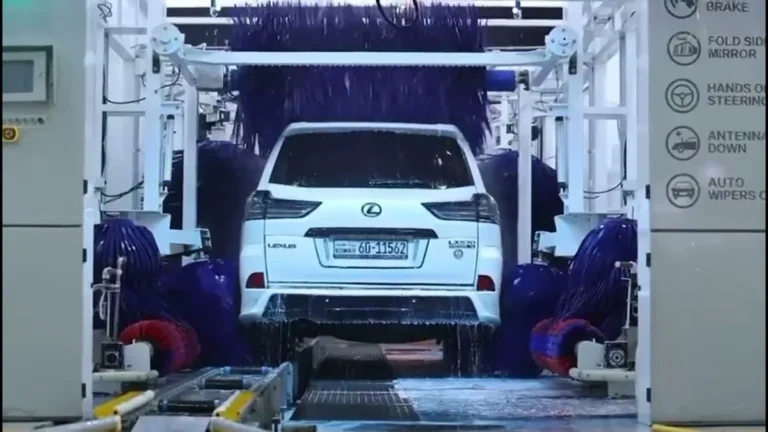
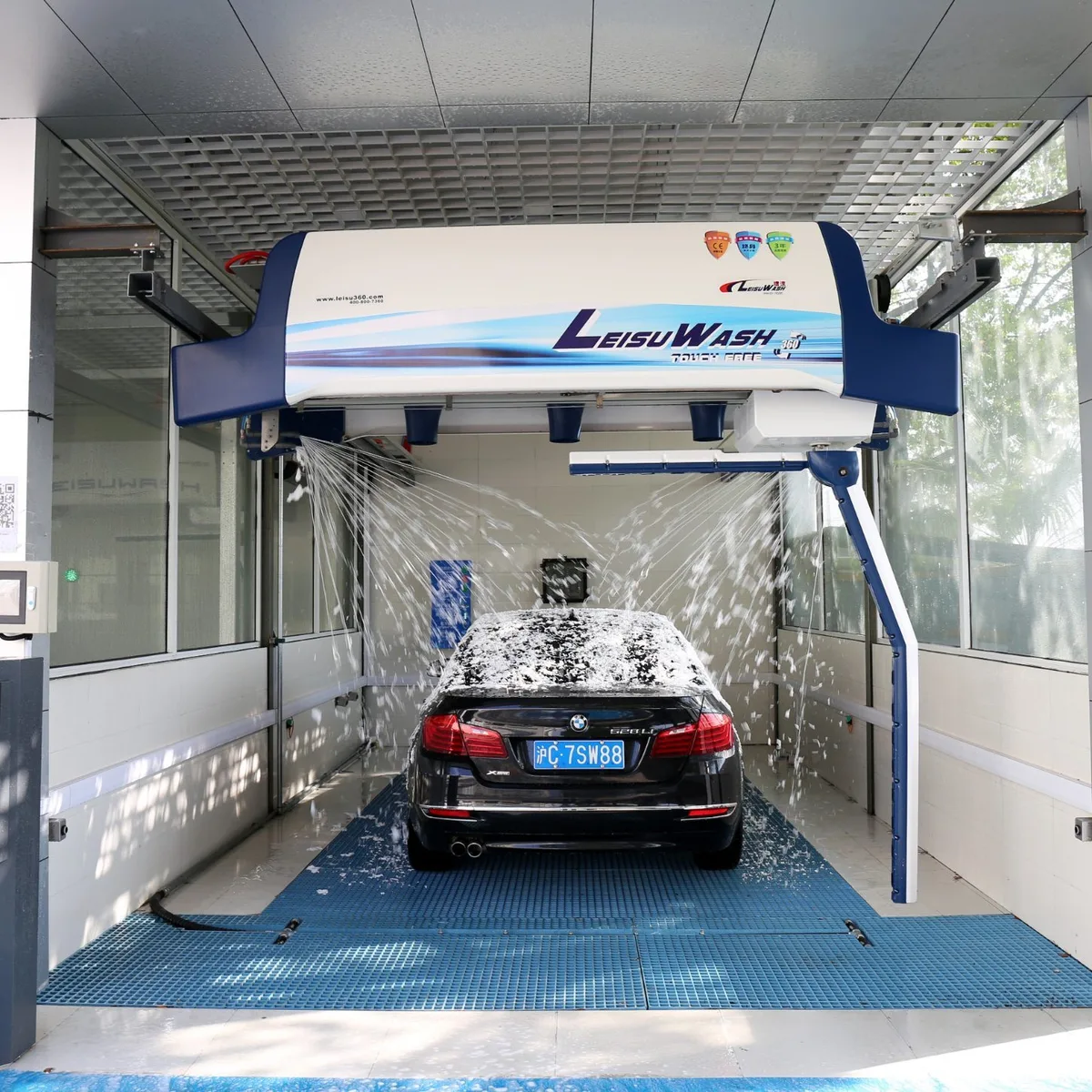
Touchless washes rely on high-pressure jets and chemical sprays rather than brushes or cloths. You drive in, put the car in neutral, and let the machine do its thing. Most Colorado touchless washes include an undercarriage spray, wheel cleaner, and a spot-free rinse.
The appeal is obvious. You don't get wet or cold. It takes about three to five minutes from start to finish.
It's also one of the safest options for your paint since nothing physically touches the surface.
The trade-off is cleaning power. Touchless washes depend entirely on chemical dwell time and pressure. If your car is heavily caked with mud or has baked-on bug splatter, the jets might not remove everything.
You might need to hit a self-serve bay first for the tough spots.
Pressure Washer & Foam Cannon – The At-Home Route
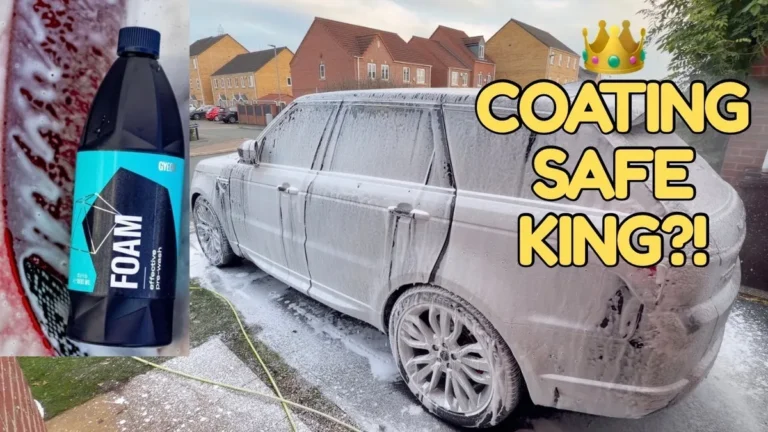
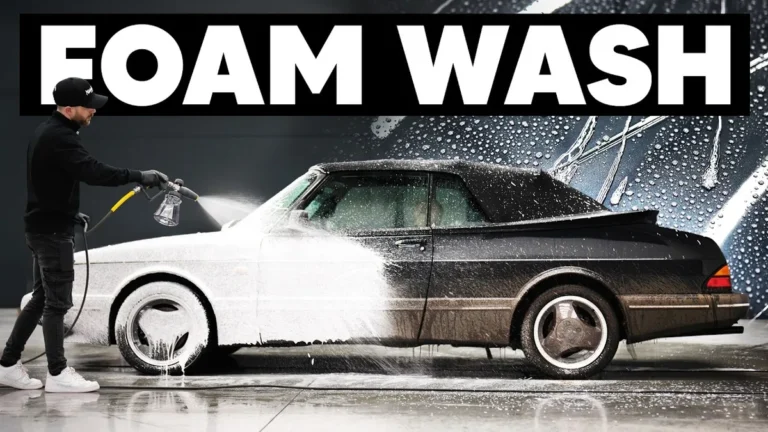
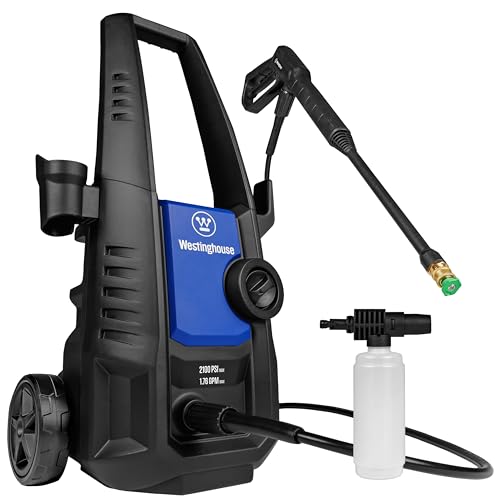
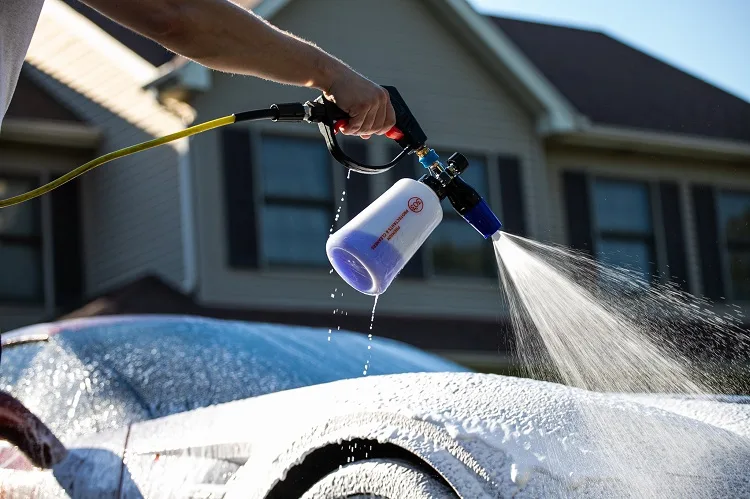
If you have a driveway and a pressure washer, this is a popular choice among Colorado car enthusiasts. You attach a foam cannon to the gun, coat the car in thick soap, let it dwell, and rinse with a wide spray pattern. You control the soap concentration, water temperature, and pressure.
This method gives you the most control over the whole process. You can use car-specific soaps, avoid harsh chemicals, and take as much time as you need. It's also cheaper per wash once you've bought the equipment.
But it has real limits in Colorado. If you live in an apartment or condo, you probably don't have outdoor access to a hose and pressure washer. And from November through March, outdoor washing at home is basically off the table because of freezing temps.
You also need to be careful with the recommended psi for washing cars, too much pressure can damage your clear coat.
Spray and Wash vs. the Alternatives – Side-by-Side Comparison
To make this easier, we put the three methods head-to-head across the factors that matter most to Colorado drivers. Here's how they stack up.
| Factor | Self-Serve Spray Bay | Touchless Automatic | Pressure Washer & Foam Cannon |
|---|---|---|---|
| Control over process | High | Low | Very high |
| Paint safety | Good (if you avoid brush) | Excellent (no contact) | Excellent (with proper technique) |
| Cold-weather usability | Limited (freezing temps) | Excellent (heated bays) | Not possible (freezing) |
| Undercarriage cleaning | Manual (you aim it) | Automatic (jets built in) | Manual (need attachment) |
| Cost per wash | $3–$7 | $8–$15 | $0.50–$1 (soap + water) |
| Time per wash | 6–12 minutes | 3–5 minutes | 20–40 minutes |
| Equipment needed | None | None | Pressure washer + foam cannon |
| Best for heavy mud | Very good | Poor to fair | Excellent |
| Best for road salt | Good (if you focus on wheel wells) | Very good (undercarriage jets) | Good (with undercarriage wand) |
The table shows there's no single winner for every situation. Your choice depends on the season, the level of grime, and whether you have outdoor washing space at home.
For the touchless automatic option, many of the newer machines in Colorado use high-pressure nozzles that match the max pressure washer psi for car safety standards. That means they clean effectively without risking paint damage. Just keep in mind that the chemicals used in touchless washes can be harsh if you have a ceramic coating or PPF.
You'll want a PPF car wash shampoo if you're washing at home.
Best for Each Use Case – Who Should Choose What
Now let's get practical. Here's how the options match up with real Colorado driving scenarios.
The daily I-25 commuter. You drive 30 miles each way through stop-and-go traffic. Your car collects a mix of road salt, exhaust residue, and winter grime. Best bet: the touchless automatic wash with an undercarriage spray at least once a week during winter.
It's fast, you stay warm, and the undercarriage jets handle the salt better than you can with a spray bay nozzle from above.
The weekend off-roader. You hit trails like Yankee Hill or the Alpine Loop. Your truck comes back with caked-on mud and pine needles in every crevice. Best bet: the self-serve spray bay.
You need to be methodical about blasting mud out of the suspension and wheel wells. A touchless automatic won't cut it when the mud is dried on. Pre-rinse, foam, dwell, and rinse thoroughly.
You might also need a car washing attachment for garden hose for touch-ups at home.
The apartment dweller without a driveway. You park on the street or in a garage with no outdoor water access. Your only real option is the self-serve spray bay or the touchless automatic. If your car is just dusty from city driving, the touchless wash is fine.
If you've been camping or skiing and the car is dirty, hit the spray bay for a more thorough clean.
The car enthusiast with a garage. You have a pressure washer and a heated garage. You already know the drill. The foam cannon route gives you the best results.
You can use a high-quality shampoo, control the pressure, and dry the car properly afterward. Just plan for the winter months when outdoor washing isn't an option unless you have a heated driveway.
The mountain-town driver. If you live in Breckenridge, Durango, or Vail, your options are more limited. Fewer self-serve bays, and some close seasonally. Touchless automatic washes are available in most resort towns but charge a premium.
Expect $12 to $18 per wash. Plan your washes before or after trips rather than relying on local options on busy weekends.
Common Mistakes Colorado Drivers Make (and How to Avoid Them)
After talking to detailers and reading through hundreds of user reviews, a few mistakes keep showing up. Here's what to watch for.
Washing in direct sun during summer. Colorado's intense sun at altitude dries soap and water fast. If you wash in direct sunlight, the soap can dry before you rinse it off, leaving streaks and residue. The fix: wash in the morning or evening, or find a shaded spot.
If you're in a self-serve bay, you usually have shade, so that's less of an issue.
Using dish soap instead of car wash shampoo. This is a classic mistake. Dish soap strips wax, sealant, and protective coatings. One wash might not ruin your paint, but repeated use will.
Use a proper car wash shampoo. Even the cheap stuff from an auto parts store is better than dish soap. If you want to know more, check out our take on whether you can wash a car with dish soap.
Not rinsing after snow melts. Here's a sneaky one. You drive through a snowstorm, then park in a heated garage. The snow melts and collects on the floor, but the road salt residue stays on the car.
If you don't rinse it off soon, that salty water dries and leaves mineral spots while salt continues to sit on the metal. A quick trip through a touchless wash the next morning prevents that.
Letting the foam brush touch the ground. At self-serve bays, the brush is often caked with grit from previous users. If you drop it on the ground, it picks up rocks and dirt that will scratch your paint. Instead, use the high-pressure rinse for most of the wash and only use the brush on wheels or lower body panels.
Better yet, skip the brush entirely and rely on the spray gun. Many detailers will tell you that do car wash brushes scratch paint is a real concern.
Skipping the undercarriage wash in winter. This is the biggest mistake for Colorado drivers. Road salt and magnesium chloride don't just sit on the body panels. They accumulate underneath, where they cause rust on suspension components, brake lines, and the frame.
A proper undercarriage wash every week during winter months can extend the life of your vehicle significantly. If you use a self-serve bay, make sure you crawl underneath carefully to aim the spray.
Forgetting to dry properly. Colorado's hard water leaves spots if you let it air dry. Most self-serve bays offer a spot-free rinse that uses reverse osmosis water, which helps. But even with that, drying with a microfiber towel is better.
If you're in a touchless wash, the air dryer usually gets most of the water off, but you might still want to hand-dry the side mirrors and door handles.

What You'll Actually Pay (and How to Save)
Let's talk real numbers. As of 2026, a single spray and wash at a self-serve bay in Colorado runs you about $3 to $7. That assumes you're efficient with the timer.
Most bays give you three to four minutes per dollar, so a thorough wash takes roughly $5 worth of time.
Touchless automatic washes cost more. A basic exterior wash lands between $8 and $12. If you add undercarriage spray, wheel cleaner, and a clear coat protectant, you're looking at $12 to $18.
The premium is for speed and convenience, not necessarily for a deeper clean.
The at-home pressure washer route has the highest upfront cost but the lowest per-wash expense. A decent electric pressure washer runs $100 to $200. A foam cannon adds another $20 to $50.
Car wash soap costs about $10 to $15 per bottle and lasts for dozens of washes. Your per-wash cost drops to under a dollar after you recover the equipment investment.
How to save money without skipping washes.
Buy a monthly unlimited plan if you use a touchless automatic regularly. Most chains in Colorado offer them for $25 to $40 per month. If you wash twice a week during winter, that plan pays for itself quickly.
Use the spot-free rinse at self-serve bays. It costs a little extra per cycle but prevents hard water spots. Colorado's water is notoriously hard, especially along the Front Range.
Those spots can etch into your paint over time. A hard water softener for washing car at home solves the same problem if you wash with a hose.
Pair your washes strategically. Use a touchless automatic for quick maintenance washes between deep cleans. Then hit a self-serve bay once a month for the heavy lifting.
This combo keeps costs down while making sure salt and grime don't build up.
Avoid the extras you don't need. That "triple foam" treatment looks nice but doesn't do much more than regular soap. Skip the wax spray at the automatic wash too.
The stuff they use is thin and won't last more than a few days.
The Final Verdict – Which One Should You Pick?
There's no universal winner. The best choice depends on your driving habits, your living situation, and the season. But we can give you a clear recommendation based on the most common Colorado scenarios.
For winter road salt protection. Go with the touchless automatic wash. The undercarriage spray is the most effective way to flush magnesium chloride off your frame and suspension. Do this weekly from November through March.
It's worth the $10 to $15 to avoid rust repairs later.
For heavy mud and off-road dirt. Use the self-serve spray bay. A touchless wash won't budge caked-on trail mud. You need direct pressure and the ability to target specific areas.
Pre-rinse, foam, let it dwell for a full minute, then rinse from top to bottom. Budget $5 to $7 and plan for 10 minutes.
For the car enthusiast with a garage. Invest in a pressure washer and foam cannon setup. The control over soap, pressure, and drying gives you the best results. Just remember to check your max pressure washer psi for car so you don't damage the clear coat.
And use a PPF car wash shampoo if you have paint protection film.
For the apartment dweller or condo owner. You're stuck with commercial washes. That's not a bad thing. Stick to touchless automatic for routine cleaning and hit a self-serve bay every month for a deeper clean.
Keep a microfiber towel in your trunk for touch drying after the air dryer.
For the mountain-town driver. Accept that you'll pay more and have fewer options. Plan your washes before heading up from the Front Range. If you're in a resort town for the season, find a touchless wash with a monthly plan.
It'll save you money and keep the salt off.
Our bottom line? Don't overthink it. The best spray and wash method is the one you'll actually use consistently.
A quick touchless wash every week beats a perfect foam-cannon job you only do once a month. Keep the salt off, keep the mud rinsed, and your Colorado vehicle will last longer for it.