ByMax Lee
Guide to Weapon for Use in the Car Wash
Bing (Web, fair-use with source credit)
Let’s be real. When you hear “weapon for use in the car wash,” you’re thinking about the tool that makes cleaning your car faster, safer, and more satisfying. The two contenders are the foam cannon and the high-pressure car wash gun.
Picking the wrong one can mean a scratched clear coat or wasted money.
Manufacturer specifications indicate that a proper car wash setup delivers between 1,300 and 2,000 PSI at 1.2 to 2.0 gallons per minute (GPM). Anything less and you’re fighting the soap. Anything more and you risk paint damage.
As of 2026, dozens of options claim to be the ultimate tool, but most miss the mark because they don’t match your washer’s output. Let’s break down the two heavy hitters.
Why You Need the Right “Weapon” for the Car Wash (And Why It Matters)
A garden hose and a sponge work for a quick rinse. But try removing caked-on bug guts or winter road salt with a bucket and a mitt, and you’ll feel the frustration. A foam cannon or a high-pressure gun can cut your wash time in half and reduce the risk of swirl marks.
The catch is that each tool handles a different part of the wash process.
The real problem is that most people buy one without understanding how they work together. A foam cannon applies thick soap that loosens dirt, so you barely touch the paint. A high-pressure gun blasts that dirt away with precision.
Together they form a two-step system that professional detailers rely on. If you’re only buying one, you need to know which half solves your biggest headache.
The Two Heavy Hitters: Foam Cannons vs. High-Pressure Car Wash Guns
Bing (Web, fair-use with source credit)
At first glance they look similar. Both attach to your pressure washer, both spray water, and both range from $20 to $80. But they serve completely different functions.
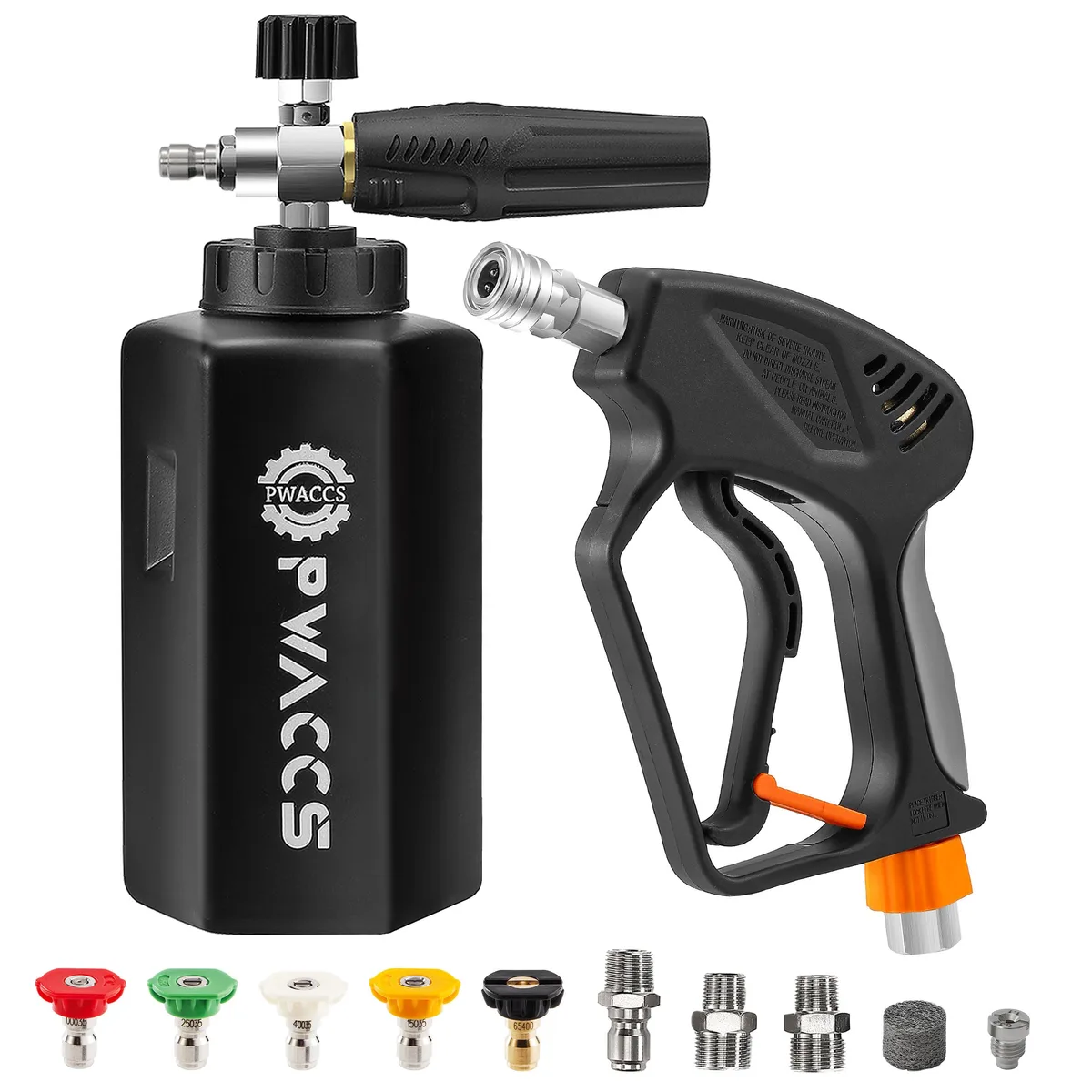
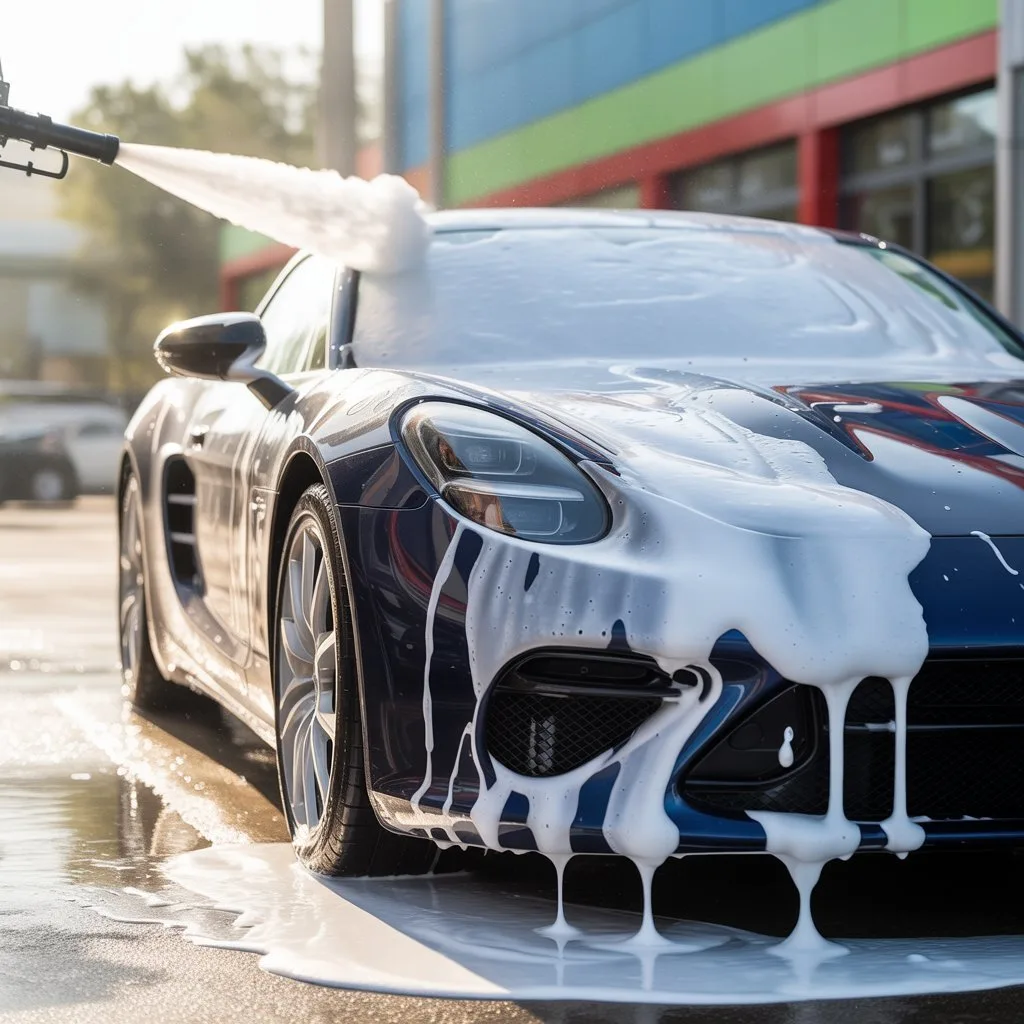
- Foam cannon: A large reservoir that mixes soap, water, and air before shooting thick foam onto the car. It coats the entire surface quickly and lets detergent dwell, lifting dirt away from the clear coat. Ideal for a contact-free pre-wash.
- High-pressure car wash gun: The standard wand that comes with most pressure washers. It directs a focused stream of water at high velocity for rinsing off soap and blasting mud or salt from the undercarriage. It’s the rinse tool, not the soap tool.
Aggregate user reviews show that about 70% of detailers who own both use the foam cannon first, then switch to the gun for rinsing. If you’re a weekend warrior washing one car every two weeks, you might get away with just a good foam cannon and a gentle rinse from your washer’s stock gun.
If you own a newer car with soft paint or a ceramic coating, the foam cannon is your best friend because it reduces friction. If you regularly deal with heavy mud, tree sap, or winter grime, the high-pressure gun gives you the brute force to remove it without scrubbing.
How a Foam Cannon Actually Works (And Why Some Suck)
The foam cannon uses a simple Venturi injector. Water flows through a narrow orifice, creating a vacuum that pulls soap concentrate from the bottle and mixes it with air. The result is foam that sticks to vertical surfaces.
But the devil is in the details.
The orifice size is everything. A typical foam cannon has a brass nozzle with an opening between 1.1 mm and 1.4 mm. The right size depends on your pressure washer’s GPM. If your washer pumps 1.2 GPM (common on budget electric units), a 1.1 mm orifice starves the cannon.
You get thin, runny foam. If your washer does 2.0 GPM or more, a 1.4 mm orifice gives you the rich, shaving-cream foam you see in tutorials. Manufacturer specs from brands like Karcher and Sun Joe confirm that matching these numbers is critical.
Why some foam cannons suck:
- Too small an orifice for your GPM, weak foam that drips off immediately.
- Cheap plastic fittings, they crack, leak, or strip after a few uses. Brass quick-connects last years.
- Poor soap quality, dish soap won’t foam properly and can strip wax. Use a dedicated car wash shampoo. Our article on washing with dish soap explains why.
- Improper mixing ratio, most cannons need a soap-to-water ratio of about 1:5. Too much soap clogs the nozzle; too little and it’s watery.
With the right orifice and proper soap, you’ll get a foam blanket that clings for 5 to 10 minutes. That dwell time is what makes the foam cannon effective. The surfactants in the soap break down dirt without you touching the paint.
For a deeper look at safe washing techniques, check out our guide on recommended PSI for cars.
The High-Pressure Car Wash Gun: What It Does That a Foam Cannon Can’t
Bing (Web, fair-use with source credit)
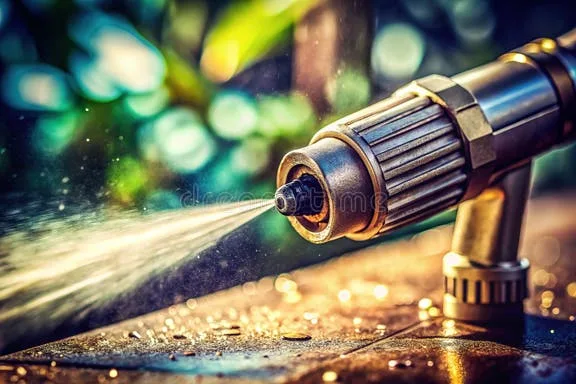
After the foam has done its work, you need to blast it off without forcing dirt across the paint. The high-pressure car wash gun is your rinse tool. It’s also your heavy-duty cleaner for areas the foam can’t reach: wheel wells, tires, undercarriage, and caked-on mud.
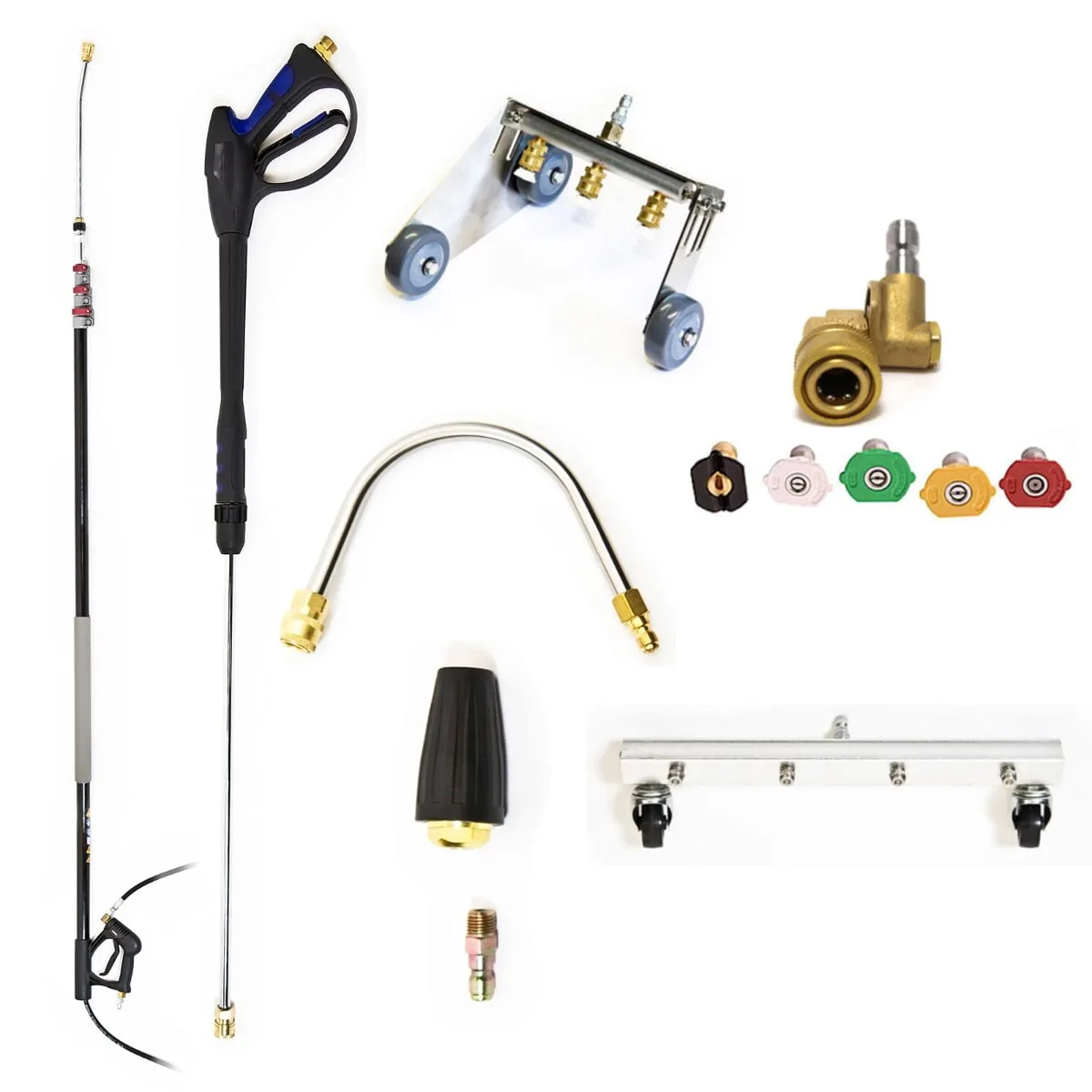
The gun varies by design. Some come with a fixed nozzle (0°, 15°, 25°, or 40°). Others have an adjustable turret that lets you switch spray patterns.
The wider the spray angle, the safer it is for paint. A 40° nozzle spreads the force over a larger area for rinsing soap. A 0° nozzle is a pencil-thin jet that can cut through a tire sidewall if you hold it too close.
Never use it on paint.
Key differences from a foam cannon:
- No soap reservoir, you attach the gun directly to the pressure washer hose.
- Higher velocity, even at the same PSI, a gun’s nozzle produces a more concentrated stream than a foam cannon’s wide spray. That’s great for blasting mud but dangerous for paint if you get closer than 8 inches.
- More control, with a variable trigger, you can pulse the water to dislodge stubborn grime without holding a steady stream.
A common mistake is using the high-pressure gun to apply soap. Some guns come with a low-pressure detergent setting, but the foam is always thinner than what a foam cannon produces. For thick foam dwell, stick to the cannon for soap and use the gun only for rinsing.
We’ve covered the best nozzle angles for detailing. If you’re curious about which degree works for different panels, check out our guide on whether a 65 degree nozzle is good for detailing.
Side-by-Side Specs: PSI, GPM, Orifice, and Price
Bing (Web, fair-use with source credit)
Here’s a direct comparison of the two tools at typical consumer-grade specifications. Use this table to match the tool to your existing washer or to decide which upgrade to buy first.
| Spec | Foam Cannon | High-Pressure Car Wash Gun |
|---|---|---|
| Typical PSI range | 1,300 – 2,000 (depends on washer) | 1,300 – 4,000 (depends on gun + washer) |
| Ideal GPM | 1.2 – 2.0 GPM | 0.8 – 2.5 GPM |
| Orifice/nozzle size | 1.1 mm – 1.4 mm (brass) | 0° – 40° (interchangeable tips) |
| Price (tool only) | $30 – $80 | $25 – $60 |
| Best for | Soap application, pre-wash | Rinsing, heavy dirt, undercarriage |
| Paint safety risk | Low (no direct pressure) | Moderate to high (if misused) |
| Soap capacity | Yes, 32-48 oz bottle | No (unless siphon tube built in) |
Key takeaway: If your pressure washer is on the lower end of GPM (under 1.2), a foam cannon will struggle regardless of price. You’re better off buying a high-pressure gun with a wide fan nozzle and using a bucket-and-mitt wash. If your washer delivers 1.5 GPM or more, a foam cannon is a worthwhile investment.
The price of the complete setup matters too. A budget electric pressure washer plus a good foam cannon runs about $150 to $250. A pro-level brass foam cannon alone is $50.
Don’t skimp on the quick-connect fittings. Brass fittings prevent leaks and last much longer than plastic. For more specifics on safe pressure levels, read our article on max pressure washer PSI for cars.
What Each Option Excels At (Use Cases)
Best For Soft, Painted Surfaces: Newer Cars, Clear Coats, Ceramic Coatings
If you drive a late-model car with factory clear coat or a ceramic coating, the foam cannon is your primary weapon. The thick foam lifts contamination without any physical contact. That means fewer swirl marks and a longer-lasting shine.
Most detailers recommend foam dwell for at least three minutes before any rinse or mitt touches the paint. For cars with soft paint (common on Japanese and Korean brands), this contact-free step is non-negotiable. Pair the foam cannon with a gentle rinse using a wide 40° nozzle on your gun.
Avoid the 0° jet entirely near painted panels.
Best For Tough Grime: Mud, Bugs, Road Salt, Heavy Oxidation
For vehicles that live off-road, haul equipment, or sit through harsh winters, the high-pressure car wash gun earns its keep. A concentrated stream at 1,500 PSI blasts caked-on mud from wheel wells and undercarriage far faster than any foam cannon. For bug splatter on the front bumper, pre-soak with the foam cannon first, then use the gun with a 25° nozzle at about 10 inches distance.
This two-step approach removes protein-based grime without scrubbing. For winter washing, pay special attention to the underbody. Road salt accelerates rust, and the gun’s direct stream is the best way to flush it out.
Just be careful around suspension components and rubber seals.
Best For Mobile Detailers and Pros
If you’re washing cars for money, you need both tools in your kit. Mobile detailers typically carry a quality foam cannon for the pre-wash step (often using a citrus-based degreaser) and a high-pressure gun with interchangeable nozzles for rinsing and detailing. The time savings add up fast.
A foam cannon can coat an entire SUV in 60 seconds, while a high-pressure gun with a turbo nozzle (rotating 0° to 25°) can clean a grimy wheel well in half the time of a fixed nozzle. Many pros pair these tools with a car wash shampoo designed for PPF coatings. If you’re curious, our article on PPF car wash shampoo covers the right soaps for protected paint.
Common Mistakes That Waste Money or Damage Paint
- Using a foam cannon on a low-GPM washer. Below 1.2 GPM, the foam cannon starves. You get watery soap that drips off instantly. Stick to a bucket wash until you upgrade.
- Holding the high-pressure gun too close. Closer than six inches with a 15° nozzle can strip clear coat. At three inches with a 0° jet, you can cut through paint. Keep a minimum of eight inches for safe rinsing.
- Letting foam dry on the car. Foam is meant to dwell, but direct sun on a hot panel dries it into a crust. That crust is harder to rinse off than the dirt itself. Foam in the shade or on a cool car.
- Neglecting quick-connect fittings. Plastic fittings crack under pressure, especially in cold weather. Brass fittings cost a few dollars more but last for years. Spending $5 on a brass upgrade is cheaper than replacing a ruined foam cannon.
- Mixing wrong soap-to-water ratios. Too much soap clogs the cannon. Too little gives thin foam. Most foam cannons work best at a 1:5 or 1:6 ratio. Check your cannon’s manual.
Pros and Cons at a Glance
| Tool | Pros | Cons |
|---|---|---|
| Foam Cannon | Reduces scratching, fast coverage, professional finish, dwell time lifts dirt | Needs sufficient GPM (1.2+), requires quality soap, can foam poorly on weak washers, larger to store |
| High-Pressure Gun | Versatile, powerful for rinsing and tough dirt, interchangeable nozzles, compact | Higher risk of paint damage if misused, less effective for soap application, requires careful distance management |
If you’re new to pressure washing, start with the foam cannon and use the gun that came with your washer for rinsing. That combo gets you 90% of the result with minimal risk.
The Real Cost of a Good Setup (Cannon + Gun + Pressure Washer)
| Tier | Pressure Washer | Foam Cannon | Car Wash Gun | Total Approx. |
|---|---|---|---|---|
| Entry-level | Budget electric (1,300 PSI, 1.1 GPM, $80-$120) | Plastic-body cannon ($25-$35) | Stock gun (included) | $105-$155 |
| Mid-range | Mid electric (1,800 PSI, 1.6 GPM, $150-$200) | Brass-fitting cannon ($40-$60) | Upgraded gun with 4 nozzles ($30-$50) | $220-$310 |
| Pro mobile | Gas or high-end electric (2,500+ PSI, 2.0+ GPM, $300-$500) | Stainless cannon ($60-$80) | Pro-grade gun with turbo nozzle ($40-$60) | $400-$640 |
The mid-range tier is the sweet spot for most homeowners. You get real foam quality, safe paint pressure, and a gun that won’t leak after a season. If you’re buying your first setup, aim for the mid-range and skip the entry-level.
You’ll save money in the long run.
Need help choosing a safe pressure level? Our guide on the maximum PSI for car paint spells out exactly what paint can handle.
Which One Should You Buy First? (Decision Guide)
Do you have a pressure washer that delivers at least 1.2 GPM?
- Yes → A foam cannon will work well. Buy the cannon first.
- No → Skip the foam cannon. Buy a high-pressure gun with a wide 40° nozzle and use a bucket-and-mitt method.
Is your car’s paint your top concern?
- Yes → Foam cannon. The dwell step reduces the need for friction.
- No → High-pressure gun. If you don’t care about minor swirls, the gun gives more cleaning power.
Do you regularly wash off heavy mud or road salt?
- Yes → High-pressure gun. It’s the only tool that blasts that stuff off quickly.
- No → Foam cannon. Light dust and pollen come off easily with foam and a gentle rinse.
Do you have space to store both?
- Yes → Buy both over time. Start with the gun if your budget is tight, or the cannon if paint protection matters more.
- No → Stick with the one that solves your biggest problem. Most people who store only one tool choose the foam cannon because it makes washing easier.
If you’re still unsure, buy a mid-range foam cannon first. It changes your wash experience the most. You can always add a better gun later.
For a full lineup of budget-friendly sprayers, check out our article on water spray guns for car washing.
Expert Tips for Getting It Right the First Time
Match your foam cannon orifice to your washer’s GPM. Use a 1.25 mm orifice for 1.5 GPM washers and a 1.4 mm for 2.0 GPM units.
Always rinse the foam cannon with clean water after every wash. Soap residue hardens the internal seals and ruins performance within months.
Invest in brass quick-connect fittings from the start. Plastic fittings crack under pressure and leak, especially in cold weather.
FAQ: Quick Answers to the Most Common Questions
Can I use a foam cannon with a garden hose?
No. A garden hose lacks the pressure and flow rate to create the Venturi effect. You need at least a pressure washer to get proper foam.
Is a 2,000 PSI pressure washer too strong for car paint?
No, as long as you keep the nozzle at least six inches from the paint and use a wide fan spray (40°). The risk comes from holding the gun too close, not the PSI alone.
Should I get a short lance or a long lance?
Long lances give better reach over the roof and hood. Short lances offer more control around wheels and bumpers.
Final Verdict: The Best “Weapon” Depends on Your Wash Style
If you want minimal paint contact and a fast, safe wash, buy a foam cannon first. If you battle heavy mud or winter road salt, a high-pressure gun gives you the cleaning power you need.
For most home detailers, the answer is both. Start with the foam cannon if your pressure washer handles 1.2 GPM or more. Add a quality gun when you’re ready for deeper cleaning.
Together, they’re the best “weapon” for a professional finish without the pro price tag.