Getting a disabled parking permit in Connecticut starts with understanding the Connecticut disabled person parking permit application and renewal process. Whether you need a permanent placard, a temporary one, or disabled veteran plates, the rules are specific and the paperwork must be done right.
As of 2026, permanent permits last five years, while temporary ones max out at six months. The first step is figuring out which type fits your situation.
Quick Answer
The Connecticut disabled person parking permit application and renewal process requires Form B-225.
Permanent permits are blue and valid for five years.
Temporary permits are red and last up to six months.
Renewals need fresh medical certification for permanent permits.

Do You Qualify for a Connecticut Disabled Parking Permit?
You qualify if a licensed physician, APN, PA, or optometrist certifies a condition that limits mobility. This includes difficulty walking 200 feet without stopping, using a wheelchair, or having a severe cardiac or respiratory issue.
Connecticut also issues disabled veteran plates for those with service-connected disabilities. These are separate from standard placards and require proof of veteran status.
If you’re unsure, check the CT DMV’s official guidelines for the full list of qualifying conditions.
Permanent vs. Temporary: Which Permit Type Fits Your Situation?
Permanent permits are for long-term disabilities. They’re blue, hang from your rearview mirror, and last five years. You’ll need to renew them with a new medical certification every five years.
Temporary permits are for short-term needs, like recovery from surgery or an injury. They’re red, also hang from your mirror, and last up to six months. You can renew these as long as your medical provider certifies the need.
If you’re a veteran with a service-connected disability, you can apply for disabled veteran plates instead of or in addition to a placard. These are license plates, not hanging tags, and they’re tied to your vehicle’s registration.
Step-by-Step: How to Apply for a Connecticut Disabled Parking Permit
Filling Out Form B-225 Correctly
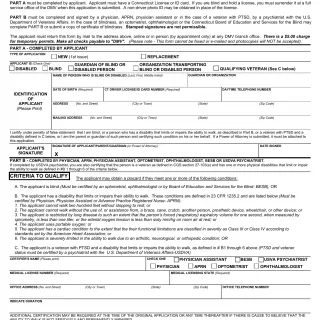
Start with Form B-225, the official application for disabled parking permits in Connecticut. You can get it from the CT DMV website or your local town clerk’s office.
Fill out the applicant section completely. Include your name, address, driver’s license number (if you have one), and vehicle information.
Getting the Required Medical Certification
The most critical part is the medical certification section. A licensed physician, advanced practice registered nurse (APN), physician assistant (PA), or optometrist must sign off.
They’ll need to confirm your condition and, for temporary permits, specify the duration. Without this, your application will be rejected.
Where and How to Submit Your Application
You have two options: submit in person or by mail. In-person submissions go to your local town clerk’s office. Mail submissions go to the CT DMV’s central office in Wethersfield.
There’s no fee for the initial permit. Processing is usually immediate for in-person submissions. Mail applications take about 5 to 10 business days.
How to Renew Your Connecticut Disabled Parking Permit
Permanent Permit Renewal (Every 5 Years)
Permanent permits expire after five years. To renew, submit a new Form B-225 with fresh medical certification. The process mirrors your initial application.
Start the renewal up to 60 days before expiration. Driving with an expired permit can result in fines up to $250.
Temporary Permit Renewal (Up to 6 Months)
Temporary permits require a new medical certification for each renewal. The maximum duration for any single permit is six months.
There’s no limit to renewals as long as your provider supports the need.
What to Do If Your Placard Is Lost, Stolen, or Damaged
Report a stolen placard to the police first. You’ll need a case number for replacement.
For lost or damaged placards, submit a new Form B-225 with the "Replacement" box checked. There’s a $5 fee. Process it in person or by mail.
Connecticut Disabled Parking Rules You Must Follow
Where and How to Display Your Placard
Hang the placard from your rearview mirror when parked. Remove it when driving to avoid obstructing your view.

The placard must be fully visible through the windshield. Never leave it on the dashboard.
Who Can Use the Permit (And Who Can’t)
Only the disabled individual can use the permit. If you’re driving someone with a disability, the placard is valid only when they’re in the vehicle.
Lending your placard to others is illegal. Misuse can result in fines up to $250 and revocation.
Costs, Fees, and Processing Times in Connecticut
| Item | Cost | Processing Time |
|---|---|---|
| Initial permit | $0 | Immediate (in-person), 5–10 days (mail) |
| Replacement | $5 | Immediate (in-person), 5–10 days (mail) |
| Renewal | $0 | Immediate (in-person), 5–10 days (mail) |
Temporary permits have no additional fees. Permanent permits are free for the full five-year term.
Common Mistakes That Get Applications Rejected or Permits Revoked
Incomplete medical certification is the top reason for rejection. The provider must sign, date, and specify the condition.
Using an expired permit is another common issue. Check the expiration date and renew on time.
Letting others use your placard can lead to revocation. The permit is non-transferable.
Out-of-State Permits: Can You Use Them in Connecticut?
Connecticut honors out-of-state disabled parking permits as long as they’re valid in the issuing state. The same rules apply: the disabled individual must be in the vehicle.
If you’re a Connecticut resident with an out-of-state permit, switch to a CT permit when you establish residency. Non-residents visiting Connecticut can use their home state’s permit.
Disabled Veteran Parking Plates: A Separate Option
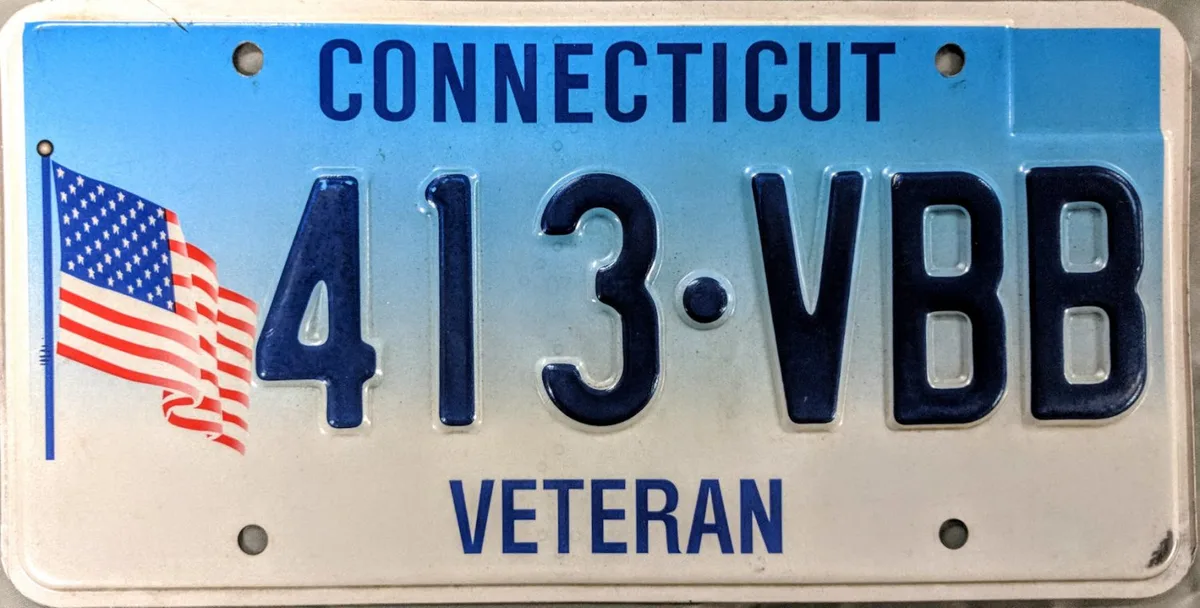
Disabled veteran plates are actual license plates issued through the DMV. They’re tied to your vehicle’s registration.
To qualify, provide proof of a service-connected disability from the VA. These plates offer the same parking privileges as placards but are vehicle-specific.
Frequently Asked Questions
How long does a permanent permit last?
A permanent permit is valid for five years from the issue date. Renew it with a new medical certification before it expires.
Can I use my permit in another state?
Yes, Connecticut permits are honored in other states. Check local laws when traveling, as rules may vary.
What happens if I use an expired permit?
Using an expired permit can result in a fine up to $250. Always check the expiration date.
Can a family member use my placard if I’m not in the car?
No, the placard is only valid when the disabled individual is present. Lending it to others is illegal.
How do I replace a lost placard?
Submit a new Form B-225 with the "Replacement" box checked. There’s a $5 fee. Provide a police report if it was stolen.
Are there any fees for the initial permit?
No, the initial permit is free. The only fee is $5 for replacements.