ByMax Lee
Iowa Child Restraint Law: Car Seat Rules for Age 6 & Under
The Iowa child restraint law and car seat requirements for ages 6 and under can feel like a maze when you're trying to get out the door. You want your child safe, and you also want to avoid a ticket. The rules are actually pretty clear once you break them down stage by stage, and they're based on how kids grow and how crash forces work.
Per the National Highway Traffic Safety Administration's crash data, correctly using a car seat cuts the risk of fatal injury by 71% for infants and 54% for toddlers. The law follows that science. Knowing it means understanding what your child needs right now and what they'll need next.
We'll walk through each stage so you know exactly where your family stands as of 2026.
Bing (Web (fair-use with source credit))
The Quick Answer: Iowa's Car Seat Rules at a Glance
Iowa law says all children under 6 must ride in a child restraint system. The type changes with age, weight, and height. Rear-facing seats are required until at least 1 year and 20 pounds.
Forward-facing harnessed seats are needed until at least age 4 and 40 pounds. Boosters are required from age 4 up through age 5. Lap-and-shoulder belts alone are only allowed once the child turns 6 or passes the 5-step fit test.
| Age / Size | Required Restraint | Notes |
|---|---|---|
| Under 1 year or under 20 lbs | Rear-facing car seat | Maximum allowed as long as child fits manufacturer limits |
| 1 to 3 years, 20 to 40 lbs | Forward-facing car seat | Must use 5-point harness |
| 4 to 5 years, over 40 lbs | Booster seat (high-back or backless) | Must use lap-and-shoulder belt |
| 6+ years and passes 5-step test | Seat belt alone | Only if the belt fits correctly |
What the Law Actually Says (And What It Doesn't)
Iowa Code § 321.446 is the law you need to know. It says any driver transporting a child under 6 must secure that child in a child restraint system that meets federal motor vehicle safety standards. The system must be used according to the manufacturer's instructions.
The law sets minimum requirements, not best practices. So a child can legally move to a forward-facing seat at 1 year and 20 pounds, even though experts recommend keeping them rear-facing much longer. The law also doesn't say you must use a high-back booster over a backless one, but it does require a lap-and-shoulder belt for any booster seat.
What the law doesn't cover: It doesn't require registration of car seats, doesn't prohibit second-hand seats outright, and doesn't mandate that you see a certified technician (though it's smart to do so). The fine for a first offense is $75 per child. You can also be cited for improper use, like a harness that's too loose or a chest clip in the wrong position.
The full text of Iowa's child restraint law spells it out in precise legal language, but the practical points are what we're covering here.
Rear-Facing Seats: When to Start and When to Switch
Iowa law says you can legally turn your child forward-facing at age 1 and 20 pounds. That's the bare minimum. The American Academy of Pediatrics and the National Highway Traffic Safety Administration both recommend keeping children rear-facing until they outgrow the seat's height and weight limit, which often means age 2, 3, or even older.
Aggregated crash data shows rear-facing seats protect the head, neck, and spine much better in a frontal collision.
So when should you actually switch? "When the child exceeds the seat's maximum rear-facing limit" is the only answer. That limit is printed on the side of every car seat.
For most convertible seats, it's around 40 to 50 pounds and a specific height (usually the head within 1 inch of the top of the shell). Once your child hits either limit, it's time to move up.
Bing (Web (fair-use with source credit))
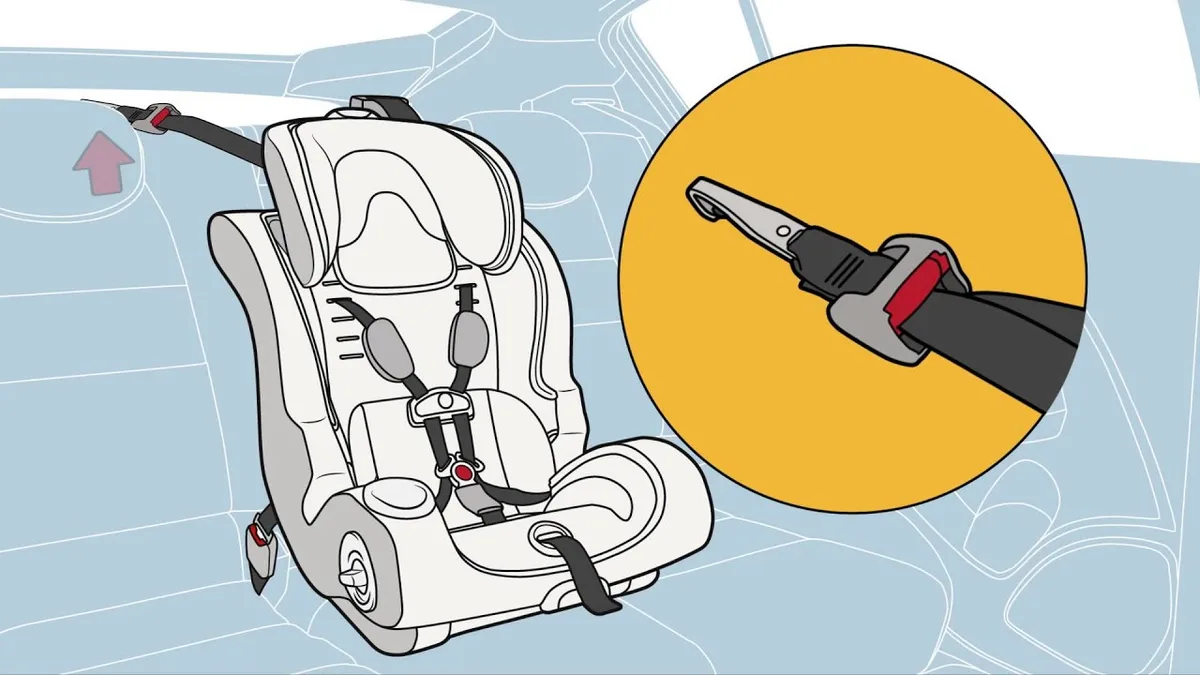
Common rear-facing installation tips:
- Use the LATCH system if your child's weight is under the vehicle's LATCH limit (usually 40 to 65 lbs)
- The seat must be reclined according to the manufacturer's angle indicator
- The harness should be at or below your child's shoulders
- Do the pinch test. If you can pinch harness webbing at the shoulder, it's too loose
Our research shows many parents flip too early because the child seems cramped. But kids are actually more comfortable rear-facing. They can stretch their legs up the seat back or cross them.
There's no evidence of leg injuries from rear-facing. Keep your child rear-facing as long as possible.
Forward-Facing Seats: Age, Weight, and Height Rules
Once your child reaches at least 1 year and 20 pounds and has outgrown the rear-facing limits of their convertible seat, they can legally ride forward-facing. But the forward-facing seat has its own rules.
The child must ride in a seat with a 5-point harness. You cannot use a booster seat at this stage, even if the child is heavy enough, because they lack the maturity to stay seated correctly. The law requires forward-facing until age 4 and 40 pounds.
Most forward-facing seats accommodate children up to 50 to 65 pounds in harness mode.
Important forward-facing requirements to know:
- The harness must be at or above your child's shoulders
- The seat must be installed in an upright recline position (unless the manual says otherwise)
- The top tether must always be attached to your vehicle's tether anchor
- The chest clip should be at armpit level
- Remove bulky coats and snowsuits before buckling. Use a blanket over the harness instead
Many combination seats advertised as "harness-to-booster" seats are popular because they grow with the child. In harness mode, they're forward-facing. Later, you remove the harness and use the built-in belt guides as a booster.
That's fine, but don't switch to booster mode until the child meets the seat's harness weight limit.
One thing that trips up families: the vehicle seat's shoulder belt anchor point. In forward-facing mode, the harness holds the child, so you don't worry about the belt position yet. But once you move to booster mode, the belt must cross the child's collarbone and sternum, not their neck or arm.
That's a separate check many overlook. For more on state-specific vehicle rules and how they interact with child safety, check out our other guides on how registration fees vary by state and state-level safety laws.
Booster Seats: When Your Child Is Ready (And When They're Not)
Once your child outgrows the forward-facing harness at around age 4 and 40 pounds, Iowa law requires a booster seat. The booster lifts the child so the vehicle's lap-and-shoulder belt fits correctly. Without it, the belt can ride up over the stomach or across the neck.
Two types are common: high-back and backless. High-back boosters provide head and side support, which is useful if your vehicle's seat back is low. Backless boosters are portable and cheaper.
Both are legal as long as the child uses the vehicle's shoulder belt.
When is a child truly ready for a booster? They must be mature enough to sit still the entire ride. If they slouch, lean sideways, or put the shoulder belt behind them, they're not ready.
Stay with the harness until they can sit properly.
Seat Belts Only: The 5-Step Test for Kids Under 6
Iowa law says a child can use a seat belt alone at age 6. But age alone is not enough. The belt must fit correctly.
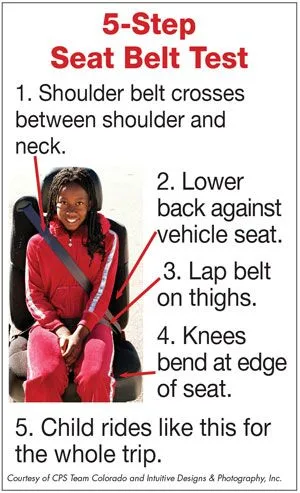
You can check with the 5-step test:
- The child's back and bottom are flat against the vehicle seat.
- Knees bend naturally over the front edge of the seat, feet flat on the floor.
- The lap belt sits low on the hips, touching the upper thighs.
- The shoulder belt crosses the middle of the collarbone and sternum.
- The child can stay in this position for the whole ride without slouching.
Bing (Web (fair-use with source credit))
If the answer to any step is no, the child still needs a booster. Many children are not ready for a seat belt alone until age 10 or 12. Our research shows that parents often rush this step.
Holding off is safer, and it's still legal until age 6. After that, the law allows it, but best practice says wait.
Common Mistakes That Could Cost You (Or Worse)
Even well-intentioned parents make mistakes. The most frequent ones can lead to a fine or injury.
Common mistakes include:
- Harness too loose. The webbing should be snug with no slack. If you can pinch any fabric at the shoulder, it's too loose.
- Chest clip too low. The clip must be at armpit level, not on the stomach.
- Bulky coats or snowsuits. Compression from a crash can create dangerous slack. Dress the child in thin layers and put a blanket over the harness.
- Using a second-hand seat with unknown history. A seat from a garage sale or a friend may have invisible damage or be expired. Always check the expiration date and crash history.
- Moving to a booster too early. The harness protects better than a belt. Keep your child harnessed as long as possible.
How to Install Each Type of Seat Correctly
Installation is where many seats fail to protect. The two methods are LATCH and vehicle seat belt. Never use both at the same time.
Rear-facing installation:
- Use the LATCH system if your child is under the vehicle's LATCH weight limit (usually 40 to 65 lbs)
- The seat should not move more than 1 inch side-to-side at the belt path
- The recline angle must match the built-in indicator
- The harness comes from slots at or below the shoulders
Forward-facing installation:
- Still use LATCH if within weight limits, but the top tether is mandatory
- Tighten until the seat moves less than 1 inch
- The harness comes from slots at or above the shoulders
- The seat back should be upright unless the manual states otherwise
Booster seat installation:
- No LATCH required (some have it for stability when empty)
- Place the booster flat on the vehicle seat
- The child's ears should be below the vehicle's headrest or the top of the high-back booster
For details on vehicle rules in other states, see our guide on renewal cycle options for registration timelines.
Where to Get Your Car Seat Checked in Iowa
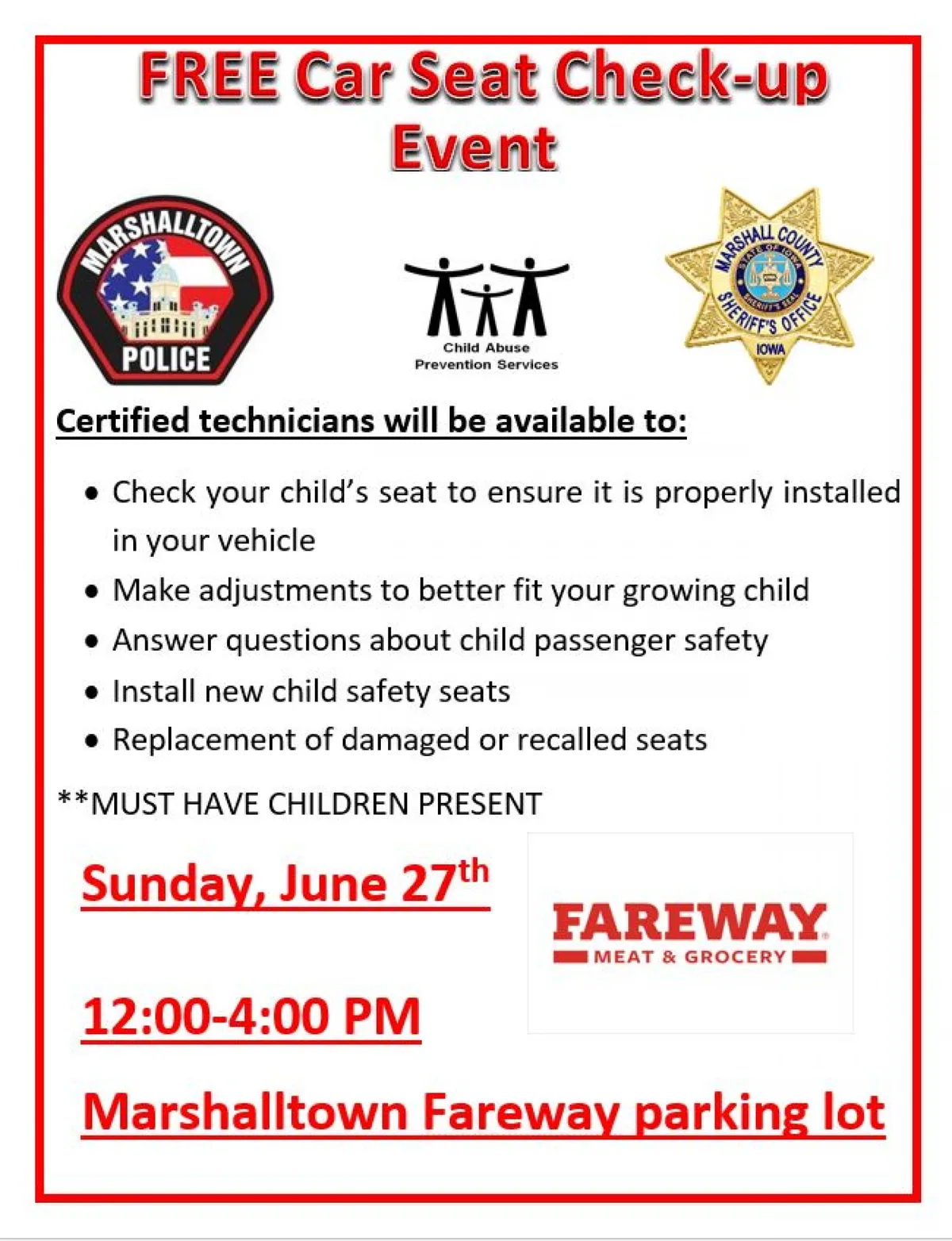
You don't have to figure this out alone. Iowa has certified Child Passenger Safety Technicians who check installations for free.
The Iowa Governor's Traffic Safety Bureau coordinates inspection stations across the state. You can find a technician by searching online for "Iowa car seat inspection" or visiting the Safe Kids Iowa coalition page. Many fire stations, police departments, and hospitals host regular check events.
Bing (Web (fair-use with source credit))
What happens at a check? A certified technician inspects your seat, checks for recalls, and shows you how to install it properly. The entire process takes about 20 to 30 minutes.
Bring your car seat, the owner's manual, and your child if possible.
It's a good idea to have the seat inspected after any change: new vehicle, new seat, or even after a minor crash.
What Happens If You Break the Law (Fines, Points, and Real Risks)
Iowa fines start at $75 for a first offense. That's per child, not per vehicle. If you have three kids improperly restrained, you could face $225 in fines.
The ticket goes on your driving record, but it doesn't add points.
The real risk isn't the fine. It's the crash. Iowa State Patrol data shows unrestrained children are three times more likely to be injured in a crash.
Even a minor fender bender at 30 mph can turn fatal if a child isn't properly secured.
Some parents think they're safe because they're just driving around the block. Most crashes happen within three miles of home. The law applies every time you drive, no matter how short the trip.
Iowa vs. Neighboring States: What Changes at the Border
Iowa's law is stricter than some neighbors, more lenient than others. Here's how it compares:
| State | Minimum Age for Seat Belt Alone | Booster Seat Requirement | Rear-Facing Minimum |
|---|---|---|---|
| Iowa | 6 years | 4 to 5 years | 1 year, 20 lbs |
| Illinois | 8 years | 4 to 7 years | 2 years |
| Minnesota | 8 years | 4 to 7 years | 2 years |
| Nebraska | 8 years | 4 to 7 years | 2 years |
| Wisconsin | 8 years | 4 to 7 years | 1 year, 20 lbs |
| Missouri | 8 years | 4 to 7 years | 1 year, 20 lbs |
| South Dakota | 5 years | 4 years | 1 year, 20 lbs |
If you cross into Illinois or Minnesota, their laws require rear-facing until age 2. That means your 18-month-old who's legally forward-facing in Iowa could get you a ticket just across the border.
The takeaway: Follow the stricter rule when traveling. It's safer and keeps you legal everywhere.
Cold Weather Car Seat Safety: Coats, Blankets, and Harness Fit
Winter coats create dangerous slack in car seat harnesses. A puffy coat can compress in a crash, leaving up to four inches of space between the harness and the child. That's enough for a child to slip out.
The solution is simple. Dress your child in thin layers. Buckle them in without the coat.
Then put the coat on backward over the harness or use a blanket. Many parents keep a fleece blanket in the car for this.
Test your child's coat. Put it on them, buckle the harness, then remove the coat without loosening the straps. If you can fit more than one finger under the harness, the coat is too bulky.
Second-Hand Seats: What's Safe and What's Not
Used car seats can save money, but they come with risks. Here's what to check before you use one:
- Expiration date. Most seats expire six to ten years from manufacture. The date is stamped on the seat or printed on a label.
- Crash history. Never use a seat that's been in a moderate or severe crash. Even a minor crash can weaken the structure.
- Recall status. Check the seat's model number and manufacturing date on the NHTSA recall site.
- Missing parts. Make sure all labels, harness straps, and buckles are intact.
- No cracks or damage. Look for stress marks, frayed straps, or broken plastic.
If you can't verify any of these, don't use the seat. A new seat is cheaper than a hospital bill.
Car Seats for Special Cases (Foster Kids, Grandparents, Carpools)
Special situations don't exempt you from the law. Here's how to handle them:
Foster parents. The state provides car seats for foster children. If you don't receive one, contact your caseworker. Never transport a foster child without the proper seat.
Grandparents. Many grandparents keep a spare seat in their car. If you're borrowing one, check the expiration date and condition. Don't assume it's safe just because it's been used before.
Carpools. The driver is responsible for ensuring every child is properly restrained. If you're carpooling, make sure every parent provides the correct seat for their child's age and size. Don't let convenience override safety.
Rental cars. Most rental companies offer car seats for an extra fee. If you decline, you're still responsible for providing your own. Never assume a rental seat is safe or properly installed.
For similar transport rules, our page on Florida's vehicle operation rules covers other state requirements.
When to Move Up (And When to Hold Off)
Move up only when your child hits the exact height or weight limit of the current seat. Don't rush based on age alone. If the harness slots are maxed out or the child's ears reach the seat top, it's time.
Holding off is safer for every stage. Staying rear-facing past 2 years and harnessed past 4 years reduces injury risk. If you're ever pulled over, remember the move over rules for stopped emergency vehicles.
The Best Car Seats for Iowa Families (By Age and Budget)
You don't need the priciest seat. A basic rear-facing infant carrier works for newborns, while a convertible seat covers birth to forward-facing. A combination harness-to-booster seat saves money long term.
For boosters, a high-back model suits low-seat vehicles, and a backless one fits tight spaces. Check your vehicle's traffic signal stopping rules if you practice installation in a parked car near intersections.
FAQs: Real Questions from Iowa Parents
Can my 1-year-old ride forward-facing in Iowa?
Yes, if they weigh at least 20 pounds and your seat allows it. Iowa law sets that as the minimum. Experts recommend rear-facing until the child outgrows the seat's limits, often age 3 or older.
The harness must be used correctly per manufacturer instructions.
Do I need a booster for a 5-year-old?
Yes. Iowa requires a booster or harnessed seat for all children under 6. A 5-year-old typically uses a belt-positioning booster with a lap-and-shoulder belt.
They must pass the 5-step fit test before using a seat belt alone.
What is the fine for a wrong car seat in Iowa?
The base fine is $75 for a first offense, charged per child. No points are added to your license. The bigger cost is safety, since a poorly fitted seat fails in a crash.
Always follow manufacturer instructions alongside the law.
Are used car seats legal in Iowa?
Yes, if they meet federal standards and have no recalls or crash damage. You must know the expiration date and history. If unsure, buy new.
A certified technician can check any seat you plan to use.